




French Gilt Bronze Box
A French gilt bronze box holds vanity items and keepsakes, offering tactile luxury and decorative presence from nineteenth-century salons.
French Gilt Bronze Box
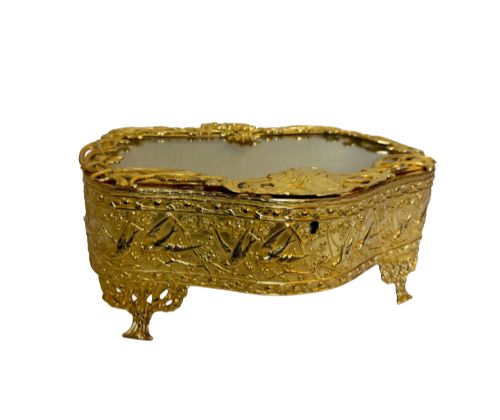
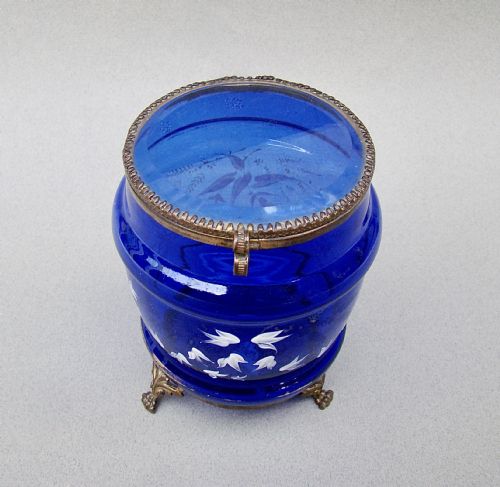
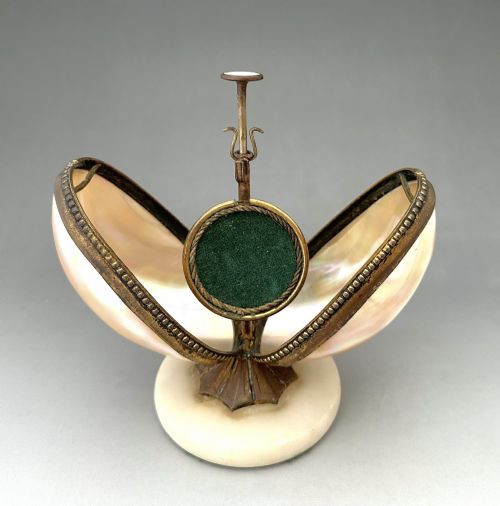
When you search for a French gilt bronze box, you encounter pieces designed to hold jewellery, trinkets, letters or sewing accessories upon dressing tables and sideboards. These containers originate predominantly from the nineteenth century, spanning periods from Charles X and Napoleon III through the late Victorian era.
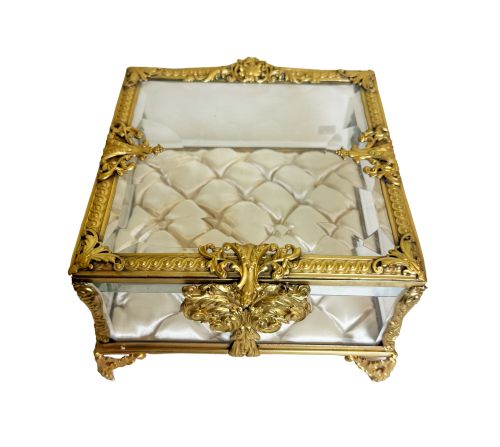
The most common forms on this page include jewellery caskets, hinged trinket boxes and desk stationary boxes. Many examples incorporate glass, porcelain panels or marquetry panels alongside metal mounts, reflecting the decorative styles of French Rococo Revival and Empire aesthetics.
Materials and Construction
Maker workshops cast mounts in brass, bronze or ormolu, applying a layer of gold through mercury gilding or electroplating to achieve the characteristic rich surface sheen. These metal mounts frame panels of hand-blown glass, cut crystal, marble, onyx or imported hardwoods such as kingwood and olive wood.
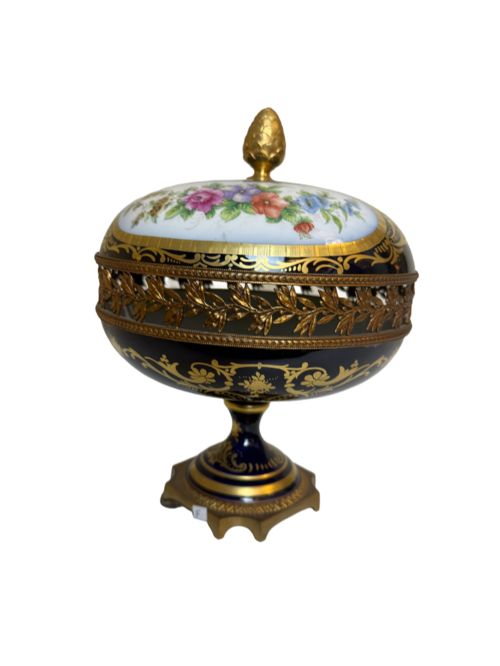
Ceramic components frequently comprise Sevres or Limoges porcelain plaques and inset dishes, often hand-painted with floral motifs or miniature portraits. Joinery involves precise dovetailing for wooden carcasses and robust pinned hinges for metal framework.
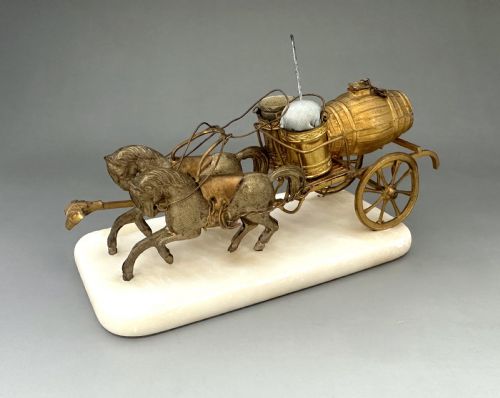
Novelty items include miniature horse-drawn carriages and musical sewing companions fashioned as coaches.
Standards of Craftsmanship
Quality rests in the crispness of the bronze chasing and the depth of the gilding, where sharp, hand-finished detailing outclasses softer, mechanically cast surfaces. The integration of materials defines the tier of the object, such as heavy bevelled glass secured accurately within sturdy cast frames rather than thin stamped brass.
Provenance and interior fittings elevate certain caskets, notably complete velvet or silk linings and intact removable trays intended for rings and smaller accessories.
Victor Raulin·AB Paris
The French Gilt Bronze Box Glossary
- Ormolu
- Gilt bronze, specifically referring to finely chased and gilded metal mounts applied to decorative objects and furniture. It gained widespread popularity during the eighteenth and nineteenth centuries in France.
- Casket
- A decorative box designed for holding jewels, documents or precious keepsakes, usually fitted with a hinged lid and a secure lock. They often feature elaborate metal mounts and glazed panels.
- Sevres
- Porcelain produced by the royal French manufactory, recognisable by hand-painted motifs and rich coloured grounds. Marked pieces carry distinct factory ciphers.
- Bijouterie table
- A glass-topped display table designed specifically for showcasing small precious objects and jewellery. These pieces share identical metal-mounting techniques with smaller tabletop boxes.
- Marquetry
- The art of applying thin veneers of various woods in geometric or pictorial patterns to a wooden structure. It provides decorative contrast on the sides of stationary and jewellery boxes.
French Gilt Bronze Box: Frequently Asked Questions
What were these boxes used for?
These containers served functional roles on nineteenth-century dressing tables and writing desks, storing rings, necklaces, calling cards and sewing gear. Wealthy owners kept them in private chambers to safeguard small valuables.
Over time, their decorative appeal surpassed their storage function, leading to their placement in public reception rooms as display pieces.
How do I date a French gilt bronze box?
Dating relies on stylistic clues, mounting techniques and the materials combined with the metal frame. Pieces from the earlier nineteenth century often display Empire or Charles X restraint, whereas later decades favour elaborate Rococo Revival casting.
Maker marks stamped onto hinges or locks, along with the specific composition of glass and porcelain inserts, help narrow the production period.
Are the porcelain panels genuine Sevres?
Many boxes incorporate painted porcelain plaques attributed to Sevres or Limoges, though distinguishing factory originals from later nineteenth-century revival pieces requires examining the glaze and underglaze marks. The quality of the hand-painted detailing serves as a primary indicator.
Such plaques were frequently mounted into metal frames by specialist bronze-workers rather than the porcelain factory itself.
How should I care for antique ormolu?
Ormolu requires gentle dusting with a soft, dry brush to prevent accumulation in the recesses of the chasing. Moisture and chemical cleaners can strip the delicate gold surface layer.
Handling the metal as little as possible preserves the original gilding by reducing the transfer of skin oils.