
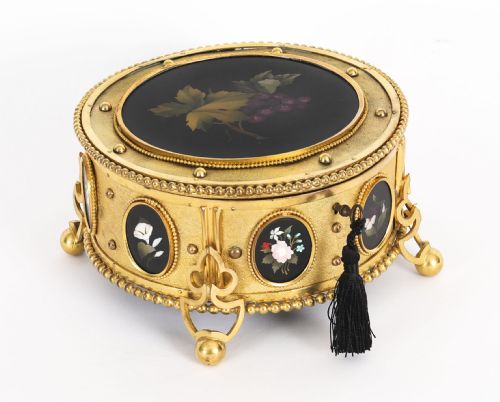


Gilt Bronze Jewellery Box
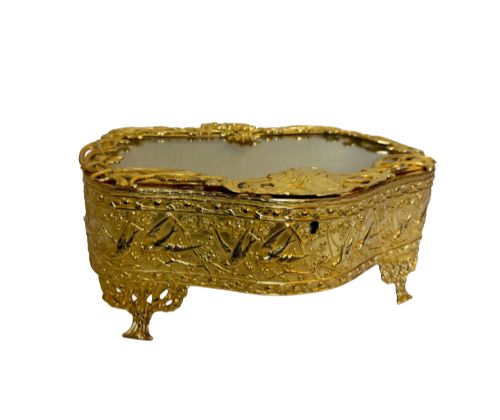
A gilt bronze jewellery box sits on the dressing table, holding precious trinkets inside cast metal and glass frames.
Gilt Bronze Jewellery Box
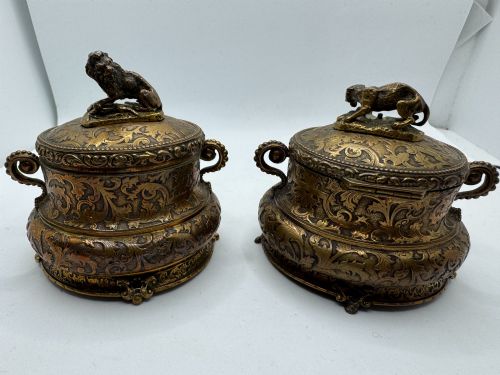
A gilt bronze jewellery box provides a secure and decorative resting place for small valuables, drawing on nineteenth-century craftsmanship. These objects appear frequently as French caskets, trinket boxes, and display tables from the eighteen-sixties through the nineteen-hundreds.
Makers shaped these containers to sit upon dressing tables and mantelpieces, often incorporating glass, porcelain, or stone panels into the metal frame. The typical piece reflects French taste of the period, spanning styles from Second Empire and Napoleon III to Rococo Revival and Art Nouveau.
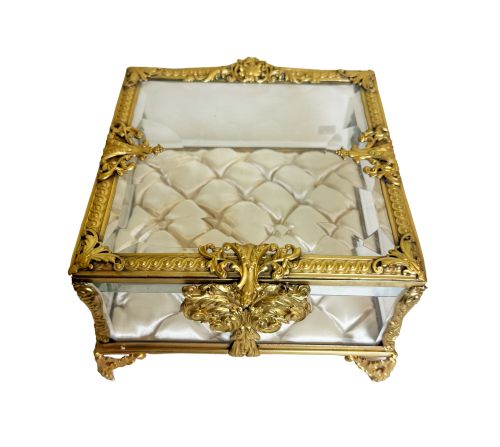
The selection ranges from simple glass caskets mounted in ormolu to elaborate miniature cabinets and display tables fitted with velvet linings. Buyers encounter varied forms including casket boxes, opaline egg trinket boxes, and items featuring painted porcelain plaques or inset miniature portraits.
How they were made
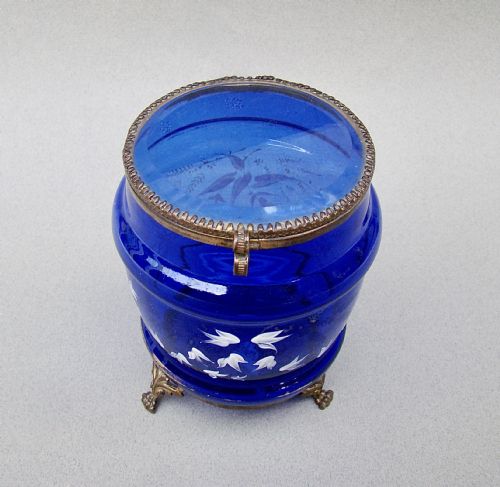
Artisans constructed these boxes using cast gilt bronze or ormolu as the primary structural framework, mounting panels of glass, crystal, porcelain, or marble directly into the metal armature. Materials such as Sevres porcelain, Baccarat glass, and Bristol blue glass provide colourful contrast to the gilded surfaces.
Interior compartments frequently feature fitted velvet linings designed to cushion delicate rings and necklaces. Advanced examples incorporate hand-painted ceramic plaques, inset stone work like pietra dura, or miniature portraits set beneath the lid.
What varies in quality
The crispness of the bronze casting and the depth of the gilding set the standard for quality across these pieces, distinguishing finely chased mounts from softer, simpler forms. Heavier metal frames and securely fitted glass or porcelain panels indicate superior manufacturing standards.
The integration of specialised artistic elements, such as hand-painted Limoges miniatures, detailed enamel work, or heavy cut crystal, elevates certain caskets above standard production models. The presence of undamaged interior velvet and functional original hinges further separates exceptional examples from ordinary ones.
The Gilt Bronze Jewellery Box Glossary
- Ormolu
- Gilt bronze produced by applying a finely ground high-carat gold mercury amalgam to a bronze object, followed by heating to drive off the mercury. This technique creates a rich, durable golden finish characteristic of nineteenth-century French metalwork.
- Pietra dura
- An artistic technique using cut and fitted polished coloured stones to create geometric or pictorial images. Craftsmen inset these stone plaques directly into the lids of fine nineteenth-century caskets.
- Bijouterie table
- A small display table with a glazed top and sides, designed specifically to showcase jewellery and small valuables. These pieces share the same gilt bronze mounts and construction methods as portable tabletop caskets.
- Palais Royal
- A historic shopping district in Paris associated with luxury novelty items, small carriages, and intricate trinket boxes produced during the nineteenth century. Pieces attributed to this origin often feature whimsical designs in glass and gilt metal.
- Sevres porcelain
- High-quality ceramic panels produced by the French national porcelain factory, frequently mounted onto the sides and lids of gilt bronze jewellery caskets. These painted panels display distinct floral or figurative motifs.
Gilt Bronze Jewellery Box: Frequently Asked Questions
What are gilt bronze jewellery boxes?
These pieces are nineteenth-century decorative containers made from cast metal frames mounted with glass, porcelain, or stone panels. They served as functional accessories for wealthy dressing rooms and parlours.
Craftsmen produced them primarily in France, utilising styles ranging from ornate Rococo Revival to flowing Art Nouveau designs. Each box combines metalwork with precious infill materials to create portable display cases.
How were jewellery caskets used?
Owners placed these caskets on dressing tables, console tables, and mantelpieces to store rings, brooches, and delicate personal items. The glazed glass and crystal versions allowed owners to view contents without opening the lid.
Larger variations, such as bijouterie tables and cabinet pieces, functioned as permanent display furniture in nineteenth-century drawing rooms. Their velvet-lined interiors protected precious items from dust and damage.
How do you date a bronze jewellery box?
Dating relies on stylistic clues, manufacturing materials, and decorative motifs associated with specific nineteenth-century periods. Second Empire and Napoleon III pieces often display heavy, formal ormolu mounts, while later items embrace organic Art Nouveau curves.
Reference to specific makers, exhibition marks, or porcelain factory stamps on internal plaques can narrow the production window. Stylistic shifts from classic revivalism toward naturalistic forms help distinguish pieces from the eighteen-sixties through the nineteen-hundreds.
Are these boxes fragile?
The structural frames are robustly cast in bronze or brass, but the inset materials require careful handling. Glass panels, crystal lids, and porcelain plaques can crack or shatter if subjected to sharp impacts.
Internal velvet linings and delicate hinges benefit from gentle maintenance rather than harsh chemical cleaning. Preserving the original gilding involves avoiding abrasive cloths and moisture on the metal surfaces.