


Victorian Glass Trinket Box
A victorian glass trinket box is a small lidded container designed for dressing tables, combining glass and metal mounts to hold jewellery and keepsakes.
Victorian Glass Trinket Box
A victorian glass trinket box brings together small lidded containers formed from coloured or clear glass, often mounted in metal frames designed for dressing tables and boudoirs. These pieces serve to hold jewellery, pins, and small keepsakes within homes of the nineteenth century.
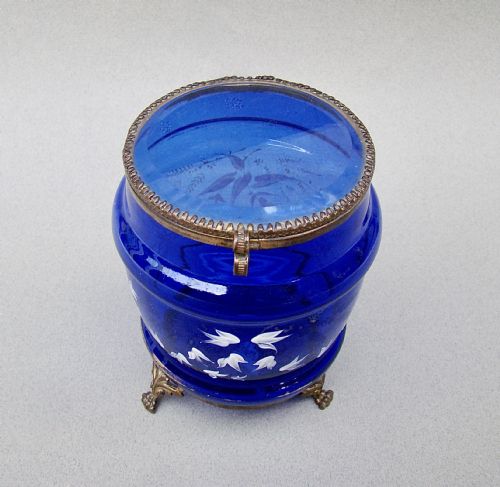
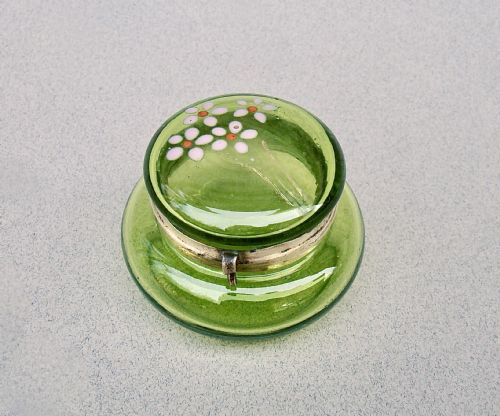
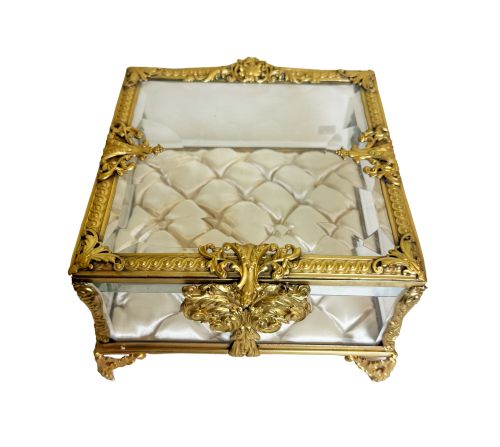
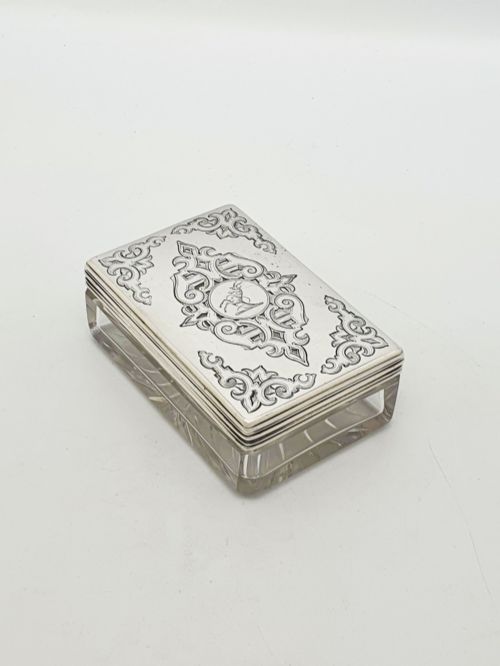
The versions most commonly met on this page span the nineteenth century, including pieces associated with French workshops and English makers. They appear in forms ranging from simple cut crystal jars to elaborate hinged caskets mounted in ormolu and brass.
Materials and Technique
Glass production forms the primary body of these objects, utilising blown, moulded, or cut crystal methods alongside coloured variations such as uranium glass and Bristol blue. Metal framing provides structural support through ormolu, gilt brass, and sterling silver mounts fitted with hinges and clasps.
Enamelling often decorates the glass surfaces with hand-painted motifs, while internal linings utilise silk materials to protect delicate contents. Metalwork frames are secured to the glass bodies using specialised adhesives or mechanical collars.
Assessing Quality and Execution
Quality reveals itself in the weight and clarity of the glass, where heavier cut crystal and richly saturated coloured glass demonstrate superior raw material. Precision in the metal mounts, particularly the fit of ormolu hinges and the crispness of cast brass or bronze, separates standard items from finer works.
The Victorian Glass Trinket Box Glossary
- Ormolu
- Gilded bronze or brass mounts applied to furniture, clocks, and glass caskets. This technique gained widespread use in nineteenth-century French decorative arts.
- Bristol Blue
- A deep, cobalt-coloured glass produced in England, particularly around Bristol, during the eighteenth and nineteenth centuries. It often provides a striking contrast to metallic frames.
- Cut Glass
- Glass shaped and patterned by abrasive wheels, creating faceted surfaces that reflect light. It forms the heavy, clear body of many dressing table jars.
- Mary Gregory
- A style of glassware decorated with white enamel silhouettes, typically depicting Victorian children in pastoral settings. This ornamentation appears on cranberry, green, and amethyst glass.
- Casket
- A decorative box designed for storing valuables, jewellery, or documents. These objects usually feature hinged lids and secure closures.
Victorian Glass Trinket Box: Frequently Asked Questions
What were glass trinket boxes used for?
These containers sat upon dressing tables and mantelpieces to store rings, brooches, pins, and small personal valuables. They kept delicate items protected from dust while displaying colourful glass and metalwork.
In period interiors, they formed part of a matched or collected set of dressing table accessories alongside glass jars and trays.
How do I date a Victorian glass box?
Dating relies on stylistic markers, metal hallmarks, and manufacturing techniques recorded across the nineteenth and early twentieth centuries. Ormolu mounts and specific enamel palettes often point towards the 1880s and 1890s.
Silver components sometimes carry assay office marks and date letters which provide an exact year of manufacture.
Are these boxes English or French?
The inventory includes both English productions and continental pieces originating from French workshops. French examples frequently incorporate elaborate ormolu frames and novelty shapes.
English pieces often combine cut crystal with sterling silver mounts or feature traditional enamel work.
How should I clean glass and metal boxes?
Glass components require gentle wiping with a soft, damp cloth to avoid disturbing enamelled details or painted scenes. Metal mounts should remain untreated with harsh polishes to preserve patination and original gilding.
Silk interiors require dry maintenance, as moisture damages vintage fabric linings.