


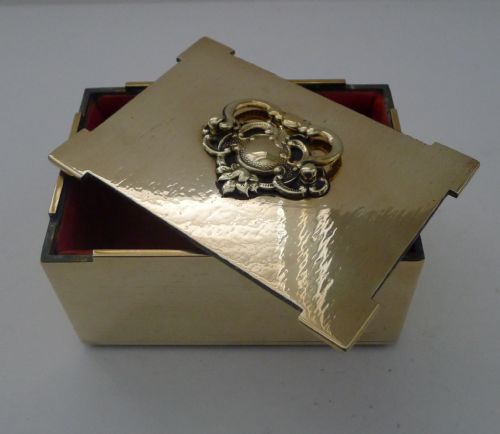


Brass Velvet Jewellery Box
These brass velvet jewellery box examples hold personal treasures securely while adding period character to a dressing table.
Brass Velvet Jewellery Box
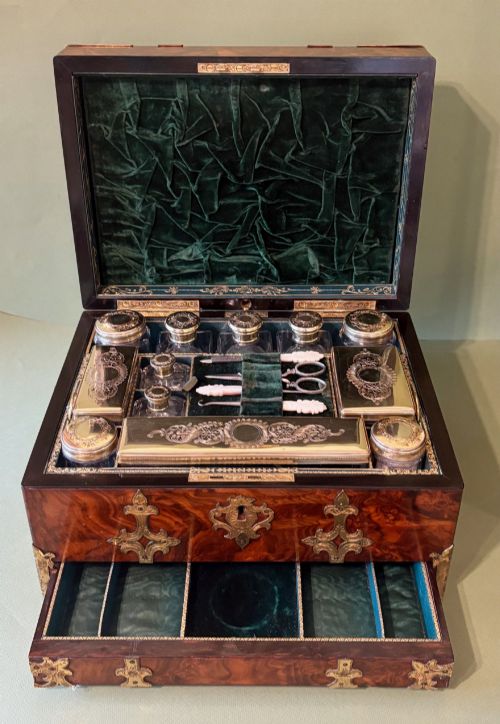
A brass velvet jewellery box combines metal framing and plush fabric lining to protect delicate trinkets. These pieces span periods from the Regency era through to the early twentieth century.
The selection includes dressing cases, vanity boxes, and display cabinets alongside traditional boxes. Walnut, mahogany, and burr walnut frequently form the wooden carcasses beneath brass fittings.
French revival styles appear alongside English Victorian interpretations. Ormolu mounts and glass panels frequently accent the cast brass frameworks.
How they were made
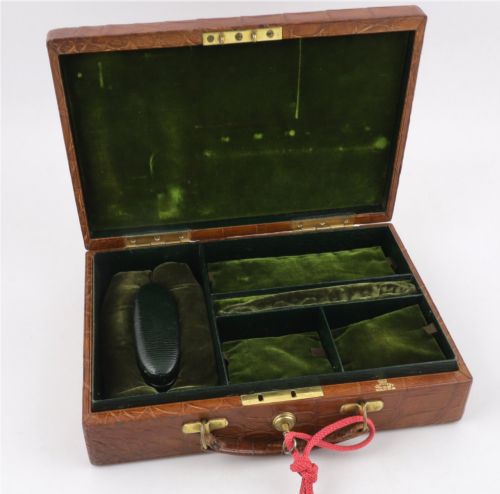
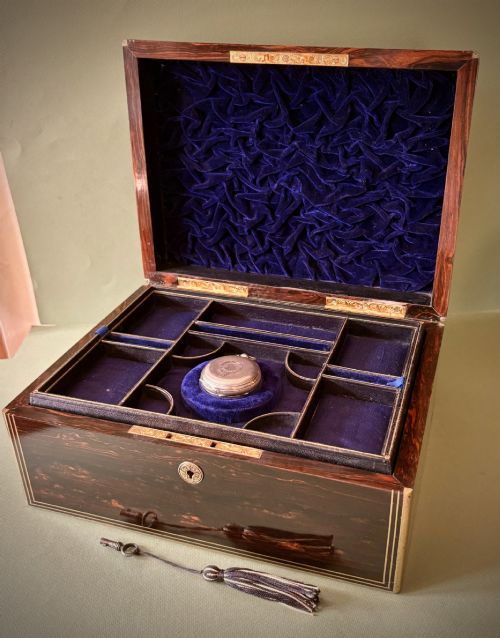
Craftsmen utilised cast brass for hinges, locks, and decorative mounts affixed to timber bodies of mahogany, walnut, or coromandel. Silk velvet interior linings required precise hand-fitting to cushion jewellery and compartments.
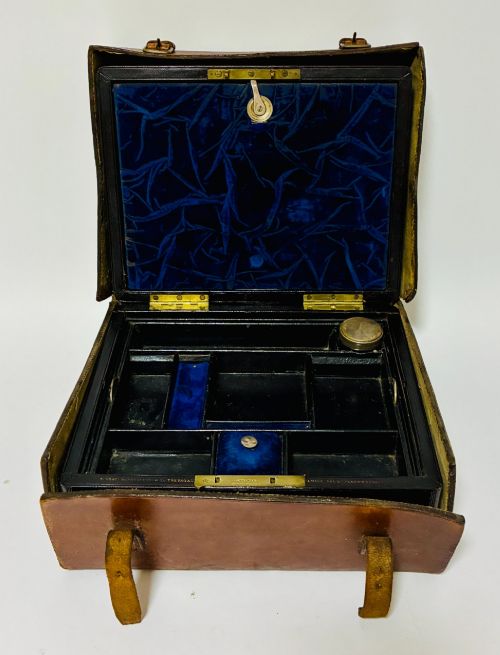
Glass panels and ormolu framing characterise the French bijouterie pieces and display boxes. Leather covering also appears on specific travel-focused dressing cases of the Victorian period.
Current listings feature Victorian, Edwardian, and Regency periods alongside French styles like Napoleon III and Louis XV revival.
What varies in quality
The refinement of the cast brass decoration distinguishes finer examples from standard production pieces. Hand-chased detailing on ormolu mounts indicates superior workshop input.
Internal fitting complexity sets apart simpler caskets from fully outfitted dressing and vanity cases. The selection of timber veneers, such as burr walnut, determines the visual depth of the body.
J C Vickery·F. West
The Brass Velvet Jewellery Box Glossary
- Ormolu
- Gilded bronze or brass applied to furniture and decorative boxes. This technique was widely used in French nineteenth-century pieces.
- Bijouterie table
- A glass-topped display table designed for small valuables. These pieces allow contents to be viewed from above.
- Burr walnut
- A figured timber veneer taken from the burl growths of walnut trees. It provides intricate grain patterns on antique boxes.
- Dressing case
- A fitted box containing compartments for cosmetics and jewellery. These often include glass bottles with silver-plated or metal caps.
Brass Velvet Jewellery Box: Frequently Asked Questions
What fits inside these boxes?
Smaller personal items, rings, and brooches fit comfortably within the lined compartments. Deeper vanity cases accommodate larger trinkets and grooming accessories.
Fitted trays often lift out to reveal secret storage beneath. Deeper boxes can hold pocket watches and cufflinks.
How do I date an antique box?
Stylistic clues like French ormolu or English Victorian walnut construction point to specific decades. Lock mechanisms and hinge types also help determine the period.
Maker marks stamped onto leather or velvet linings provide further chronological evidence. Wood choices shift from Regency mahogany to Victorian burr walnut.
Are keys usually included?
Working original keys remain uncommon on nineteenth-century boxes due to centuries of displacement. Many locks survive in open positions.
Specialist locksmiths can sometimes fit replacement keys if operational locks are desired. The decorative escutcheon often remains the primary visual feature.
Where should I place one?
These boxes suit dressing tables, chest tops, or surface displays in a bedroom. Glass-topped bijouterie tables work well in reception spaces.
Keeping pieces away from direct sunlight protects the velvet lining from fading. Stable room humidity preserves both the timber and the brass elements.