






Gold Metal Trinket Casket
A gold metal trinket casket is a small, decorative container for keeping personal valuables, offering a tangible link to Victorian and Belle Epoque dressing tables.
Gold Metal Trinket Casket
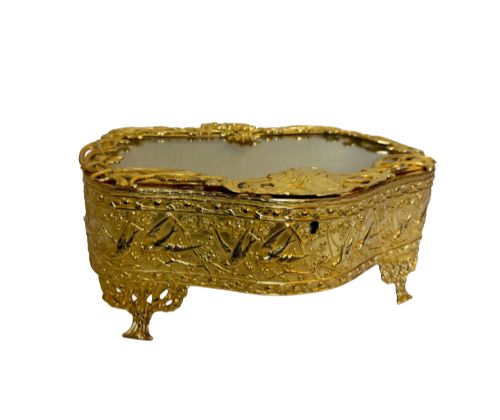
A gold metal trinket casket is primarily encountered as a jewellery box or jewellery casket dating from the nineteenth and early twentieth centuries. These vessels were designed to house precious personal items, often taking pride of place on a dressing table or mantelpiece.
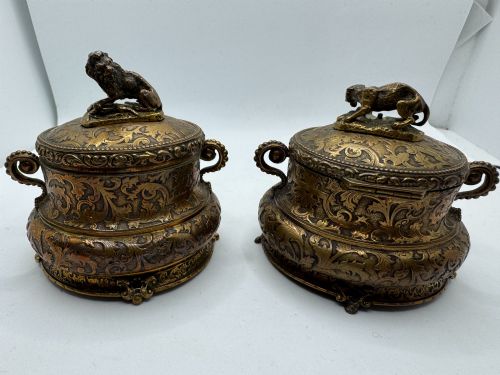
The pieces listed on this page span several decades, notably drawing on Victorian, Art Nouveau, and French Napoleon III aesthetics. Buyers will find variations ranging from English brass and bronze designs to elaborate French ormolu and glass creations.
How they were made
Maker's workshops employed cast brass, gilt bronze, and ormolu to form the structural body of each casket, often combining the metalwork with heavy bevelled glass panels. This union of heavy metal casting and transparent glazing required precise engineering to ensure the hinged lids and corners met cleanly.
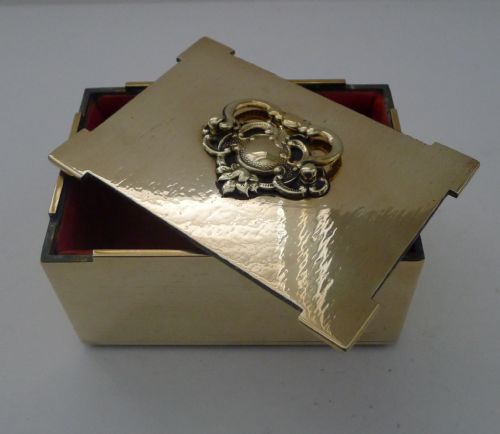
Interiors were frequently lined with velvet to cushion delicate items, while specialist surface decoration such as Pietra Dura stone inlays or Limoges miniatures were applied to the exterior. Certain pieces also utilised copper electro-form techniques, capturing intricate surface detail across the gilded metal.
Gold Metal Trinket Casket Retail Price Guide 2026
Typical asking prices for gold metal trinket casket among the pieces listed under this phrase on Sellingantiques today, from the lower quarter to the upper quarter. They describe what is for sale here now, not the wider market.
Design styles represented span Victorian, Art Nouveau, Rococo Revival, French Second Empire, and Belle Epoque.
What varies in quality
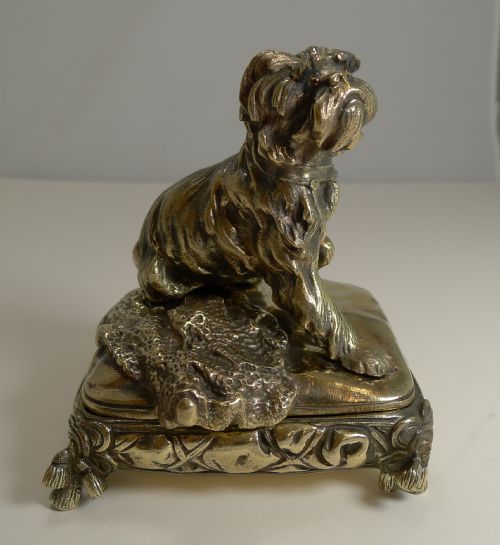
The distinction between standard production and superior craftsmanship lies in the crispness of the metal casting and the complexity of the decorative additions. Finials shaped as dogs or intricate rococo scrollwork demonstrate greater artisanal input than plain geometric housings.
The inclusion of specialist decorative elements, such as genuine inset pietra dura panels or hand-painted porcelain miniatures, elevates a simple metal box into a work of decorative art. Furthermore, the quality of the glass, particularly thick bevelled edges, marks out the superior examples.
The Gold Metal Trinket Casket Glossary
- Ormolu
- A gilded bronze or brass finish applied to decorative metalwork. It gives the object a rich golden appearance reminiscent of solid gold.
- Pietra Dura
- An artistic technique using cut and fitted polished coloured stones to create geometric or pictorial designs. It appears inlaid into the stone or metal surfaces of specific caskets.
- Bevelled Glass
- Glass panes featuring an angled edge cut around the perimeter. This catches the light and adds depth to the viewing panels of a jewellery box.
- Finial
- A decorative ornament fixed to the top of a lid or corner. They often take sculptural forms such as animal figures.
- Electro-form
- A manufacturing process using electroplating to grow metal over a mould. This technique allowed makers to produce detailed gilded copper surfaces in the nineteenth century.
Gold Metal Trinket Casket: Frequently Asked Questions
What is a gold metal trinket casket?
A gold metal trinket casket is a small decorative container fashioned from brass, bronze, or gilt metal, designed to hold jewellery and personal treasures.
These pieces typically date from the nineteenth and early twentieth centuries, reflecting various revival styles popular in England and France.
How were these caskets used historically?
Historically, they sat upon bedroom dressing tables or boudoir surfaces to store rings, brooches, and small keepsakes.
Their decorative nature meant they served as ornamental display objects as much as practical storage containers for daily use.
How do I live with a antique trinket box?
Living with these pieces involves placing them on stable surfaces away from excessive moisture, which can harm velvet linings or metal finishes.
They require minimal maintenance, needing only gentle dusting to keep the gilt surfaces and glass panels bright.
How do I tell different periods apart?
Distinguishing periods relies on observing stylistic details, such as flowing organic lines for Art Nouveau pieces or ornate scrolling for Victorian and Napoleon III examples.
Materials also offer clues, as early forms often feature heavy cast bronze and hand-fitted glass panels.