


Gilt Metal Jewellery Casket
A gilt metal jewellery casket provides a secure, decorative enclosure for precious personal ornaments, combining sturdy metalwork with refined glass or stone inserts.
Gilt Metal Jewellery Casket
A gilt metal jewellery casket takes the form of a small decorative box designed to hold personal treasures, commonly encountered from nineteenth-century European makers. These pieces emerge in styles ranging from Rococo Revival and Napoleon III to Art Nouveau, reflecting the aesthetic preferences of their respective decades.
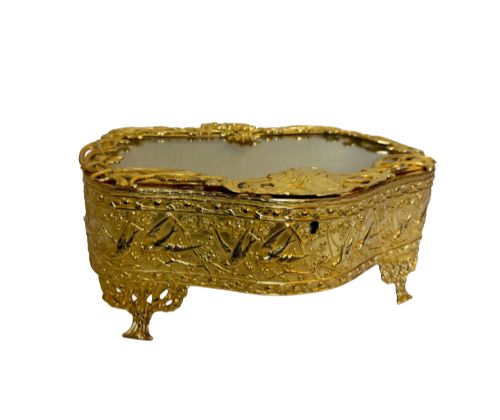
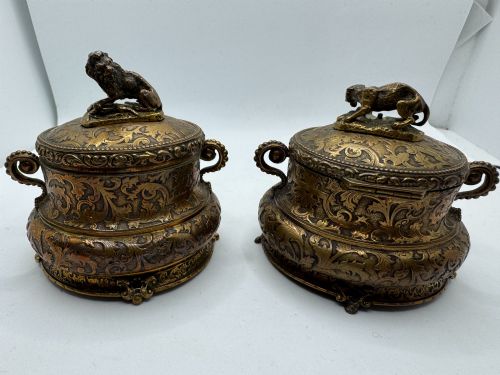
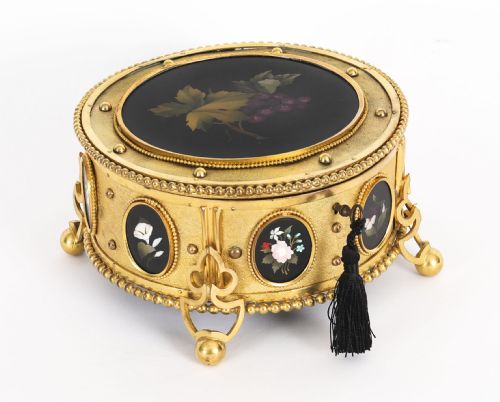
The most typical examples on this page utilise cast metal frames combined with glass panels, porcelain plaques, or stone inlays to display their contents. Collectors encounter forms varying from simple rectangular trinket boxes to domed caskets mounted with figural finials or miniature paintings.
Materials and construction methods
The primary structure relies on cast metals such as ormolu, gilt bronze, brass, and gilded copper, often shaped through traditional foundry techniques. Electro-forming and surface gilding create the characteristic luminous golden finish seen across these nineteenth-century pieces.
Vessels incorporate transparent or bevelled glass panes, heavy marble bases, and decorative inlays like Pietra Dura or Limoges porcelain miniatures. Individual components are joined securely to support hinged lids, frequently accented with cast finials or applied mounts.
Certain nineteenth-century caskets feature small cast dog finials keeping watch over the lid.
Assessing quality in metalwork and inserts
Quality rests upon the crispness of the metal casting and the depth of the original gilding, where finer examples display sharply articulated ornamentation rather than softened surface details. The weight and rigidity of the frame indicate the standard of construction.
The integration of specialised materials, such as hand-painted porcelain panels, finely fitted bevelled glass, or intricate stone mosaic work, elevates the standing of an individual piece. Better boxes maintain structural integrity at the hinges and corners, ensuring smooth operation over time.
The Gilt Metal Jewellery Casket Glossary
- Gilt metal
- Metal that has been coated with a thin layer of gold or gold-coloured wash. This technique provides the appearance of solid gold while utilising a base metal core.
- Ormolu
- Cast bronze that has been gilded with finely ground gold amalgam. This French finishing method yields a rich, warm golden hue popular on nineteenth-century decorative items.
- Pietra Dura
- An artistic technique using cut and fitted polished coloured stones to create geometric or pictorial designs. Artisans inlay these stone plaques directly into the lids or panels of boxes.
- Bevelled glass
- Glass panes with edges cut and polished at an angle. This treatment catches the light and adds a decorative border to the viewing windows of a casket.
- Limoges miniature
- A small painted portrait or scene created on an enamel plaque in France. These detailed artworks frequently adorn the lids of nineteenth-century trinket boxes.
Gilt Metal Jewellery Casket: Frequently Asked Questions
What were gilt metal jewellery caskets used for?
These caskets served as luxurious desktop or dressing table receptacles for rings, brooches, and other small personal valuables. Owners kept them within private chambers to protect delicate items from dust and handling.
Beyond simple storage, the decorative nature of the metal and glass construction allowed these boxes to function as ornamental objects in nineteenth-century interiors.
How do I date a nineteenth-century jewellery box?
Dating relies on stylistic indicators such as the fluid, naturalistic curves characteristic of Art Nouveau designs versus the heavier, ornate scrollwork of Rococo Revival or Napoleon III periods. Materials like electro-formed copper or specific types of porcelain inserts also point to particular decades.
Examining construction techniques, hinge types, and any maker marks assists in narrowing the production era more precisely.
Are the glass panels usually original?
Most surviving pieces retain their original heavy or bevelled glass windows, held securely within the metal framework. Careful inspection of the edges and surface wear helps confirm authenticity.
Replacements do occur if a panel suffered damage, though matching the thickness and bevel of the period glass remains standard for quality repairs.
How should I clean a gilt metal casket?
Maintenance requires only gentle dusting with a soft, dry cloth to prevent accumulation in the crevices of the cast ornamentation. Abrasive cleaners and liquid polishes must be avoided to protect the thin gold surface layer.
Glass panels can be wiped carefully with a dry microfibre cloth, taking care not to touch any painted porcelain or stone inserts.