
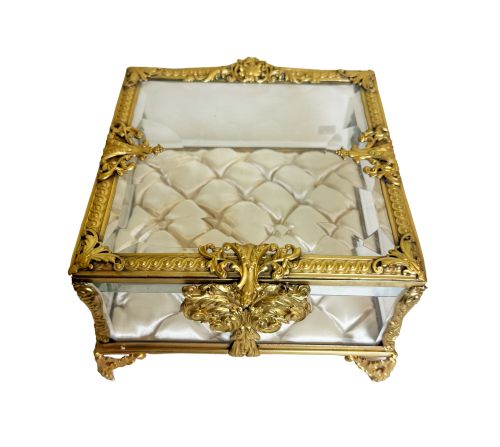
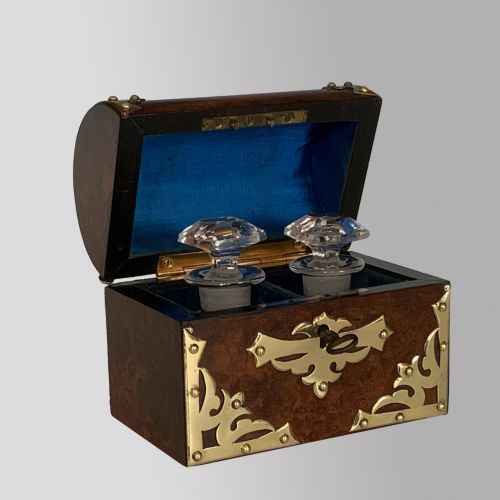


Ormolu Glass Box
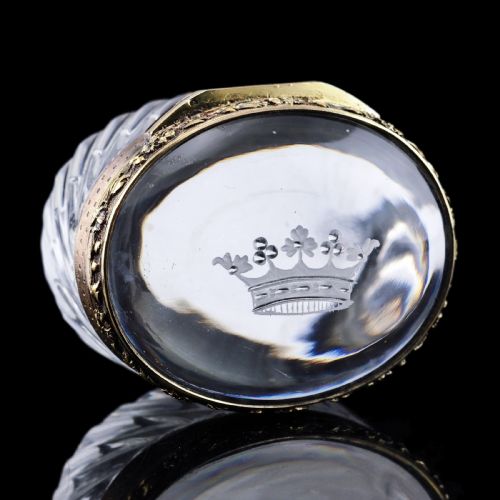
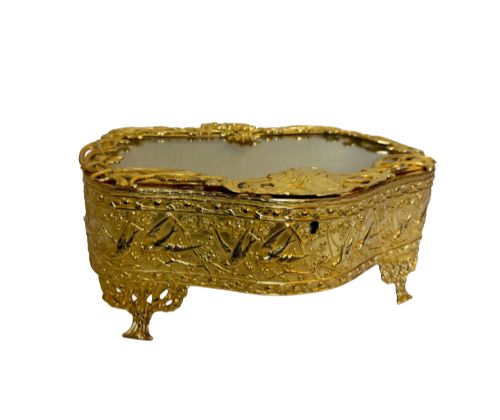
An ormolu glass box brings together cast gilded bronze and clear or coloured glass to hold trinkets, jewellery, and precious small items.
Ormolu Glass Box
An ormolu glass box sits on a dressing table, desk, or cabinet to store jewellery, trinkets, and small personal valuables. These pieces include jewellery boxes, trinket boxes, and larger caskets designed during the nineteenth century.
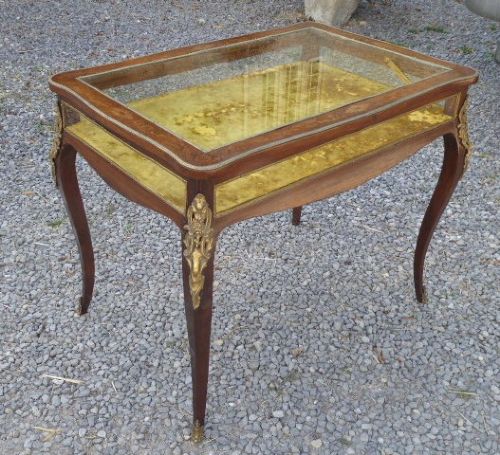
French makers dominate the selection, with Napoleon III, Louis XVI revival, and Art Nouveau styles appearing frequently across the inventory. Alongside standard lidded boxes, the pieces extend to larger bijouterie display tables and tantalus sets fitted with glass decanters.
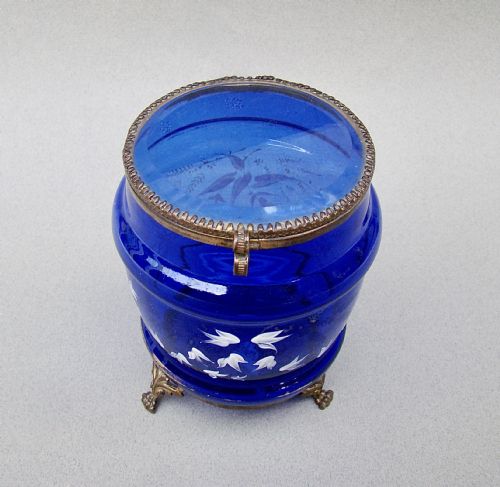
The materials combine heavy cast bronze mounts with blown, cut, or coloured glass vessels, often lined internally with velvet or silk. Bristol blue glass and clear crystal bodies feature alongside opaline glass egg caskets.
How they were made
Craftsmen shaped the mounts through bronze casting and mercury gilding, known as ormolu, to create decorative frames, hinges, and feet. These metal mounts were then secured around glass bodies formed by blowing or cutting.
Glass components range from plain crystal and Bristol blue vessels to layered opaline glass, sometimes paired with wooden frames in kingwood, walnut, or mahogany. Interiors frequently received tailored linings of silk or velvet to protect delicate contents.
The listings combine nineteenth-century French and Victorian periods, with materials spanning cut crystal, Bristol blue glass, ormolu, and velvet.
What varies in quality
The crispness of the bronze casting determines the definition in scrollwork, foliage, and figural mounts. Finer pieces show deep chiselling and finishing by hand after the casting process, whereas simpler examples retain softer contours.
The thickness and clarity of the glass vessel, whether heavy cut crystal or vibrant coloured glass, mark the standard of the manufacture. Tight joinery between the metal frame and the glass body indicates careful assembly by the maker.
The Ormolu Glass Box Glossary
- Ormolu
- Gilded bronze produced by applying a mercury and gold amalgam to cast bronze before heating. This technique creates a durable golden finish characteristic of nineteenth-century decorative metalwork.
- Bijouterie table
- A display table with a glass top and glazed sides set in a metal frame, used for exhibiting small decorative objects and jewellery. These tables often stand on slender legs.
- Baccarat
- A French crystal manufactory known for heavy, clear, and cut glass productions used in nineteenth-century boxes and tantalus sets.
- Opaline glass
- An opaque glass developed in nineteenth-century France, appearing in pastel shades including blue, pink, and white for decorative caskets.
- Cave a liqueur
- A fitted box containing glass decanters and liqueur glasses, frequently mounted in ormolu and set with crystal.
Ormolu Glass Box: Frequently Asked Questions
What is an ormolu glass box used for?
These boxes served primarily to hold jewellery, trinkets, and small personal valuables on nineteenth-century dressing tables and drawing rooms.
Today, they function as decorative objects for display or practical storage for modern accessories.
How do I date an ormolu glass box?
Dating relies on stylistic clues such as the sweeping asymmetry of Louis XV revival pieces or the flowing floral lines typical of Art Nouveau.
Materials, mount construction, and glass types also point to specific decades within the nineteenth century.
How should I clean the ormolu mounts?
Dust the metal mounts gently with a soft, dry brush to prevent the accumulation of dirt in the recessed cast details.
Avoid using liquid metal cleaners, as abrasive substances can strip the historic gold gilding from the bronze.
What is the difference between a casket and a bijouterie table?
A casket is a portable box designed to sit on a surface or inside a larger cabinet to hold personal items.
A bijouterie table is a larger, stationary piece of furniture featuring glazed panels specifically built to display collections.