




French Glass Jewellery Casket
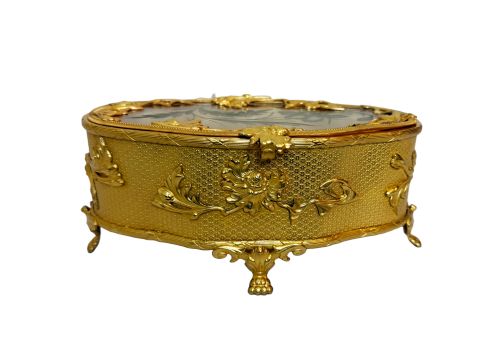
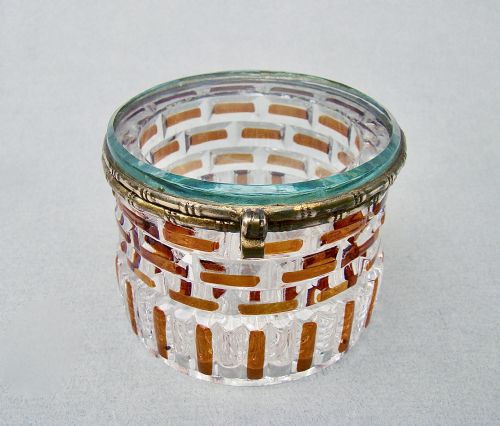
These French glass jewellery caskets combine heavy metal mounts and thick transparent or coloured panes to safely hold small precious items.
French Glass Jewellery Casket
A french glass jewellery casket is a small lidded box designed for trinkets, rings, and watches, mounted in metal frames that give the container its structure. Most examples date from the nineteenth century, including pieces from the Victorian era and the Belle Epoque.
The version most commonly met on this page pairs thick bevelled glass panes with gilt bronze, ormolu, or brass frameworks. These range from simple rectangular trinket boxes to more elaborate novelty forms such as miniature carriages.
Makers produced these decorative containers across several decades, resulting in varied stylistic influences from Napoleon III and Art Nouveau designs. Collectors often encounter them described interchangeably as jewellery boxes, trinket boxes, or caskets.
Materials and construction
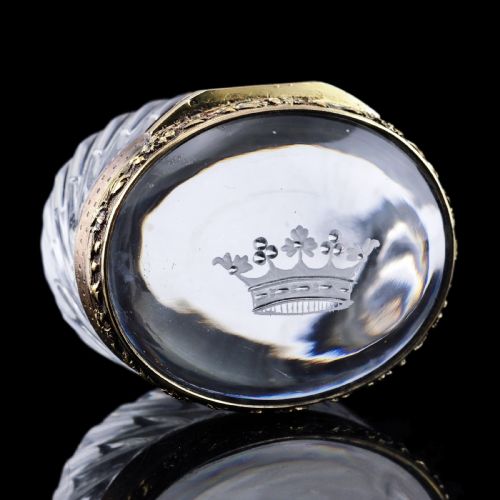
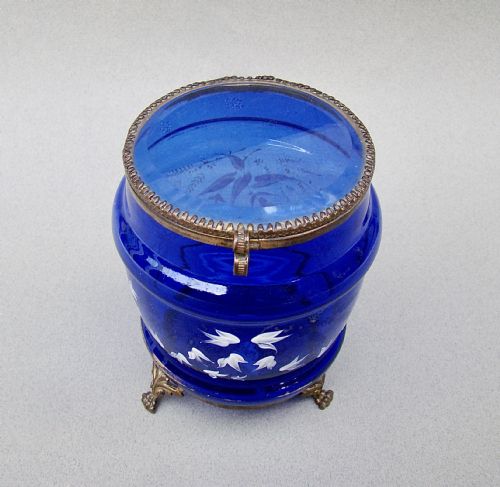
Makers constructed these boxes using heavy cast bronze, ormolu, or brass to form a rigid skeletal frame that securely held individual glass panels in place. The glass itself frequently appears bevelled at the edges, cut as crystal, or cast in coloured varieties such as amber, Bristol blue, opaline, and uranium.
Interior compartments typically feature linings of silk to cushion contents, while exterior surfaces occasionally display applied enamel details or cast metal ornaments like gilded eagles and coronets. The metal components were frequently fire-gilded or polished to produce a bright metallic finish.
French Glass Jewellery Casket Retail Price Guide 2026
Typical asking prices for french glass jewellery casket among the pieces listed under this phrase on Sellingantiques today, from the lower quarter to the upper quarter. They describe what is for sale here now, not the wider market.
Listings for these caskets feature materials including ormolu, bevelled glass, cut crystal, silk, and coloured glass varieties such as Bristol blue and uranium.
Assessing quality and workmanship
Quality in a french glass jewellery casket rests primarily on the weight and thickness of the cast metal mount and the precision of the glass cutting. Heavier ormolu frames with deeply chased ornamentation and tightly fitted bevelled panes represent the higher tier of manufacture.
Simpler brass frames holding plain unbevelled glass represent a more utilitarian standard of production. The presence of specialised glass types, such as signed Baccarat crystal or complex moulded novelty shapes like coaches, distinguishes superior pieces from standard boxes.
Baccarat
The French Glass Jewellery Casket Glossary
- Ormolu
- A gilded bronze or brass mount used structurally and ornamentally on furniture and decorative boxes. It provides a rich golden appearance without solid gold construction.
- Bevelled glass
- A pane of glass with a ground and polished edge sloping at an angle. This technique creates a prismatic border that catches the light.
- Baccarat
- A renowned French crystal manufacturer known for producing high-quality glass vessels. Their works are often associated with luxury decorative objects from the nineteenth century.
- Uranium glass
- Glass containing a small amount of uranium dioxide added as a colourant, typically producing a vibrant yellow-green hue. It glows under ultraviolet light.
- Palais Royal
- A historic shopping district in Paris associated with luxury goods and novelty items. Items linked to this origin often include miniature carriage forms and specialised desk trinkets.
French Glass Jewellery Casket: Frequently Asked Questions
How do I date a glass jewellery casket?
Dating relies on stylistic clues, metal types, and manufacturing techniques recorded across the nineteenth century. Pieces showing heavy ormolu mounts and bevelled glass typically point towards the eighteen eighties and nineties.
Later Victorian and Belle Epoque examples often incorporate distinct Art Nouveau curves or specific coloured glass types. Comparing the cast metal detailing helps narrow down the period of origin.
What were these caskets originally used for?
These boxes served as desktop or dressing table containers for storing small valuables, rings, and pocket watches. Wealthy owners kept them within easy reach to hold daily accessories.
Grand Tour travellers also purchased novelty variants as souvenirs during travels through France. Their decorative nature meant they functioned as display pieces as well as storage containers.
How should I clean the metal mounts?
Ormolu and gilt bronze mounts require gentle dusting with a dry soft cloth to remove surface particles. Avoid aggressive metal polishes that can wear away thin layers of gilding.
Water and harsh chemicals should be kept away from silk linings and glued joints. Professional conservation advice is recommended for heavily tarnished or structurally delicate frames.
Are the glass panels usually removable?
The glass panes are secured directly into the metal frame during assembly and are not intended to be removed. Movement within the frame often indicates loose metal prongs or shrinkage of the internal structure.
Special care is necessary when handling boxes with heavy cut crystal or bevelled panes to prevent stress on the corners. Original panes fit snugly within the cast housing.