
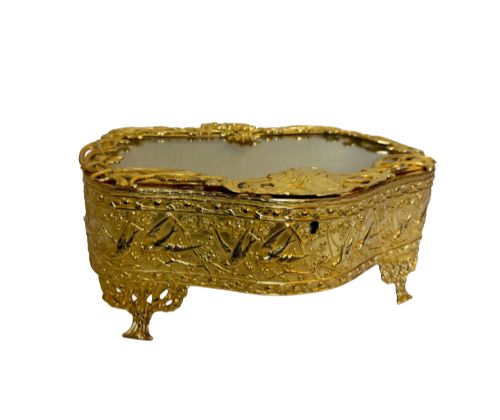


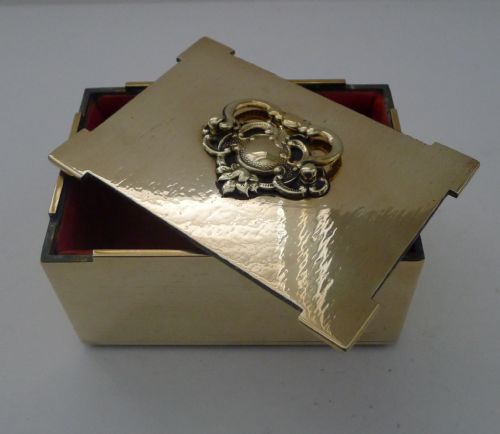

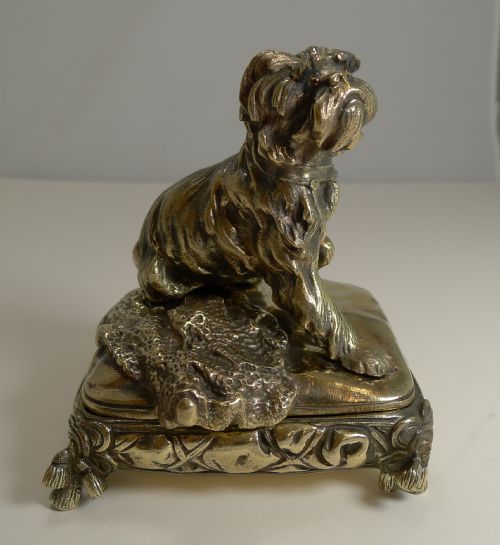
Gold Metal Casket Box
A gold metal casket box holds small treasures securely, bringing nineteenth-century French and Italian elegance straight to a modern dressing table.
Gold Metal Casket Box
When you search for a gold metal casket box, you encounter heavily ornamented containers designed primarily to hold jewellery, trinkets, or miniature portraits. The pieces available range from the seventeenth century through to the early twentieth century, spanning English, French, and Italian origins.
You are most likely to meet Victorian and Napoleon III interpretations on this page, often styled with revivalist Rococo or Art Nouveau flourishes. These items function as miniature display cases, frequently combining metal frames with transparent panels.
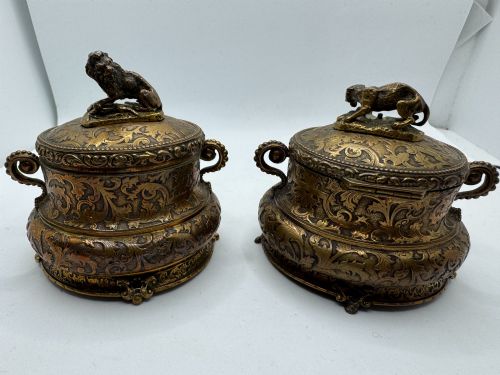
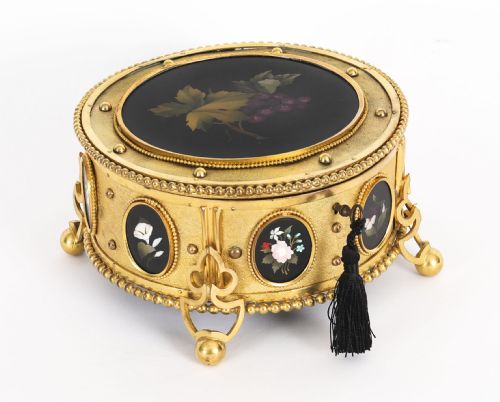
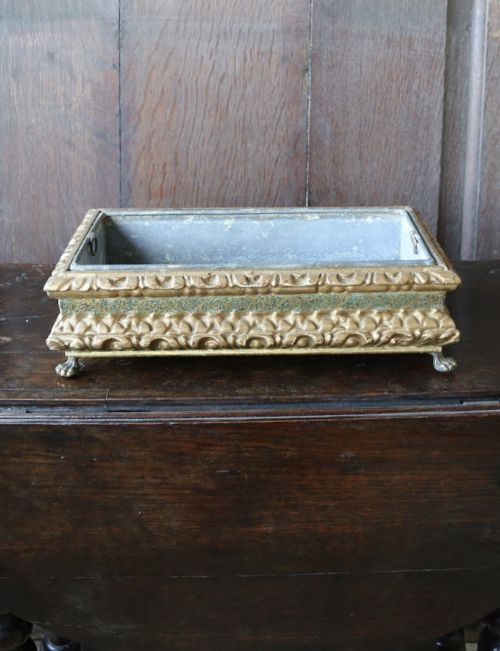
The forms extend from simple rectangular jewellery boxes to elaborately cast caskets featuring figural finials and pietra dura inlays. Each example demonstrates the Victorian and continental penchant for decorative domestic metalwork.
Materials and construction methods
These items are constructed using cast brass, gilt bronze, or ormolu frames that provide structural rigidity and a golden exterior finish. Metalworkers utilised casting and electro-forming techniques to shape the detailed frames and decorative mounts.
Many containers incorporate bevelled glass panels held securely within the metal armature to display the contents from multiple angles. Interiors are typically lined with soft velvet to protect precious items placed inside.
Listings feature items spanning the 17th century through to 1900, with French, Italian, and English origins.
Factors that separate different examples
Quality rests heavily on the crispness of the metal casting and the depth of the gilding applied to the bronze, brass, or copper base. Pieces featuring specialised decorative elements such as inset Limoges miniatures, carved pietre dure panels, or hand-carved wooden structures sit at a higher tier.
The precision with which the bevelled glass is fitted and the sturdiness of the original hinges and clasps determine the structural integrity. Finer items display meticulous attention to detail in sculptural elements like animal finials or intricate floral relief work.
The Gold Metal Casket Box Glossary
- Ormolu
- A metallic technique involving the application of finely ground gold-mercury amalgam to a bronze object. This process creates a rich golden finish seen on many nineteenth-century French pieces.
- Pietra dura
- An artistic technique using cut and fitted polished coloured stones to create pictorial designs. It appears on decorative box lids from Italian workshops.
- Bevelled glass
- Glass panes with edges cut and polished at an angle. This treatment adds a decorative refractive border to display windows on jewellery caskets.
- Limoges miniature
- A small painted portrait or scene created on enamel. These detailed artworks occasionally adorn the lids of nineteenth-century French boxes.
- Napoleon III
- A French design period spanning the mid to late nineteenth century. It is characterised by eclectic revivals of earlier historical styles and lavish ornamentation.
Gold Metal Casket Box: Frequently Asked Questions
What did people store inside a gold metal casket box?
These containers were utilised by Victorians and continental owners to hold valuable rings, necklaces, and brooches safely on dressing tables. They also served to display cherished portrait miniatures and small personal keepsakes.
Today, they continue to function as secure, decorative receptacles for modern jewellery and small collectable items.
How do I identify a French nineteenth-century casket?
French pieces from this era frequently employ ormolu or gilt bronze combined with thick bevelled glass panels. You will often notice refined floral motifs or Rococo revival scrolls cast directly into the metal frame.
Maker choices and distinct casting weights further separate these continental examples from English or Italian productions.
Are the interiors of these boxes original?
Many surviving examples retain their original velvet or silk linings, which show natural signs of age and wear from historical use. Some pieces may feature later replacement fabrics where the original material deteriorated entirely over the decades.
Examining the fit and fabric type helps determine whether the interior matches the production period of the metal exterior.
How should I clean a gilt metal surface?
Gilt metal and ormolu require gentle dusting with a soft, dry brush to preserve the delicate gold layer. Avoid using harsh chemical polishes or abrasive cloths that can strip away the historical gilding.
Keeping the boxes away from direct moisture protects both the exterior metal and any delicate interior velvet linings.