





Mahogany Letter Box
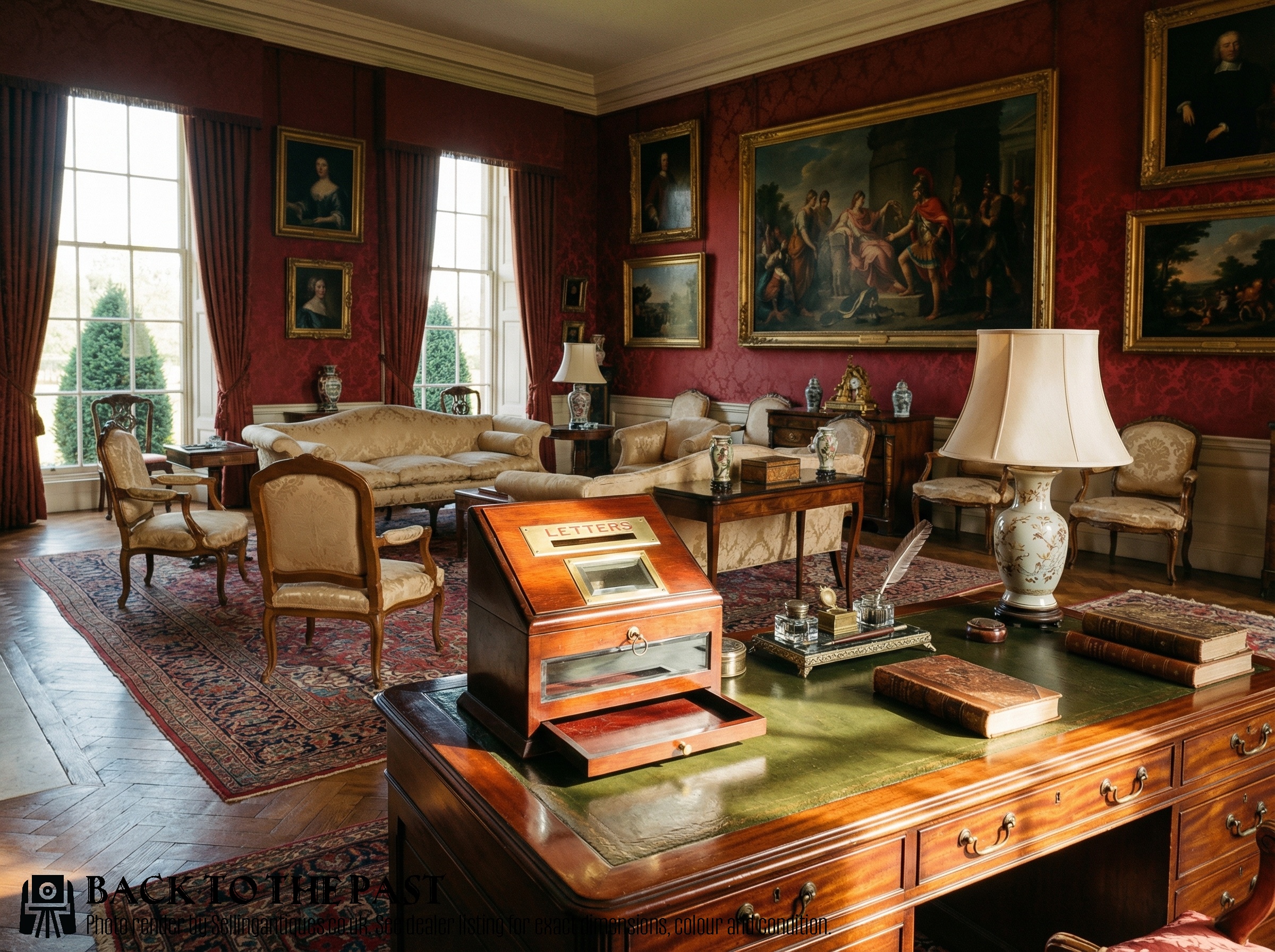
A mahogany letter box brings the solid weight of a country house or hotel post room straight to your desk.
Mahogany Letter Box
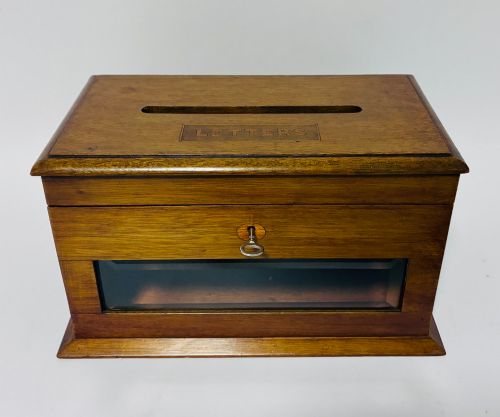
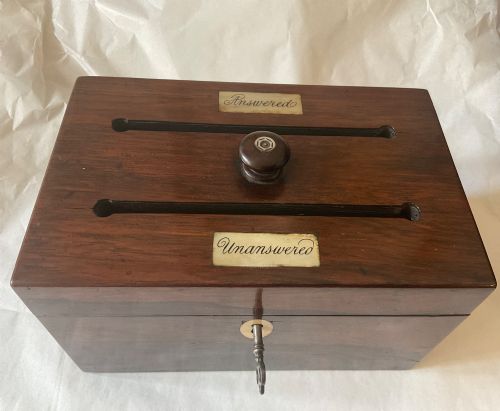
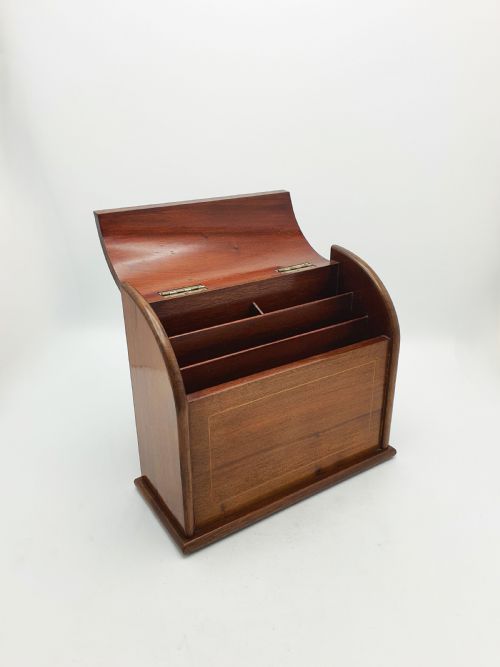
A mahogany letter box serves as a secure desktop or wall-mounted receptacle for incoming and outgoing post, originating primarily from Victorian country houses, hotels, and estate offices. You will most frequently encounter substantial Victorian examples with brass slots, hinged lids, and dedicated compartments for answered and unanswered correspondence.
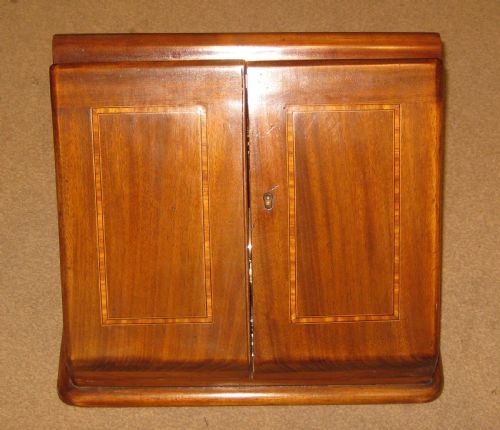
The selection ranges from George III and Georgian writing boxes and knife boxes adapted for letters to Edwardian stationery cabinets and large hotel post boxes bearing royal ciphers. Alongside standard desk models, you will find wall-hanging versions and novelty pieces designed with dual slots.
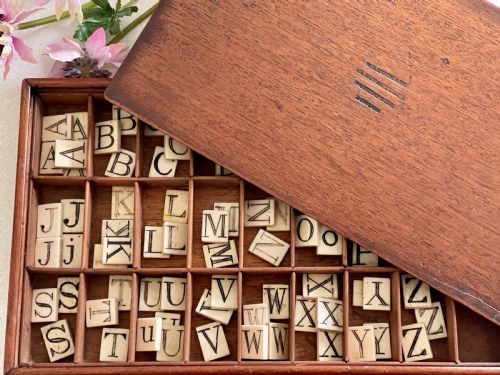
Makers and manufacturers utilised durable timber to construct boxes that withstood daily domestic or commercial use. The form evolved from simple sloped boxes to elaborate cabinets fitted with glass panels, bone or ivory labels, and internal letter racks.
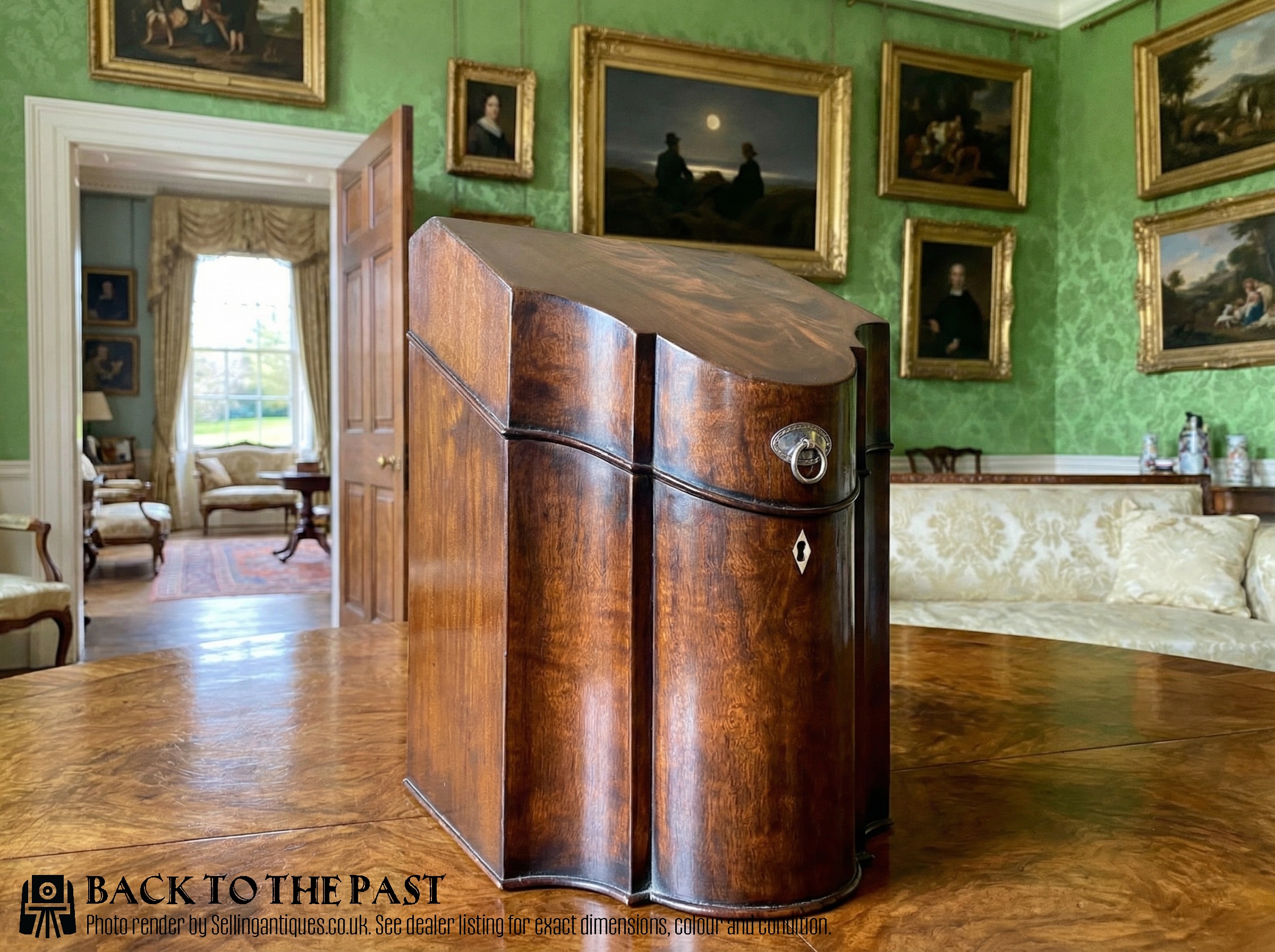
Materials and construction
Craftsmen built these pieces using dense mahogany, often selected for rich grain and figured surfaces, sometimes enhanced with boxwood or satinwood stringing and inlay. Structural elements were frequently augmented with heavy brass mounts, hinges, escutcheons, and letter plates.
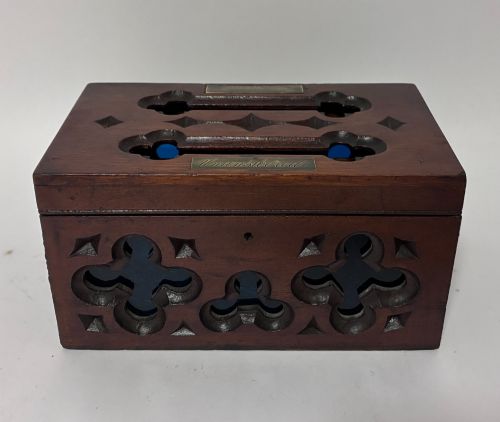
Internal layouts incorporated fitted partitions, glass panels for display, and occasionally carved mahogany details or painted motifs. Secondary woods and traditional joinery methods secured the carcasses, whilst specialised compartments accommodated inkwells, pens, and bone alphabet letters.
Mahogany Letter Box Retail Price Guide 2026
Typical asking prices for mahogany letter box among the pieces listed under this phrase on Sellingantiques today, from the lower quarter to the upper quarter. They describe what is for sale here now, not the wider market.
The listings span from the 1800s Georgian period through the Victorian and Edwardian eras up to the 1920s.
Defining quality
Superior examples distinguish themselves through the quality of the timber selection, such as figured mahogany, and the crispness of brass mountings and inlay work. The integration of functional hardware, like working locks with matching keys and well-fitted internal divisions, separates standard utility boxes from grand country house commissions.
Design complexity also defines the tier, moving from plain utilitarian post boxes to architectural Gothic revival models, inlaid Edwardian stationery cabinets, and pieces bearing armorial crests or royal ciphers.
Ermen and Roby
The Mahogany Letter Box Glossary
- Correspondence box
- A specialised desk box designed to hold writing paper, envelopes, and incoming or outgoing mail. These often feature internal partitions labelled for organisation.
- Stationery cabinet
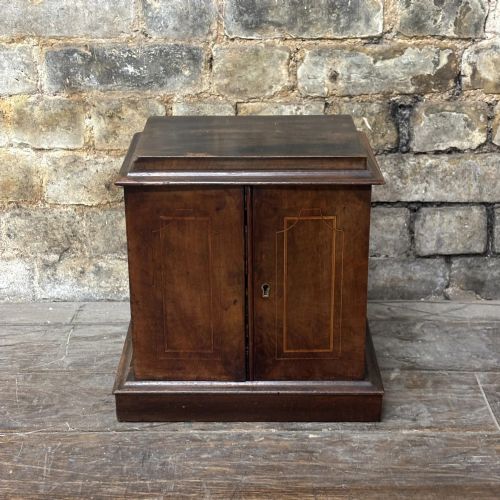
- A larger desk accessory with doors or falling fronts enclosing multiple pigeonholes and shelves for paper and correspondence. They became particularly popular during the Victorian and Edwardian periods.
- Escutcheon
- A protective plate surrounding a keyhole, usually fashioned from brass to match the box hinges and letter slot. It prevents the surrounding wood from wearing down through repeated use.
- Stringing
- Fine inlay work consisting of thin strips of contrasting wood, such as boxwood or satinwood, set flush into the mahogany surface. This technique defined finer Georgian and Edwardian decorative styles.
Mahogany Letter Box: Frequently Asked Questions
How were mahogany letter boxes used?
These boxes managed the heavy flow of daily post in large Victorian households, hotels, and commercial offices. Servants or staff collected mail from the slot and sorted correspondence into internal compartments.
Personal desks also housed smaller versions to keep private stationery and incoming letters organised away from household traffic.
Are all these boxes meant for desks?
Whilst many sit on writing tables or pedestals, a significant number of period examples were manufactured to hang directly on walls in hallways or estate offices. Others functioned as portable writing slopes that combined a letter rack with a sloped writing surface.
Specialised variants like hotel post boxes and shop display cabinets served public or commercial environments rather than private studies.
How do I date a mahogany letter box?
Dating relies on architectural styles, hardware design, and secondary materials present in the piece. Georgian and George III boxes tend to feature cleaner, simpler lines and restrained brasswork.
Victorian and Edwardian iterations often display heavier mouldings, extensive inlay, Gothic revival motifs, or brass hardware stamped with registry marks and royal ciphers.
What is the difference between a letter box and a stationery cabinet?
A letter box primarily focuses on receiving and securing mail through an exterior slot, often featuring compartments for answered and unanswered post. A stationery cabinet opens to reveal vertical pigeonholes and shelves specifically intended for storing blank writing paper and envelopes.
Cabinets usually enclose these supplies behind doors or a fall-front rather than relying solely on a top-opening lid.