




Georgian Cutlery Box
Georgian cutlery box pieces are elegant table-top receptacles designed to hold dining implements, offering both functional storage and period charm.
What They Are
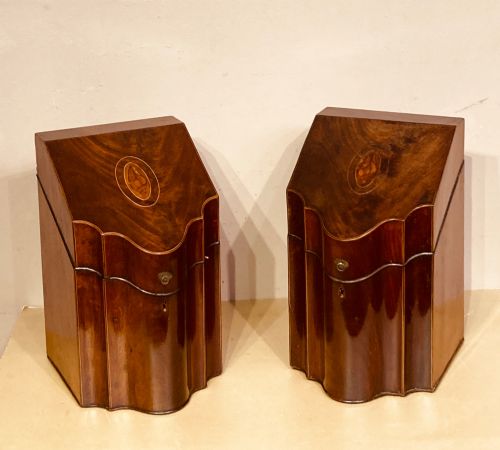
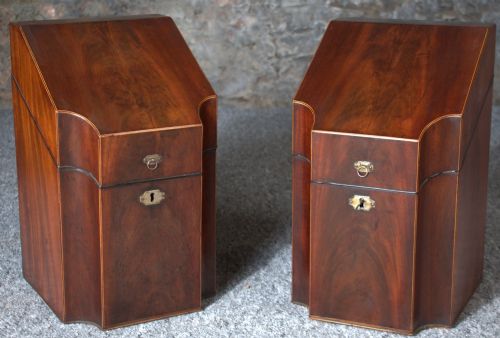
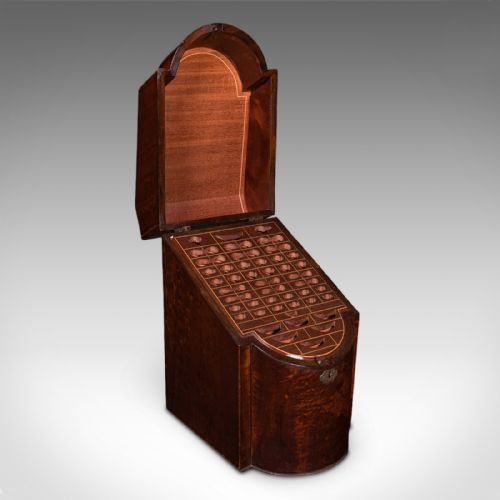
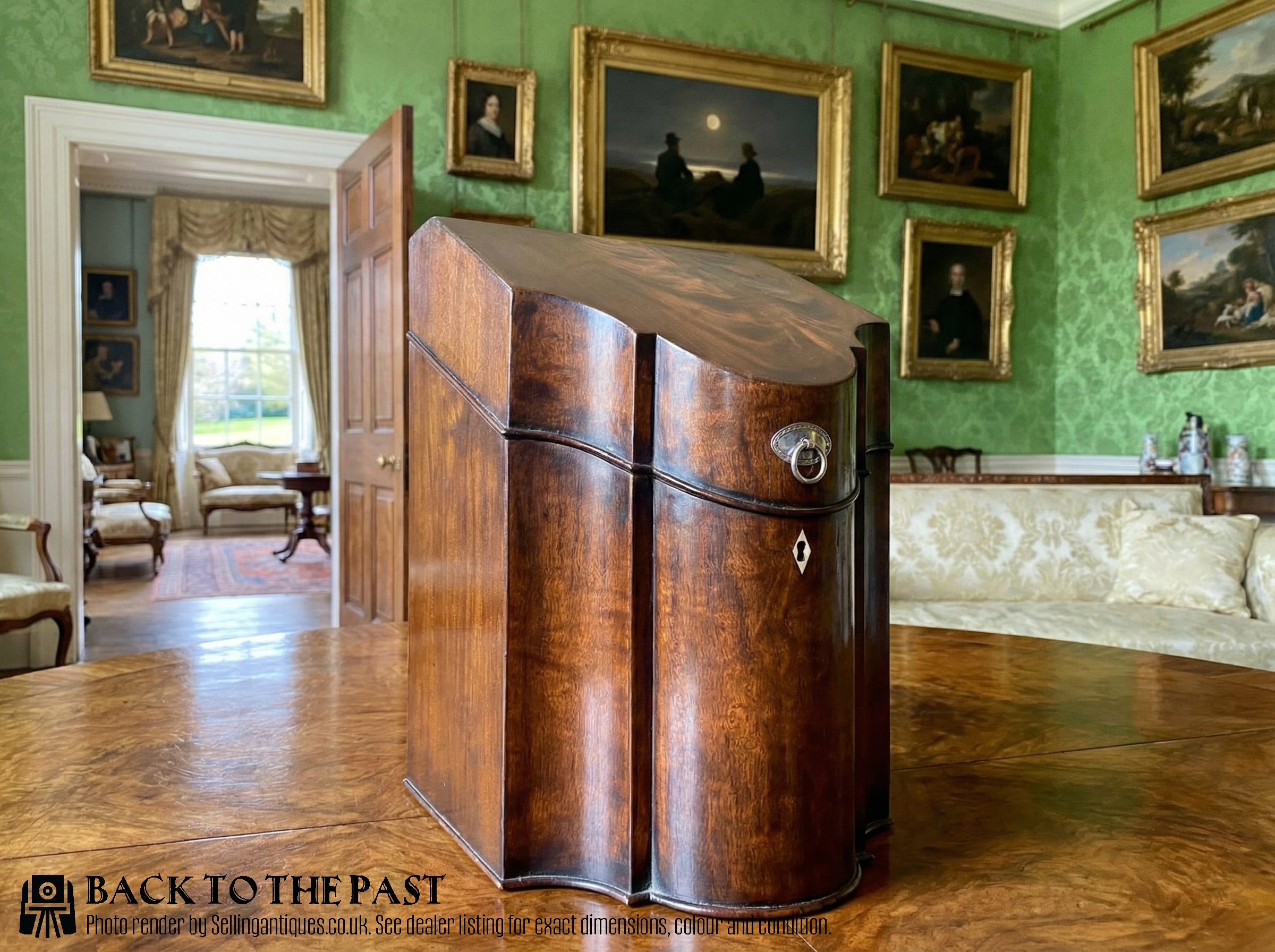
A georgian cutlery box is a specialised receptacle designed for storing knives, forks, and spoons during the dining process. These items predominantly take the form of knife boxes, often styled with serpentine contours or sloping lids.
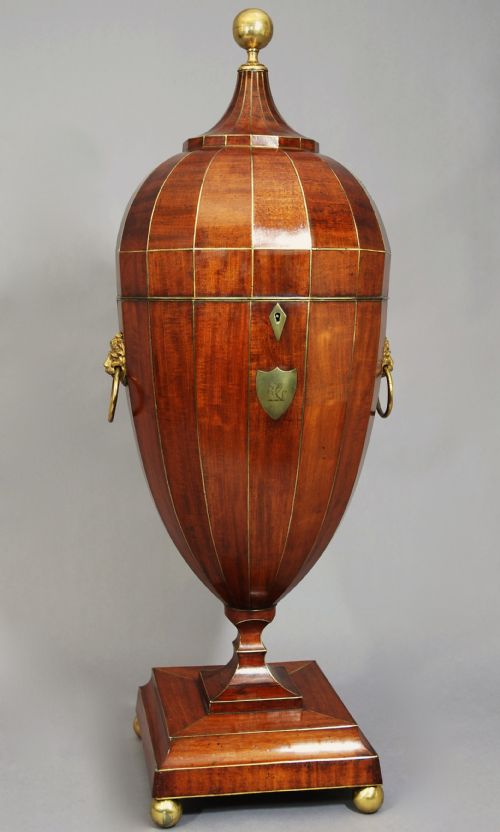
The pieces on this page span the 18th Century, George III, and the year 1800, representing the classic forms utilised in affluent households of the era. Buyers will find variations including matched pairs and singular storage boxes.
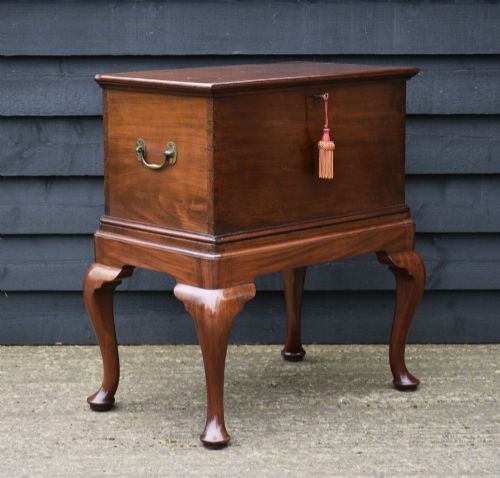
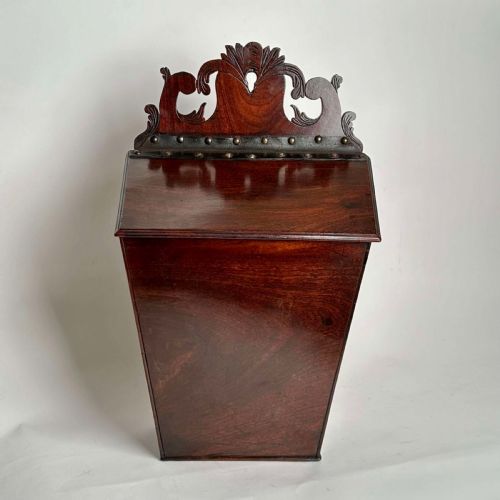
Beyond knife storage, certain items double as stationery boxes, caddies, or candle storage, demonstrating the adaptable nature of wooden containers from the period.
What Varies in Quality
The visual hierarchy of these boxes rests upon the choice of timber, with highly figured mahogany and intricate inlay commanding greater attention than plain fruitwood or oak. Grain selection and balanced proportions dictate the success of the piece.
Craftsmanship is evident in the execution of serpentine shapes and the tight integration of brass hardware. Superior examples maintain crisp lines in their sloping profiles and retain their original interior linings.
Retail Price Guide 2026
Typical UK retail prices for georgian cutlery box, calculated from the Sellingantiques database of over a million retail prices indexed since 2003. This retail price guide relies exclusively on Sellingantiques data; no external sources or auction records are used, so the figures do not describe the wider market.
Mahogany and brass dominate the material palette across the listed pieces, frequently paired with boxwood inlay.
The Georgian Cutlery Box Glossary
- Serpentine
- A curved shape featuring a convex centre flanked by two concave sweeps, frequently seen on the fronts of quality knife boxes.
- Inlay
- A decorative technique where pieces of contrasting wood like satinwood or boxwood are inserted into recesses in the primary mahogany or fruitwood surface.
- George III
- The period spanning from 1760 to 1820, characterising much of the furniture and decorative arts seen in this selection.
- Canteen
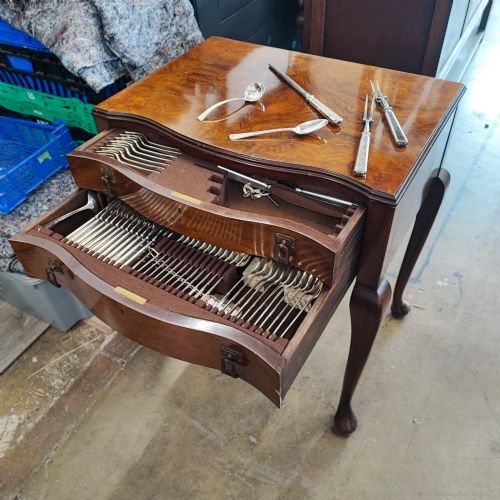
- A fitted case or chest designed to hold a complete set of cutlery securely.
- Fruitwood
- A light-coloured timber derived from fruit-bearing trees, utilised by period makers for domestic items.
Frequently Asked Questions
What were georgian cutlery boxes used for?
These boxes sat on sideboards or dining tables to keep knives, forks, and spoons organised and close at hand during meals.
Servants would bring out the filled boxes when setting the table for formal dining occasions.
How do I date a georgian cutlery box?
Dating relies on identifying the prevailing timber choices, such as mahogany, and stylistic traits like serpentine fronts or specific inlay patterns.
Comparing the construction methods of the oak linings and brass hardware against known 18th-century examples also helps establish the age.
Can I use these boxes for modern cutlery?
Many boxes retain internal dividers or slots that accommodate slender cutlery pieces, though modern stainless steel handles may differ in thickness.
Careful measurement of the interior space ensures contemporary utensils fit without damaging the historic wood or linings.
Are these boxes found in pairs?
Dining rooms of the period often utilised symmetrical arrangements, leading makers to construct matching pairs of knife boxes to flank a sideboard.
Single boxes are also common, having become separated over centuries of domestic use and inheritance.