



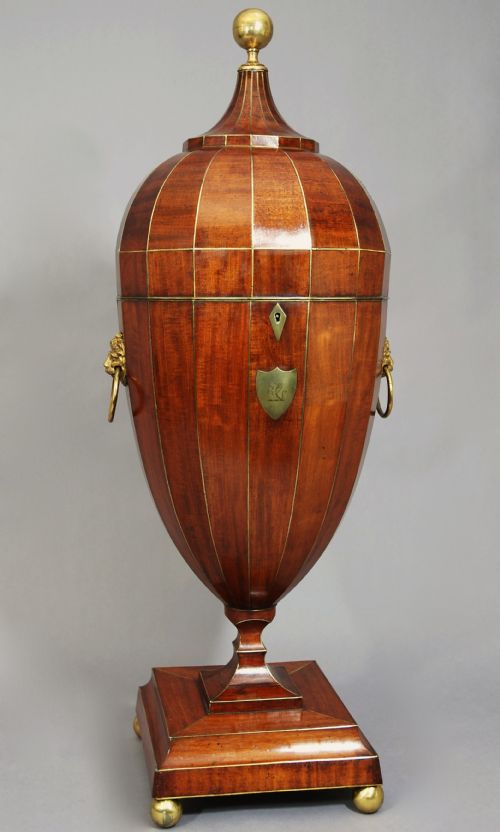


Mahogany Cutlery Box
A mahogany cutlery box brings functional Georgian dining elegance to a sideboard, offering refined storage with distinct period character.
Mahogany Cutlery Box
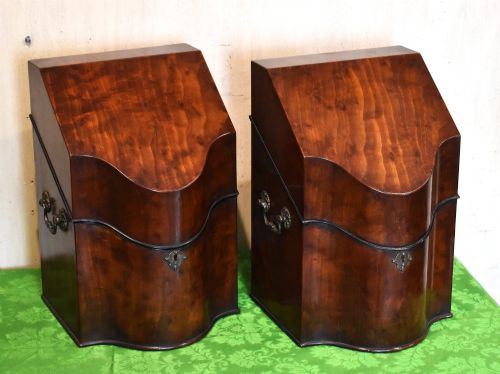
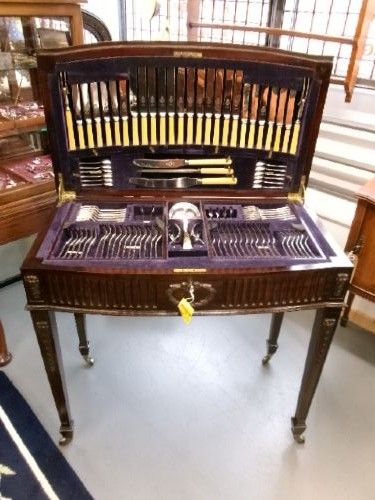
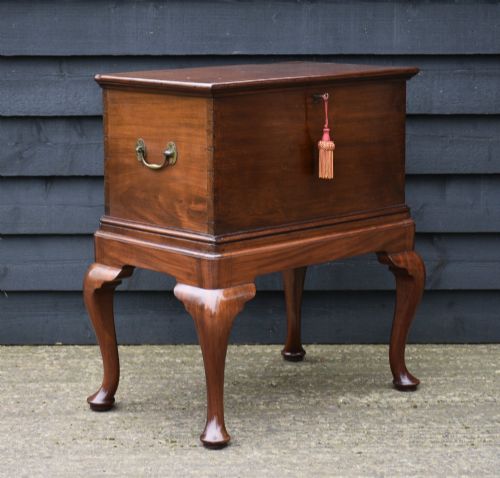
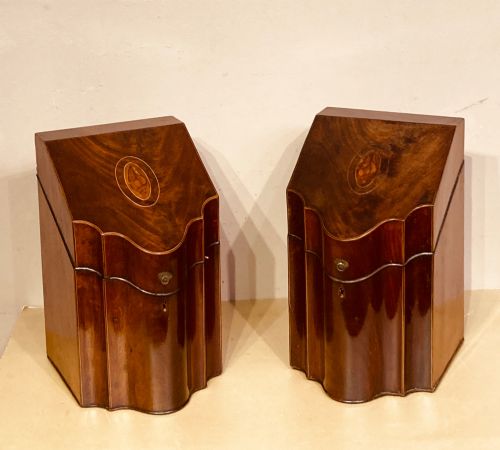
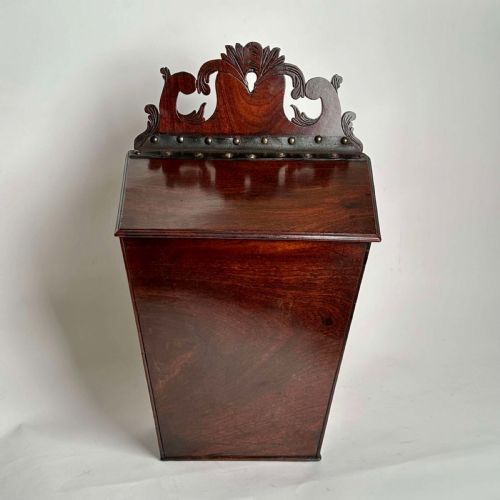
A mahogany cutlery box sits on a dining surface, designed originally to house table knives and now serving as a sophisticated container for modern flatware or small treasures.
The versions encountered here belong predominantly to the Georgian and eighteenth-century periods, showing distinctive sloped lids and upright forms tailored for formal dining rooms.
Makers shaped these pieces as single boxes or matching pairs, utilising serpentine fronts, bow fronts, or straight profiles to suit the architectural tastes of the era.
Materials and construction
Craftsmen built these pieces using solid mahogany and flame mahogany veneers, frequently enhancing the surfaces with delicate boxwood and satinwood inlay.
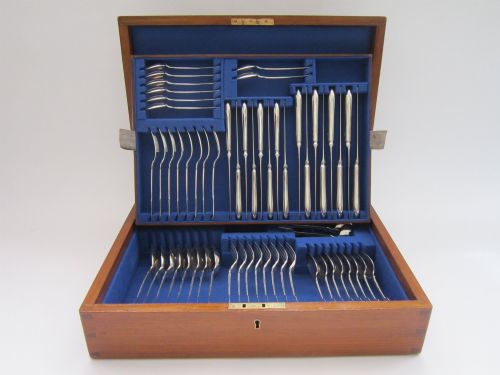
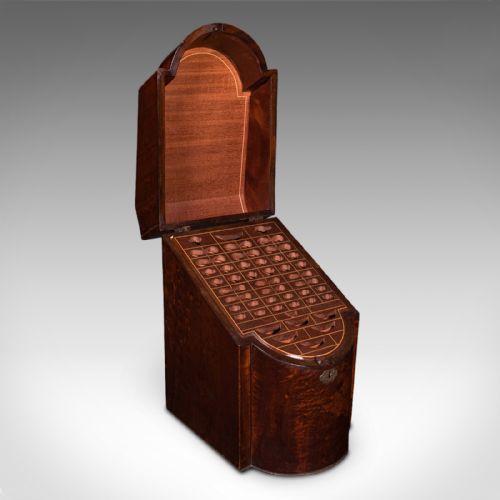
Constructors mounted the hinged lids and drop fronts with brass hardware, while interior fittings often retained original wooden dividers or velvet-lined slots for cutlery.
Mahogany Cutlery Box Retail Price Guide 2026
Typical asking prices for mahogany cutlery box among the pieces listed under this phrase on Sellingantiques today, from the lower quarter to the upper quarter. They describe what is for sale here now, not the wider market.
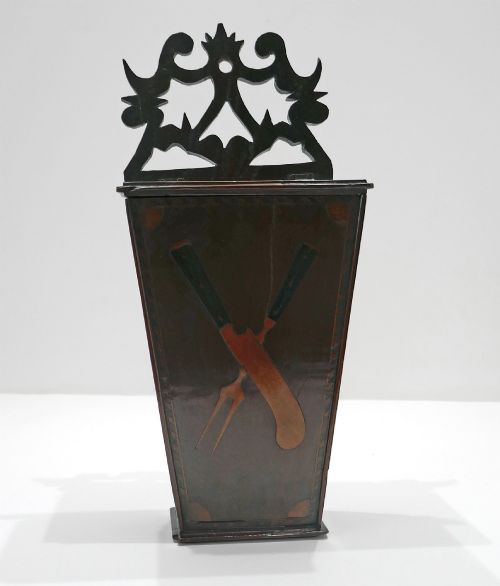
Archive records show pairs of knife boxes alongside candle and tool boxes.
Distinctions in quality
Superior examples display rich timber figuring, such as flame mahogany grain and crisp cross-banding, which elevates the visual depth of the wood.
Master craftsmanship shows in the precision of the boxwood stringing, the integration of solid silver mounts, and the survival of the original fitted interior.
The Mahogany Cutlery Box Glossary
- Serpentine
- A gently undulating front curve popular in Georgian furniture design. This shape softens the profile of a storage box.
- Cross-banding
- A border of veneer laid with the grain running perpendicular to the main panel. It frames the central mahogany surface.
- Stringing
- Fine inlay lines of contrasting timber such as boxwood. This technique adds delicate linear decoration to cabinet edges.
- Bow front
- A convex curved front profile found on specific eighteenth-century boxes. It creates a pleasing rounded appearance on a sideboard.
Mahogany Cutlery Box: Frequently Asked Questions
How were knife boxes used?
These boxes stood on side tables in the dining room to hold silver-handled knives and forks before and after meals. Servants brought them out when setting the table for formal dining.
Today, they adapt easily for storing modern flatware, letters, or precious keepsakes while retaining their historic aesthetic on a contemporary surface.
How do I spot a Georgian box?
Look for timber characteristics like dense, dark mahogany and traditional hand-cut dovetail joints at the corners. Eighteenth-century pieces often feature sloping lids designed specifically for upright cutlery storage.
Internal partitions and original brasses further indicate the period, distinguishing genuine eighteenth-century examples from later reproductions.
Can I use it for modern cutlery?
Many boxes retain internal wooden dividers that accommodate standard spoons and forks, though knife slots may require narrower blades. Buyers often check the internal dimensions before storing contemporary sets.
Lined interiors help protect both the historic timber and the modern flatware from scratches during daily retrieval.