




18th Century Knife Box
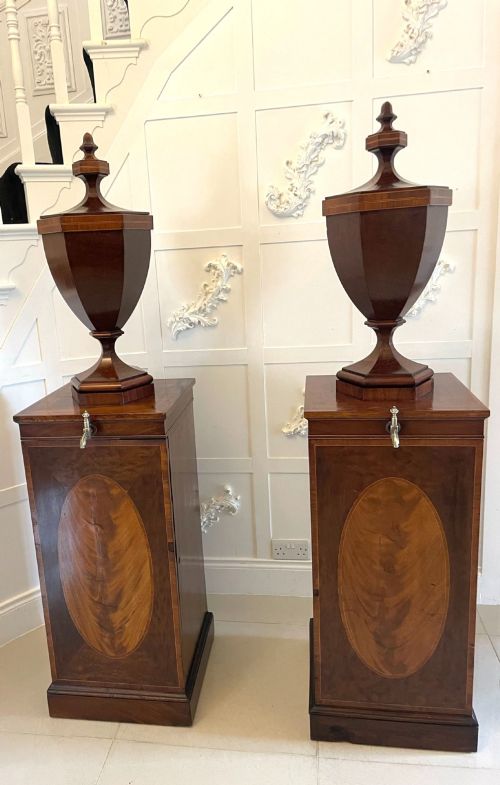
These 18th century knife box examples bring Georgian dining room elegance to your sideboard with figured timber and polished brass mounts.
What an 18th century knife box is
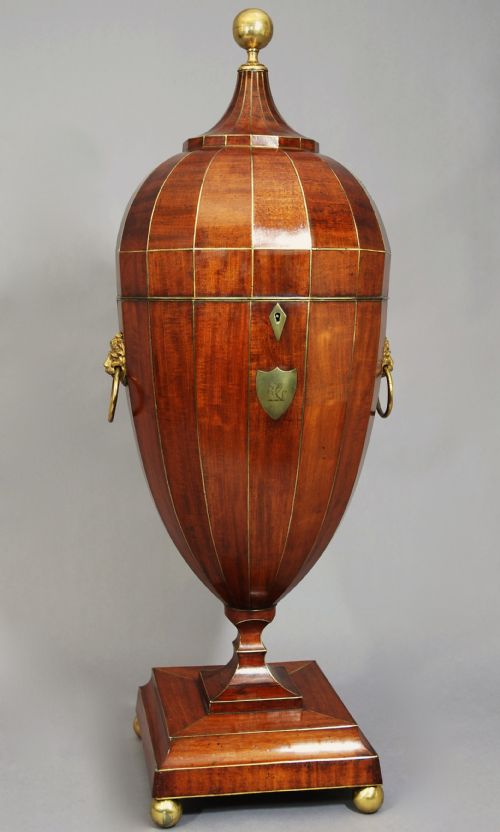
An 18th century knife box is a specialised receptacle designed to hold dining cutlery upright on the sideboard during formal meals. The form emerged to keep steel blades and bone handles tidy and protected from damp dining room air.
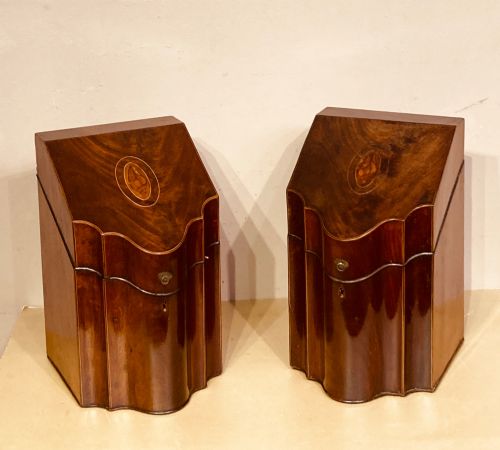
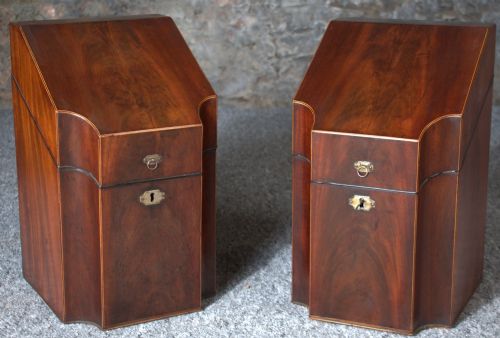
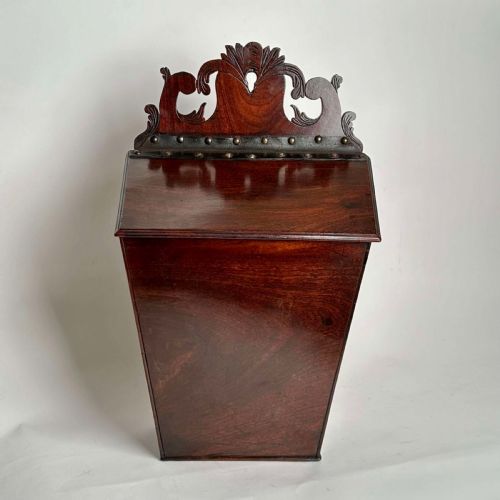
You are most likely to meet mahogany versions from the Georgian period, often built with serpentine fronts or sloping lids. Some survive as matched pairs, though single boxes appear regularly in the listings.
How they were made
Cabinet makers utilised dense timbers such as mahogany and oak, often selecting well-figured grain for the primary display surfaces. Finer examples incorporate satinwood and boxwood inlay to create contrasting geometric or floral stringing.
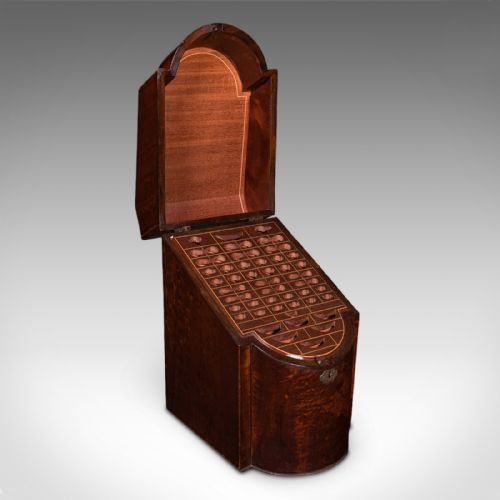
The characteristic sloping lid operates on brass hinges, while escutcheons and carrying handles utilise cast metal. Interior fittings frequently retain divisions lined to receive specific sets of cutlery.
Retail Price Guide 2026
Typical UK retail prices for 18th century knife box, calculated from the Sellingantiques database of over a million retail prices indexed since 2003. This retail price guide relies exclusively on Sellingantiques data; no external sources or auction records are used, so the figures do not describe the wider market.
Oak appears occasionally as a primary material, alongside rarer variants featuring hanging wall attachments rather than standard sideboard feet.
What varies in quality
The visual appeal depends largely on the choice of timber figure and the precision of the boxwood inlay. Subtly figured mahogany combined with crisp stringing lifts a box out of the ordinary tier.
Construction details also dictate standard, particularly the tightness of the dovetail joints and the quality of the original brass hardware. Heavy, well-cast mounts and intact interior dividers mark out superior examples.
The 18th Century Knife Box Glossary
- Serpentine front
- A gently undulating cabinet front curving inward at the centre and outward at the sides. This contour requires skilled woodworking and adds considerable visual movement to the piece.
- Stringing
- Thin lines of contrasting wood inlay used to outline panels and lids. Boxwood and satinwood provide the pale contrast against dark mahogany.
- Escutcheon
- A protective metal plate surrounding the keyhole. On these boxes, brass escutcheons often match the carrying handles on the sides.
- Well-figured
- A descriptive term for wood grain possessing pronounced patterns, swirls, or chatoyancy. Cabinet makers reserved such timber for the most visible exterior surfaces.
Frequently Asked Questions
What were knife boxes used for?
These boxes held steel knives, forks, and spoons upright inside fitted interior slots before and after meals. Servants placed them on sideboards to display silver and keep cutlery clean.
Today, they function primarily as decorative decorative objects on sideboards or console tables, occasionally holding letters or small keepsakes.
How do I tell a Georgian knife box apart?
Georgian examples display characteristic sloping lids, serpentine or straight fronts, and specific secondary timbers like oak. Look for period brasses and traditional dovetailing.
Later Victorian reproductions often feel heavier, use different secondary woods, and lack the subtle patination built up over centuries of polishing.
Are pairs harder to find than single boxes?
Matched pairs of 18th century cutlery boxes occur much less frequently than individual pieces. Surviving pairs were usually built together to flank a sideboard symmetrically.
Single boxes make up the majority of available stock and offer an accessible entry point into collecting Georgian woodwork.
How should I care for mahogany timber?
Keep wooden pieces away from direct heat sources and strong sunlight to prevent the timber and inlay from drying out. Occasional application of suitable wax helps maintain the polish.
Avoid excessive moisture on the brass mounts and interior linings to preserve the original materials safely.