





Georgian Knife Box
A georgian knife box stores fine dining implements in polished wood, offering a handsome focal point for a dining room or sideboard.

Georgian Knife Box
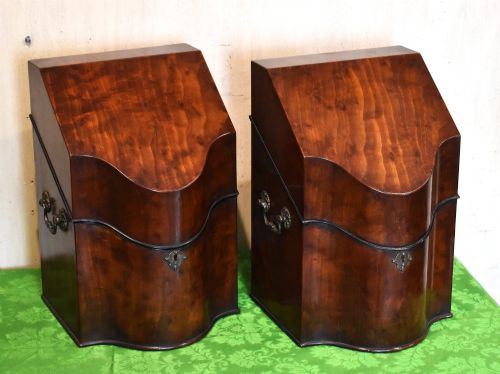
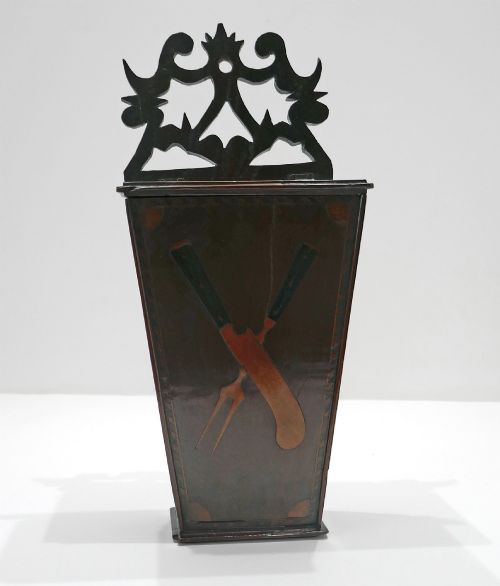
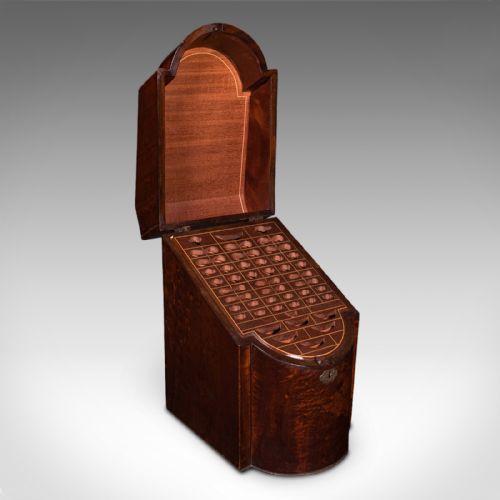
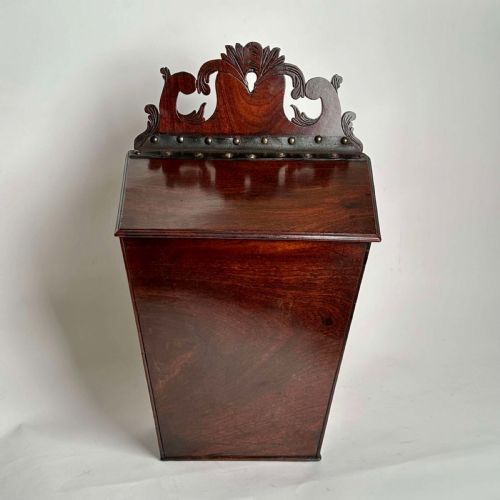
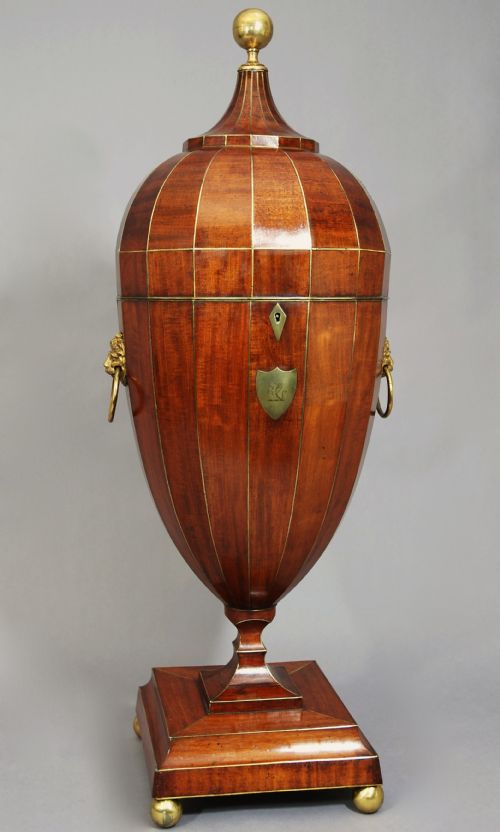
A georgian knife box is a sloped, upright receptacle designed during the eighteenth and early nineteenth centuries to house cutlery on the dining table or sideboard. Most examples encountered on this page take the form of sloping wooden boxes with hinged lids, alongside variations shaped as urns, trays, and stationery holders.
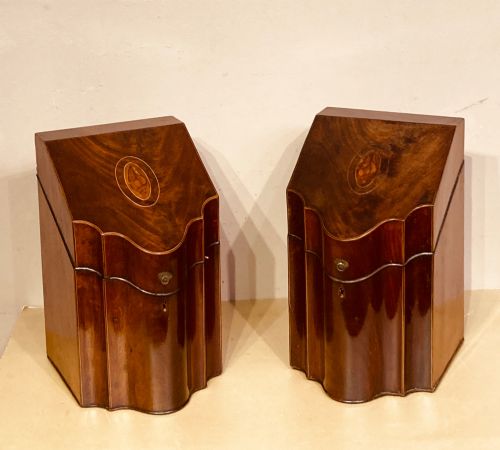
The objects appear predominantly in mahogany, often fashioned with serpentine or bow fronts, and frequently date from the George III period. Makers also shaped these pieces from oak, satinwood, and walnut, sometimes incorporating internal fittings to organise knives, forks, and spoons.
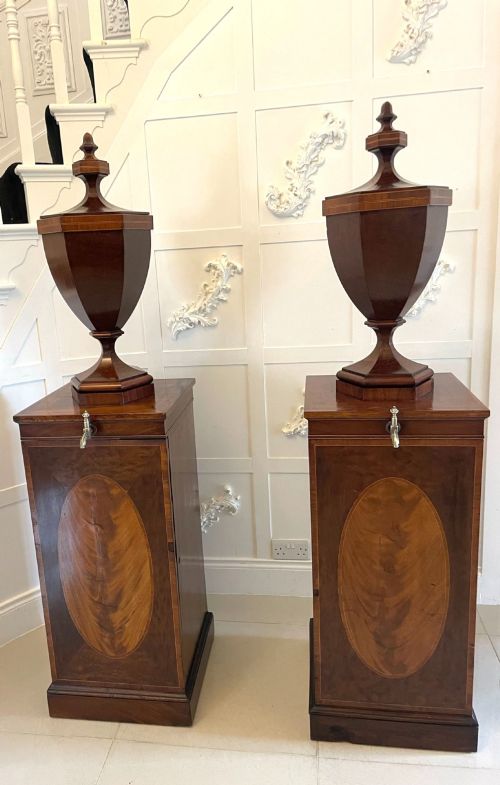
Beyond standard cutlery storage, the evidence shows several examples adapted over time for stationery, letter holding, or converted into canteens. Buyers frequently find paired items, single boxes, and taller pedestal arrangements designed to match formal dining room schemes.
Materials and Construction
Cabinetmakers constructed these pieces primarily from solid and veneered mahogany, frequently employing boxwood inlay, satinwood stringing, and brass fittings such as escutcheons and carrying handles. Artisans selected figured woods to accentuate the curved surfaces of serpentine and bow front profiles.
Internal compartments were lined with wood or fabric to secure individual blades and handles, while structural integrity relied on precise joinery suited to daily handling. Selected items feature solid silver mounts, sterling silver shields, and specialised hardware characteristic of high-status dining accessories.
Georgian Knife Box Retail Price Guide 2026
Typical asking prices for georgian knife box among the pieces listed under this phrase on Sellingantiques today, from the lower quarter to the upper quarter. They describe what is for sale here now, not the wider market.
One Welsh maker fashioned a painted pine knife sharpener, proving that even utilitarian kitchen gear deserved a coat of bright colour.
Assessing the Standard
Quality in these pieces depends on the selection of timber grain, the crispness of the inlay work, and the symmetry of the serpentine or bow front shape. Finer examples display carefully matched veneers and retain their original brass hardware, internal partitions, and locking mechanisms.
The condition of the timber finish, the subtlety of the woodwork curvature, and the presence of original silver mounts elevate certain pieces above standard utilitarian containers. Pieces retaining balanced proportions and untouched patination represent the upper tier of surviving examples.
Edward Barnard And Son
The Georgian Knife Box Glossary
- Serpentine
- A curved furniture front characterised by a convex central section flanked by two concave sweeps. This shape requires advanced woodworking skill to execute cleanly on a knife box lid.
- Bow front
- A convex, outwardly curved frontal profile popular in late eighteenth-century cabinet making. It softens the strict angles of storage furniture.
- Cutlery urn
- A tall, vase-shaped vessel used on a pedestal to store dining implements during grand meals. These pieces mirror classical architecture.
- Escutcheon
- A flat plate of brass or silver surrounding a keyhole to protect the surrounding wood from wear. It often provides decorative contrast to dark mahogany.
- Stringing
- Thin lines of contrasting wood inlay used to edge panels and lids. It frames the primary timber with precise geometric definition.
Georgian Knife Box: Frequently Asked Questions
What were georgian knife boxes used for?
These boxes stored steel cutlery sets securely between formal dining occasions in wealthy households. Servants brought the filled containers to the dining room when setting the table.
Over subsequent generations, many boxes lost their original cutlery linings and found new purposes holding stationery, letters, or small household items on desks.
Are pairs common for these boxes?
Matched pairs appear frequently in the record because dining rooms of the period required symmetrical arrangements on sideboards or pedestals. These pairs share identical timber grains, dimensions, and brass hardware.
Single boxes also survive in large numbers where companion pieces have separated or where households only required a single tabletop container.
How do I live with a knife box?
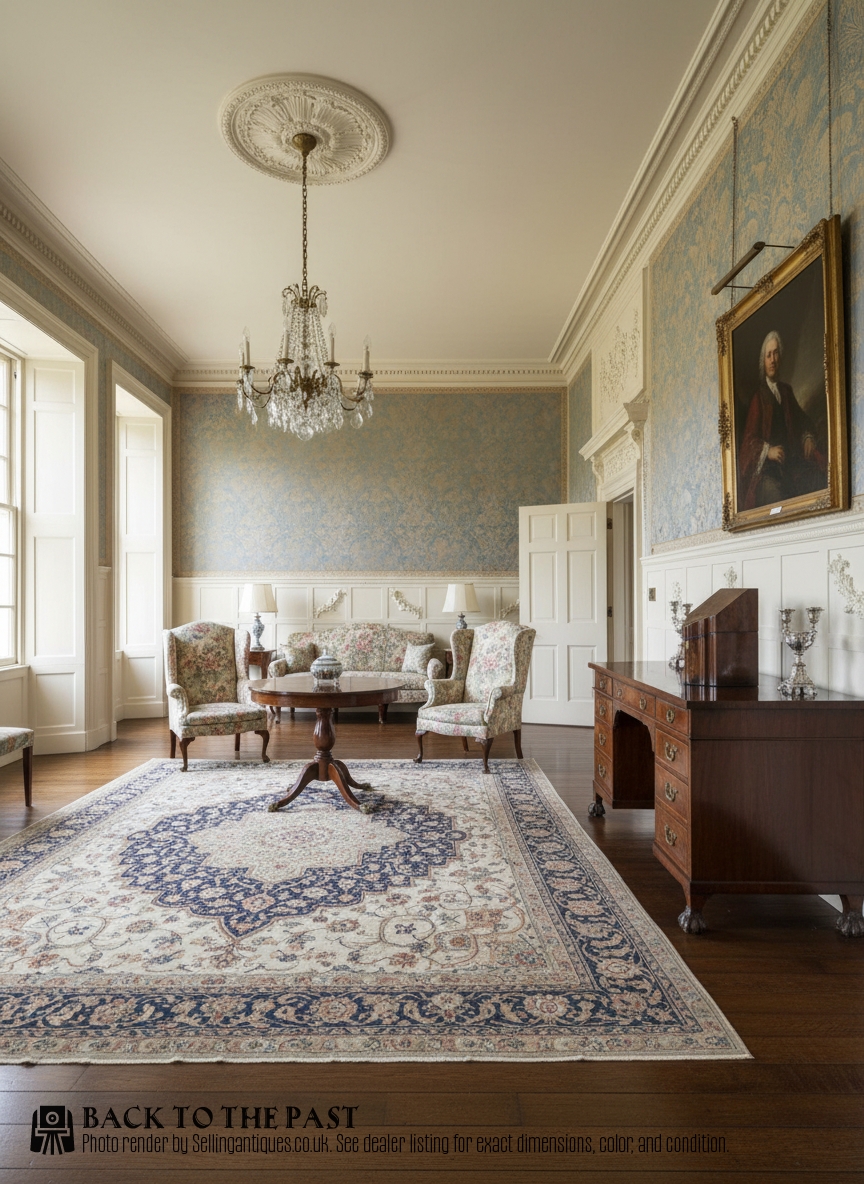
These pieces fit naturally onto sideboards, side tables, or bookshelves where their polished wood finishes and curved profiles complement traditional interiors. Keeping them away from direct heat sources protects the mahogany veneer and internal wood fittings.
Using them for modern letters, desk accessories, or simply displaying them closed allows collectors to integrate eighteenth-century craftsmanship into everyday spaces.