



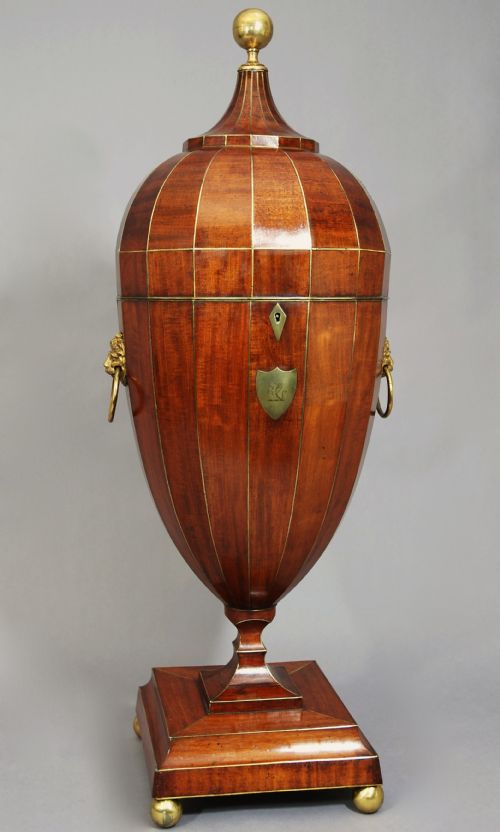


18th Century Cutlery Box
These 18th century cutlery box examples are practical dining room containers that collectors prize for their rich timber figures and polished brass furniture.
18th Century Cutlery Box
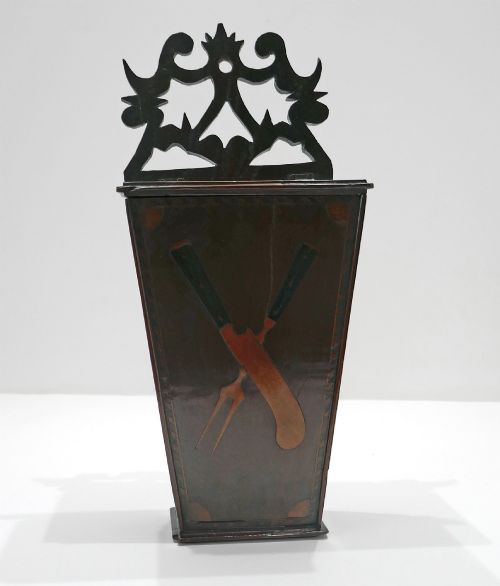
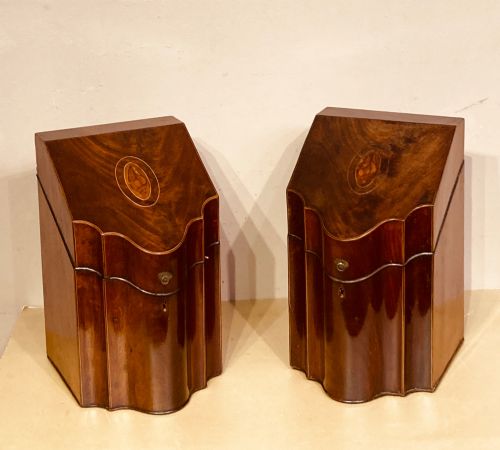
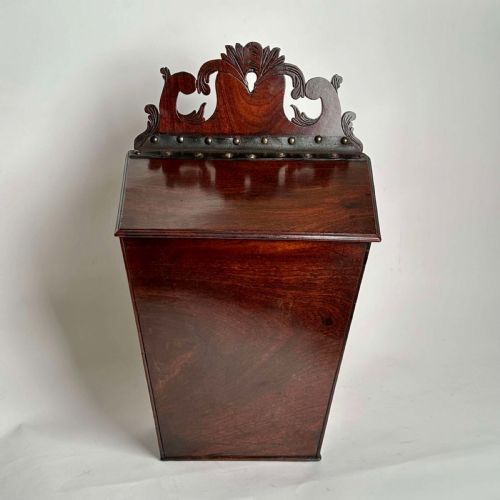
An 18th century cutlery box takes the form of sloping knife boxes, serpentine fronts, urns, and country trays designed to hold flatware on the sideboard. The most common format met here is the mahogany knife box dating from the Georgian period.
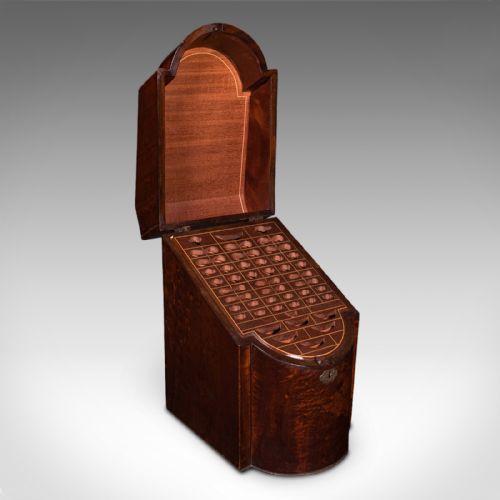
Makers shaped these timber containers with upright backs and slanted lids to present individual eating knives upright. Many examples span George III styles, while others double as stationary boxes or wine bottle carriers.
The selection ranges from matched pairs to large urns and country oak trays. Each piece reflects the formal dining requirements of elite households during the seventeen hundreds and early eighteen hundreds.
How they were made
Cabinetmakers constructed these boxes primarily from solid and veneered mahogany, frequently accented with satinwood, boxwood, and delicate wood inlay. Craftsmen selected figured timbers to display rich grain patterns across the sloping lids and curved fronts.
Makers fastened brass fittings, side handles, and escutcheons to secure the compartments and aid movement. Silver mounts also appear on select pieces, adding contrast to the dark polished wood.
Joinery techniques included dovetailing for the primary carcase and shaping serpentine or bow fronts from single blocks or bent laminates. Interior partitions were fitted to separate individual knives or create stationery slots.
18th Century Cutlery Box Retail Price Guide 2026
Typical asking prices for 18th century cutlery box among the pieces listed under this phrase on Sellingantiques today, from the lower quarter to the upper quarter. They describe what is for sale here now, not the wider market.
Several boxes found a second career holding letters instead of blades.
What varies in quality
The degree of timber figure and the crispness of the wood inlay determine visual distinction across the range. Finer boxes utilise highly figured mahogany and precise stringing lines rather than plain boards.
The proportion and silhouette dictate the architectural success of each box, particularly in serpentine or bow front formats. Heavy brasses and well-cast handles elevate the status of the piece compared to utilitarian replacements.
Condition of the interior divisions and the retention of original hardware influence the integrity of the object. Alterations such as conversions for stationery change the original function but remain part of the historical record.
The 18th Century Cutlery Box Glossary
- Serpentine front
- A furniture front curved with a convex centre flanked by concave wings. This graceful shape requires skilled woodworking to achieve.
- Bow front
- A convex, outwardly curving front profile popular on late period storage boxes. It softens the strict angles of traditional dining furniture.
- Escutcheon
- A flat plate surrounding a keyhole to protect the surrounding wood from wear. They are commonly cast from brass on these pieces.
- Stringing
- Thin lines of contrasting wood inlay used to edge panels and lids. Boxwood and satinwood provide the pale tones against dark mahogany.
- Cutlery urn
- A large, vase-shaped dining room vessel designed for storing flatware. These tall forms stand out for their monumental scale on sideboards.
18th Century Cutlery Box: Frequently Asked Questions
How were knife boxes used?
These boxes sat upon sideboards in dining rooms to hold handled knives, forks, and spoons ready for formal meals. Servants brought them out when setting the table for guests.
Over time, many of these containers lost their internal knife partitions and were adapted to hold stationery, letters, or wine bottles.
What woods were used?
Mahogany is the dominant timber seen across these pieces, favoured for its deep colour and durability. Cabinetmakers enhanced the surfaces using boxwood and satinwood inlay.
Local workshops also utilised native timbers such as oak for country pieces. Brass and occasional silver provided functional and decorative hardware.
How to date Georgian boxes?
Dating relies on stylistic shifts from straight-sided eighteenth century forms to the serpentine and bow front shapes of the Sheraton period. Mahogany veneers and stringing patterns also indicate the decades around seventeen ninety.
Hardware styles, including drop handles and shaped escutcheons, offer further clues to the manufacturing period.
Can I use them today?
These boxes function well for holding modern letters, documents, or small accessories on a desk. Unaltered interiors can still accommodate traditional items or collections.
Placing them away from direct heat sources protects the antique wood and prevents the historic veneer from lifting.