

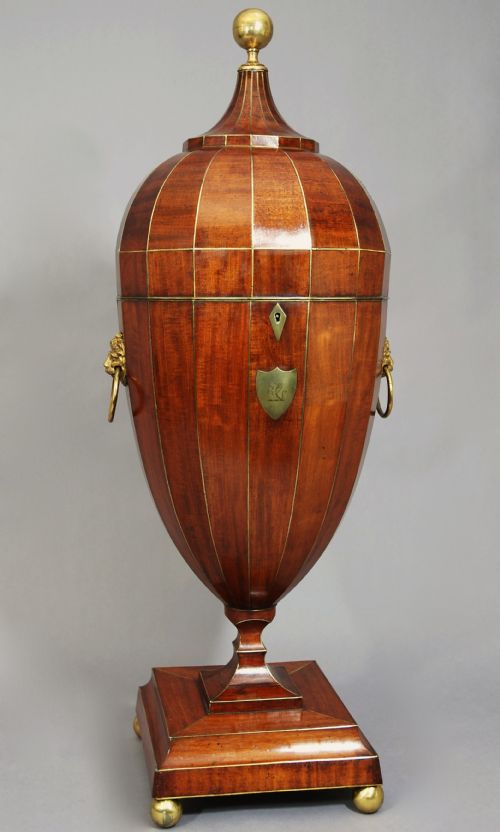
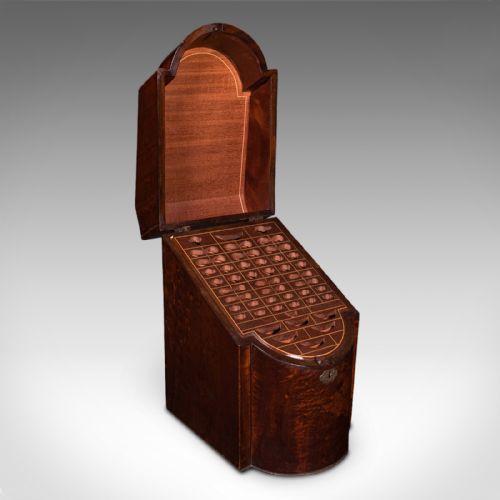
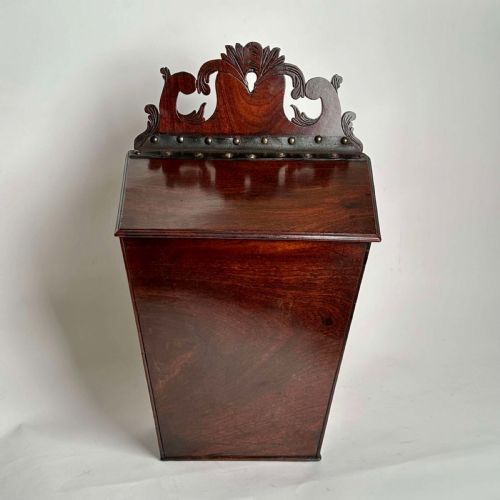


Mahogany Knife Box
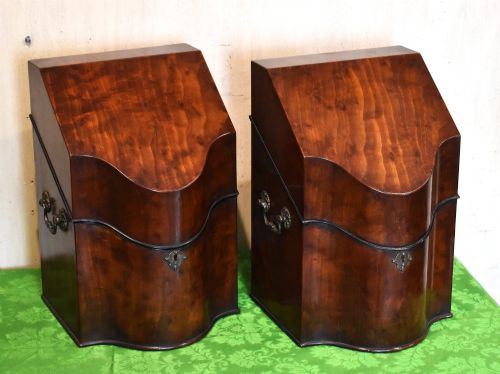
These mahogany knife boxes are classic Georgian dining room pieces, chosen for their polished dark wood and serpentine fronts.
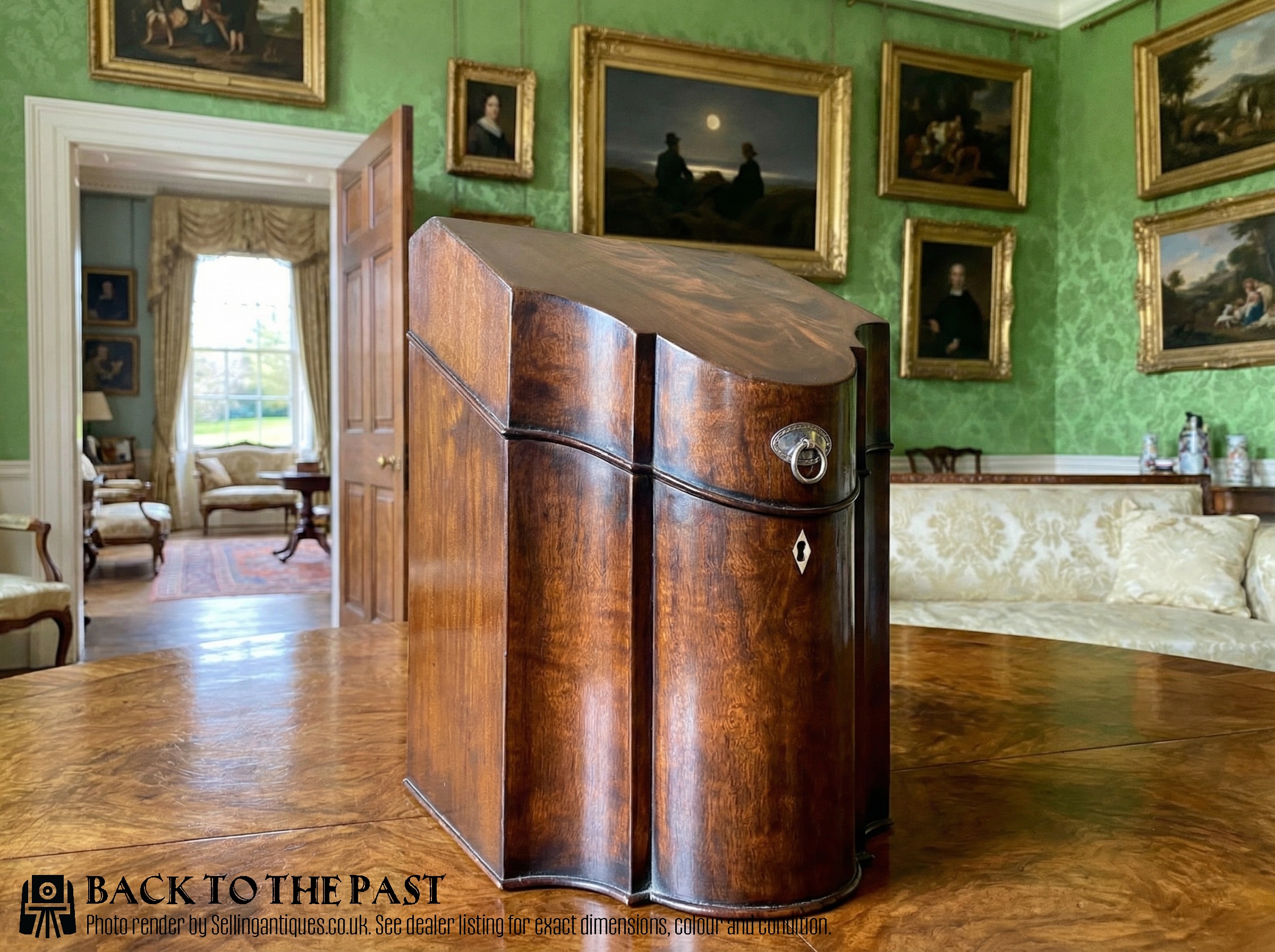
Mahogany Knife Box
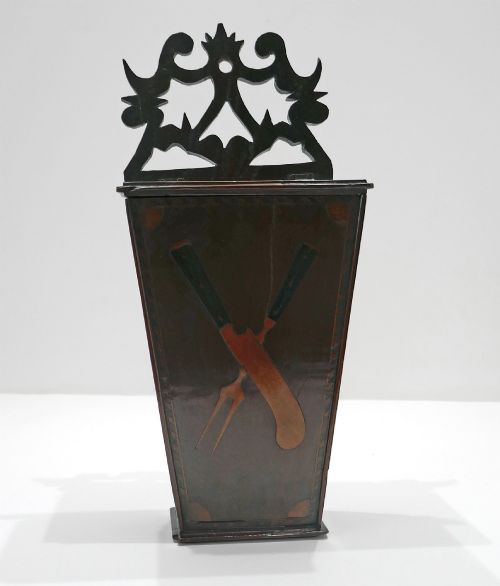
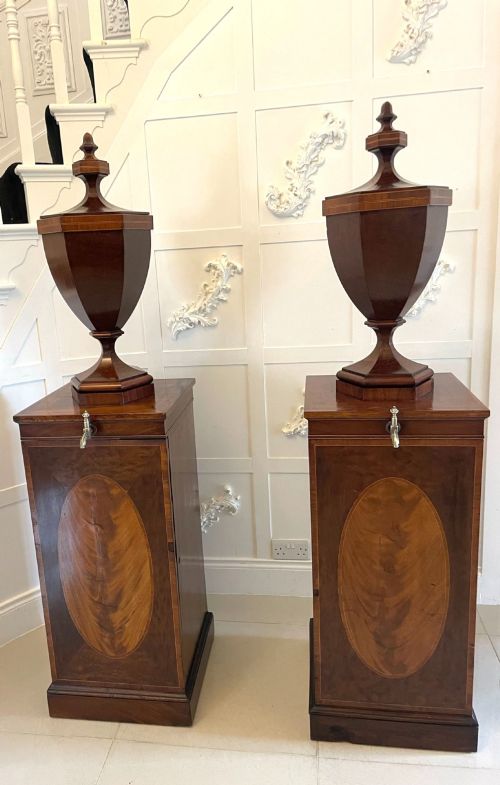
A mahogany knife box is a specialised storage piece designed to keep dining cutlery orderly and protected when not in use on the table. The forms seen here range from traditional sloping lidded boxes to dramatic classical urns and pedestals.
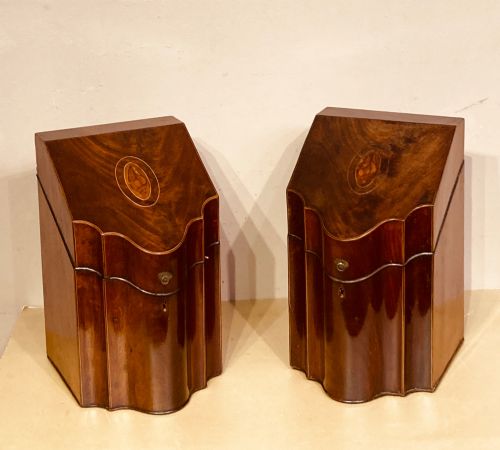
The most common version to meet is the George III period knife box, often shaped with a serpentine front or a sloping lid. Many examples from these periods function equally well today as stationery holders or decorative desktop cabinets.
Makers shaped these containers to sit on sideboards or serving tables in grand dining rooms. They appear individually or in matched pairs, sometimes accompanied by original fitted interiors.
Materials and construction
Craftsmen utilised solid and figured mahogany as the primary structural wood, frequently selecting flame veneers for visual depth. Satinwood, boxwood inlay, and contrasting stringing provide delicate decorative borders.
Metal components such as brass fittings, handles, and escutcheons secure the lids and add functional contrast to the dark timber. Some select examples incorporate solid silver mounts or internal fittings designed for specific cutlery sets.
Mahogany Knife Box Retail Price Guide 2026
Typical asking prices for mahogany knife box among the pieces listed under this phrase on Sellingantiques today, from the lower quarter to the upper quarter. They describe what is for sale here now, not the wider market.
Several knife boxes double happily as secret letter holders, proving eighteenth-century dining tables came with hidden desktop multitasking.
Assessing quality
Quality rests upon the choice of timber and the precision of the cabinetmaker's joinery, particularly around curved serpentine fronts. Figured mahogany grain patterns and crisp, intricate boxwood inlay distinguish superior items from plain utility versions.
The presence of original internal fittings, period brass hardware, and a deep aged patina elevate a piece. Proportion also matters, with narrow or unusually large dimensions altering the visual balance.
The Mahogany Knife Box Glossary
- Serpentine front
- A furniture front curving inward centrally and outward at the sides. This contour requires skilled woodworking to achieve graceful proportions.
- Inlay
- A technique where pieces of contrasting wood like boxwood or satinwood are inserted into recesses in the mahogany surface. It creates decorative geometric or floral motifs.
- Cutlery urn
- A tall, vase-shaped wooden vessel used for storing tableware during the eighteenth century. These matching pairs often stood on flanking pedestals in large dining rooms.
- Escutcheon
- A protective metal plate surrounding a keyhole on the lid or front of the box. Brass is the standard metal used for these fittings.
Mahogany Knife Box: Frequently Asked Questions
What were mahogany knife boxes used for?
These boxes stored steel dining knives and forks upright or flat within lined compartments on the sideboard. Wealthy households used them to keep cutlery clean and secure between meals.
Today, owners frequently repurpose them to hold letters, stationery, or small desk accessories while displaying the polished wood.
How can I tell a George III knife box from a later copy?
Examine the interior construction, secondary timbers used inside, and the hand-cut dovetails joining the sides. Eighteenth-century boxes display distinct tool marks and dry, aged wood surfaces.
Hardware such as brass hinges and lock plates should match the period of the construction rather than modern replacements.
Are these knife boxes usually found as pairs?
Many surviving examples were originally constructed as symmetrical pairs to flank a dining room sideboard. Collectors often seek matched pairs for formal display.
Single boxes also appear frequently, reflecting how many individual pieces survived centuries of use independently.
Do mahogany knife boxes still have their original interiors?
Some pieces retain their fitted wooden block interiors pierced with knife slots, though many have had these internal dividers removed over time. Removed inserts allowed the boxes to function more easily as general stationery storage.
An intact original interior adds considerable interest for collectors seeking untouched historical examples.