




Pair of Knife Boxes
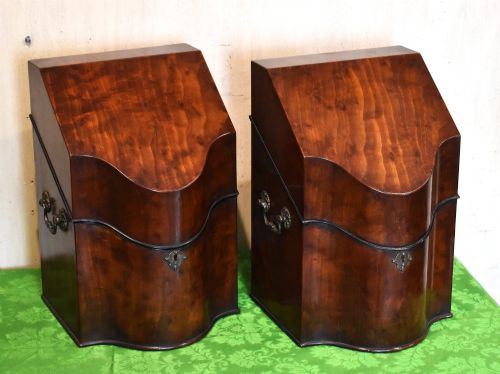
These pair of knife boxes are formal dining table containers made to hold silverware in style.
Pair of Knife Boxes
When you search for a pair of knife boxes, you encounter formal receptacles designed to sit upon the sideboard during grand meals. The pieces recorded here span the eighteenth century and the Victorian era, reflecting the changing tastes of dining rooms over generations.
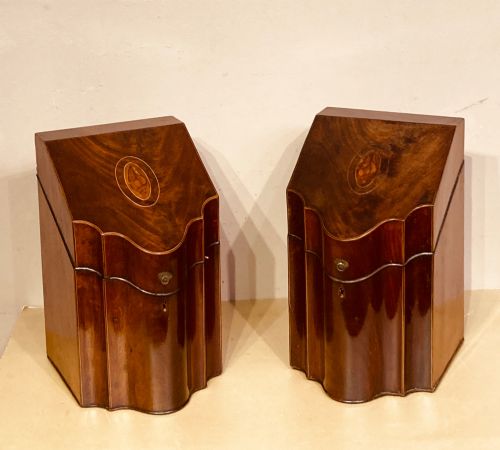
The version you are most likely to meet on this page is the classic George III mahogany slope-front box. These items frequently display inlaid stringing and detailed woodworking characteristic of the period.
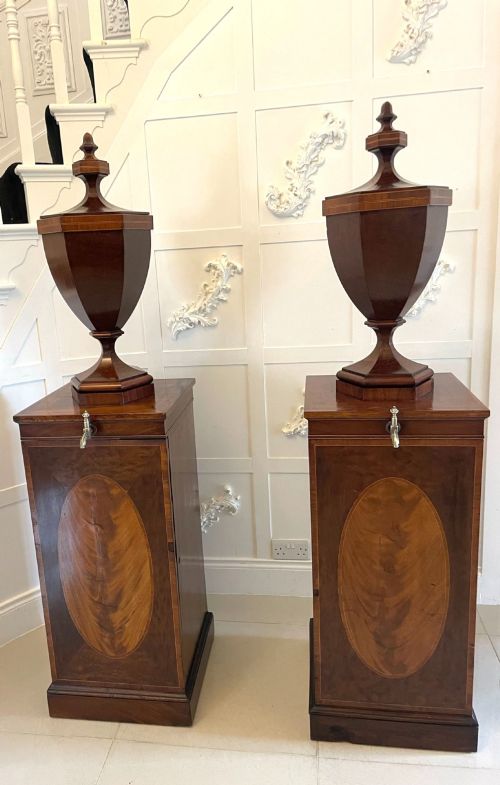
Alongside traditional slope-front containers, the selection includes related cutlery urns and pedestal forms. Each variation served the practical purpose of storing dining implements while adding architectural symmetry to the room.
Materials and construction
Carpenters built these containers primarily using mahogany, often selecting timber with rich grain patterns. Boxwood stringing and contrasting inlay work frequently accentuate the dark surfaces of the wood.
Metal mounts made from brass or sterling silver provide structural reinforcement and functional handles or locks. Inside, velvet or silk linings protected the steel and silver cutlery stored within.
Pair of Knife Boxes Retail Price Guide 2026
Typical asking prices for pair of knife boxes among the pieces listed under this phrase on Sellingantiques today, from the lower quarter to the upper quarter. They describe what is for sale here now, not the wider market.
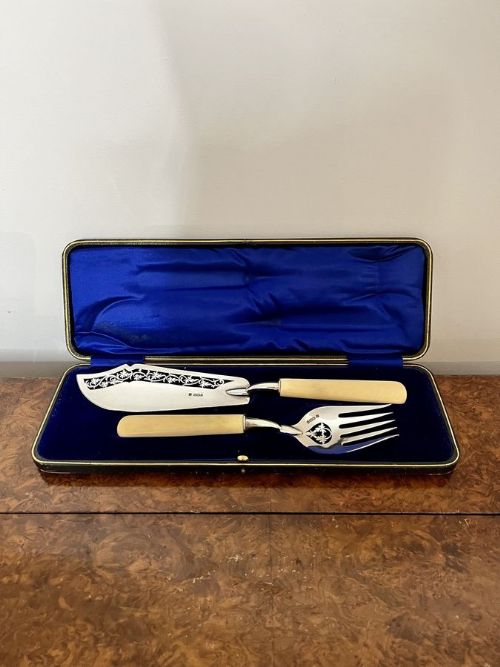
Silver fish servers and butter knives occasionally join the inventory, reminding us that past diners required dedicated tools for every single course.
Judging the pieces
The standard of a pair of knife boxes depends upon the crispness of the inlay and the selection of the mahogany veneer. Finer examples exhibit balanced proportions and well-figured wood grain that covers the entire exterior surface.
Preservation of original brass or silver mounts and internal fittings elevates a set above standard examples. Retaining the authentic patination acquired over centuries of polish and handling marks the superior specimens.
The Pair of Knife Boxes Glossary
- Mahogany
- A durable tropical hardwood imported for high-end cabinet making. Its deep reddish-brown tone became the foundation of Georgian dining room furniture.
- Inlay
- A decorative technique where contrasting materials like boxwood are set into the surface wood. This method creates geometric borders and delicate visual patterns.
- Cutlery urn
- A vase-shaped vessel used on sideboards for storing tableware during the eighteenth century. These tall containers match the function of standard knife boxes.
- Stringing
- Thin lines of light wood inlaid into darker cabinet surfaces to create borders. This linear detail defines the edges of panels on better boxes.
- Patina
- The soft sheen and mellow colour developed on antique wooden surfaces through age and polishing. It serves as an indicator of genuine historical age.
Pair of Knife Boxes: Frequently Asked Questions
What were knife boxes used for?
These containers held steel-bladed table knives and forks when dining rooms lacked built-in storage. Servants placed them on sideboards to keep cutlery close at hand during formal meals.
After the meal, the boxes protected delicate blades from rust and tarnishing. Their locking lids kept valuable silver secure between uses.
How do I date a pair of knife boxes?
Georgian examples often feature serpentine or slope fronts with extensive boxwood stringing and brass escutcheons. Eighteenth-century makers focused on clean architectural silhouettes.
Later Victorian pieces introduce different wood treatments and alternative hardware styles. Examining the internal fittings and construction joints helps confirm the period.
Are knife boxes always sold in pairs?
Dining room symmetry traditionally required matching containers placed at opposite ends of a sideboard. Surviving pairs maintained this balanced arrangement through generations of use.
Single boxes do exist, but matched pairs remain desirable for maintaining historical room layouts. The evidence here focuses specifically on paired examples.
How do I care for mahogany knife boxes?
Keep wooden surfaces away from direct sunlight and steady heat sources to prevent timber splitting. Gentle application of traditional wax preserves the finish.
Avoid abrasive cleaners on the brass or silver mounts. Regular dusting with a soft cloth maintains the natural surface sheen.