


Antique Knife Box Pair
These antique knife box pair pieces are sophisticated storage vessels crafted to hold dining cutlery.
Antique Knife Box Pair
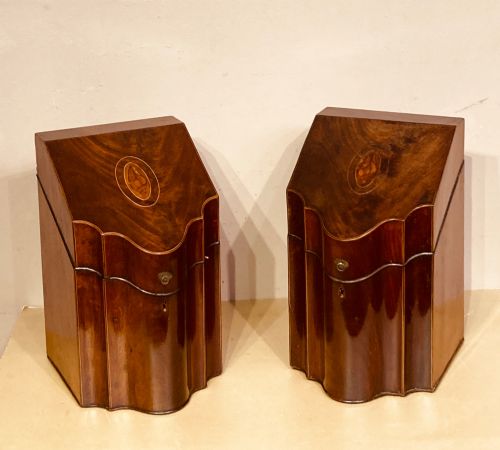
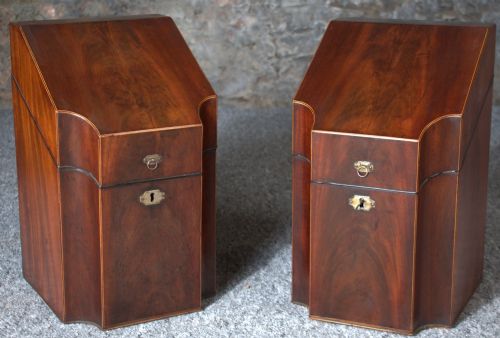
An antique knife box pair consists of matched dining containers designed for holding cutlery on the sideboard during elite meals. The pieces seen here span from the 18th Century through the Georgian and Victorian eras up to the 20th Century.
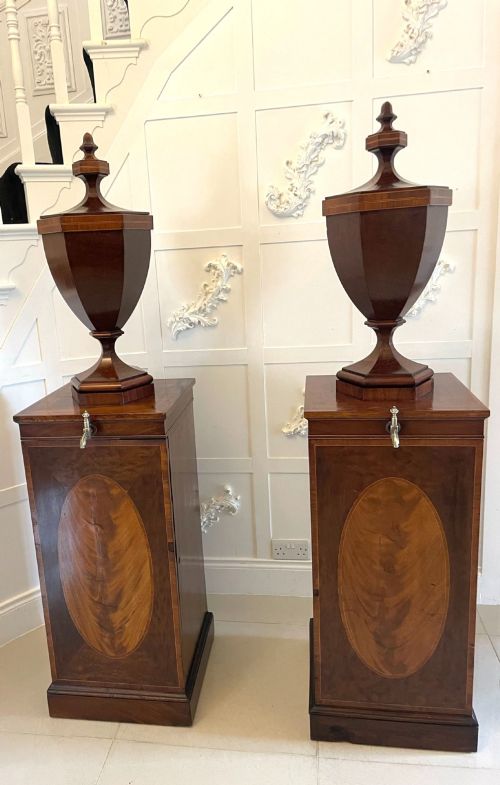
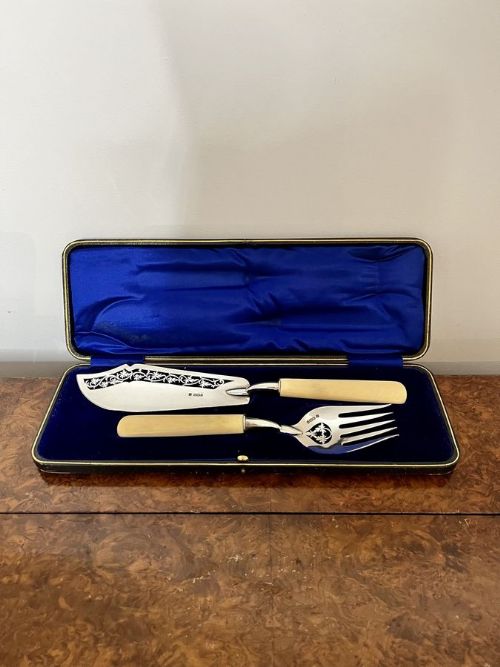
Buyers most frequently encounter traditional mahogany forms alongside occasional lidded cutlery urns and fitted silver service sets. The selection ranges from slope-front wooden receptacles to specialised servers housed in velvet-lined boxes.
Materials and construction methods
Makers utilised dense hardwoods such as mahogany and satinwood, often applying boxwood stringing and fine inlay to accentuate the geometric profiles. Solid brass mounts and handles provide functional structure while complementing the dark timber grains.
Internal compartments frequently feature velvet or silk linings designed to cushion individual utensils safely. Silver and sterling silver components appear across related cutlery servers, sometimes paired with mother of pearl handles.
Some wooden urns are tall enough to double as miniature classical monuments on your sideboard.
Distinctions in quality
The degree of refinement in the timber figure and the precision of the stringing inlay set superior examples apart from standard work. Patina depth and the crispness of surviving brass handles indicate how carefully a piece was preserved.
Originality of internal fittings and the integrity of structural joints dictate the desirability of wooden boxes. Complete original cases for smaller serving sets elevate the interest of matched pairs.
The Antique Knife Box Pair Glossary
- Mahogany
- A durable tropical hardwood prized for its rich reddish-brown colour and smooth grain pattern. It serves as the primary structural material for Georgian and Victorian boxes.
- Stringing
- Thin inlay lines of contrasting timber, such as boxwood, embedded into the surface to create decorative borders. This technique highlights the geometric edges of the lids and panels.
- Bow front
- A convex curved shape characteristic of certain late 18th century cutlery boxes. This styling softens the rigid corners of the wooden containers.
- Urn
- A classical vase-shaped vessel form utilised for grander dining room cutlery storage. These lidded pedestals often accompany matching architectural pedestals.
- Patina
- The surface sheen and softening of tone developed through decades of handling and polishing. It indicates age and proper maintenance of the timber.
Antique Knife Box Pair: Frequently Asked Questions
How were knife boxes used?
These boxes stood on sideboards or serving tables in the dining room to hold steel-bladed knives and forks when not in use at the table.
Servants retrieved the cutlery from the lidded containers during meal services as courses progressed.
What woods appear most often?
Mahogany forms the vast majority of the wooden boxes found in this category, selected for its strength and dark tone.
Satinwood and boxwood accents occasionally appear in decorative stringing and contrasting inlay work.
How do I date an antique box?
Stylistic indicators such as slope-front profiles, serpentine curves, and bow fronts point toward specific decades in the 18th and 19th centuries.
Construction joints and interior fittings provide further clues regarding the period of manufacture.
Are fitted interiors usually original?
Many boxes retain their original wooden partitions or velvet linings designed to separate individual cutlery handles.
Alterations to the interior compartments sometimes occurred later to accommodate different styles of flatware.