
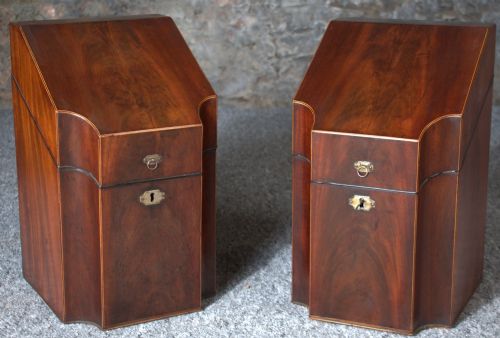


Serpentine Front Knife Box
A serpentine front knife box offers elegant storage in figured timber, shaped to add refined line to a dining room sideboard.
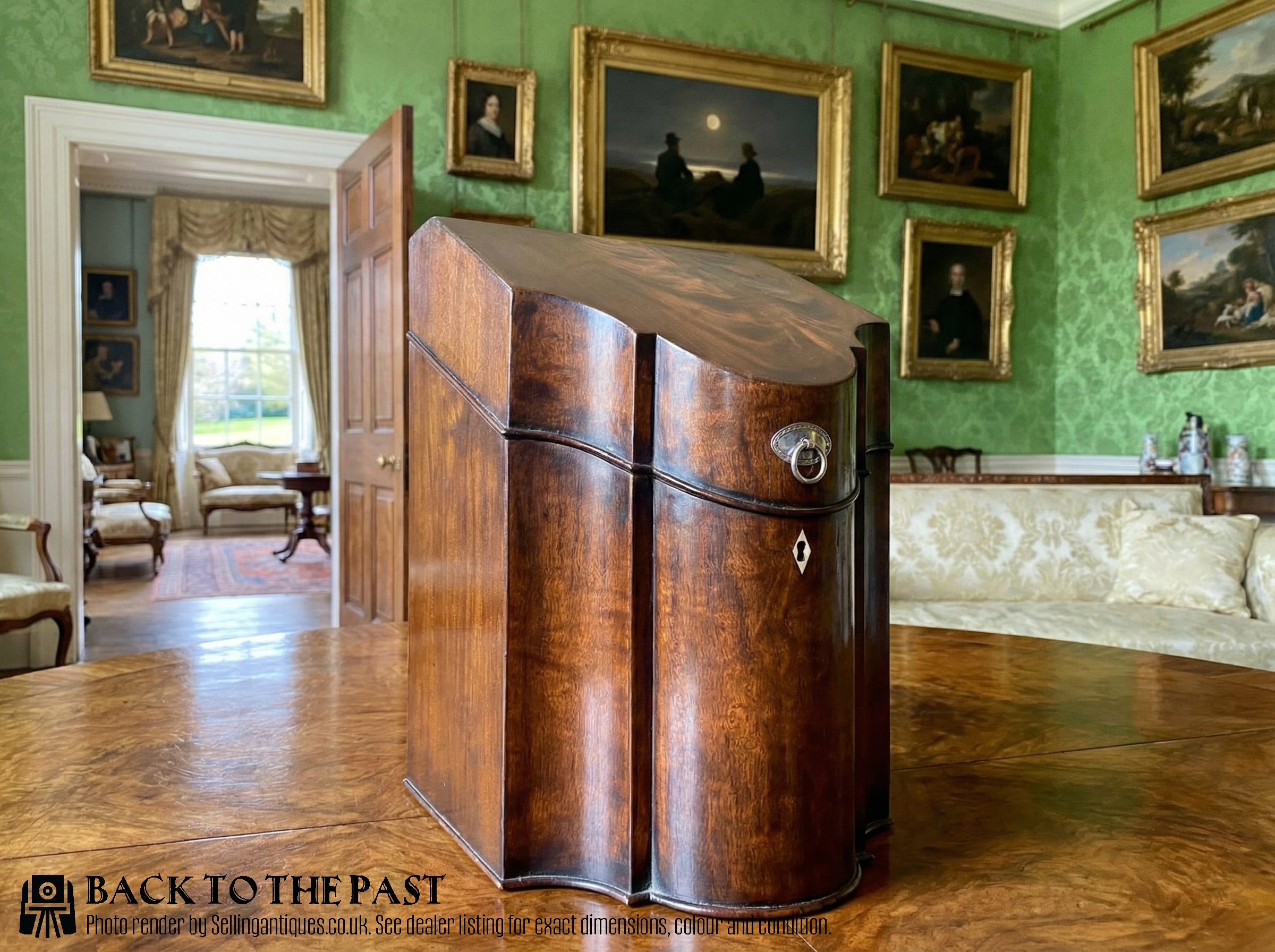
Serpentine Front Knife Box
When you search for a serpentine front knife box, you are looking at sophisticated dining accessories designed to hold cutlery during the Georgian era.
The version you are most likely to meet on this page is formed from mahogany with a serpentine shaped front, frequently dating from the eighteenth century or around eighteen hundred.
These items were kept on sideboards or side tables in grand dining rooms, ready to present knives and forks to guests before service.
How they were made
Cabinet makers utilised solid and figured mahogany planks, often enhanced with delicate boxwood and satinwood inlay to define the sloping lids and curved fronts.
Brass fittings such as escutcheons, handles and hinges provide functional hardware, while internal compartments were lined or fitted to secure individual knife blades.
Serpentine Front Knife Box Retail Price Guide 2026
Typical asking prices for serpentine front knife box among the pieces listed under this phrase on Sellingantiques today, from the lower quarter to the upper quarter. They describe what is for sale here now, not the wider market.
Listings feature eighteenth century and Georgian period pieces constructed primarily from mahogany with brass and wood inlay materials.
What varies in quality
The standard of timber selection sets individual examples apart, with highly figured mahogany and intricate wood inlay marking out the superior items.
The precision of the serpentine curve and the crispness of the joinery determine whether a piece achieves the refined proportions expected of the George III period.
The Serpentine Front Knife Box Glossary
- Serpentine front
- A curved shape featuring a convex centre flanked by concave wings. This undulating profile creates subtle movement across the front of the cabinet.
- Mahogany
- A durable tropical hardwood prized for its rich reddish-brown tone. Cabinet makers selected figured variations to catch the light on formal furniture.
- Inlay
- A decorative technique inserting contrasting woods such as boxwood and satinwood into recessed areas of the primary timber. This creates geometric or linear patterns.
- Escutcheon
- A protective brass plate surrounding a keyhole. It prevents the surrounding wood from wearing down through repeated use of the key.
Serpentine Front Knife Box: Frequently Asked Questions
What is a serpentine front knife box?
A serpentine front knife box is an eighteenth century tabletop container shaped with a distinctive undulating front curve, built to store dining cutlery.
Cabinet makers during the Georgian period produced these items in mahogany, often incorporating fine wood inlay and brass fittings to match formal dining room furniture.
How were these boxes used?
These boxes sat upon sideboards in wealthy households to hold steel cutlery upright within slotted interior compartments until required for the meal.
Servants retrieved the knives from inside the box when laying the table for dinner guests, keeping the dining surfaces orderly and organised.
How do I identify a Georgian box?
Georgian boxes typically display eighteenth century construction methods, utilising solid mahogany timbers, hand-cut dovetails, and traditional brass hardware.
Stylistic cues include sloping hinged lids, serpentine shapes, and decorative stringing or inlay work characteristic of the George III era.
Can I use them for stationery?
Many surviving examples adapt well to modern domestic settings as stationery cabinets or decorative storage boxes on desks and side tables.
The sloping interior lids and divided compartments that once held cutlery accommodate letters, pens, and paper rather effectively.