

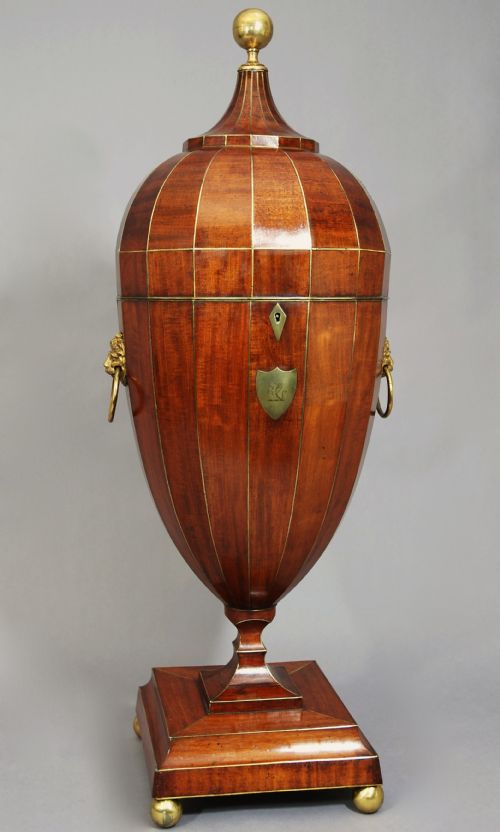


Inlaid Mahogany Knife Box
These inlaid mahogany knife box pieces are handsome dining room storage vessels designed to keep cutlery orderly, offering classic Georgian style for the modern interior.
Inlaid Mahogany Knife Box
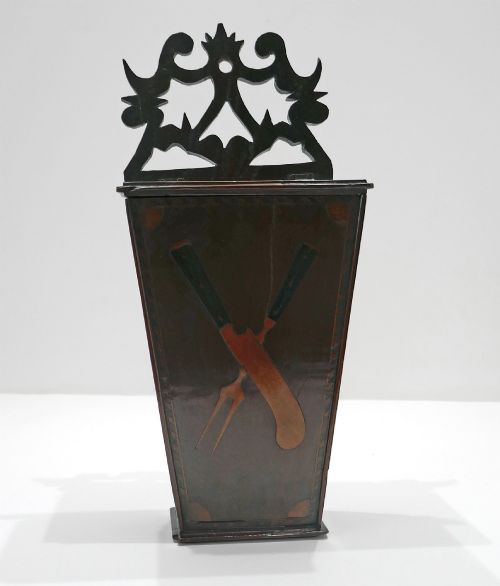
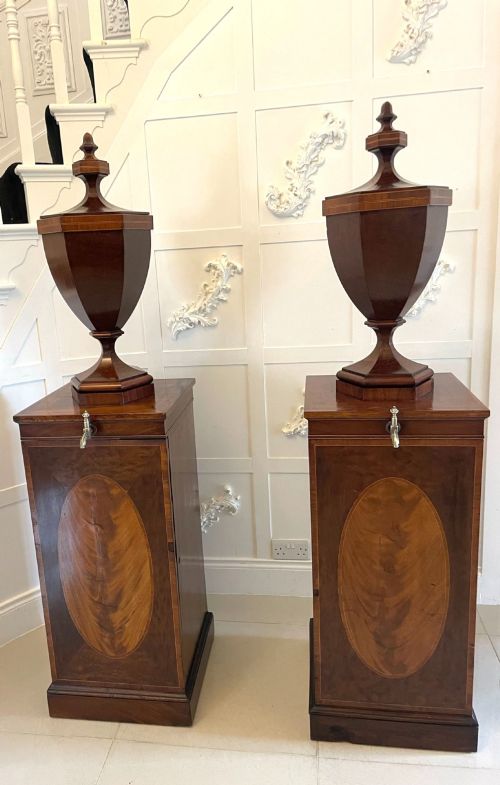
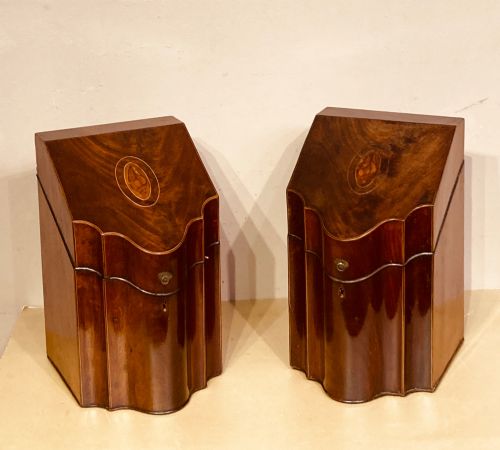
An inlaid mahogany knife box serves as a functional and decorative table accessory originating primarily in the Georgian and 18th century periods. Buyers searching this phrase will find traditional sloping lidded boxes alongside elegant cutlery urns and occasional stationery cabinets.
Materials and Construction
Makers utilised rich mahogany as the primary structural timber, selected for its deep grain and warm tone. Surfaces are frequently enhanced with contrasting boxwood and satinwood inlay to create delicate stringing and decorative motifs.
Brass hardware such as hinges, handles, and escutcheons complete the construction, providing both structural support and visual contrast against the dark timber.
Inlaid Mahogany Knife Box Retail Price Guide 2026
Typical asking prices for inlaid mahogany knife box among the pieces listed under this phrase on Sellingantiques today, from the lower quarter to the upper quarter. They describe what is for sale here now, not the wider market.
Some boxes double as stationery cabinets, proving that even eighteenth-century cutlery storage could transition to paperwork.
Assessing Quality and Distinction
Superior examples distinguish themselves through the precision and complexity of the wood inlay work, particularly where satinwood and boxwood create sharp, clean geometric or floral patterns. The choice of mahogany grain also dictates the visual depth of the piece.
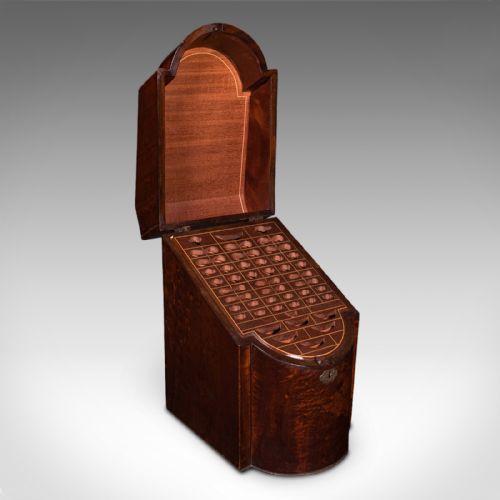
Proportion and form separate standard items from exceptional ones, with serpentine fronts, graceful curves, and original brass fittings commanding greater aesthetic appreciation. Complete interior fittings and matching pairs further elevate the standing of these objects.
The Inlaid Mahogany Knife Box Glossary
- Serpentine front
- A curved furniture front featuring a convex centre flanked by concave sides. This shape demands high skill from the cabinetmaker.
- Stringing
- Thin lines of contrasting wood inlaid into channels in the primary surface. It provides delicate framing for panels and edges.
- Cutlery urn
- A tall, vase-shaped wooden vessel used during formal dining to store knives and forks. They often stand upon matched pedestals.
- Escutcheon
- A protective brass plate surrounding a keyhole. It prevents the wood from wearing down around the lock.
Inlaid Mahogany Knife Box: Frequently Asked Questions
What were knife boxes originally used for?
These boxes sat on sideboards in grand dining rooms to hold silver cutlery securely when not in use.
Servants would retrieve the knives and forks from inside the sloping lidded compartments just before a meal was served.
How do I style a knife box today?
Place a single box on a console table or desk to bring historic character and hidden storage to a room.
They also function well as letter holders or luxury organisers for modern stationery.
Are these boxes usually found in pairs?
Makers frequently produced these items as symmetrical pairs to flank dining room sideboards during the eighteenth century.
Single boxes and matched pairs both appear regularly in historic collections.
How can I tell a Georgian box from later copies?
Examine the interior construction, secondary timbers, and hand-cut dovetails for signs of eighteenth-century joinery methods.
Original brass hardware and authentic patination on the mahogany also help confirm the period.