




Gothic Brass Mounts Box
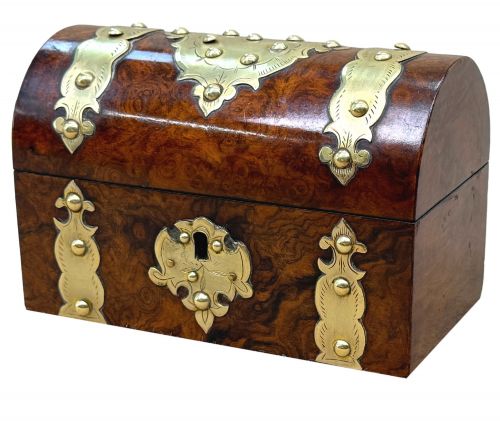
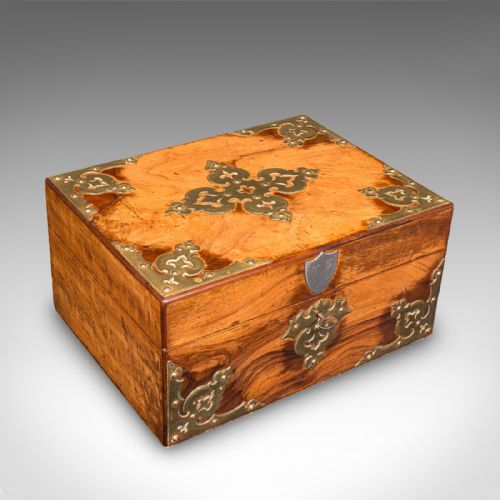
These gothic brass mounts box pieces are Victorian desk accessories and caskets built for correspondence and storage, offering robust timber construction paired with decorative metalwork.
Gothic Brass Mounts Box
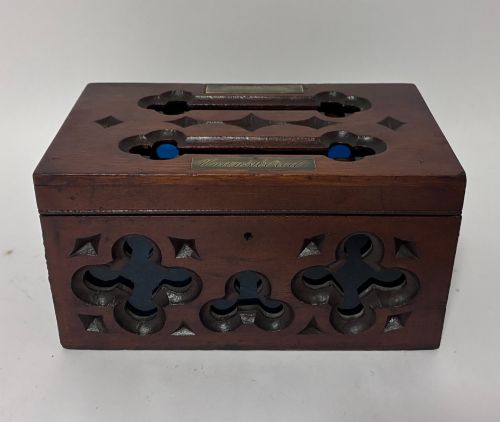
When you search for a gothic brass mounts box, you encounter nineteenth-century desk accessories, stationery cabinets, and correspondence boxes dating primarily from the Victorian era. These items span various functional forms, including tea caddies, writing slopes, glove boxes, and games containers designed for domestic or professional use.
The objects frequently display Gothic Revival styling, characterised by architectural motifs and heavy metal mounts applied to rich hardwoods. You will notice that many examples originate from the middle and latter decades of the nineteenth century, reflecting the prevailing taste for ornamental desk furniture.
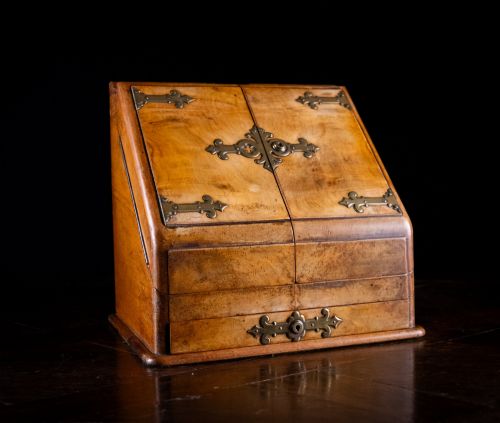
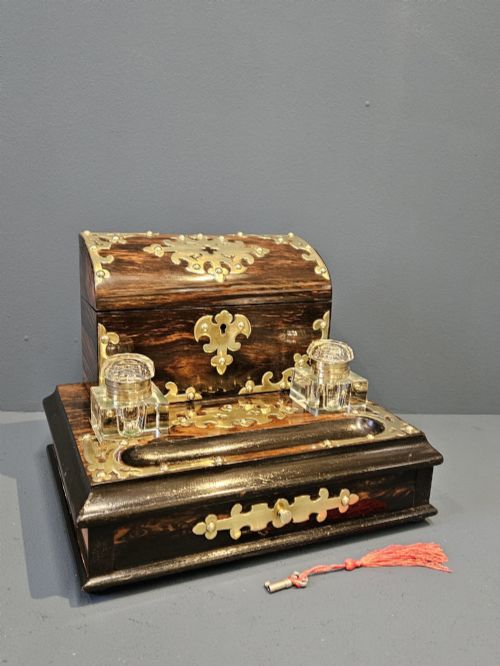
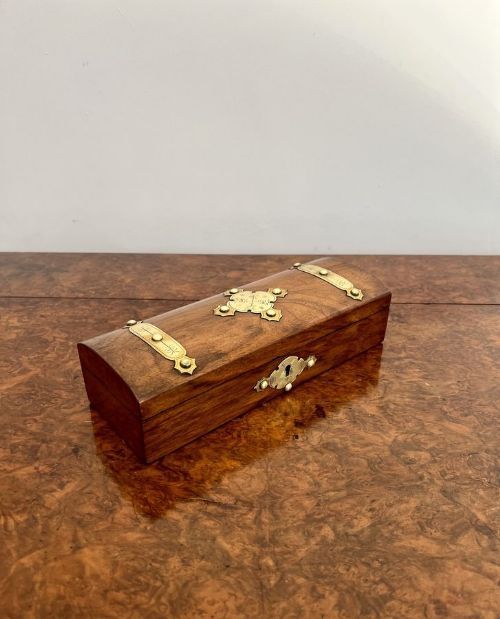
Stationery boxes and letter caskets dominate the forms available, often featuring dome tops or sloping lids. These pieces serve as practical containers while exhibiting the characteristic brass strapwork and mounts associated with the Gothic taste.
Materials and construction methods
Cabinet makers utilised dense, highly figured hardwoods such as walnut, burr walnut, coromandel, oak, and pollard oak as the primary body materials. These timbers were selected for their grain patterns and stability, providing a rich background for applied metalwork.
Brass mountings, hinges, and strapwork were secured to the wooden carcasses, sometimes incorporating media such as glass, malachite, agate cabochons, or ormolu for added ornamentation. Joinery techniques from the period ensured sturdy housing for stationery, writing equipment, and personal valuables.
Listings demonstrate that Victorian stationery boxes frequently utilise burr walnut and coromandel timbers paired with heavy brass strapwork.
Judging the standard of execution
The distinction between tiers of production lies in the selection of timber veneers and the intricacy of the brass mounts. Finer examples display carefully matched burr walnut or figured coromandel alongside substantial, well-cast brass hardware rather than simple stamped sheet metal.
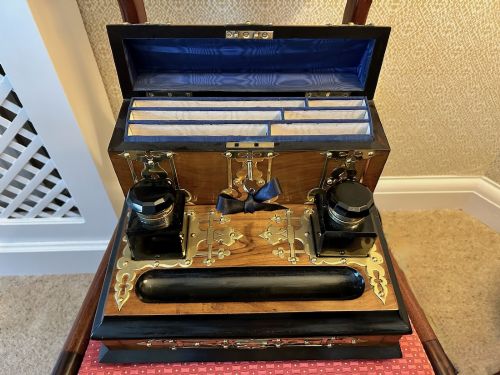
Interior fittings and secondary woods also separate standard items from superior pieces. Well-executed boxes incorporate fitted stationery dividers, lined compartments, and robust locking mechanisms that demonstrate meticulous attention to internal detail.
Briggs 27 Piccadilly London·Rodman and Co of Belfast
The Gothic Brass Mounts Box Glossary
- Gothic Revival
- An architectural and decorative style popular during the Victorian period that draws inspiration from medieval design. It influences the pointed arches, heavy hardware, and structural forms seen on nineteenth-century boxes.
- Coromandel
- A dense, heavily figured timber imported from Asia, prized for its dark brown colour and contrasting striations. Makers utilised this material for high-end stationery boxes and writing slopes.
- Burr Walnut
- Wood taken from a growth on a walnut tree, yielding swirling, organic patterns. Cabinet makers valued this veneer for decorative exterior panels on Victorian desks and caskets.
- Stationery Box
- A desk accessory engineered to hold writing paper, envelopes, and correspondence. These containers often feature tiered interiors and sloping or dome-shaped lids.
Gothic Brass Mounts Box: Frequently Asked Questions
What is a gothic brass mounts box used for?
These boxes function primarily as desk accessories for organising correspondence, writing paper, and envelopes. Victorian households relied on them to keep stationery tidy and secure in studies or living rooms.
Beyond paper storage, variations serve as tea caddies, glove boxes, games containers, and sewing cases. Their robust construction made them suitable for everyday domestic use on top of desks and tables.
How do I date a Victorian box?
Dating relies on observing the timber species, construction methods, and stylistic indicators such as Gothic Revival motifs. Pieces marked with specific decades or attributed to the mid-to-late nineteenth century typically show characteristic Victorian hardware and joinery.
Makers' marks, paper labels inside the lid, or engraved brass plaques also help establish a more precise timeframe. Comparing the complexity of the brass mounts and the choice of veneers provides further chronological context.
What woods are typical for these boxes?
Figured hardwoods form the basis of most nineteenth-century examples, with walnut and burr walnut appearing frequently. Coromandel is another premium timber commonly selected for its striking dark grain and durability.
Oak appears in various forms, from domestic country house pieces to substantial decorative cabinets. Secondary timbers line the interiors, while exotic veneers cover the exterior surfaces for decorative impact.
How do I care for a wood and brass box?
Maintenance involves keeping the wooden surfaces away from direct heat sources and drastic humidity changes to prevent the veneer from lifting. Gentle dusting with a dry cloth preserves the finish of both the timber and the brass mounts.
Brass elements can be left with their natural age or cleaned lightly if tarnish obscures the detail. Avoid harsh chemical polishes that might damage the surrounding wood or inlay.