



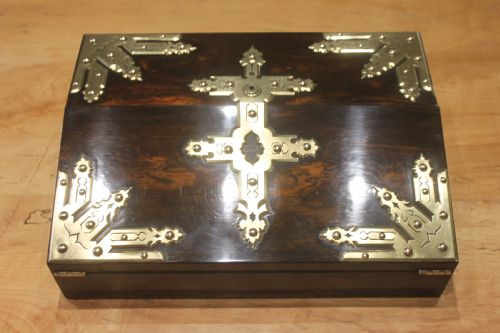

Coromandel Writing Box
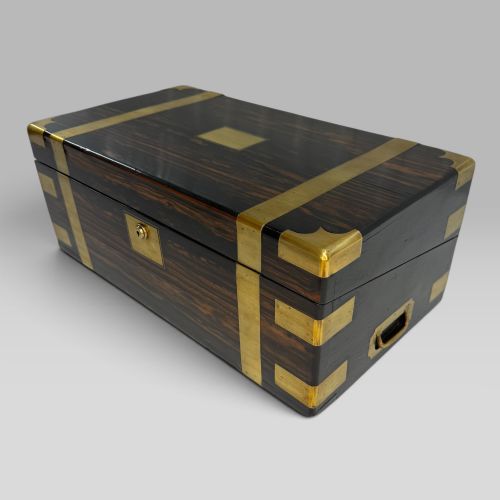
A coromandel writing box brings dense grain and brass binding to the desk, offering a durable repository for correspondence.
Coromandel Writing Box
A coromandel writing box is a portable desk or storage receptacle constructed primarily during the nineteenth century, encompassing forms such as writing slopes, stationery cabinets, and inkstands. These pieces reflect the high demand for luxurious desk accessories during the Victorian period and earlier decades.
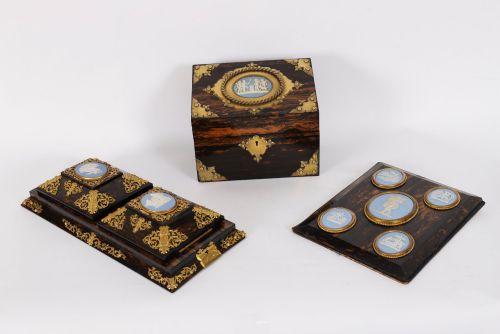
Buyers encounter distinct styles including standard Victorian brass-bound models, Gothic Revival designs, and Anglo-Indian variants. The selection spans utilitarian campaign boxes to elaborate drop-front stationery caskets equipped with secret drawers.
Materials and construction
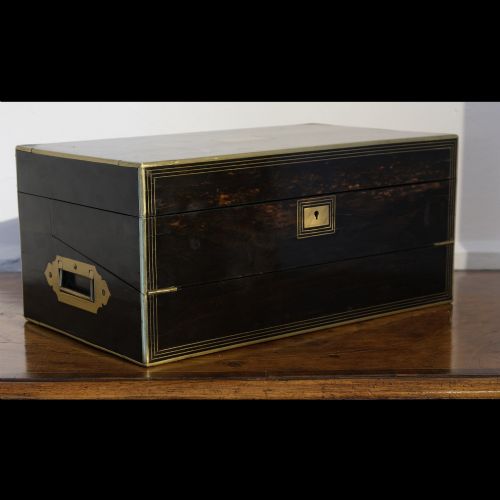
Makers utilised coromandel wood for its dark, richly figured grain, frequently mounting the primary carcase in solid brass corners, straps, and escutcheons. Internal fittings often incorporate secondary timbers alongside velvet or leather writing surfaces.
Decorative embellishment relied on precision inlay, utilising mother-of-pearl, abalone, or pietra dura panels set flush into the timber surface. Metalwork mounts in ormolu or cast brass secure the structural edges.
Coromandel Writing Box Retail Price Guide 2026
Typical asking prices for coromandel writing box among the pieces listed under this phrase on Sellingantiques today, from the lower quarter to the upper quarter. They describe what is for sale here now, not the wider market.
Listings feature nineteenth-century coromandel boxes incorporating brass, glass, ceramic, mother-of-pearl, and abalone materials.
Assessing the execution
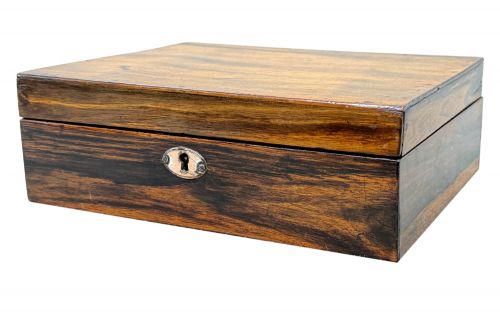
Quality rests upon the depth and figure of the coromandel timber and the precision of the brass binding and inlay work. Superior examples display seamless joins, tightly fitted secret compartments, and undamaged flush ornament.
Makers' signatures and retail stamps elevate a piece, alongside complete internal fittings such as original glass inkwells and matching ceramic components. The integrity of the original locking mechanisms and hinges separates standard items from finer productions.
Briggs 27 Piccadilly London·Houghton and Gunn·Mechi and Bazin·Lund of London·C.G. Hope Hastings·Parkings and Gotto·Howell James and Co
The Coromandel Writing Box Glossary
- Coromandel
- A dense, heavily figured tropical hardwood imported from Asia, prized for its dark brown colour and contrasting black streaks. It forms the primary exterior veneer on luxury nineteenth-century boxes.
- Writing Slope
- A box with a hinged, slanted lid that folds down to reveal a sloping writing surface and internal compartments for pens and paper. Many incorporate hidden secondary drawers accessible by removing specific partitions.
- Pietra Dura
- An artistic technique involving the inlay of cut and fitted polished coloured stones to create pictorial designs. On these boxes, small stone plaques appear inset into the wooden lid.
- Ormolu
- Gilded bronze used for decorative mounts, feet, and handles on nineteenth-century boxes. The application provides a bright metallic contrast against the dark timber.
Coromandel Writing Box: Frequently Asked Questions
What is inside a coromandel writing box?
These boxes typically contain sloping writing surfaces lined with leather or velvet, inkwells, pen trays, and various compartments for stationery. Some incorporate secret drawers concealed behind removable panels.
More elaborate stationery cabinets feature drop fronts, letter slots, and vertical partitions designed to organise correspondence and desk accessories.
How do I care for coromandel wood?
Coromandel requires stable indoor humidity away from direct sunlight to prevent the timber from drying and the veneer from lifting. Occasional application of suitable wax polish maintains the lustre of the grain.
Avoid excessive moisture on both the wood and any brass or mother-of-pearl inlay to preserve the original finish.
How are Victorian boxes dated?
Dating relies on construction methods, brass mount styles, registration marks, and maker signatures recorded on locks or paper labels inside the box. Nineteenth-century pieces often reflect stylistic shifts from Regency restraint to ornate Victorian Gothic Revival.
Specific retailer stamps help narrow the production window to active trading years of the firm.
Were these boxes used for travel?
Many examples function as campaign or travelling writing boxes, built with robust brass banding and secure locks to withstand movement. Their compact forms allowed owners to transport personal correspondence safely.
Stationery cabinets and larger desk stands were designed primarily for stationary use on library tables rather than transit.