

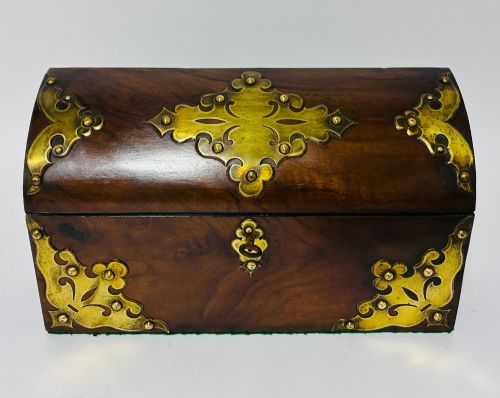
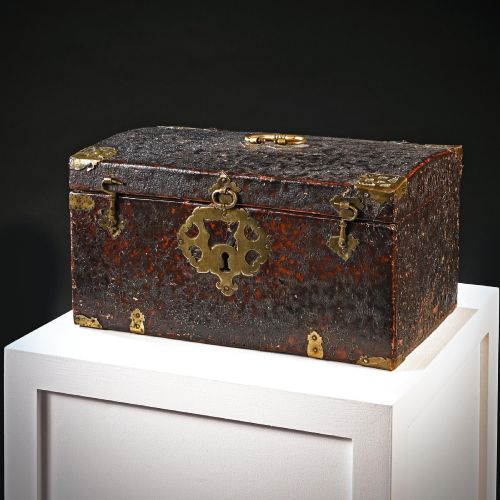
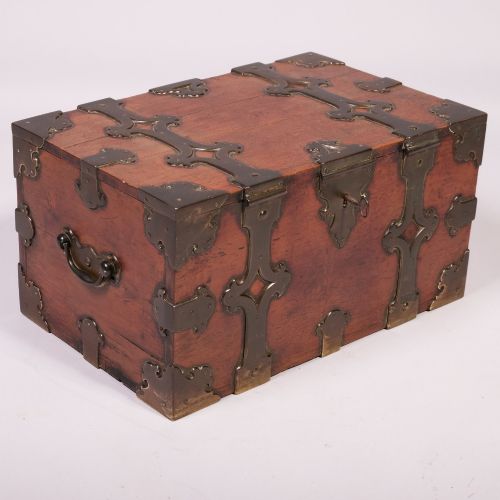
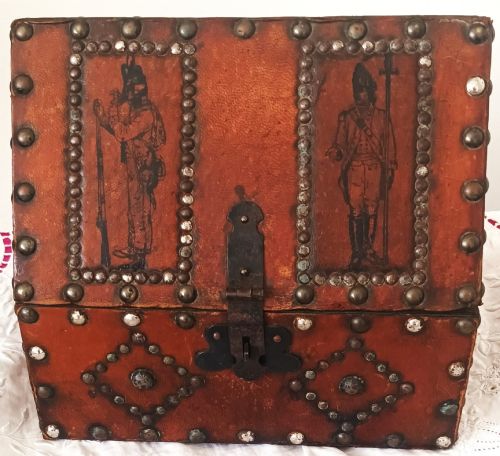



Brass Bound Casket
A brass bound casket is a sturdy timber container secured with metal straps, built to protect valuables during travel or heavy domestic use.
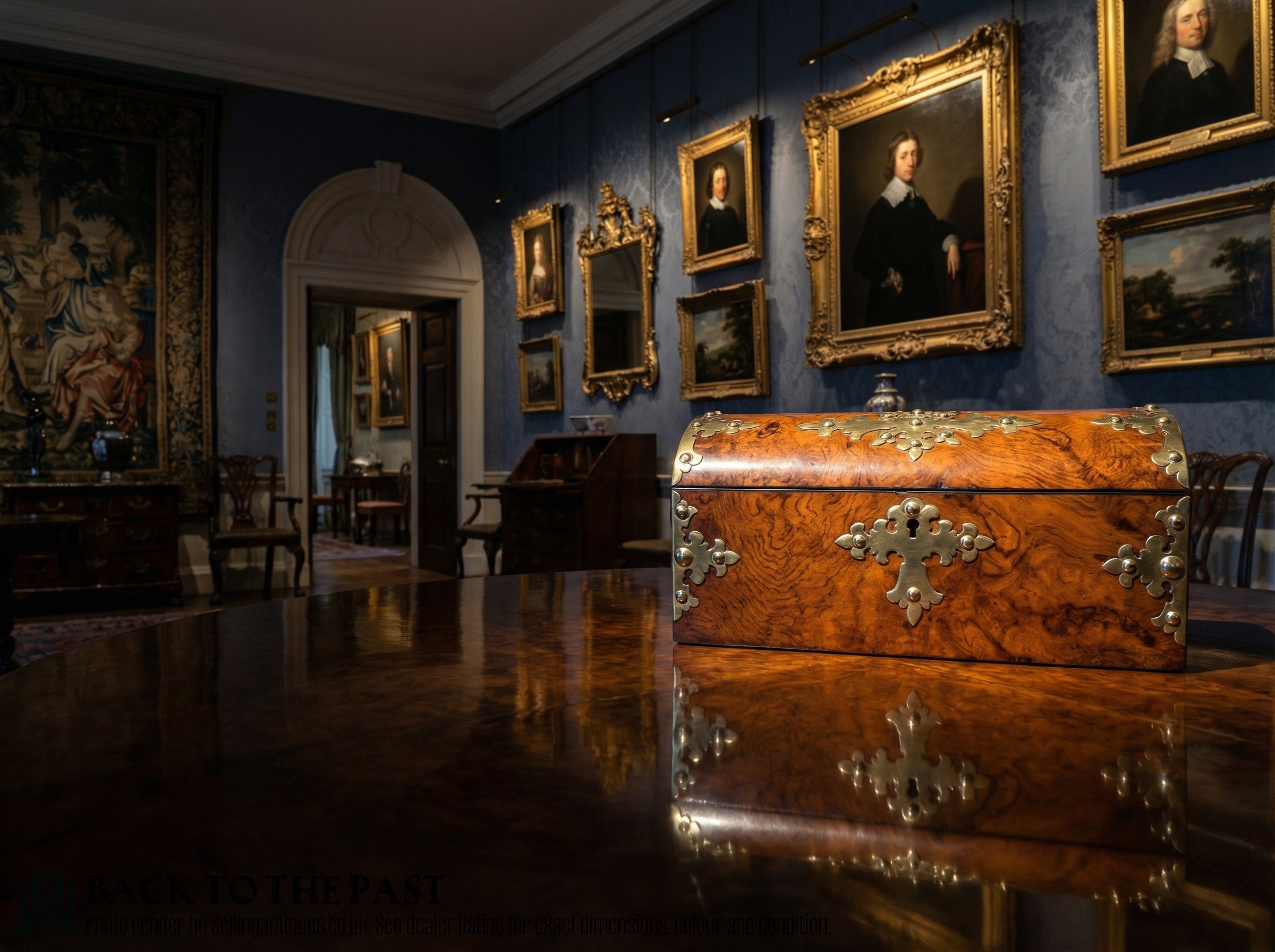
Brass Bound Casket
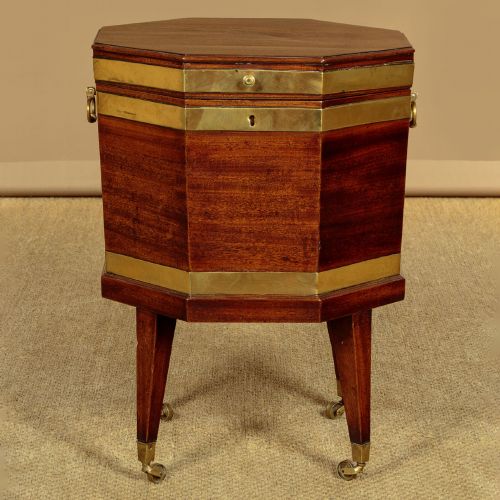
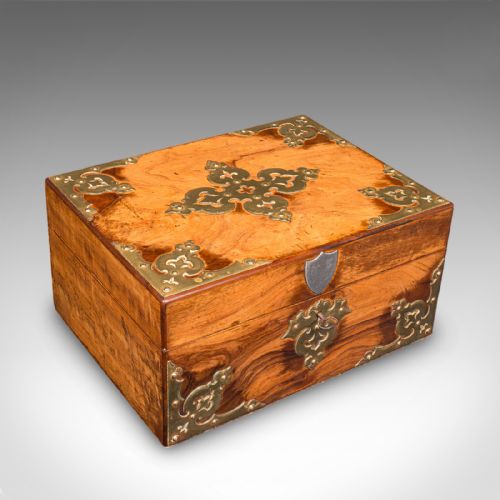
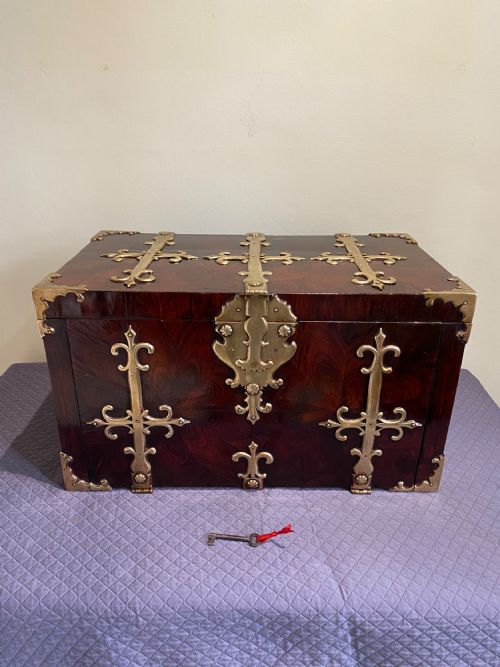
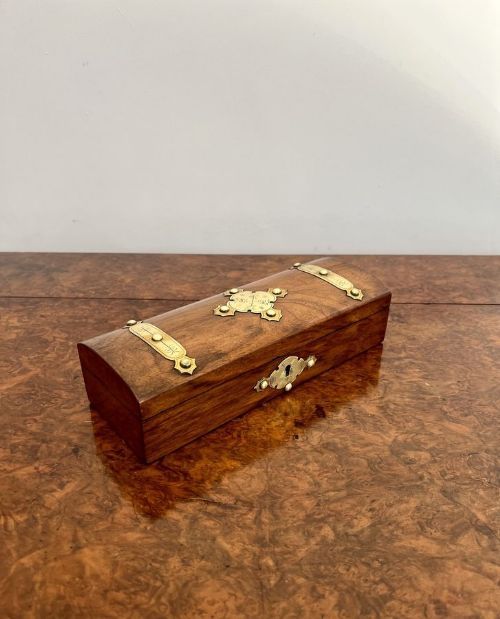
When you search for a brass bound casket, you encounter robust timber containers framed in metal straps and corner pieces for structural strength and security. These items span domestic storage and travel equipment, including document boxes, writing slopes, jewellery cases and larger cellarettes.
The versions most common on this page date from the nineteenth century, particularly the Victorian period, though earlier Georgian and seventeenth-century examples appear alongside them. Timbers like mahogany, rosewood, coromandel and walnut predominate, often selected for rich grain and finished with flush brass handles and escutcheons.
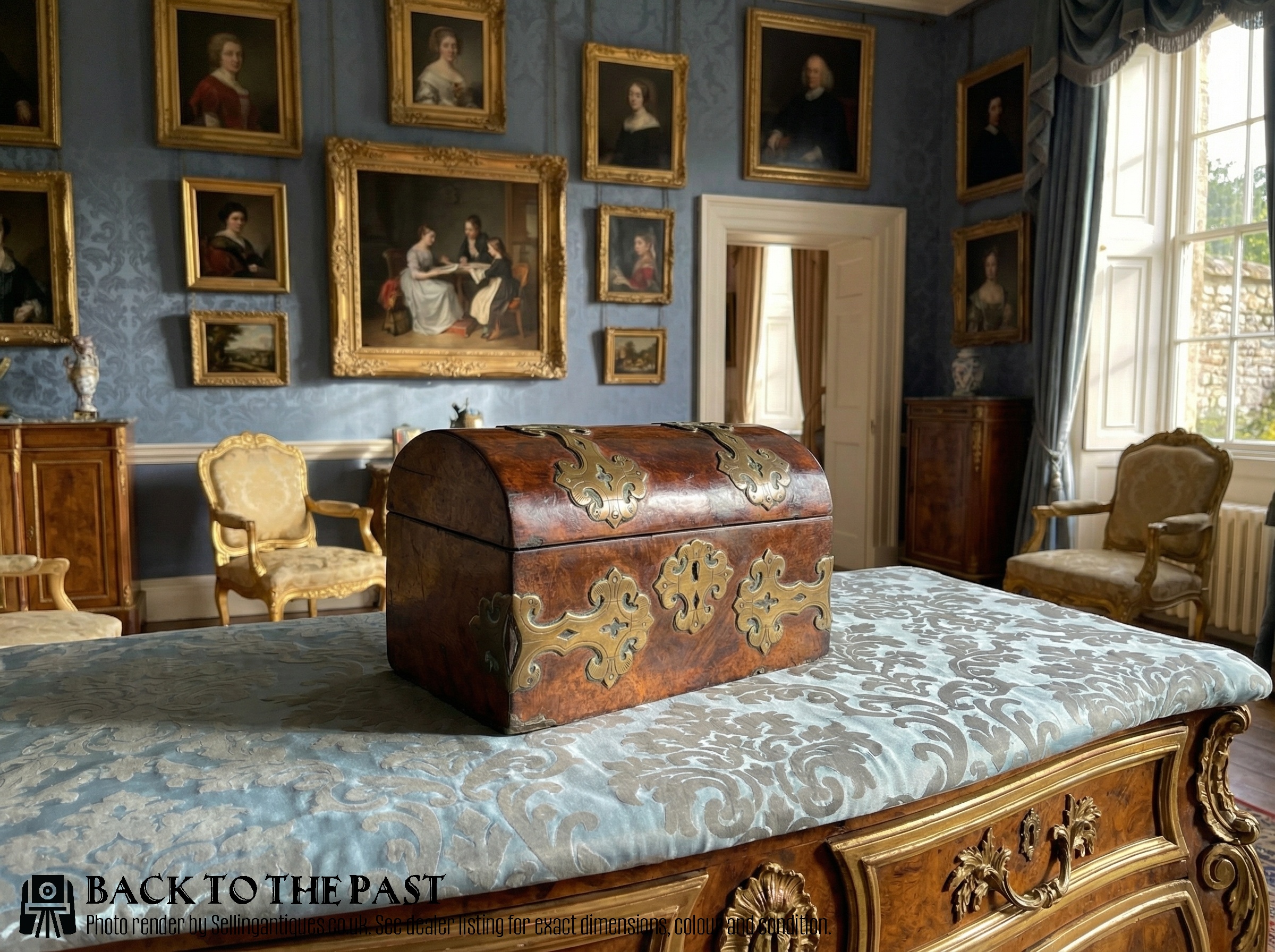
How they were made
Maker's workshops built these pieces using dense hardwoods like mahogany, teak, camphoer and exotic veneers such as coromandel and burr walnut over solid framing. Carpenters joined the carcases with dovetails for strength, ensuring the wood could withstand the stresses of travel and changing climates.
Brass straps, brackets and corner angles were hand-fitted into rebated channels flush with the timber surface, then secured with small brass pins or screws. This metal reinforcement protected vulnerable corners from impact and kept locking mechanisms firmly anchored under pressure.
Brass Bound Casket Retail Price Guide 2026
Typical asking prices for brass bound casket among the pieces listed under this phrase on Sellingantiques today, from the lower quarter to the upper quarter. They describe what is for sale here now, not the wider market.
Listings feature brass bound caskets spanning the seventeenth, eighteenth and nineteenth centuries, constructed from mahogany, rosewood, coromandel and camphor.
What varies in quality
Quality rests in the calibre of the timber selection and the precision of the metalwork integration. Superior examples display figured veneers with continuous grain patterns across the lid and sides, whilst simpler pieces utilise plain domestic woods.
The execution of the brass mounts also marks out better production, with heavy gauge metal rebated cleanly into the wood rather than simply screwed to the surface. Fitted interiors lined in velvet, leather or silk with secret drawers and original working locks distinguish finer boxes from utilitarian versions.
George Betjemann·C.G. Hope Hastings
The Brass Bound Casket Glossary
- Cellarette
- A large timber box or wine cooler lined for holding bottles, frequently fitted with brass bands and designed to stand beneath a sideboard or in a dining room.
- Escutcheon
- A flat plate of brass surrounding a keyhole that protects the surrounding wood from wear and adds decorative detail.
- Dovetail
- A joint formed by interlocking wedge-shaped fingers of wood, providing exceptional tensile strength at the corners of the box.
- Campaign box
- Portable furniture made for military officers or travellers, characterised by flush brass handles and reinforced corners for transit.
- Rebate
- A rectangular recess cut along the edge of a piece of wood to allow brass binding to sit flush with the surface.
Brass Bound Casket: Frequently Asked Questions
What were brass bound caskets used for?
These caskets served primarily to transport and safeguard valuables, documents, writing equipment and jewellery during travel or domestic relocation. Sturdy timber construction combined with metal straps to prevent the wood from splitting and to deter unauthorised access.
Larger variations functioned as wine coolers and cellarettes in dining rooms, keeping bottles secure and chilled. Smaller versions sat on desks or dressing tables to organise personal papers and precious items.
How do I care for a wooden box?
Keep wooden boxes away from direct heat sources and strong sunlight to prevent the timber and exotic veneers from drying, warping or fading. Maintain a stable room temperature and humidity level to protect both the wood and the internal fabric linings.
Apply a traditional beeswax polish sparingly to nourish the timber surface. Avoid harsh chemical cleaners on the brass mounts, using only a soft cloth to remove dust.
How do I date a brass bound box?
Examine the construction methods, such as the cut of the wood and the style of the dovetails, alongside the timber choice. Georgian pieces often feature solid mahogany or oak with simpler mounts, while Victorian examples frequently showcase exotic veneers like coromandel and burr walnut.
Locks, hinges and brass profiles also provide clues, as manufacturing techniques shifted from hand-filed components to machine-standardised hardware towards the end of the nineteenth century.
Are these boxes original and complete?
Many surviving boxes retain their original fitted interiors, secret compartments and working locks with matching keys, though linings are sometimes replaced due to age. The brass mounts and banding should show consistent patination matching the wear on the timber.
Examining the interior reveals whether dividers, trays and velvet pads are period-correct or later additions. Minor repairs to veneers are common in pieces that saw active use.