

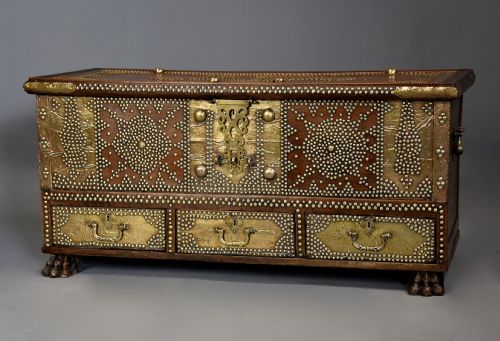

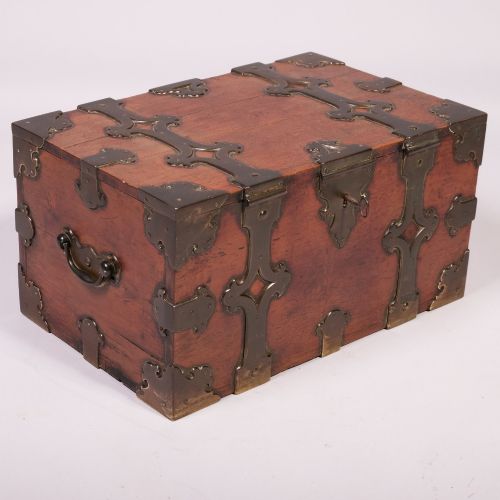
Brass Mounted Wooden Chest
A brass mounted wooden chest brings together timber and metalwork with practical strength.
What these chests are
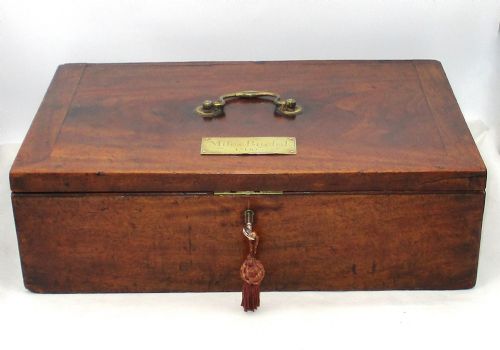
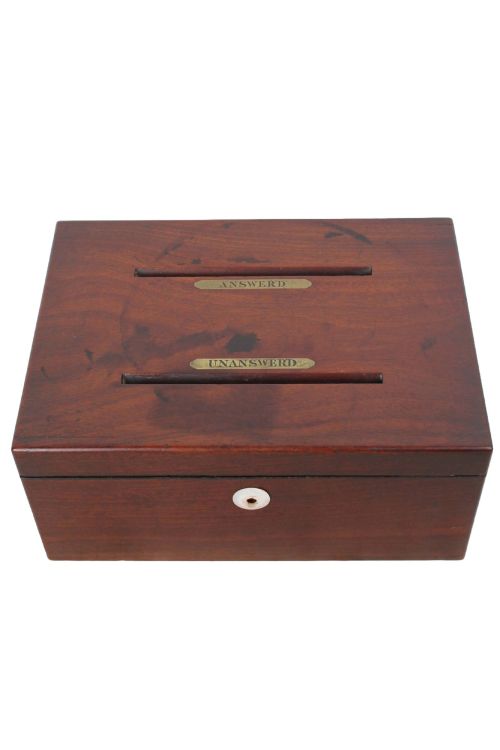
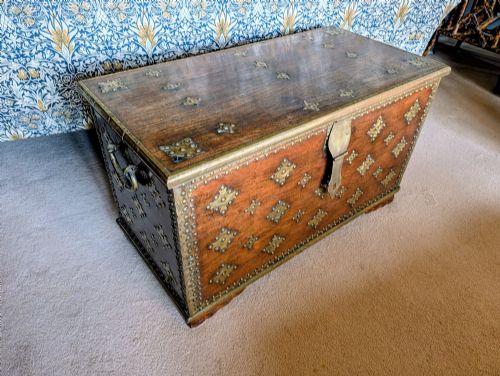
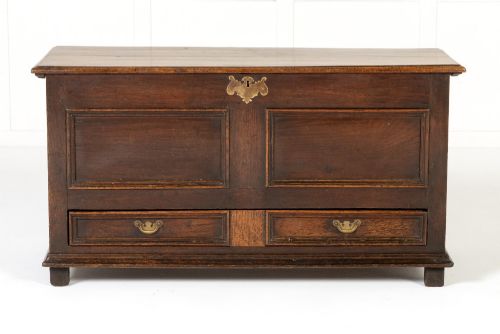
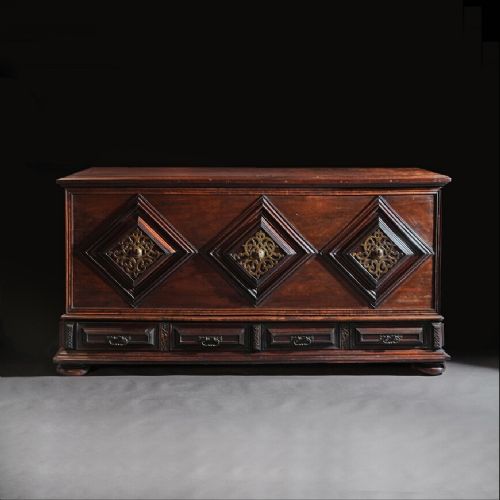
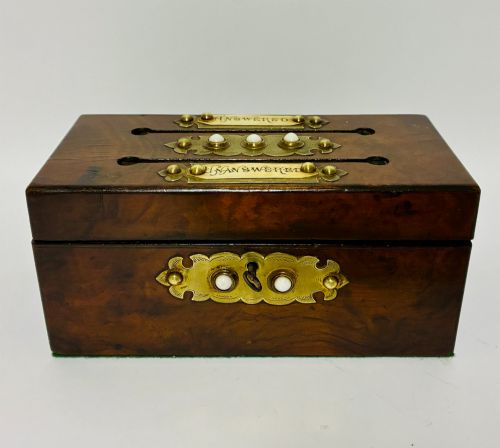
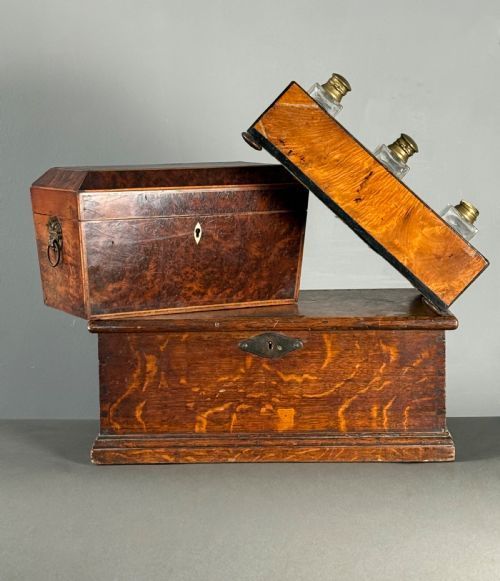
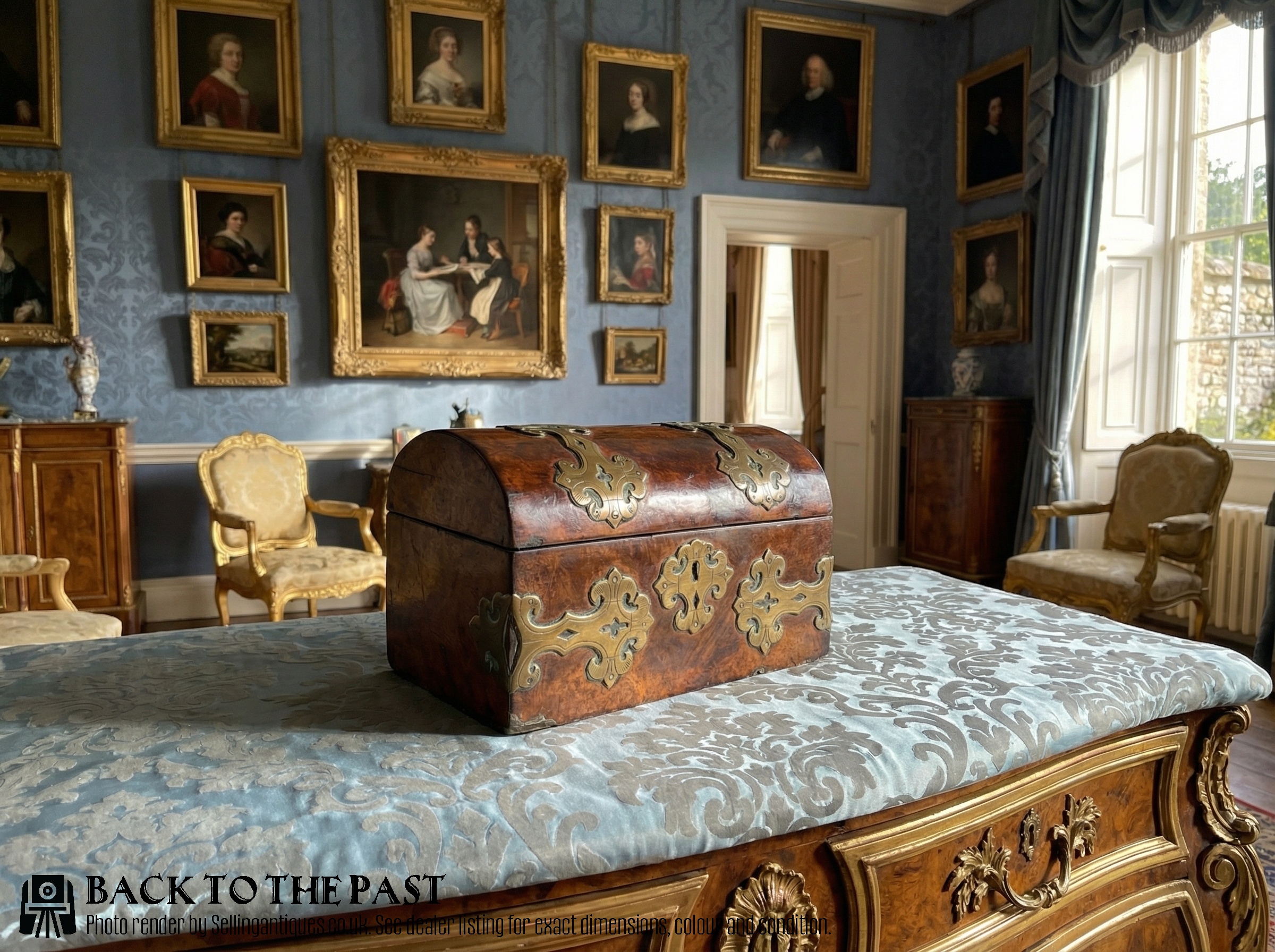
A brass mounted wooden chest offers a solid timber construction reinforced with metal corners, straps, and corner brackets designed for travel or secure storage. The examples on this page span the Georgian period, the Victorian era, and the early twentieth century, taking forms such as apothecary boxes, Zanzibar chests, painted Korean trunks, and miniature military chests.
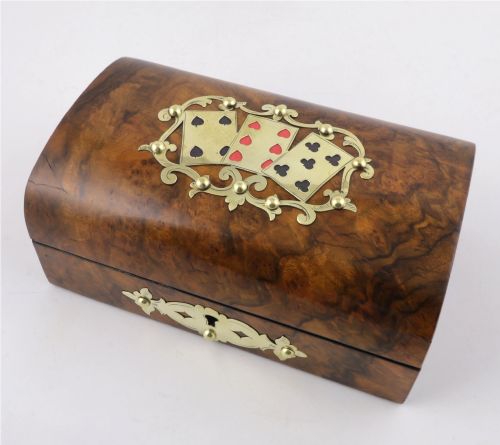
The materials used across these pieces include teak, mahogany, amboyna wood, and burr wood, paired with heavy brass mountings and occasional iron fixtures. These items served functional roles in domestic settings, campaign life, and maritime trade, evolving from utilitarian storage into decorative collector pieces.
How they were made
Cabinetmakers constructed these chests using dense hardwoods like teak and mahogany, alongside decorative veneers such as amboyna and burr wood. Carpenters joined the timber with corner bracing and dovetailed joints to withstand heavy handling during transit.
Blacksmiths and metalworkers shaped brass plates, straps, and corner mounts, securing them to the wooden bodies with flush-fitting screws or pins. Surface finishes varied from original painted layers to polished hardwood grains, complemented by integrated iron or brass carrying handles.
Retail Price Guide 2026
Typical UK retail prices for brass mounted wooden chest, calculated from the Sellingantiques database of over a million retail prices indexed since 2003. This retail price guide relies exclusively on Sellingantiques data; no external sources or auction records are used, so the figures do not describe the wider market.
The listings span from the Georgian period through the Victorian era up to 1920, utilising woods like teak, mahogany, and burr wood.
What varies in quality
The distinction between standard examples and superior pieces rests on the choice of timber and the precision of the metalwork. Finely figured burr wood or amboyna veneers elevate a piece above utilitarian campaign timber, while hand-engraved brass mounts show a higher tier of craftsmanship than plain stamped plates.
Originality of surface and hardware dictates the integrity of the piece. Chests retaining their fitted internal compartments, original paint, or complete brass strapping demonstrate greater historical completeness than those with replaced fittings or stripped surfaces.
The Brass Mounted Wooden Chest Glossary
- Campaign chest
- A portable storage box made in sections with recessed brass handles, designed for military officers on the move during the eighteenth and nineteenth centuries. These pieces break down for easy transport.
- Apothecary box
- A small compartmentalised chest used to store medical vials, scales, and remedies. They often feature secure locking mechanisms to protect sensitive contents.
- Zanzibar chest
- A heavy wooden storage trunk characterised by dense brass studding, strapwork, and decorative hasp closures. These items reflect trade connections across the Indian Ocean.
- Amboyna wood
- A richly mottled and burred timber sourced from Southeast Asia, prized for decorative veneer work on luxury boxes and small chests.
- Dovetail joint
- An interlocking woodworking joint formed by interlocking wedge-shaped fingers, providing high tensile strength for box construction.
Frequently Asked Questions
What is a brass mounted wooden chest?
A brass mounted wooden chest is a storage box built from hardwoods and reinforced with metal plates and corners. They were constructed for travel, medical use, or domestic storage.
These pieces combine functional metalwork with timber craftsmanship, ranging from small apothecary boxes to large Zanzibar trunks.
How were these chests used originally?
Owners used these boxes to transport valuable goods, personal items, or medical supplies across land and sea. Military officers and merchants relied on their robust construction for frequent journeys.
Smaller versions sat on tabletops to hold letters or apothecary bottles, while larger trunks stored garments and household valuables.
How do I date a wooden chest?
Dating relies on observing construction methods, timber choices, and hardware styles associated with specific periods. Georgian and Victorian pieces show distinct joinery techniques and fastener types.
Consulting the recorded period of manufacture helps place a piece within its historical context, from eighteenth-century boxes to early twentieth-century painted trunks.
How do I care for antique wood and brass?
Maintenance involves keeping the timber nourished with appropriate wax and avoiding excessive moisture or direct sunlight. Brass mounts can be left with their natural patination or gently cleaned without harsh abrasives.
Stable indoor humidity prevents the hardwood from splitting and keeps metal fittings secure in their original housings.