
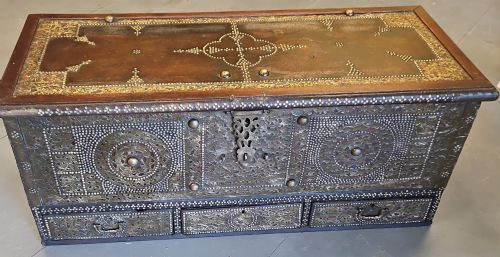


Zanzibar Chest
A zanzibar chest offers heavy hardwood construction and intricate metalwork, serving as a practical storage trunk that brings maritime history into a modern room.
Zanzibar Chest
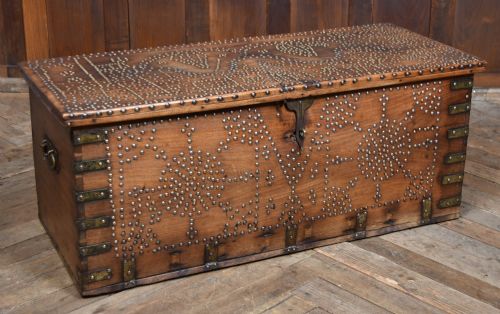
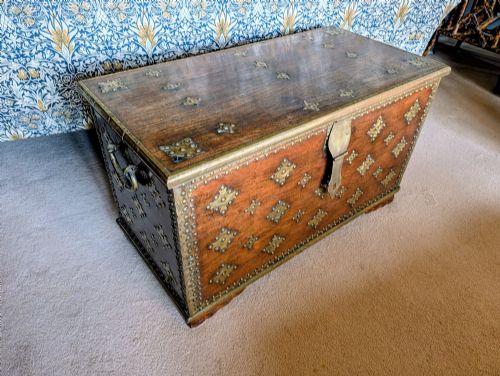
A zanzibar chest is a heavy storage trunk or blanket box designed for travel and domestic use, heavily associated with East African and Middle Eastern trade routes. The versions you meet most often on this page date from the nineteenth century, including Victorian periods and specific years like eighteen-ninety and nineteen-twenty.
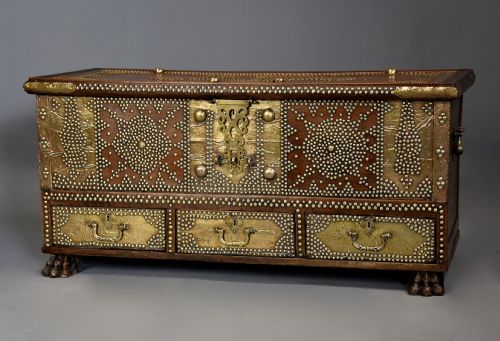
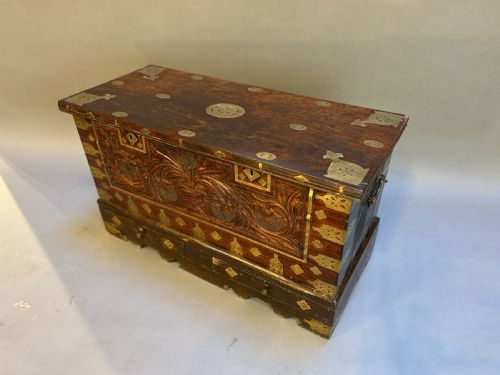
These pieces function primarily as blanket boxes, storage chests, or carriage trunks, often incorporating internal candle boxes and small drawers. The styles span Anglo-Indian Colonial, Middle Eastern, and Victorian Colonial definitions, reflecting the interconnected maritime trade of the Indian Ocean.
How they were made
Makers constructed these trunks using dense tropical hardwoods such as teak, padouk, rosewood, shisham, and camphorwood, selected for durability in humid climates. These timbers provide a heavy, robust carcase designed to withstand long-distance carriage.
The woodwork is reinforced with structural brass and copper work, including heavy stud decoration, bound edges, and elaborate lock plates. Artisans fixed these metal mounts with numerous pins to secure the joints and protect the corners during transit.
The site records hardware in brass and copper, paired with hardwoods including teak, padouk, rosewood, and camphorwood.
What varies in quality
The standard of a zanzibar chest rests on the density of the timber and the intricacy of the metal application. Superior examples display dense grains in woods like padouk or teak alongside dense, precise brass studding and heavy corner plates.
The Zanzibar Chest Glossary
- Padouk
- A heavy, durable tropical hardwood with a reddish hue used frequently in nineteenth-century cabinet making. It resists decay and provides a stable surface for brass mounts.
- Camphorwood
- Aromatic timber utilised for storage chests because its natural scent repels insects. It appears in maritime trunks designed to protect textiles.
- Studwork
- The application of numerous decorative brass or copper nails across the exterior of a chest. This technique provides both structural reinforcement and intricate geometric patterns.
- Candle box
- A small lidded compartment built inside a trunk near the interior edge. It stored small valuables or lighting supplies away from the main storage well.
- Dowry chest
- A specialised trunk commissioned for a marriage, often featuring elaborate brass inlay and carving. These pieces held household goods and valuables for a bride.
Zanzibar Chest: Frequently Asked Questions
What were zanzibar chests used for?
These trunks served as travel luggage and secure storage for merchants, sailors, and families across maritime trade routes. They transported textiles, documents, and personal valuables.
In domestic settings, they transitioned into blanket boxes and strongboxes to keep household items safe from humidity and pests.
How do you date a zanzibar chest?
Dating relies on examining the construction methods, wood types, and style of brass mounts used on the carcase. Pieces from the early nineteenth century often feature heavier hand-forged elements and simpler configurations.
Later Victorian examples tend to incorporate standardised brass fittings, applied studwork, and specific internal arrangements like small accessory drawers.
Are all zanzibar chests made of teak?
While teak is common, these chests utilise several different tropical hardwoods depending on regional availability and workshop origins. Evidence shows pieces made from padouk, rosewood, shisham, and camphorwood.
Each timber offers distinct grain patterns and weights, though all share the density required for long-distance transport.
How do you live with a zanzibar chest?
A zanzibar chest functions effectively as a coffee table, end-of-bed blanket box, or hallway storage trunk. Its flat top and sturdy hardwood construction support everyday objects while hiding clutter inside.
Maintenance involves treating the hardwood with appropriate oils and keeping the brass mounts clean with a soft cloth.