
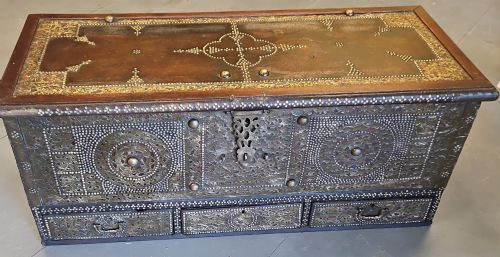


Indian Brass Studded Trunk
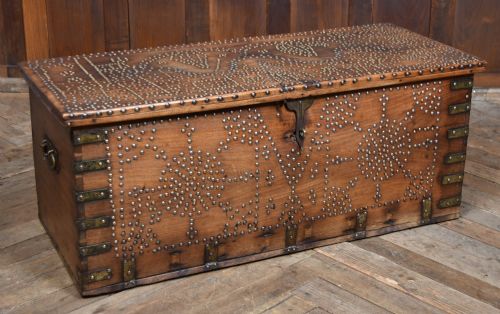
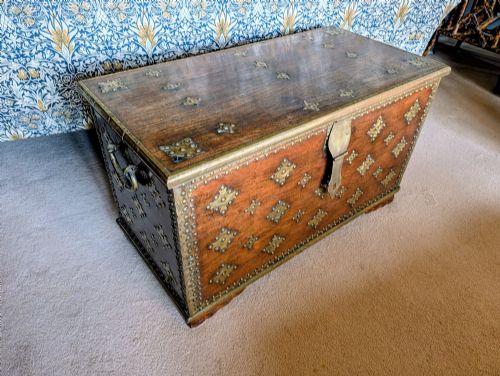
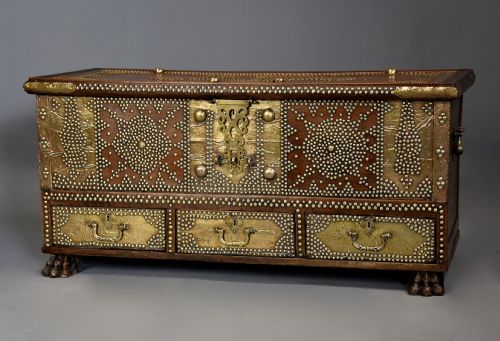
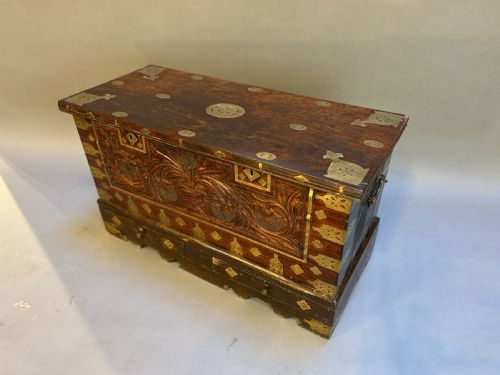
An indian brass studded trunk offers heavy timber construction and elaborate metalwork, bringing utilitarian maritime history directly into a modern hallway.
Indian Brass Studded Trunk
When you search for an indian brass studded trunk, you are looking at robust storage pieces built for travel and trade across oceanic routes. The pieces seen here generally appear as blanket boxes, storage chests, and blanket or storage boxes.
These items originate predominantly from the nineteenth century, with specific examples carrying dates around eighteen fifty, eighteen sixty, eighteen ninety, and nineteen twenty. Their stylistic labels span Anglo-Indian, Victorian Colonial, and Zanzibar designations, showing how domestic British tastes met overseas craftsmanship.
How they were made
The primary construction relies on dense exotic timbers including teak, padouk, rosewood, and general hardwoods. Carpenters built these bodies to endure long sea voyages and humid climates without warping.
Makers reinforced the wooden panels with brass studwork, copper detailing, and iron straps. This metal application functioned structurally to protect the corners and edges while creating intricate geometric patterns across the lid and front.
The listings on this site record diverse materials including padouk, rosewood, teak, brass, iron, and copper across the nineteenth century.
What varies in quality
The grade of timber dictates the foundation of the piece, with richly grained padouk and rosewood sitting at the upper end compared to standard utilitarian hardwoods. Heavier secondary metals and more densely packed brass stud patterns indicate greater workshop investment.
Proportion and surface preservation also define the hierarchy among surviving examples. Trunks that retain their original patination and complete metal fastenings demonstrate superior initial craftsmanship and careful subsequent handling.
The Indian Brass Studded Trunk Glossary
- Padouk
- A dense, durable tropical hardwood prized for its deep reddish-brown colour. It forms the primary structural material for many nineteenth-century overseas chests.
- Zanzibar chest
- A specific regional form of trading chest characterised by heavy brass studding and strapwork. These pieces frequently surface under various Victorian and colonial classifications.
- Coffer
- A large wooden box traditionally utilised for storing valuables. In this inventory, the term groups alongside trunks and blanket boxes.
- Strapwork
- Decorative or reinforcing bands of metal affixed across the exterior of a chest. On these items, brass and iron straps provide both structural rigidity and visual contrast.
Indian Brass Studded Trunk: Frequently Asked Questions
What is an indian brass studded trunk?
These items are heavy wooden storage chests featuring dense brass studding and metal reinforcements. They originated as trade and travel containers during the nineteenth century.
They combine robust tropical timbers like teak and padouk with elaborate metalwork. Their design reflects the exchange between British colonial presence and local craftsmanship.
How were these trunks used originally?
Merchants and travellers utilised them to transport personal belongings and valuable goods across maritime routes. The sturdy construction protected contents from rough handling and moisture.
Once settled in a home, they doubled as secure storage for household textiles and blankets. Their flat lids also allowed them to function as tables or benches during transit.
How do I style a trunk at home?
Place a trunk at the foot of a bed or against a hallway wall to provide functional storage for linens. The dark timber and brass work anchor light contemporary interiors.
Keep the top relatively clear to showcase the detailed studwork and timber grain. Position them away from direct heat sources to protect the historic wood.
How can I tell the period?
Examine the timber selection, construction joints, and metal fastenings to gauge the era of manufacture. Nineteenth-century examples often utilise solid padouk or rosewood with hand-hammered brass studs.
Stylistic labels such as Victorian Colonial or specific dates like eighteen fifty provide further chronological markers. Consistency in the ageing of the metal and wood points toward genuine antique status.