


Brass Studded Coffer Chest
A brass studded coffer chest is a sturdy portable container for travel and storage, valued for its tactile hide and metal decoration.
Brass Studded Coffer Chest
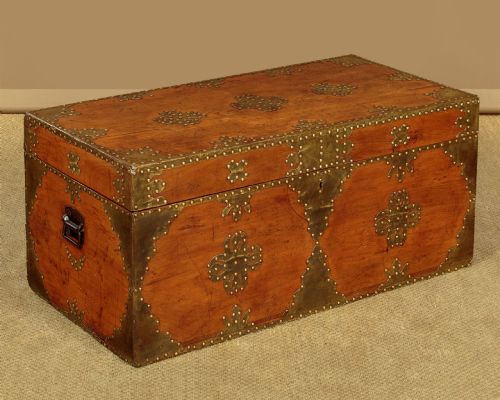
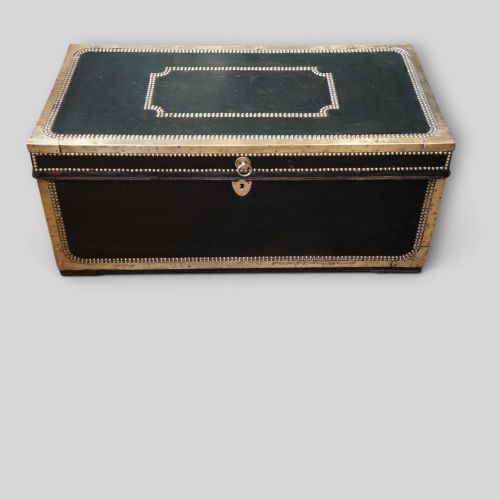
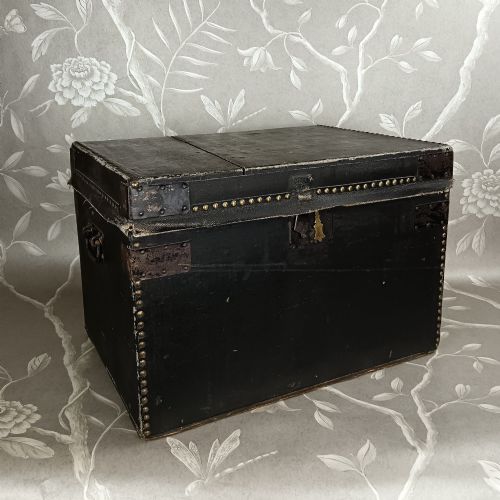
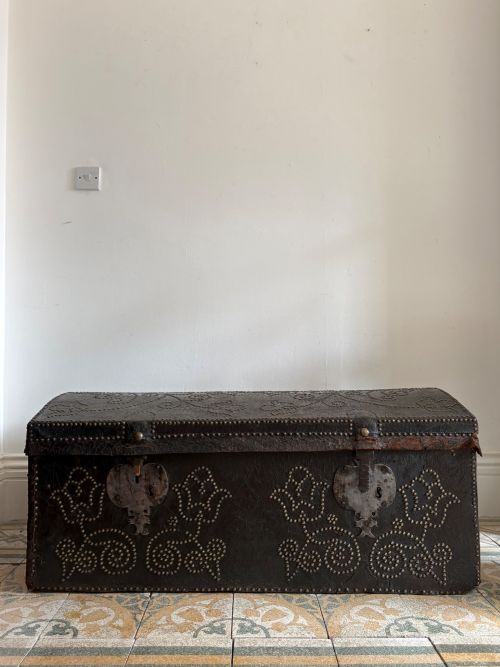
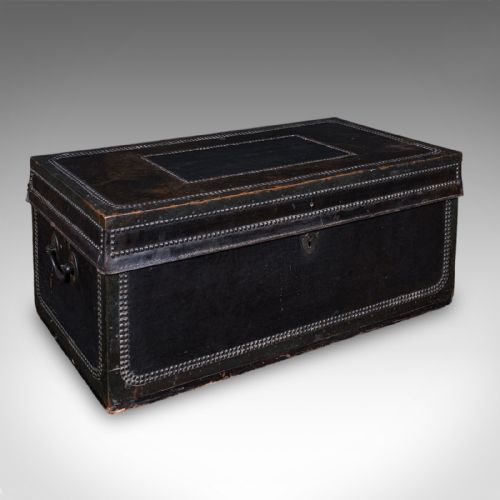
A brass studded coffer chest encompasses travelling trunks, blanket boxes and ottomans designed for storage or transit across long distances. When you search for this phrase, you meet items spanning from the late seventeenth century through the Victorian era and into the early twentieth century.
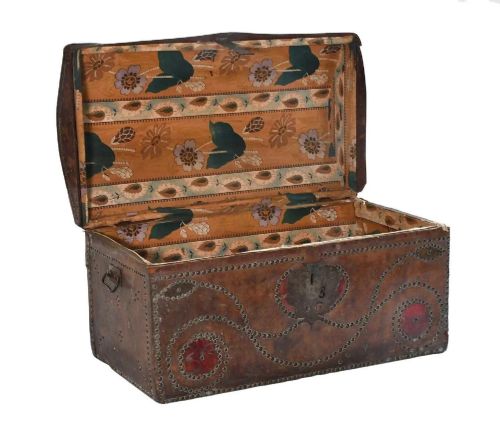
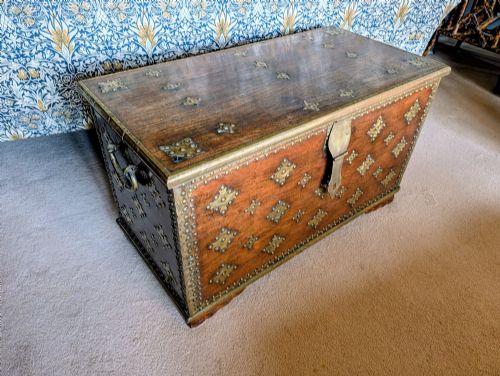
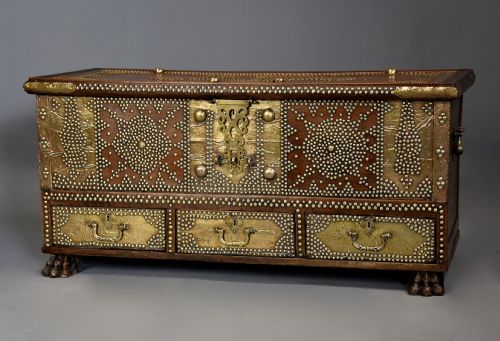
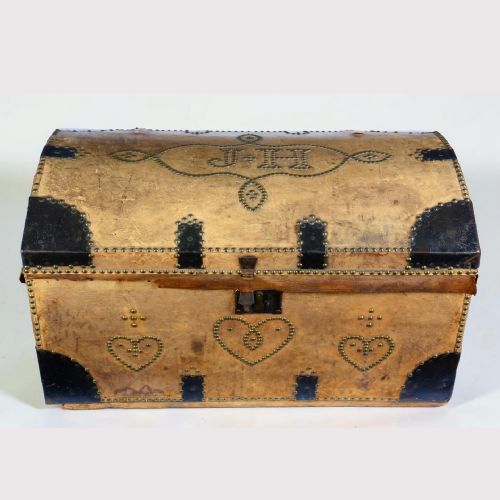
The selection includes campaign trunks, dome-top coffers and heavy trading chests originating from British workshops, China Trade routes, Zanzibar and Spain. These objects served military officers, merchants and travellers before finding a place in domestic interiors as functional furniture.
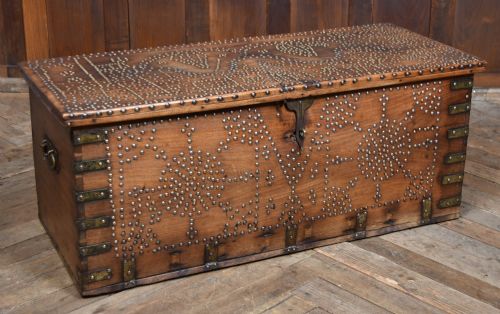
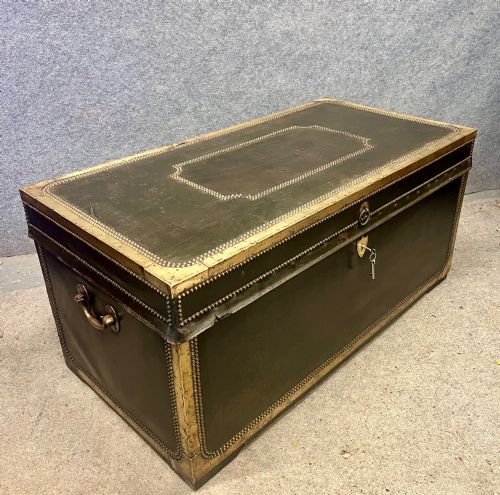
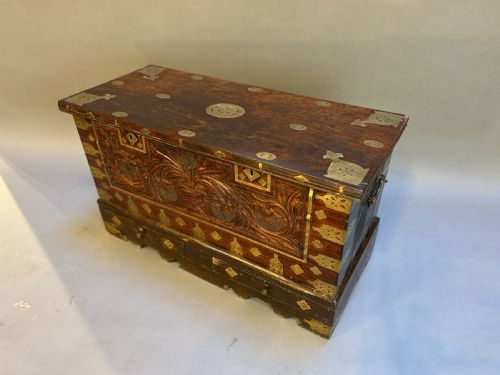
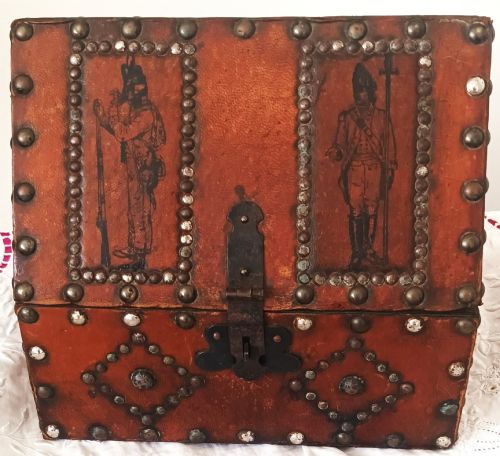
The dominant forms are rectangular chests and domed coffers featuring reinforced corners, carry handles and dense patterns of metal studs or brass binding. Many examples retain leather or hide cladding over timber carcasses constructed from hardwoods, camphor wood, teak or padouk.
How they were made
Carpenters built the carcasses using dense timbers such as camphor wood, teak, padouk, mahogany and rosewood, which resisted warping and insect damage during transport. These wooden frames were then enclosed in cattle hide or leather and secured with iron or brass bands.
Makers drove thousands of individual brass studs and nailheads into the leather surface in geometric patterns, reinforcing the seams while creating decorative borders. Iron drop handles, strap hinges and lock plates were fitted to the exterior to withstand the rigours of coaching, shipping and campaign travel.
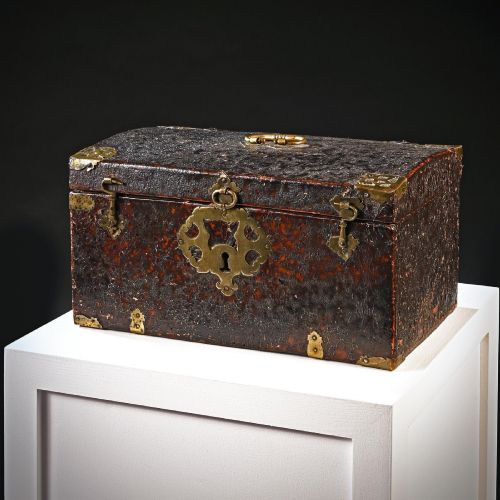
Listings span multiple centuries, incorporating 17th-century Spanish leather boxes alongside 19th-century Victorian campaign trunks and camphor wood Zanzibar chests.
What varies in quality
The distinction between standard utility luggage and finer pieces lies in the precision of the brass studwork and the selection of cabinet timber. Elaborate geometric configurations of nailheads and substantial brass strapwork elevate a chest above plain utilitarian boxes.
The integrity of the original leather covering and the survival of makers' marks or brass inscription plates also distinguish superior examples. Heavy hardwood carcasses with intact original linings and working locks represent the more accomplished end of the range.
Samuel Pratt·Wm Insall of Bristol·Arthur Wannop·Chapple And Sons·Seabrook of St Pauls
The Brass Studded Coffer Chest Glossary
- Campaign trunk
- A portable chest designed for military officers on active service, featuring recessed handles and robust metal reinforcement to withstand frequent transit.
- Zanzibar chest
- A distinct trading chest originating from East Africa and India, characterised by heavy brass studding, strapwork and compartmentalised interiors.
- Dome top
- A curved lid construction that sheds water during travel and provides additional vertical storage capacity inside the chest.
- Camphor wood
- An aromatic hardwood utilised in maritime and colonial chest construction because its natural scent repels insects from stored textiles.
- Casket
- A smaller ornamental box or chest, often leather-clad and metal-bound, used for holding valuables or documents rather than garments.
Brass Studded Coffer Chest: Frequently Asked Questions
How were these chests used originally?
These containers accompanied officers, merchants and diplomats on ships, coaches and military campaigns to protect clothing and valuable possessions from moisture and rough handling. Their robust construction allowed them to function as both luggage during transit and secure storage furniture upon arrival at a destination.
In domestic settings, particularly during the Victorian period, larger trunks transitioned into static furniture pieces for bedrooms and hallways. They stored household textiles, blankets and winter garments while serving as benches or decorative focal points.
How do I care for leather and brass?
Historic leather benefits from occasional light conditioning with appropriate museum-grade waxes to prevent the hide from drying and cracking over time. Avoid modern chemical cleaners that might strip the original hand-dyed surface or soften the aged leather excessively.
Brass studwork and metal bindings require minimal intervention beyond gentle dusting with a soft cloth to preserve the natural patina. Polishing the metal to a bright shine removes historical character and should be avoided.
How can I tell the period?
Dating relies on examining the construction methods of the internal woodwork, the style of the iron hinges, and the configuration of the brass studwork. Earlier seventeenth and eighteenth-century examples often feature heavier hand-forged ironwork and simpler leather bindings.
Nineteenth-century pieces frequently display more intricate brass geometric patterns, specific maker's stamps on the locks or leather, and exotic hardwoods like camphor or padouk. Trade routes also offer clues, as China Trade and Zanzibar chests carry distinct regional building characteristics.
Are these chests suitable for modern storage?
These sturdy containers offer deep interior capacity that suits contemporary living spaces for stowing away blankets, shoes or bulky items. Their flat tops also allow them to function effectively as coffee tables or ottomans in a living room.
Camphor wood and teak interiors provide a natural resistance to pests, making them particularly useful for storing woollens and linens. Buyers should verify internal dimensions and clean linings gently before placing textiles inside historic trunks.