






Indian Carved Storage Trunk
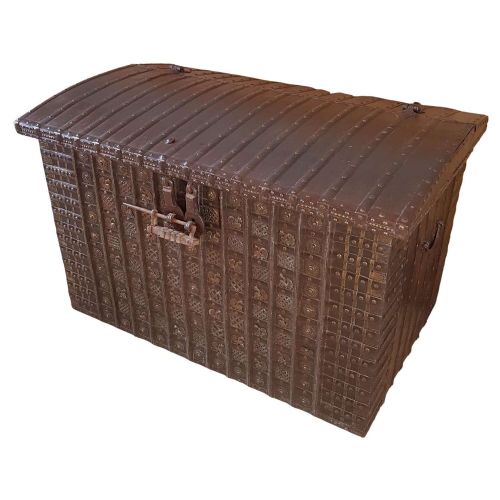
An indian carved storage trunk brings heavy teak, intricate brass studding, and regional character straight from the nineteenth-century colonial interior into a modern room.
Indian Carved Storage Trunk
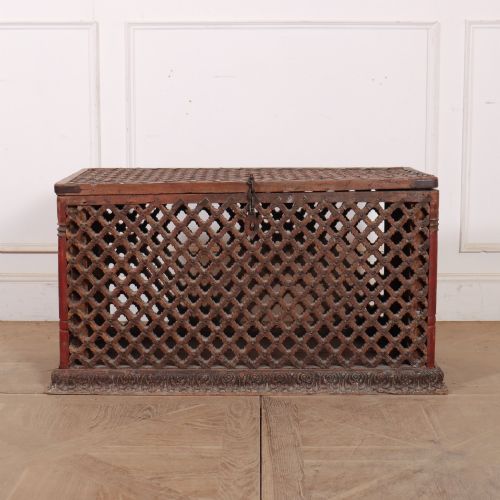
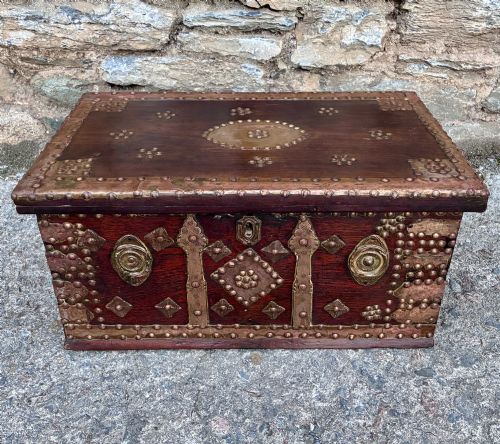
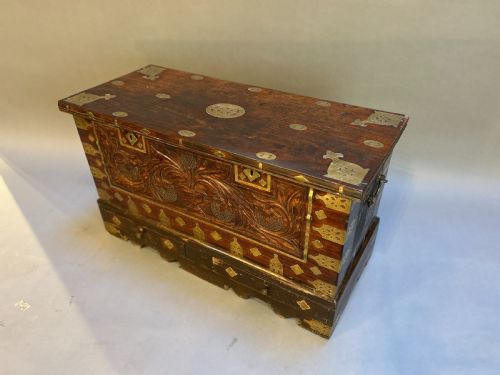
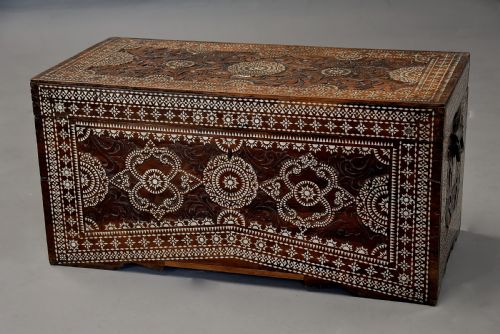
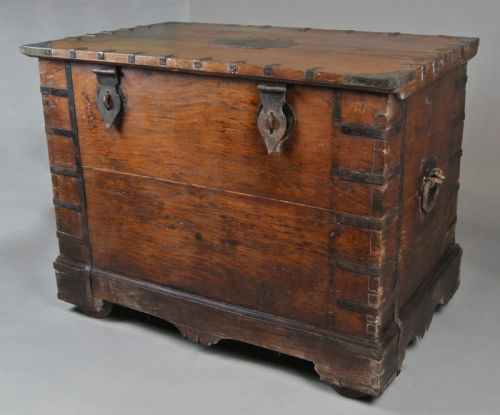
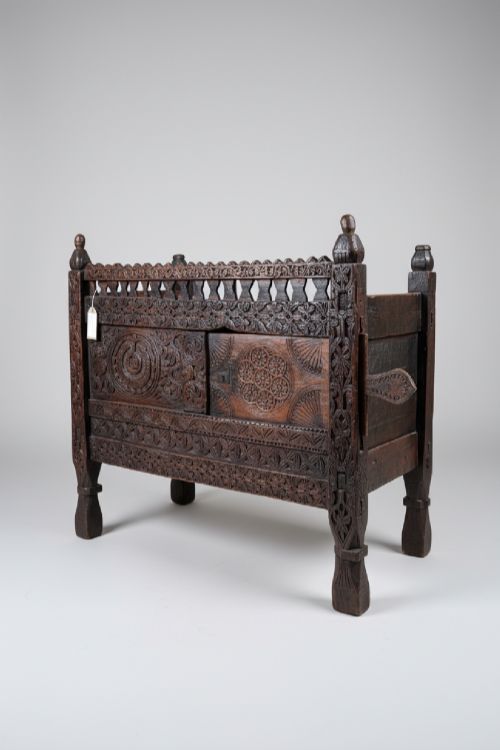
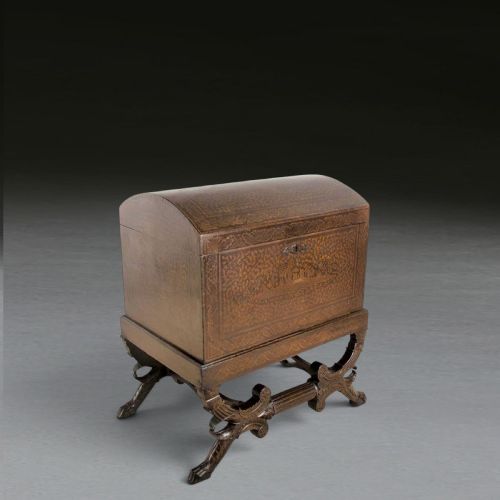
An indian carved storage trunk encompasses robust coffers, dowry chests, and blanket boxes originating from nineteenth-century workshops across the subcontinent and surrounding regions. The examples seen here range from plain hardwood storage benches to heavily decorated brass-studded pieces built for trade and domestic use.
Buyers are most likely to encounter nineteenth-century items spanning the Victorian era, including Anglo-Indian colonial designs and specialised regional forms like Zanzibar traders chests and Swat Valley folk art. These objects combine practical lidded storage with dense surface carving, contrasting panels, and structural metalwork.
The materials and construction reflect the utilitarian origins of these boxes, which were designed to secure textiles, valuables, and personal effects against dust and humidity. Surviving pieces demonstrate the varied output of nineteenth-century artisans working in teak, hardwood, satinwood, and ebony.
Materials and construction
The primary structure relies on dense timbers such as teak, hardwood, satinwood, camphor wood, and ebony, selected for durability and stability in warm climates. Carpenters joined heavy planks using traditional framing methods, often mounting lids on sturdy hinges to support deep, open compartments.
Surface decoration integrates hand-carved woodwork with applied metal elements, including brass studding, iron banding, and strapwork that reinforced the corners and lids. Selected pieces incorporate inlaid mother of pearl or surface lacquer to create patterned panels across the front and top.
Indian Carved Storage Trunk Retail Price Guide 2026
Typical asking prices for indian carved storage trunk among the pieces listed under this phrase on Sellingantiques today, from the lower quarter to the upper quarter. They describe what is for sale here now, not the wider market.
Several nineteenth-century trunks retain their original heavy iron locks, ensuring that past secrets remain firmly wedged behind brass studding.
Factors of quality
Quality rests upon the integrity of the timber frame, the density of the hand carving, and the completeness of original metal fittings like brass studs and iron bands. Heavier woods and well-preserved joints indicate a higher standard of original workshop production.
The precision of the surface decoration and the survival of secondary materials such as lacquer, interior compartments, or mother of pearl inlay distinguish standard utility boxes from more elaborate colonial and regional presentation pieces.
The Indian Carved Storage Trunk Glossary
- Zanzibar chest
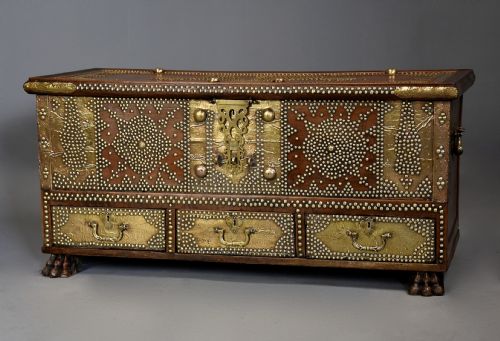
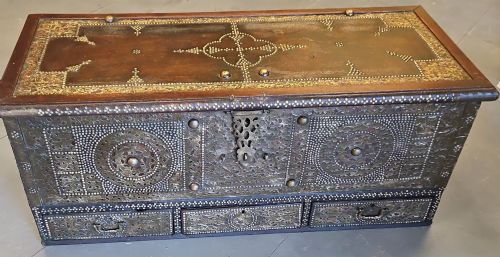
- A heavy timber trunk distinguished by brass stud work, strap mounts, and a raised central drawer configuration beneath the main lid. These pieces reflect maritime trade connections across the Indian Ocean.
- Dowry chest
- A lidded storage box created to hold household linens and personal wealth as part of a bride's marriage portion. They often feature regional folk carving or iron banding.
- Anglo-Indian colonial
- A style combining traditional Indian woodworking techniques with European furniture forms suited to British residences in the nineteenth century. These objects typically utilise local hardwoods like teak and padouk.
- Coffer
- A deep rectangular box with a hinged lid, traditionally used for keeping valuables secure. They sit lower to the ground than modern wardrobes and often display robust iron bindings.
- Swat Valley folk art
- A regional decorative style known for geometric wood carving and pegged construction originating from mountain communities. Pieces from this tradition emphasise textured surface relief over smooth polish.
Indian Carved Storage Trunk: Frequently Asked Questions
How were these trunks used originally?
These trunks served as secure receptacles for clothing, textiles, and valuables in domestic homes, trading posts, and aboard merchant vessels. Their heavy timber construction and metal strapping helped protect contents from pests and moisture.
Many examples functioned specifically as dowry chests, holding household goods assembled for a wedding. Others travelled as personal luggage for merchants navigating colonial trade routes.
What woods should I expect to find?
The primary timbers recorded in these pieces are teak, various Asian hardwoods, satinwood, ebony, and camphor wood. These materials were chosen for their structural strength and resistance to local insects.
Secondary materials include brass for studs and decorative mounts, iron for structural banding, and occasional applications of lacquer or mother of pearl inlay.
How do I place a trunk in a modern interior?
A large storage chest functions effectively as a coffee table in a living room, providing a flat surface alongside concealed interior space. They also sit well at the foot of a bed for spare blankets and linens.
The dark timber and metal hardware pair naturally with neutral walls, woven rugs, and modern upholstery, adding texture and historical weight to a room.
How do I distinguish regional styles?
Regional identity appears through specific decorative motifs and hardware arrangements, such as the brass stud patterns characteristic of Zanzibar chests or the geometric folk carving found on Swat Valley pieces. Anglo-Indian and colonial examples often blend traditional carving methods with European box proportions.
Examining the choice of timber, such as fragrant camphor wood or dense ebony, also provides clues regarding the geographic origin of the workshop.