
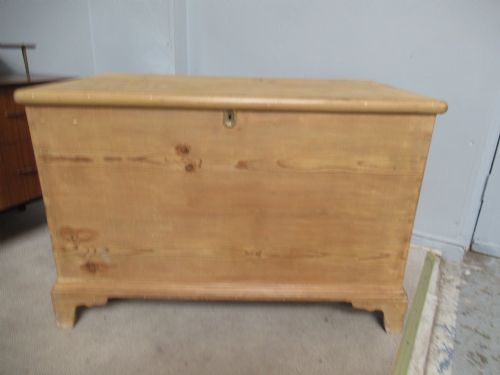
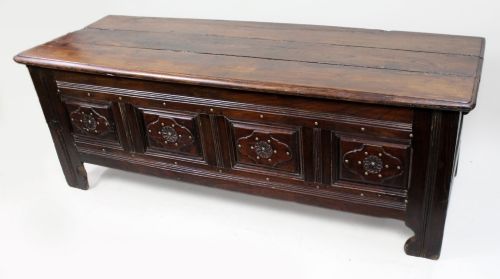
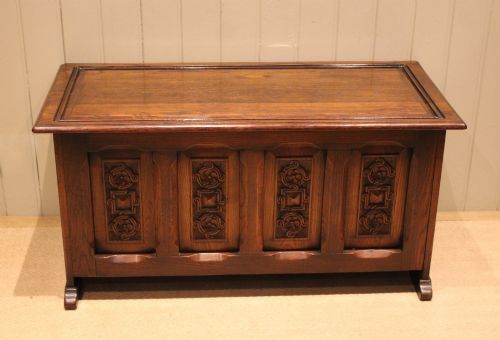
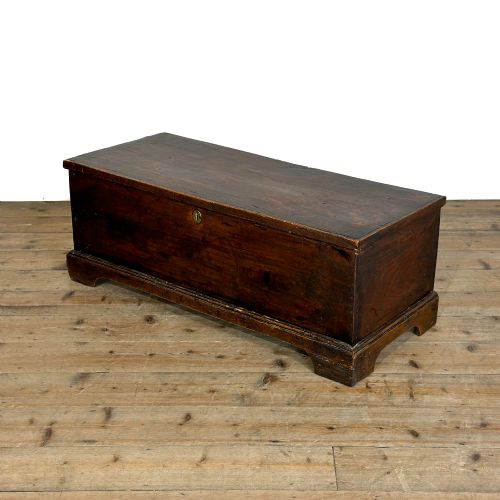
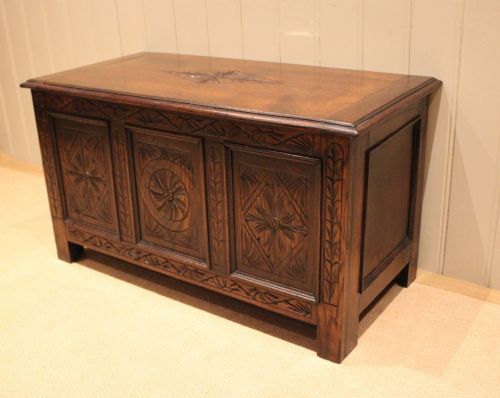
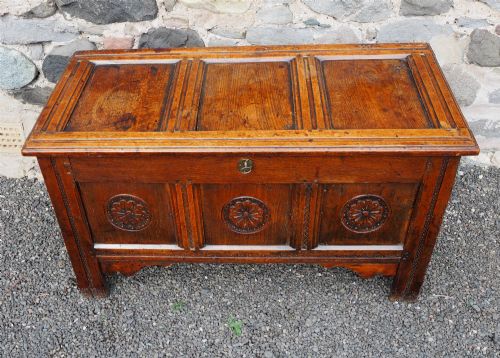
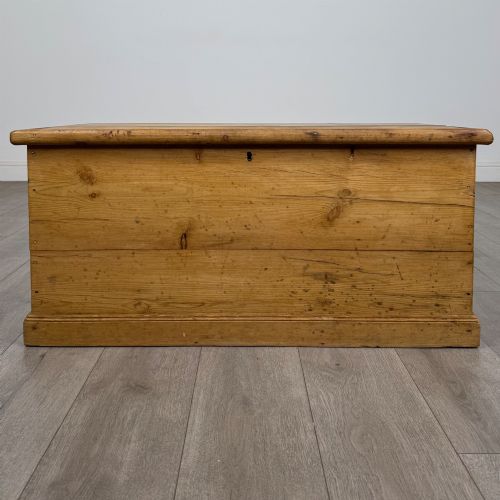
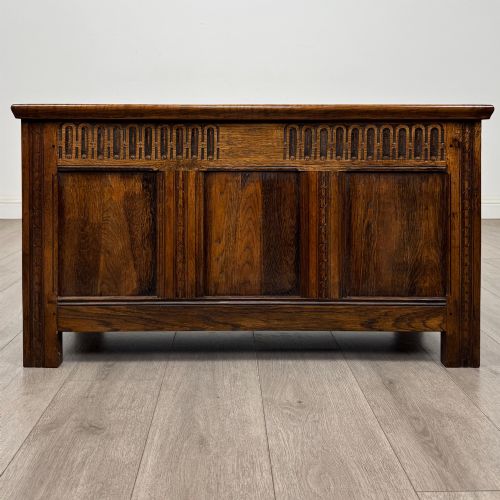


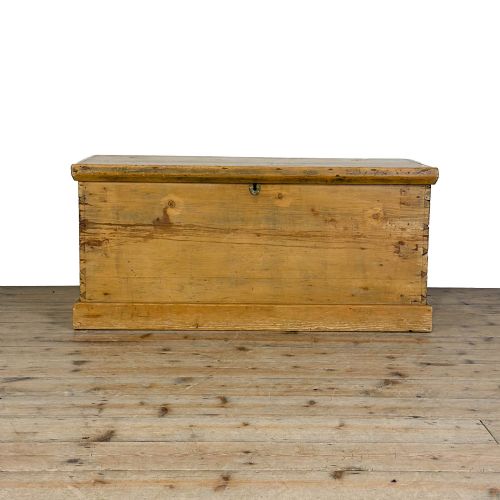
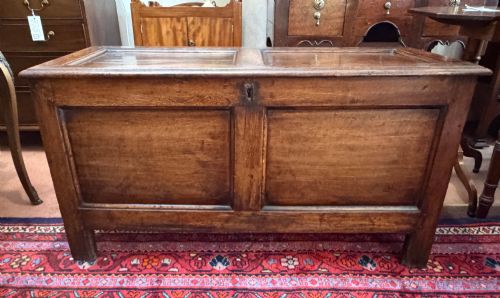
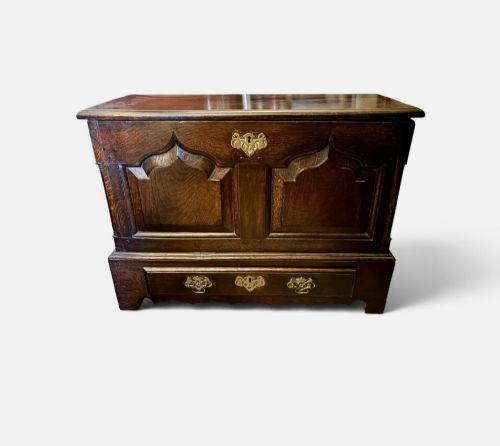
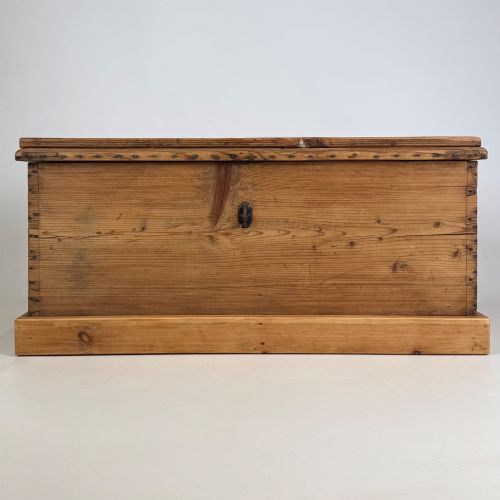
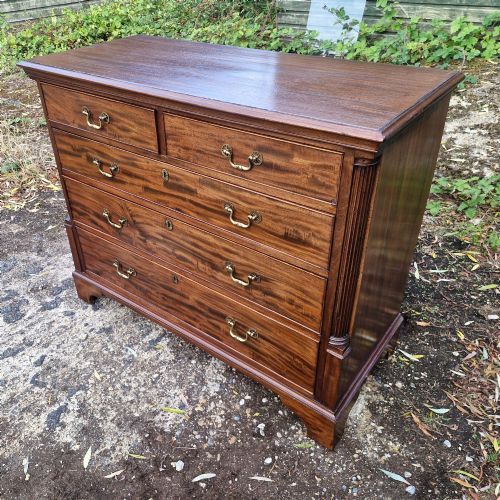
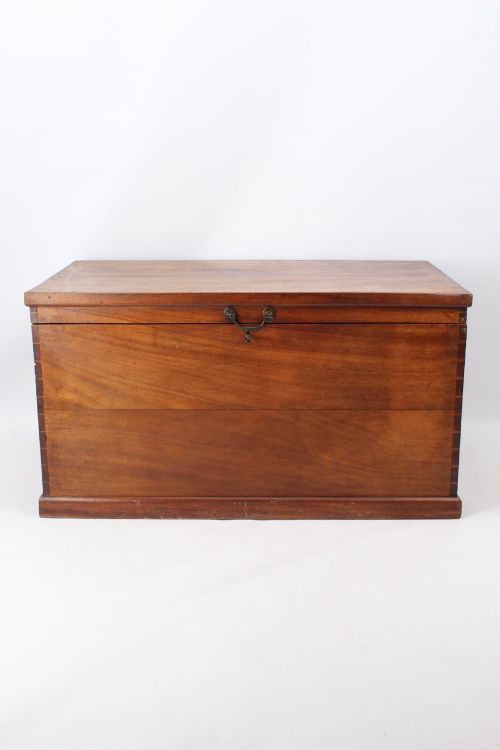
Traditional Blanket Chest
A traditional blanket chest is a sturdy timber receptacle designed for household storage, offering solid construction and historic character.
Traditional Blanket Chest
A traditional blanket chest encompasses robust storage vessels such as coffers, mule chests, and boarded trunks made for domestic use across several centuries.
The pieces appearing on this page span from the sixteenth and seventeenth centuries through the Georgian and Victorian eras up to the early twentieth century.
Buyers frequently encounter solid oak and pine examples alongside elm six-plank boards and occasional exotic camphor wood or mahogany pieces.
Materials and construction
Carpenters utilised native timbers including oak, elm, and pine, building joined panel frames or straightforward boarded six-plank configurations.
Metal reinforcement arrived via hand-forged iron strapwork and brass hinges or handles, securing heavy lids and corners for daily utility.
Listings feature structural materials including oak, elm, pine, mahogany, camphor wood, brass, iron, and paint.
Build and ornamentation
The standard of craftsmanship shows in the thickness of the timber, the tightness of the joinery, and the preservation of original surfaces.
Carved detailing, panel moulding, and crossbanded inlays distinguish more elaborate regional workshops from plain utilitarian boxes.
The Traditional Blanket Chest Glossary
- Coffer
- A large wooden chest traditionally used for storing valuables, linens, or garments. These sturdy boxes often feature hinged lids and boarded or panelled construction.
- Mule chest
- A storage chest that includes one or more drawers beneath the main compartment. This form emerged during the Georgian period.
- Six-plank
- A simple construction method utilising six individual boards joined directly at the edges. This technique appears frequently on early elm and pine pieces.
- Strapwork
- Decorative metal bands or strap hinges applied to the exterior of a chest. Hand-forged iron examples provide both structural support and visual detail.
- Crossbanding
- A decorative border technique where veneer strips are laid across the grain. It surfaces on finer mahogany and oak pieces from the Georgian era.
Traditional Blanket Chest: Frequently Asked Questions
What is a traditional blanket chest used for?
These vessels served households for storing heavy woollen blankets, linens, and personal valuables securely away from dampness and dust.
Today they function effectively as living room coffee tables, hallway storage benches, or bedroom blanket boxes.
How do I date an antique oak coffer?
Dating relies on examining the construction methods, tool marks left by carpenters, and the prevailing decorative style of the period.
Early seventeenth-century examples typically show joined frame construction with pegged joints, while later revival pieces adopt different hardware.
Are camphor wood chests traditional?
Camphor wood trunks served travellers and households by providing natural insect-repellent storage for garments during long journeys.
These imported trunks appear alongside native British oak and pine versions within the broader category of storage chests.
How should I care for an old pine chest?
Maintain the timber by keeping the piece away from direct heat sources and sudden humidity changes that cause wood to split.
An occasional application of appropriate wax polish preserves the surface finish without harming the original patina.