
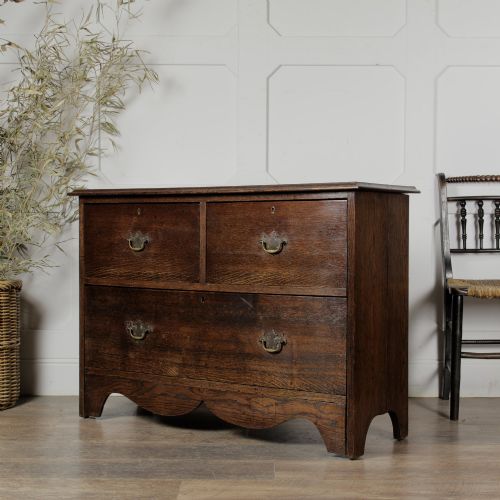
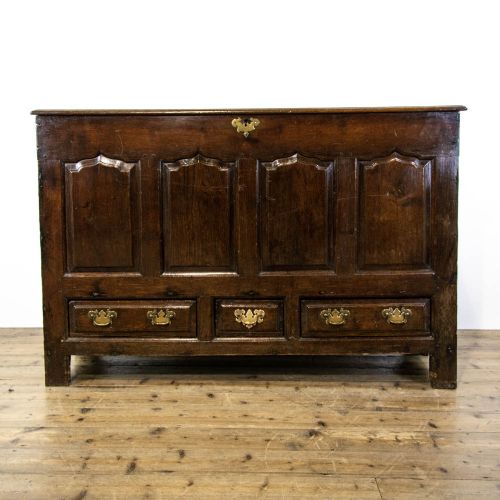
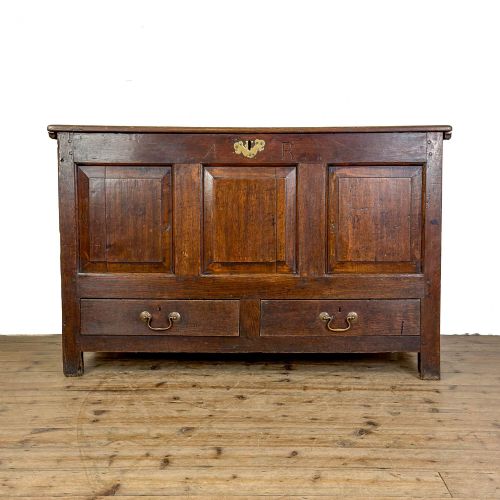


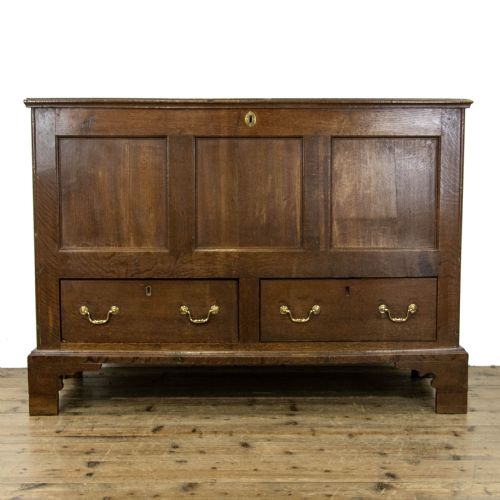


Brass Handle Mule Chest
A brass handle mule chest brings together centuries of practical storage and refined woodwork, offering the combination of a coffer and drawers that every collector seeks.
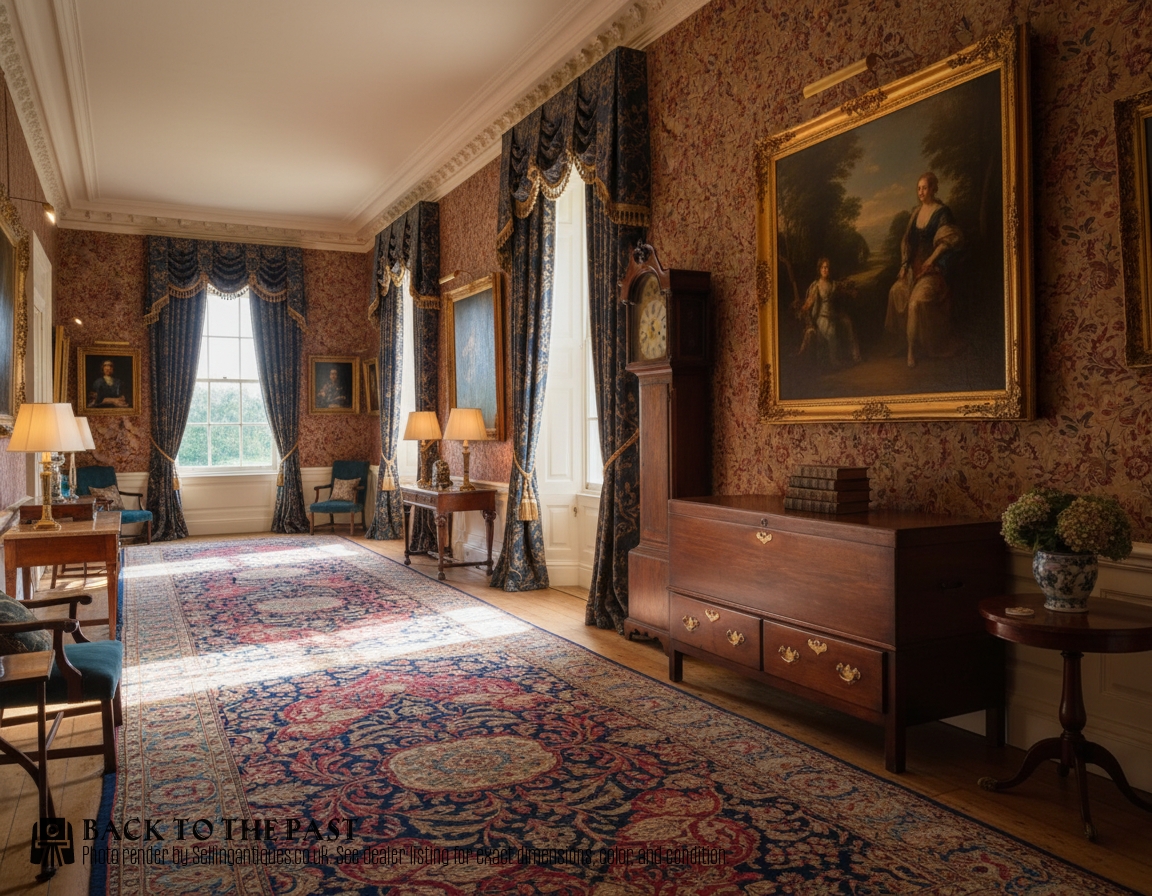
Brass Handle Mule Chest
When you search for a brass handle mule chest, you encounter sturdy storage furniture that typically combines a hinged lid compartment with one or more lower drawers. These pieces date across the eighteenth century, the Georgian period, and into the early twentieth century, reflecting centuries of domestic utility.
Originating as practical storage solutions for linen and household goods, these chests served multiple domestic functions by the fireside and in the bedroom. Their defining characteristic remains the lower drawer addition placed beneath the main coffer space, fitted with metal handles for daily use.

How they were made
Joiners constructed these pieces primarily using solid oak and mahogany planks, often reinforced with pegged mortise and tenon joints for the frame and panels. Iron hinges and fixings secured the heavy lids, while metal drop handles and escutcheons adorned the drawers.
Regional workshops utilised local timber stocks, meaning English and Welsh vernacular pieces display distinct grain patterns and construction nuances. Surfaces were finished through hand planing and polishing, highlighting the natural figure of the wood without heavy veneers.
Miniature apprentice chests served as desktop boxes, allowing young woodworkers to demonstrate their mastery of joinery on a tiny scale.
What varies in quality
Quality in these chests rests upon the integrity of the timber selection and the retention of original brass hardware. Pieces featuring well-figured oak or mahogany planks alongside period-correct mounts command greater appreciation from collectors.
The subtlety of panel carving, the tightness of the drawer joints, and the survival of secondary woods define the upper tier of the range. Simpler provincial items show heavier utilitarian construction, whereas formal Georgian examples exhibit finer proportions and moulding details.
The Brass Handle Mule Chest Glossary
- Mule chest
- A traditional storage chest featuring a hinged lid above one or more lower drawers. This hybrid form bridges the evolution from simple coffers to full chests of drawers.
- Coffer
- A heavy wooden box with a lid, used primarily for keeping valuables or textiles secure. Early examples form the foundational ancestor of the mule chest.
- Coffer bach
- A small Welsh box or miniature chest, often utilised on a table or desktop. The term translates from Welsh as little coffer.
- Vernacular style
- Furniture made by local craftsmen using regional traditions and readily available native timbers rather than following strict metropolitan designs. These pieces tell the story of local woodworking heritage.
- Escutcheon
- A protective plate surrounding a keyhole, usually fashioned from brass to match the drawer pulls. It prevents the wood around the lock from splitting through repeated use.
Brass Handle Mule Chest: Frequently Asked Questions
What is a mule chest?
A mule chest is a traditional storage item that combines a deep upper coffer with one or more drawers built into the base.
This hybrid design evolved to provide easier access to stored textiles without requiring items at the bottom of the box to be lifted out entirely.
How old are these chests?
The pieces available range from eighteenth-century Georgian examples down to early twentieth-century interpretations.
Most surviving specimens date from the seventeen-hundreds, reflecting traditional regional joinery and domestic customs of the period.
Where were they used?
These chests served primarily in bedrooms, parlours, and hallways as secure storage for household linens, blankets, and personal belongings.
Their robust construction also allowed them to function near firesides or serve as housekeeper trunks for daily estate management.
What woods were used?
Cabinet makers and country joiners relied heavily on solid oak and mahogany for the primary structures.
Regional pieces often utilised native English and Welsh hardwoods, sometimes complemented by iron hinges and brass hardware.