
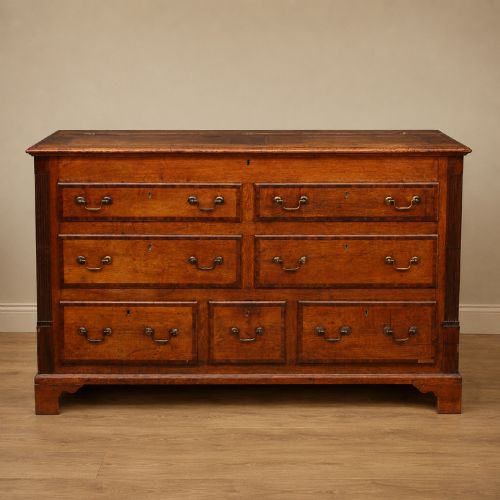


Georgian Mahogany Mule Chest
These georgian mahogany mule chest examples are sturdy storage pieces combining deep trunk space with integrated drawers, built to last generations.

Georgian Mahogany Mule Chest
A georgian mahogany mule chest bridges the gap between a traditional blanket box and a chest of drawers, offering deep lidded storage alongside one or more lower drawers. You are most likely to encounter George III and George II period examples featuring rich timber grains.
Makers designed these storage trunks for domestic utility in country houses and town residences alike. The form frequently appears under alternative period names such as housekeeper trunks, silver chests, or Lancashire chests.
The evidence shows these pieces span from mid-eighteenth century creations around 1750 up to the early nineteenth century around 1800. They combine box storage with chest of drawers functionality in singular cabinet forms.
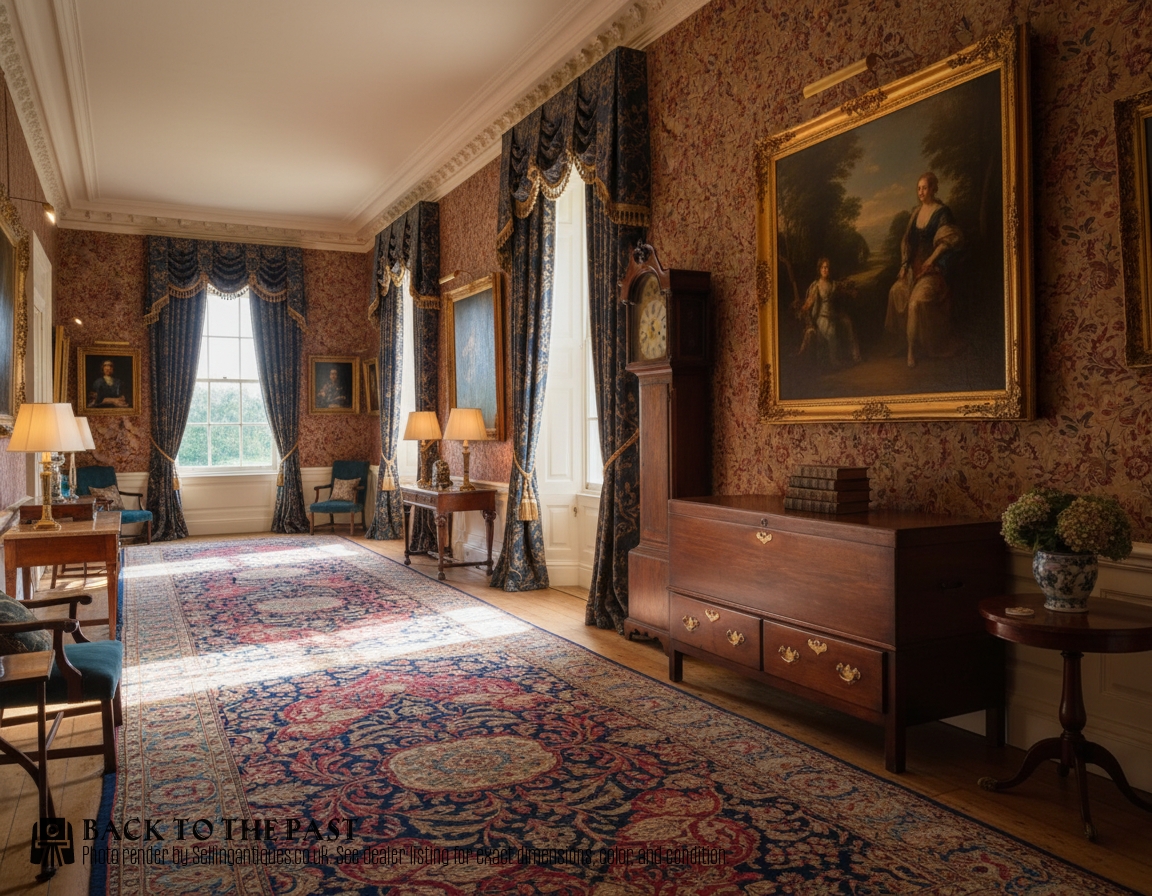
How they were made
Cabinetmakers constructed these pieces primarily using solid mahogany, frequently supported by internal oak frameworks for structural integrity.
Decoration often involved fruitwood inlay, crossbanding, and fitted brass hardware to accentuate the polished timber surfaces.
Georgian Mahogany Mule Chest Retail Price Guide 2026
Typical asking prices for georgian mahogany mule chest among the pieces listed under this phrase on Sellingantiques today, from the lower quarter to the upper quarter. They describe what is for sale here now, not the wider market.
Listed items span the Georgian period, George II, and George III styles, utilising mahogany, oak, fruitwood inlay, and brass.
What varies in quality
The distinction between standard utility items and superior examples lies in the selection of timber figures and the precision of the fruitwood inlay. Better pieces display deliberate grain matching across the drawer fronts and lid panels.
Hardware choice also separates categories, where original brass handles and escutcheons elevate the piece above those fitted with later replacements.
The Georgian Mahogany Mule Chest Glossary
- Crossbanding
- A decorative border technique where thin strips of veneer are laid across the grain of the primary wood. This frames panels on drawers and lids.
- Fruitwood inlay
- The practice of embedding contrasting light fruitwood into the mahogany surface. It creates geometric patterns or floral motifs.
- Mule chest
- A hybrid storage form featuring a lift-up lid above one or more functional lower drawers. It serves both blanket storage and linen organisation.
- Chest on stand
- A raised storage configuration where a main chest sits upon an integrated support frame with legs. This elevates the composition off the floor.
Georgian Mahogany Mule Chest: Frequently Asked Questions
What is a mule chest?
A mule chest is a traditional storage furniture piece that combines a hinged trunk at the top with one or more drawers built into the base.
This hybrid design allowed owners to store bulky blankets above while keeping smaller garments or linens neatly separated below.
How do I date a Georgian chest?
Dating relies on observing construction methods, timber choices, and stylistic cues from specific reigns within the Georgian era. Pieces from the mid-eighteenth century often display different proportions compared to those made around eighteen hundred.
Examine the secondary woods like oak and the complexity of any fruitwood inlay to narrow down the decade of production.
Where were mule chests used?
These large storage trunks sat primarily in bedrooms, hallways, and housekeepers rooms of large country houses. Their robust construction handled daily domestic demands.
Today they function effectively as living room coffee tables or bedroom storage cabinets.
Are mahogany and oak both used?
Cabinetmakers frequently combined multiple timbers within a single piece to balance strength and appearance. Mahogany provided the primary decorative exterior surface.
Oak commonly formed the internal drawer linings and structural framing for added durability.