


Georgian Wooden Blanket Box
A georgian wooden blanket box brings centuries of domestic storage into a modern room with honest joinery and practical depth.

Georgian Wooden Blanket Box
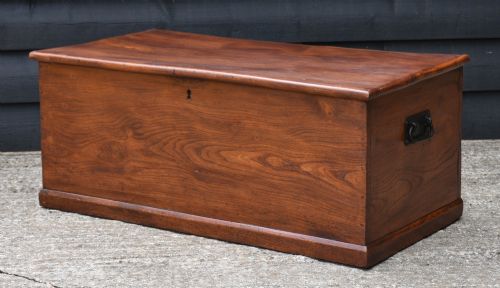
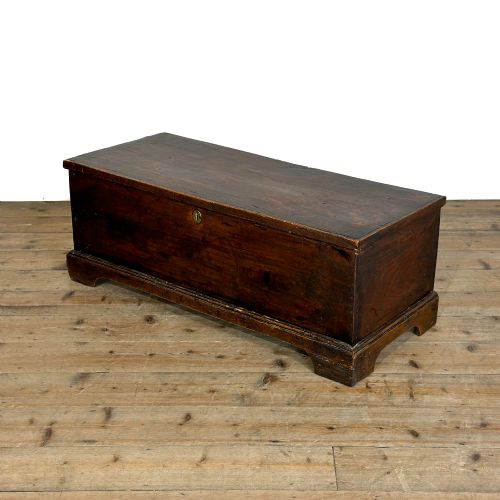
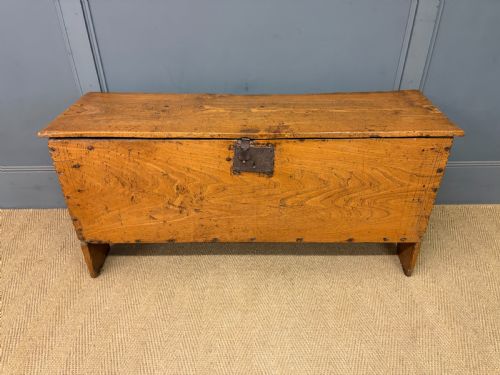
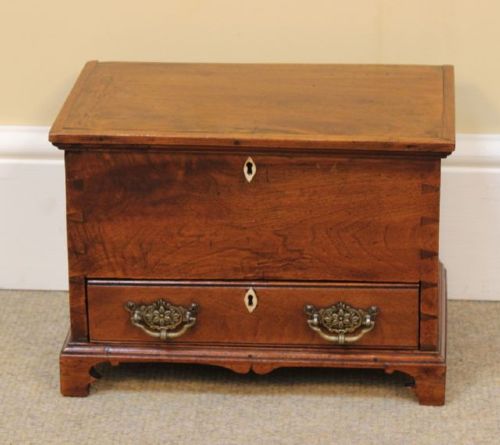
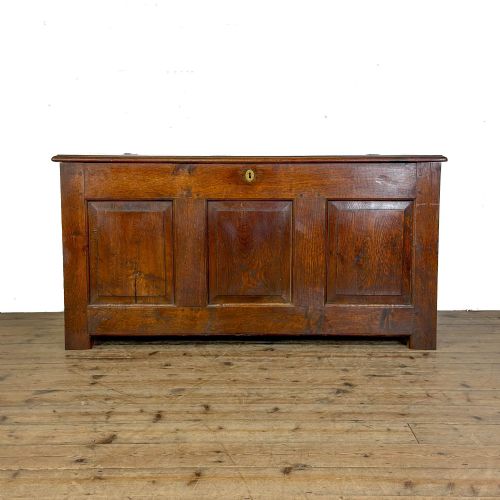
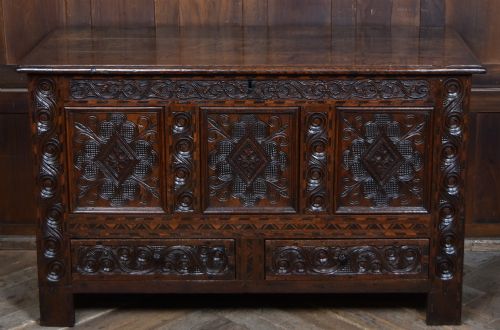
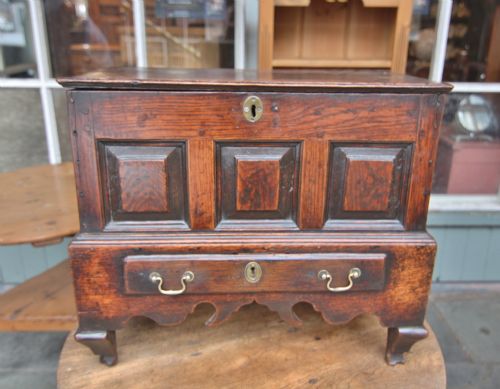
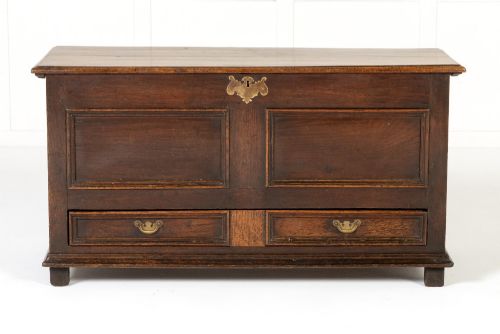
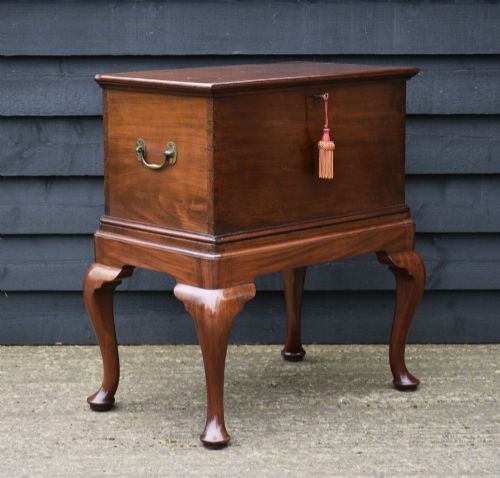
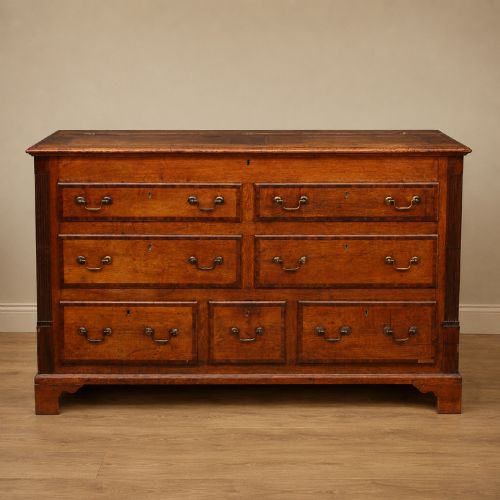
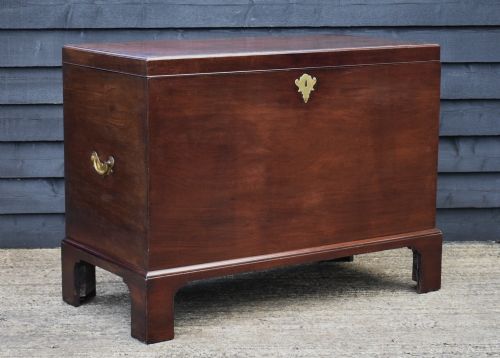
When you search for a georgian wooden blanket box, you encounter heavy timber storage pieces spanning the seventeenth through the nineteenth centuries, including mule chests with drawers, smaller coffer bach variants, and plain trunks. The examples appearing here most frequently are constructed from domestic oak and regional pine, often carrying the simple lines of country workshops alongside more refined mahogany pieces.
Regional variations shape these listings significantly, particularly through Welsh vernacular pieces and Lancashire mule chests that incorporate lower drawer sections beneath the primary storage well. Makers built these containers for daily household utility, storing textiles, linens, and personal valuables in substantial timber cases that doubled as seating.
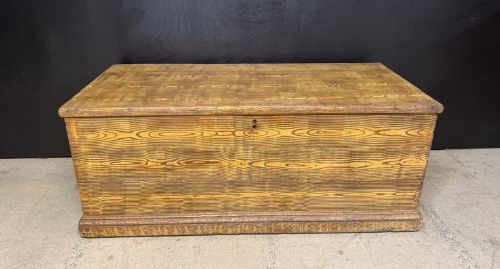
The material palette relies heavily on native hardwoods and softwoods, ranging from dark English oak and figured elm to painted pine and polished mahogany. While formal period definitions point to the eighteenth century, the surviving stock includes early rustic examples and later provincial interpretations that retain traditional construction methods.

How they were made
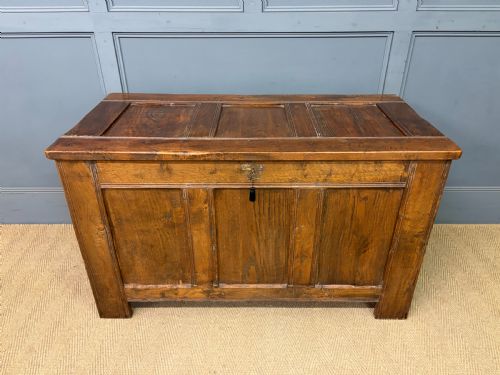
Joiners relied on frame-and-panel construction using native timbers such as oak, elm, and pine, allowing the wood to expand and contract naturally without splitting the primary structure. Hand-cut dovetails secure the drawer components in mule chests, while pegged mortise and tenon joints hold the main carcass together.
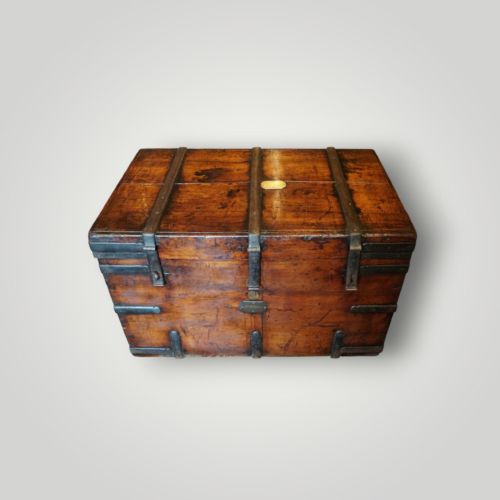
Iron and brass hardware provides both structural reinforcement and functional utility, appearing as strap hinges, carrying handles, and sturdy lock plates. Surface finishes depend on age and origin, moving from waxed raw timber and dark polish to traditional paint layers on vernacular pine chests.
Listings feature structural timbers including oak, pine, mahogany, elm, and walnut, alongside iron and brass hardware.
What varies in quality
The integrity of the timber and the retention of original surfaces dictate the standing of an individual piece, separating honest patinated examples from heavily restored ones. Original floorboards, feet, and ironwork elevate the historical weight of a chest.
Proportion and refinement in secondary woods, such as mahogany crossbanding or burr elm panels, distinguish regional country pieces from high-style urban commissions. The clarity of hand-carved details and the snugness of lid alignment reflect the skill of the original workshop.
The Georgian Wooden Blanket Box Glossary
- Mule chest
- A storage chest fitted with one or more drawers beneath the main internal compartment. This form bridges the gap between a traditional coffer and a chest of drawers.
- Coffer bach
- A miniature Welsh oak chest, translating literally as little chest. These small vernacular pieces served to store precious documents, linens, or small valuables.
- Crossbanding
- A decorative border technique where thin strips of veneer are laid across the grain of the primary wood. This detail appears on refined mahogany and oak pieces to frame panels.
- Panelling
- A method of framing thin wooden boards within a grooved structural border. This construction method prevents warping in large timber surfaces.
Georgian Wooden Blanket Box: Frequently Asked Questions
What is a mule chest?
A mule chest combines a traditional top-opening storage box with one or more lower drawers. This hybrid form gained popularity as households required easier access to stored linens without disturbing the contents on top.
They appear frequently in oak and mahogany, often associated with regional English and Welsh vernacular traditions from the eighteenth century.
How were these boxes used?
These large timber boxes served primarily to store heavy blankets, woolen garments, household linens, and personal valuables away from dampness and pests. In many domestic settings, their flat lids allowed them to double as benches or window seats.
Travellers and military officers also utilised reinforced trunks for moving personal belongings across long distances during the eighteenth and nineteenth centuries.
How do I identify a coffer bach?
A coffer bach is a distinctively small Welsh chest, usually constructed from oak and featuring a single small drawer beneath the main compartment. Their compact proportions distinguish them from standard blanket boxes.
Craftsmen often made these miniature chests as presentation pieces or dowry boxes for family members.
Are these chests made of solid oak?
Many of the earlier pieces rely entirely on solid native oak, while later or regional examples incorporate pine, elm, or mahogany for secondary parts and panels. Timber selection typically reflects the local resources available to the regional workshop.
Makers used contrasting woods like mahogany crossbanding or burr elm highlights to decorative effect on specific surface areas.