


Colonial Camphorwood Box
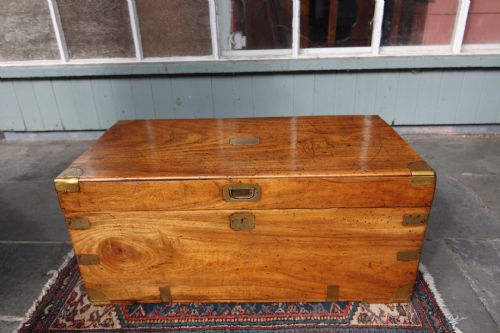
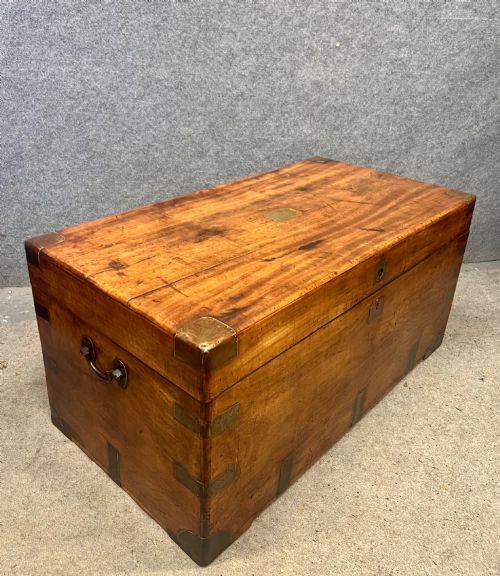
A colonial camphorwood box brings aromatic timber and robust campaign hardware together to store possessions with portable strength.
Colonial Camphorwood Box
A colonial camphorwood box is a sturdy storage chest designed for travel and endurance during the nineteenth century. These trunks combine practical utility with the distinctive scent and insect-repellent properties of camphor wood.
Most examples found here date from the nineteenth century, including specific years like 1850 and 1890, reflecting the Victorian campaign and Anglo-Indian colonial periods. Buyers frequently encounter forms styled as campaign chests or trunks fitted for military and civilian transit.
Makers constructed these pieces as trunks and coffers, incorporating secondary timbers such as teak and ebony. The dominant presence of campaign styles indicates they were built to withstand the rigours of movement across distant territories.
How they were made
Craftsmen utilised fragrant camphor wood for the primary body, harnessing its natural density and aromatic qualities to protect contents. Workshops combined this with contrasting dense timbers like teak and ebony for structural strength and decorative detail.
Trunks feature exposed metalwork where brass fittings, corners, and straps reinforce every joint. These brass elements protect the wooden edges from heavy handling and secure the lid during transit.
Opening an original nineteenth-century camphor wood trunk still releases the distinct, centuries-old aromatic scent that kept colonial insects at bay.
What varies in quality
Quality rests in the crispness of the brass fittings and the density of the primary timber selection. Better examples display heavier brass mountings, flush handles, and precise corner strapwork that sits completely flush with the camphor wood.
The choice of secondary woods also marks the distinction between standard and finer pieces, with select trunks integrating ebony details alongside camphor wood. The integrity of the original joints and the preservation of the timber surface dictate the standing of each chest.
The Colonial Camphorwood Box Glossary
- Campaign chest
- A portable storage box made in sections with recessed brass handles for military officers on the move. These chests disassemble or stack for easy transport.
- Camphor wood
- An aromatic timber native to Asia, prized for its distinct scent and natural resistance to insects. It forms the primary body of these colonial boxes.
- Brass bound
- A construction method where brass strips and corners reinforce the edges and joints of a wooden trunk. This protects the chest from the impacts of long journeys.
- Anglo-Indian
- A descriptive term for decorative arts and furniture produced in India under British influence during the nineteenth century. These pieces often blend British furniture forms with local timbers.
Colonial Camphorwood Box: Frequently Asked Questions
What is a colonial camphorwood box?
A colonial camphorwood box is a nineteenth-century storage trunk built from aromatic timber and reinforced with brass for travel.
These chests were utilised during the Victorian campaign period to transport personal belongings across long distances.
How were these chests used?
Officers and travellers used them to pack uniforms, books, and valuables while moving between distant stations.
The sturdy brass bindings and solid wooden construction allowed the trunks to endure rough handling on ships and carriages.
Why use camphor wood?
Camphor wood emits a strong, distinct fragrance that naturally deters moths and other insects from damaging stored textiles.
This made the timber an ideal material for protecting clothing in humid colonial climates.
How do I date a campaign chest?
Dating relies on the style of the brass hardware, the method of construction, and the specific period characteristics.
Nineteenth-century examples often feature heavy brass corners and recessed drop handles designed for military transport.