
Figured Walnut Drawers
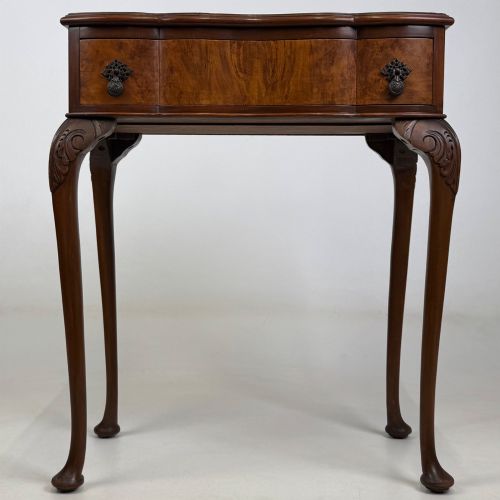
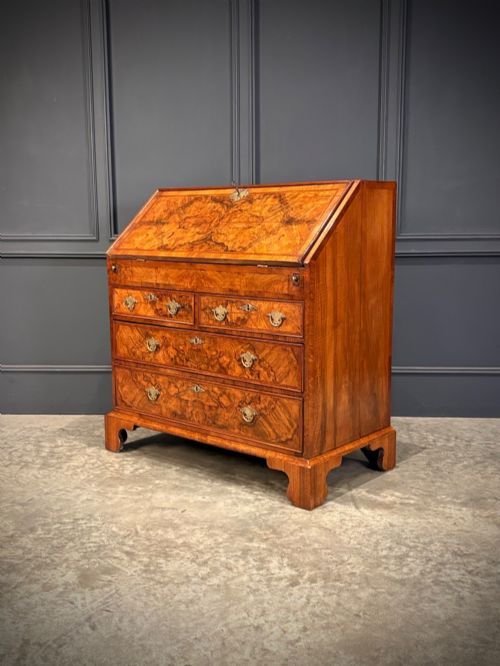
Figured walnut drawers bring rich timber grain and historic depth into a room, offering functional storage with exceptional visual presence.
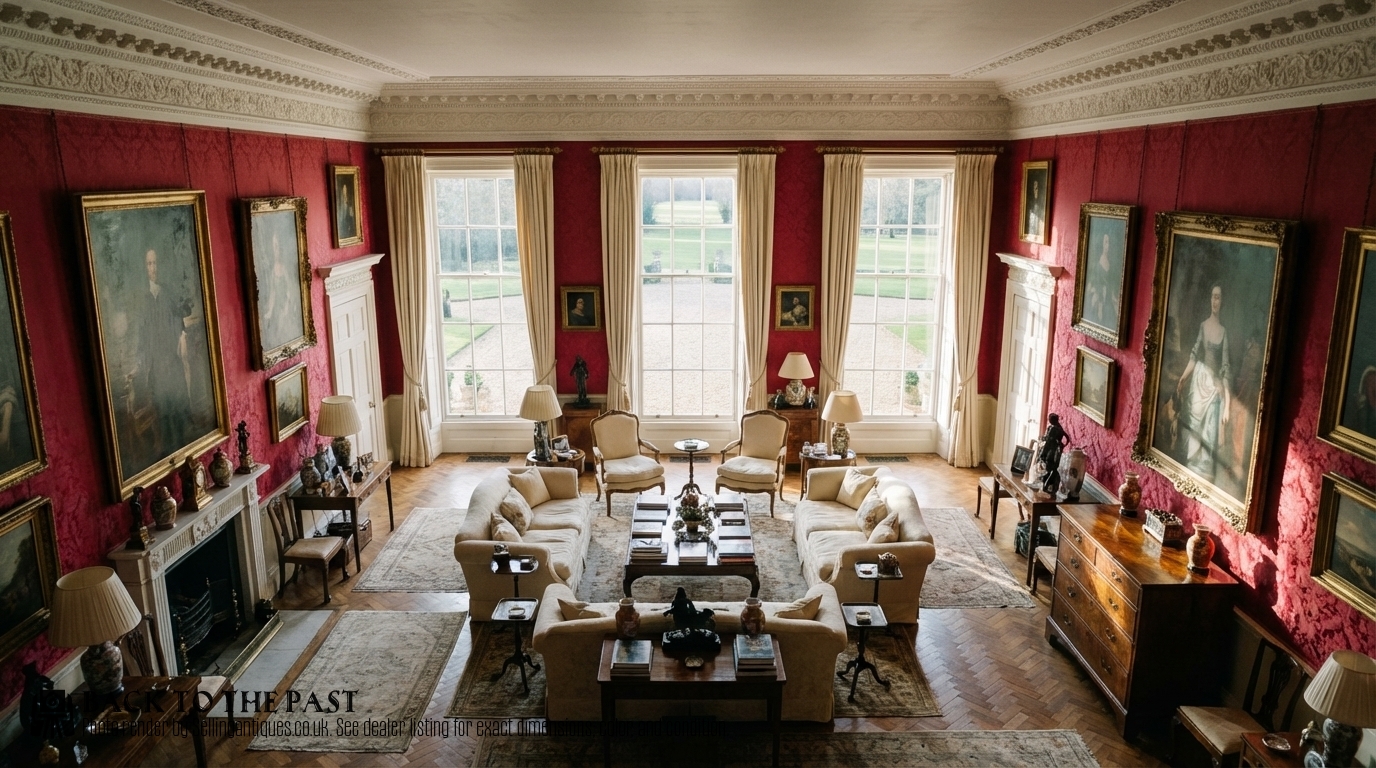
What figured walnut drawers are
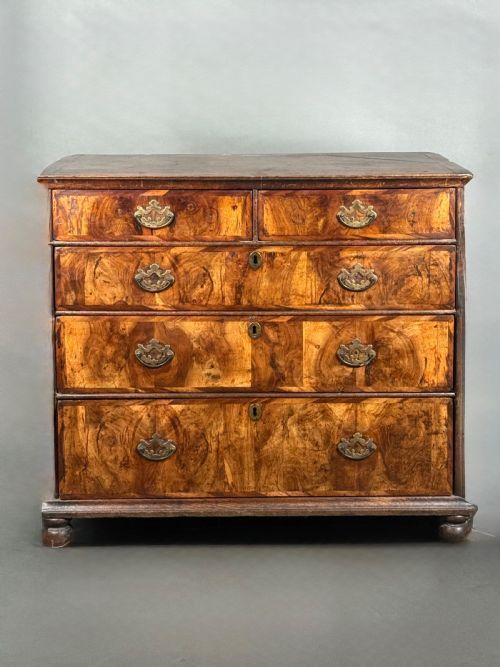
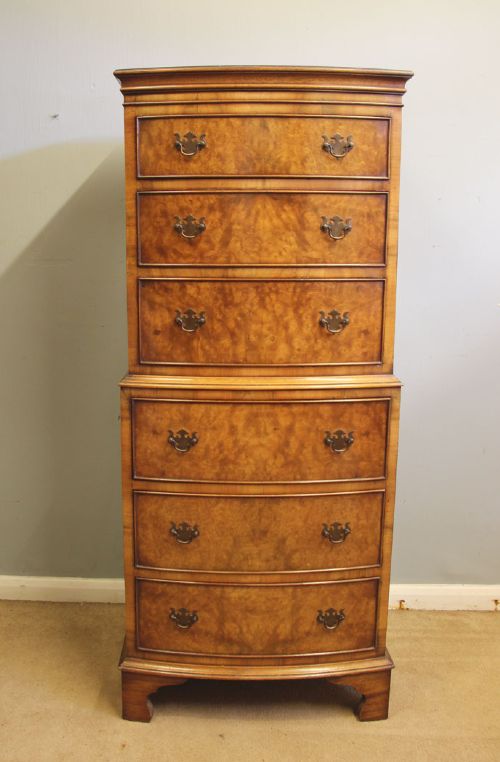
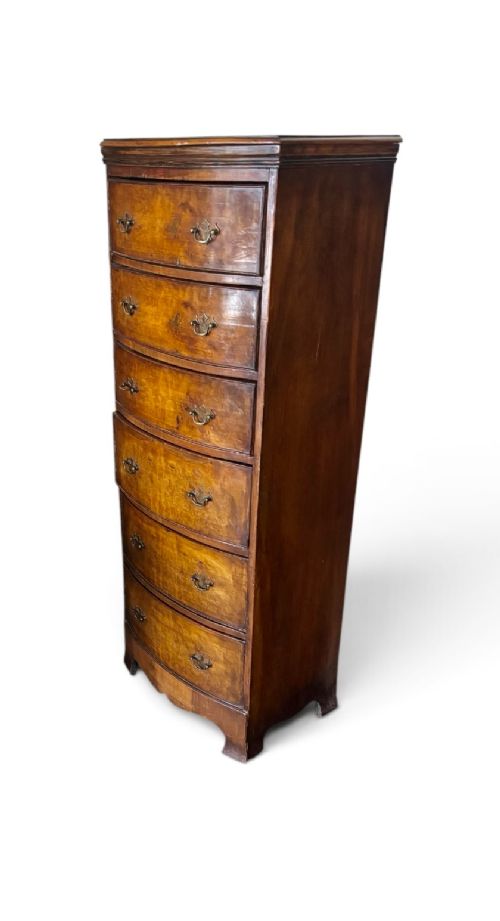
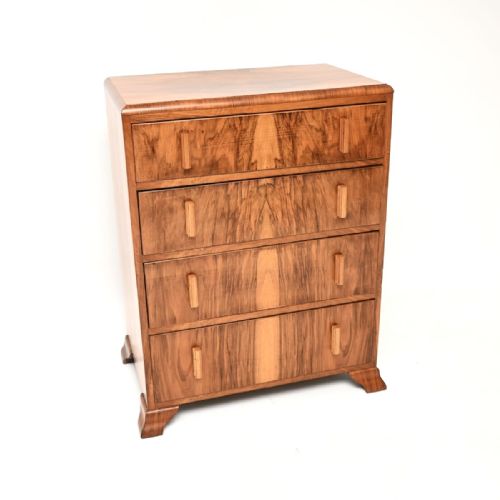
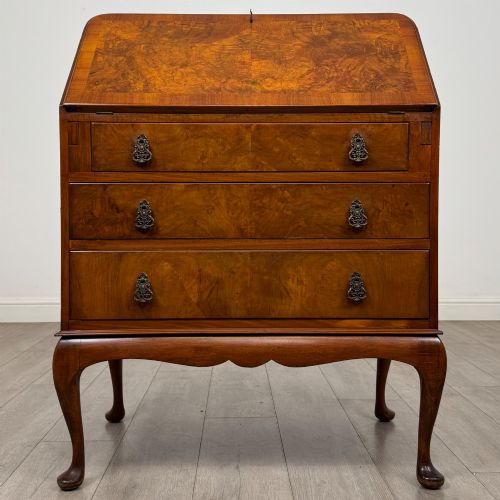
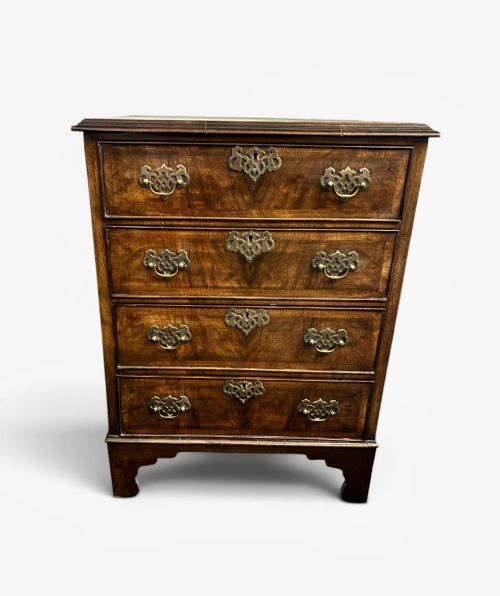
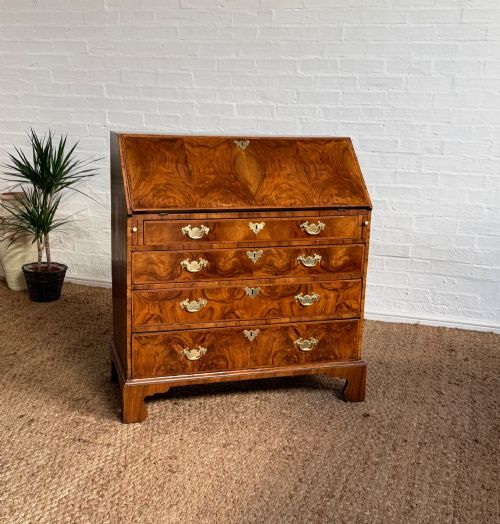
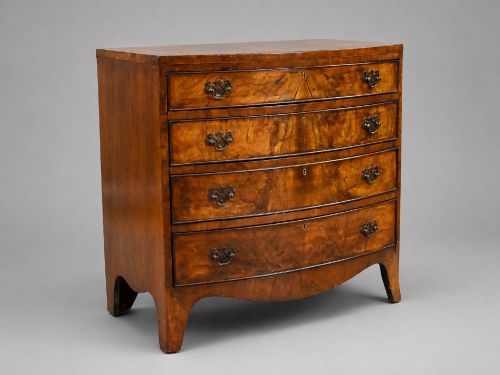
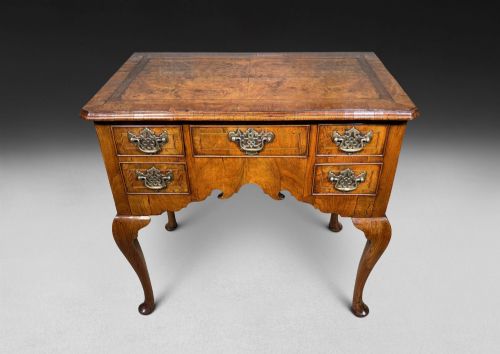
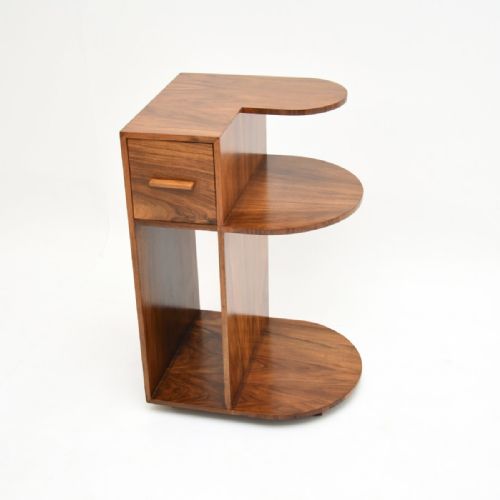
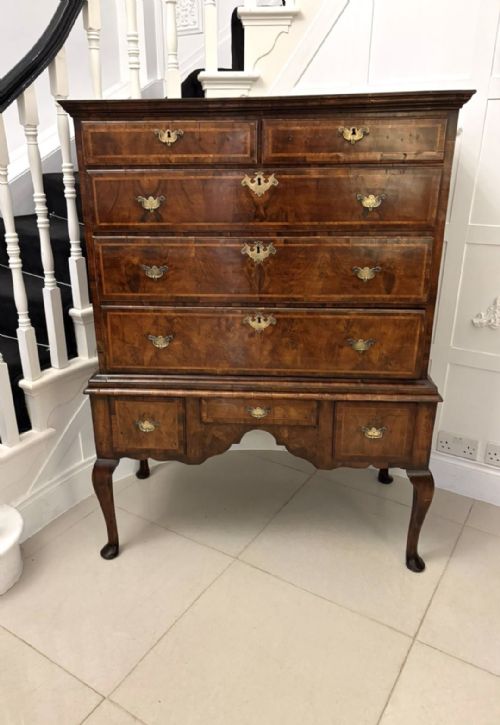
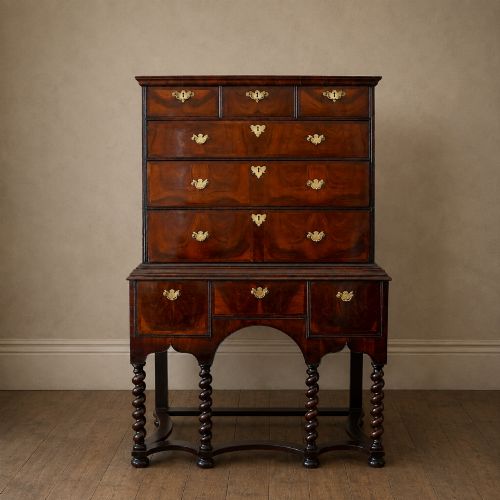
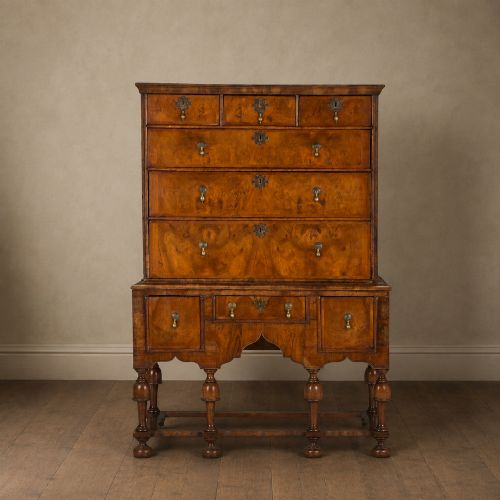
Figured walnut drawers encompass chest of drawers forms spanning from the early eighteenth century through to the Art Deco period of nineteen thirty. Buyers encounter pieces created across distinct historical eras including George I, George II, Queen Anne, and Victorian campaigns. The selection ranges from compact small chests and tallboys to substantial chest on chest designs.
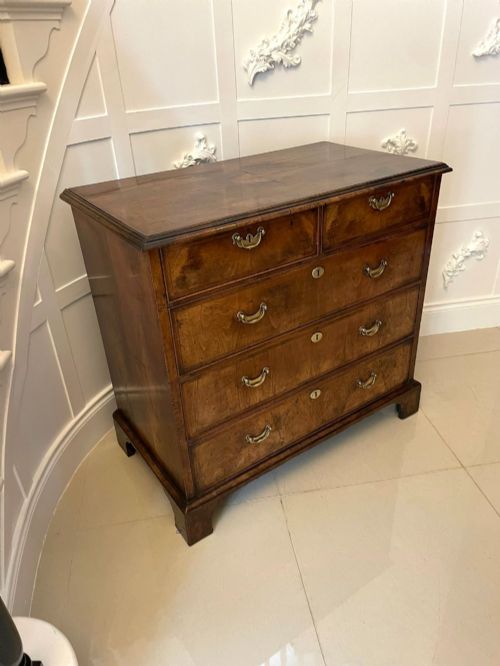
The most common form met on this page is the classic chest of drawers, appearing in single pieces, two-part configurations, and chest on stand formats. Examples frequently utilise walnut veneer over supportive structural timbers, displaying the characteristic lively grain patterns that define the group.
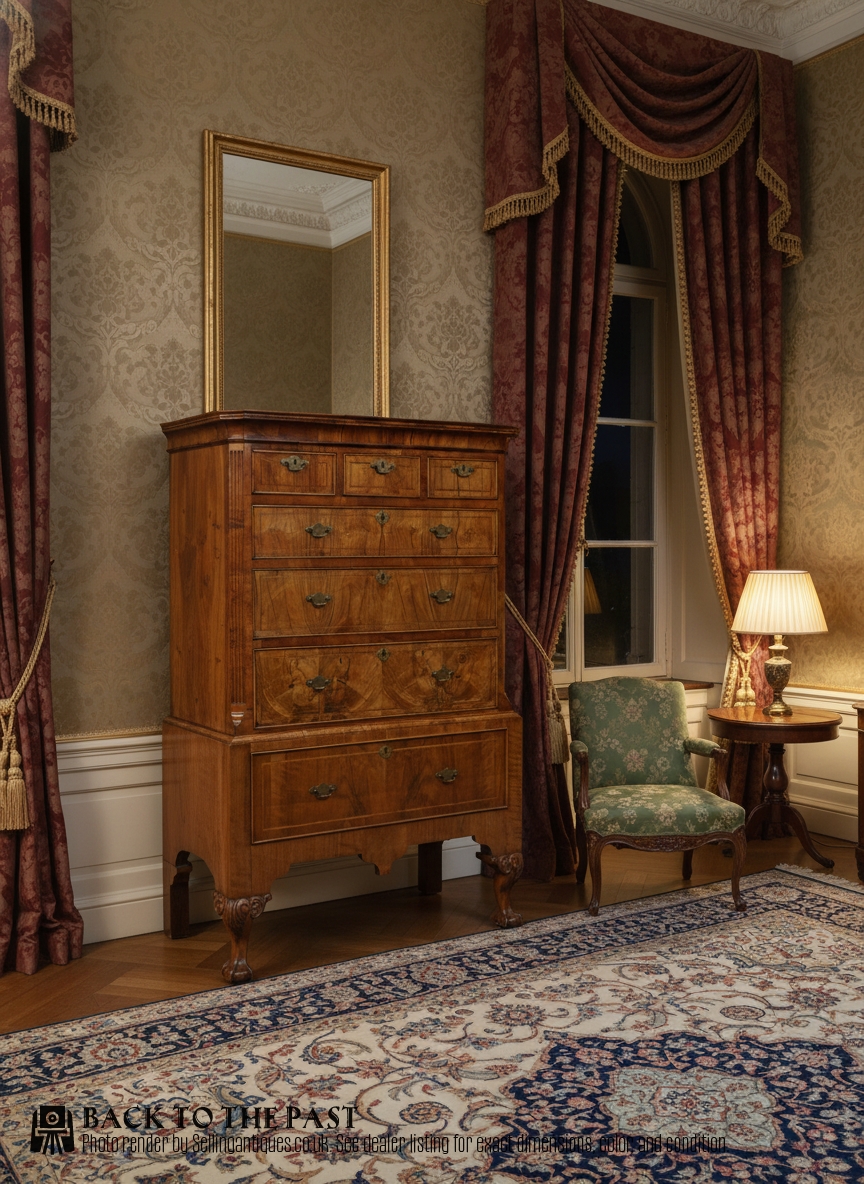
What varies in quality
Quality rests upon the selection and matching of the timber veneer across the drawer fronts and top surfaces. Superior examples demonstrate continuous, balanced grain patterns that flow logically across the structure.
The sophistication of secondary decorative elements, such as precise cross-banding and the retention of original brass hardware, elevates certain pieces above standard production.
Retail Price Guide 2026
Typical UK retail prices for figured walnut drawers, calculated from the Sellingantiques database of over a million retail prices indexed since 2003. This retail price guide relies exclusively on Sellingantiques data; no external sources or auction records are used, so the figures do not describe the wider market.
Military campaign chests hid their brass handles in recessed pockets so officers could stack them neatly inside tents.
Druce And Co
The Figured Walnut Drawers Glossary
- Veneer
- A thin layer of figured walnut timber applied to a supportive secondary wood like oak. This technique allowed cabinetmakers to display striking grain patterns across large surfaces.
- Cross-banding
- A decorative border technique where strips of walnut veneer are laid perpendicular to the main grain direction. It frames drawer fronts and top panels.
- Chest on chest
- A tall storage form consisting of a lower chest supporting a slightly smaller upper chest. This design maximises vertical storage capacity.
- Campaign chest
- A portable furniture form divided into sections with inset brass handles for military transport. Victorian examples utilise this practical construction.
- Tallboy
- A tall single or two-part chest providing multiple tiers of drawers. These pieces offer significant vertical presence within a room.
Frequently Asked Questions
How do I identify a George I figured walnut chest?
George I examples typically date from the early eighteenth century and often feature two-part construction with five drawers. They frequently display rich grain patterns supported by oak linings.
These pieces often incorporate cross-banding and feather inlay around the drawer perimeters, reflecting the cabinetmaking standards of the period.
What is the difference between a tallboy and a chest on chest?
A tallboy generally refers to a single tall chest of drawers or a combination cabinet designed for vertical storage. They provide substantial capacity while occupying a compact floor footprint.
A chest on chest specifically comprises two distinct sections stacked vertically, where a smaller upper chest rests directly upon a larger lower base.
How should I care for antique walnut veneer?
Keep walnut furniture away from direct sunlight and sudden temperature shifts to protect the historic veneer from drying or splitting. Regular dusting with a soft, dry cloth preserves the polished surface.
Avoid commercial silicone polishes and excess moisture, opting instead for traditional wax maintenance sparingly applied by hand.
Are campaign chests different from standard chests?
Campaign chests feature specific structural adaptations designed for travel, including recessed brass handles and corner brackets to prevent damage during transit. They are commonly built in separate modular sections.
Standard chests of drawers are stationary household items built for domestic interiors rather than frequent relocation.