




Brass Bound Teak Chest
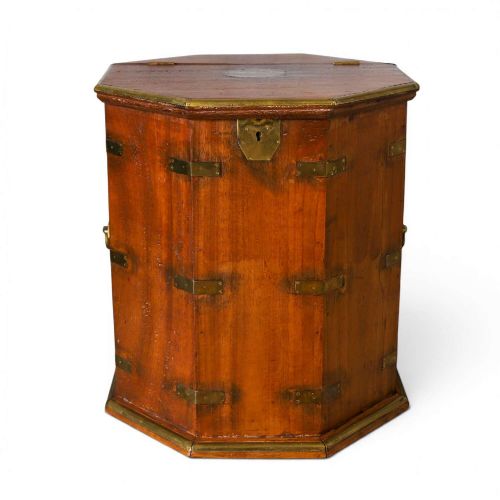
A brass bound teak chest offers sturdy travel storage built for officers, merchants, and long journeys across the nineteenth century.
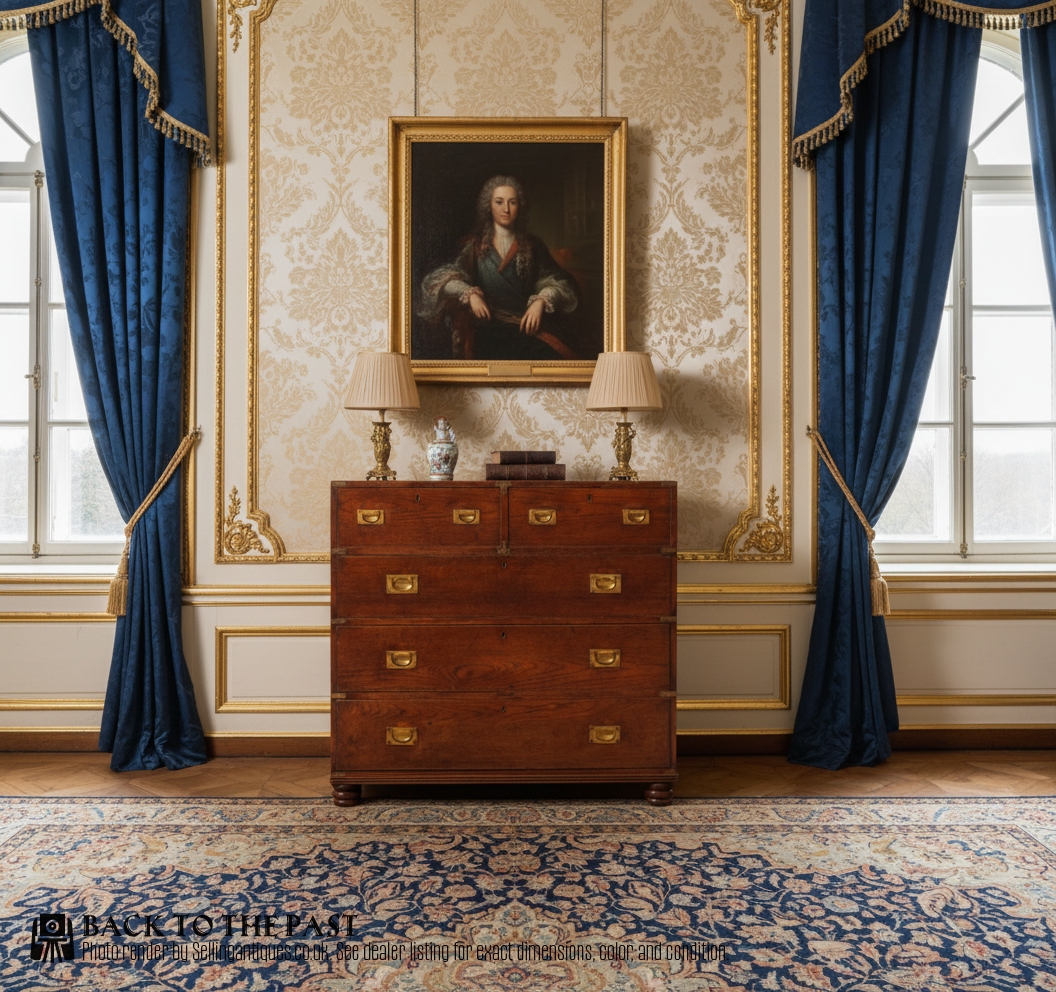
Brass Bound Teak Chest
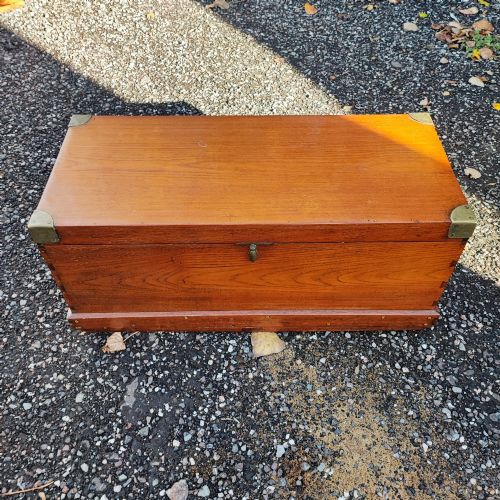
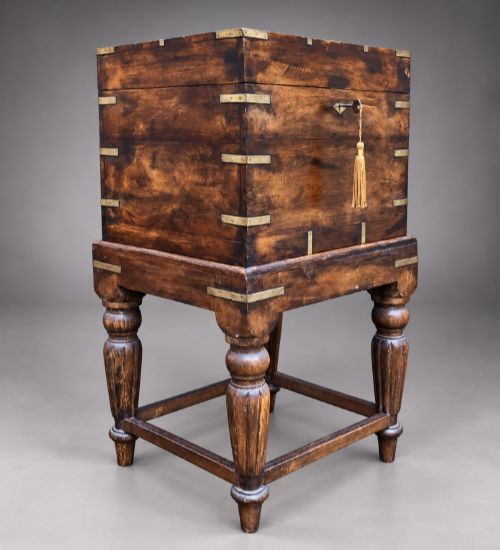
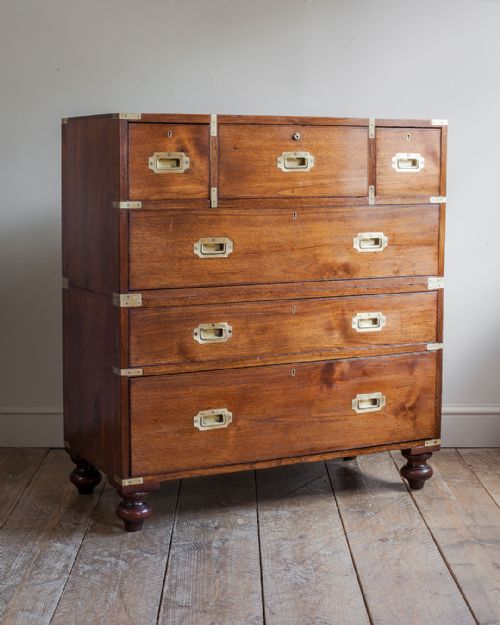
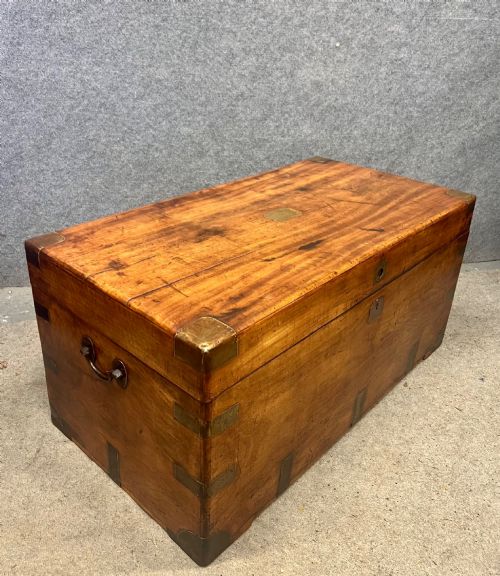
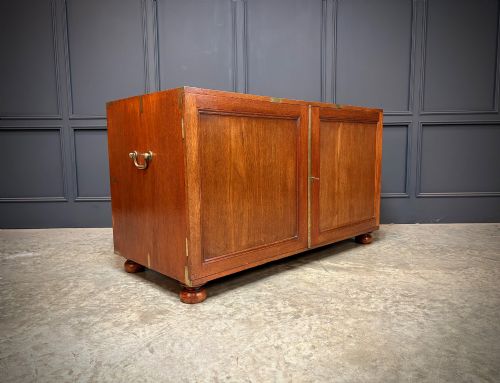
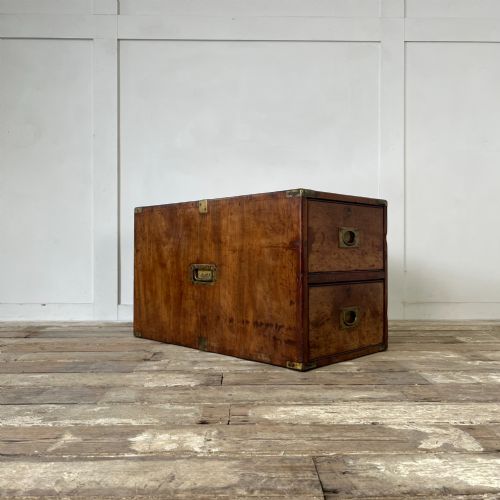
A brass bound teak chest is a heavy wooden storage piece built for travel and colonial service. You will most often find two-part campaign chests of drawers and sturdy trunks from the nineteenth century on this page.
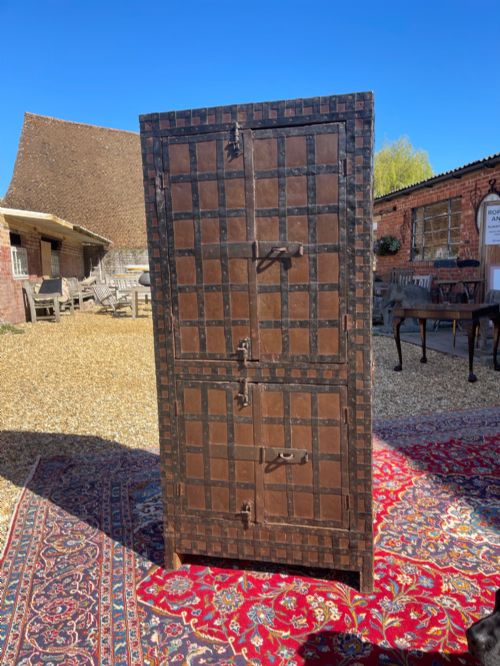
These pieces range from military secretaire chests with fitted writing drawers to merchant trunks and Anglo-Indian storage boxes. They combine dense tropical timbers with metal reinforcement designed to withstand repeated transit.
The origins span English military workshops, Anglo-Indian production centres, and Zanzibar, reflecting the global movement of officers and traders. Each form serves a practical function for portable living.
Materials and Construction
Makers utilised dense timbers such as teak and padouk because these woods resist humidity and warping during long sea voyages. Mahogany and iron also appear in specific frames and internal structures.
Brass corners, straps, and flush-fitting inset handles protect the edges and allow pieces to pack tightly together. Many examples divide into two stacked sections with recessed carrying brackets on the sides.
Joints are tightly secured to endure rough handling, while internal compartments often feature secret drawers and fold-down writing surfaces for campaign use.
Brass Bound Teak Chest Retail Price Guide 2026
Typical asking prices for brass bound teak chest among the pieces listed under this phrase on Sellingantiques today, from the lower quarter to the upper quarter. They describe what is for sale here now, not the wider market.
The listings on this site record pieces built across the nineteenth century, including Victorian military styles and earlier Regency examples.
Judging Quality and Distinction
Quality rests on the crispness of the brasswork and the precision of the joinery where the sections meet. Superior pieces retain their original recessed handles, lock escutcheons, and internal fittings without later replacements.
The density and grain of the teak timber set finer examples apart from simpler utility boxes. Maker stamps from established military outfitters add a documented provenance that elevates a piece within its period.
Army & Navy·A J Wright & Co Liverpool
The Brass Bound Teak Chest Glossary
- Campaign chest
- A portable chest of drawers built in two separate sections for easy transport by military officers. These units feature removable feet and inset brass handles.
- Secretaire
- A cabinet or chest containing a pull-out drawer with a hinged writing surface and small pigeonholes. This provides a compact desk space inside a travel trunk.
- Cellarette
- A fitted chest or box designed to hold wine bottles securely during transport. They often include internal partitions lined for beverage storage.
- Padouk
- A heavy tropical hardwood with a reddish hue used in fine cabinet making and campaign furniture. It offers exceptional durability and a smooth grain.
- Escutcheon
- A flat plate of brass surrounding a keyhole that protects the surrounding wood from wear. On these pieces, they are typically countersunk flush with the surface.
Brass Bound Teak Chest: Frequently Asked Questions
What is a campaign chest?
A campaign chest is a modular piece of furniture designed to split into multiple sections for military officers on the move.
These chests feature flush brass mounts to prevent snagging during transport and sturdy carrying handles on the sides.
Why use teak for these chests?
Teak contains natural oils that protect the wood from moisture, warping, and insect damage in tropical climates.
This durability made it the primary material for furniture travelling across the British Empire.
How do two-part chests work?
Two-part chests stack one cabinet section on top of another and secure them with side brackets or internal locking pins.
This division allowed servants to lift and pack each half independently on wagons or ships.
Where were Anglo-Indian chests made?
Anglo-Indian chests were constructed in workshops across the Indian subcontinent for British officers and local merchants.
They combine traditional British campaign forms with regional carving styles and dense local hardwoods.