


Dark Wood Cellarette
A dark wood cellarette is a heavy timber vessel designed to store and cool wine, offering secure storage and period presence for a dining room.
Dark Wood Cellarette
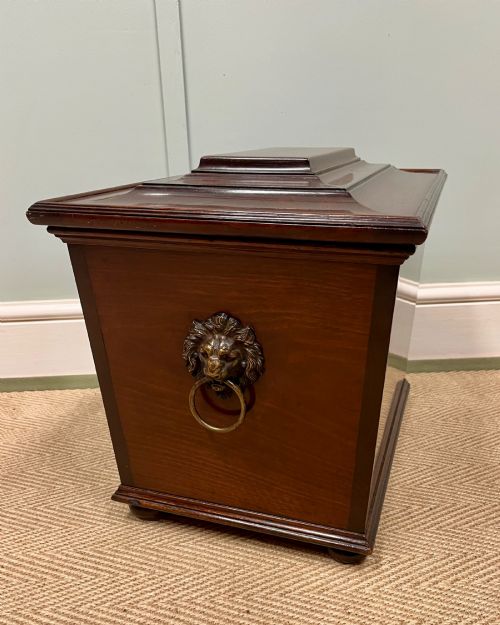
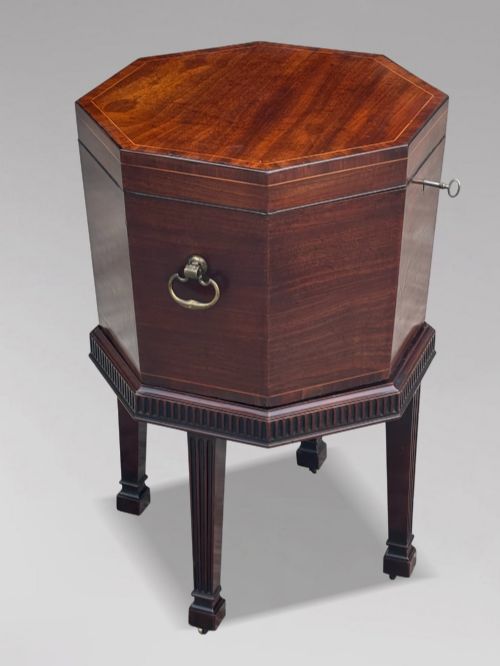
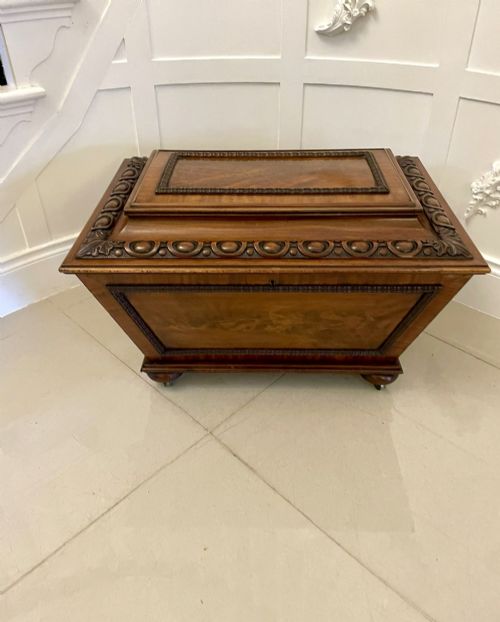
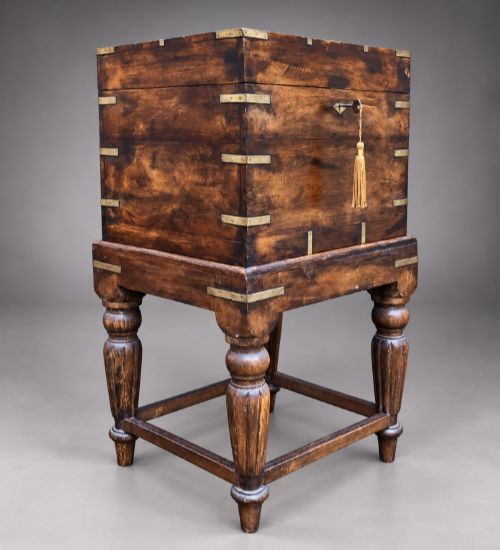
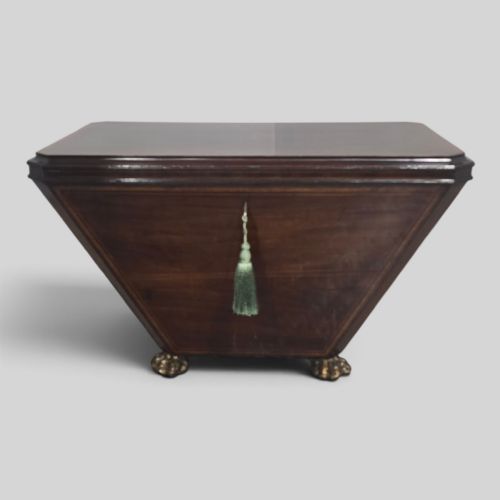
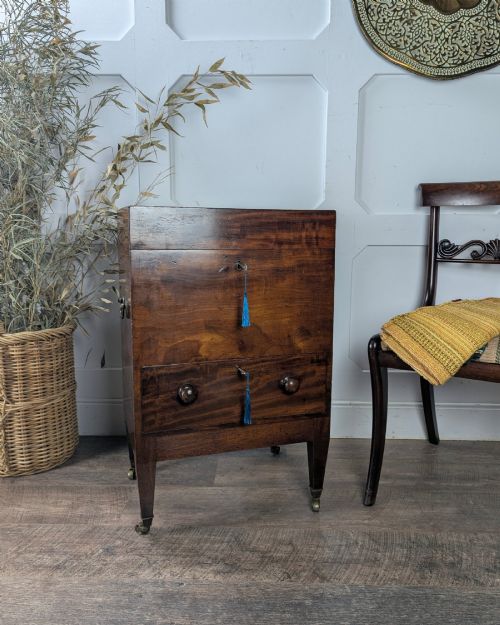
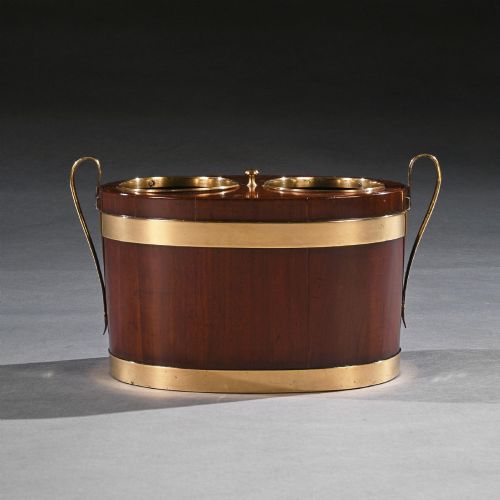
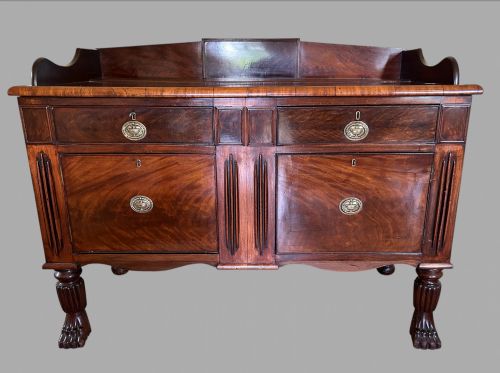
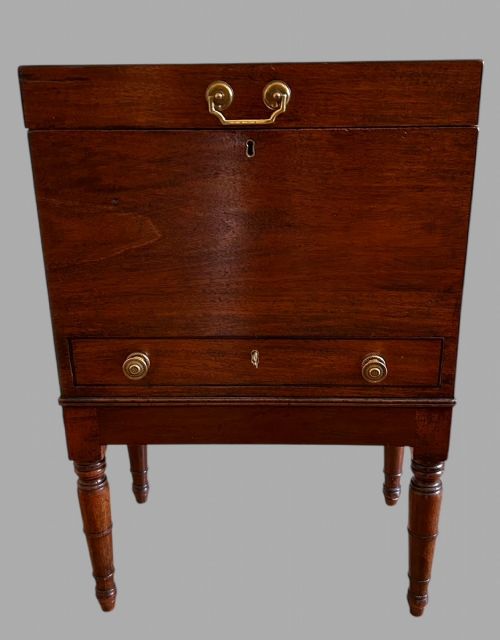
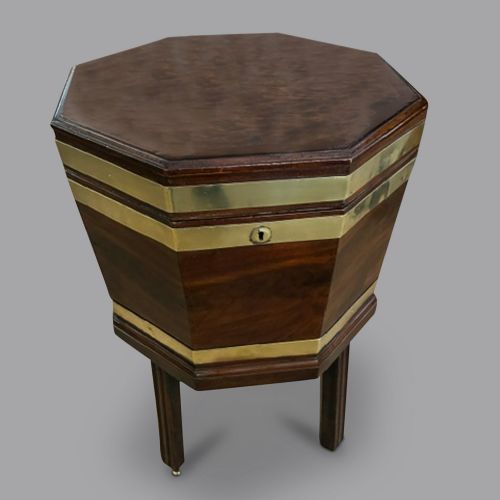
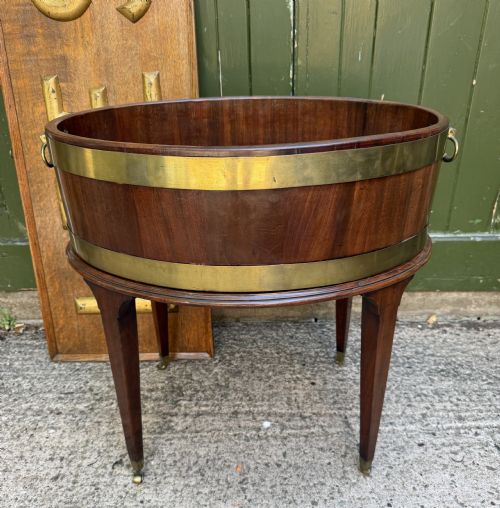
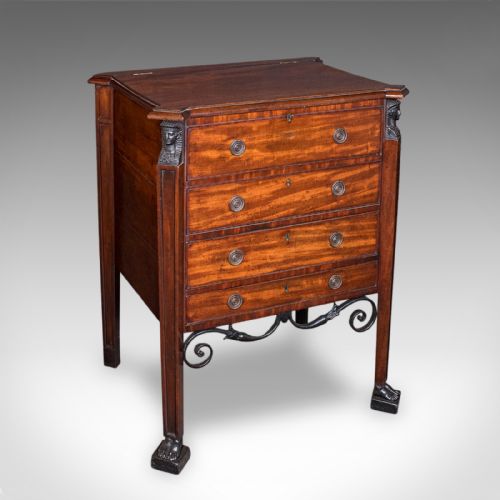
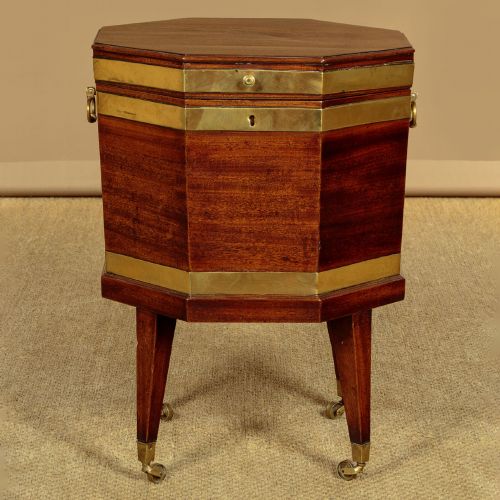
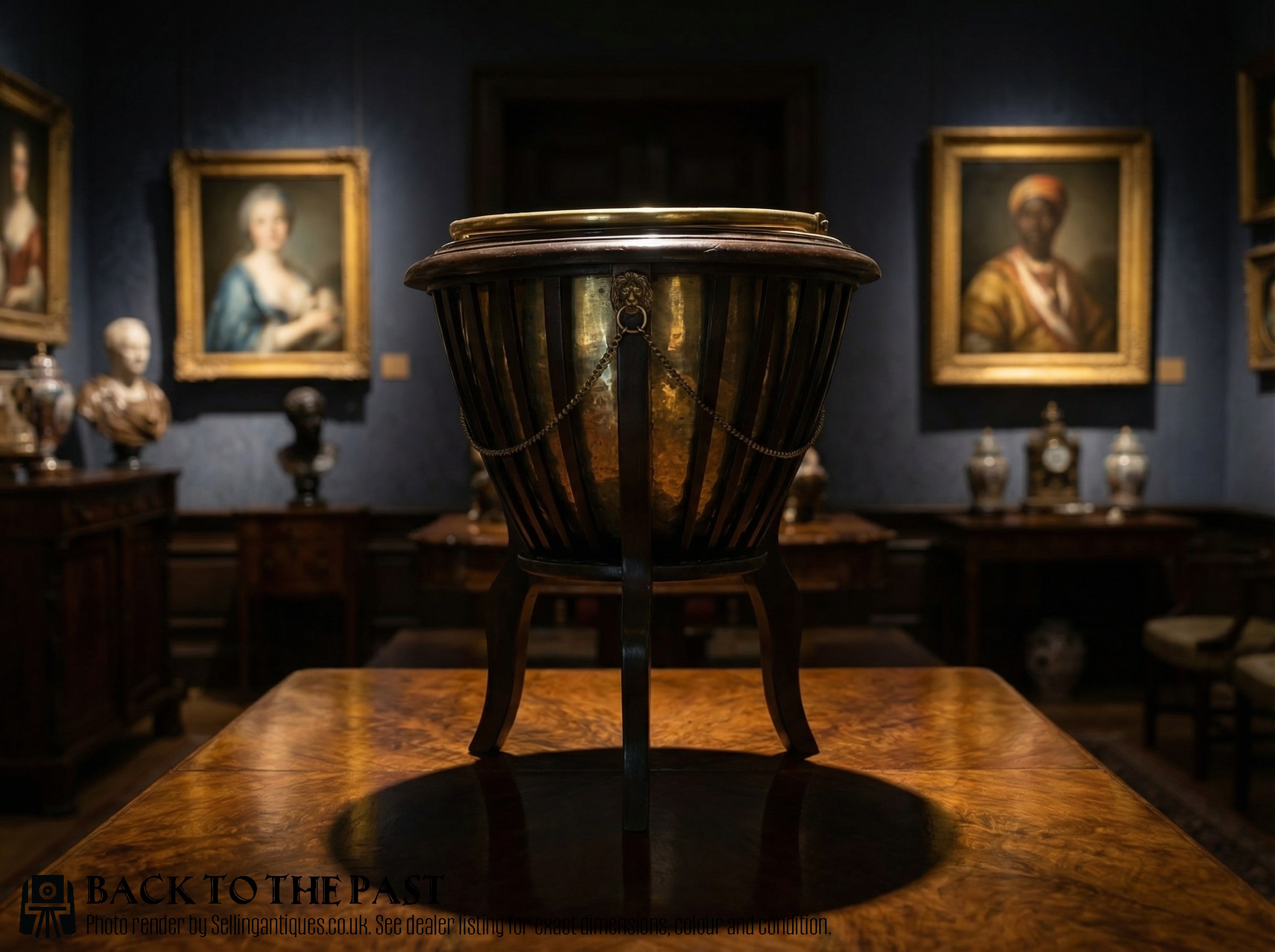
A dark wood cellarette typically takes the form of a freestanding oval, octagonal or sarcophagus-shaped chest designed to hold bottles of wine near the dining table. When searching this phrase, you encounter pieces spanning the Georgian, Regency and Victorian periods, often taking the alternate classification of wine coolers.
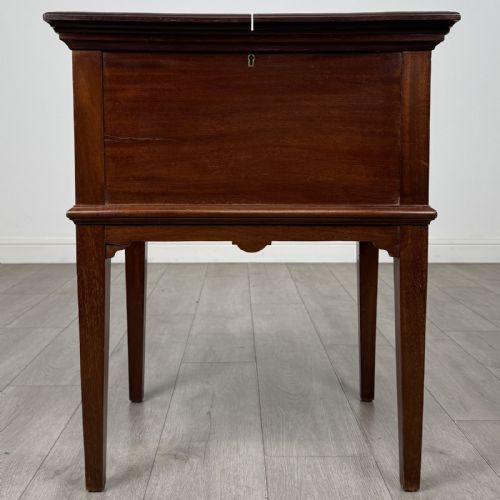
The majority of examples seen on this page are constructed from mahogany, ranging from plain timber to highly figured flame mahogany or padouk. Many rest upon integral stands with legs, while others sit directly on the floor as lidded boxes intended to slide beneath sideboards.
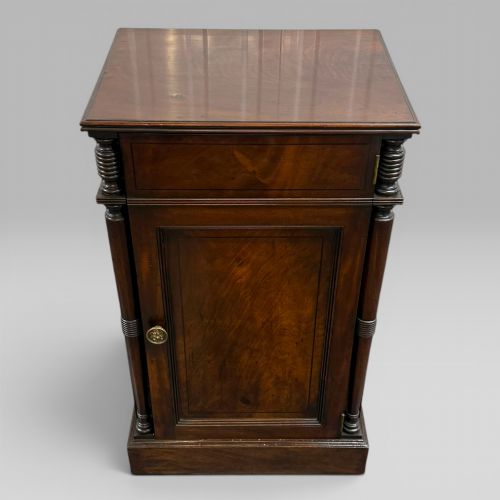
Origins vary from standard English workshops to provincial centres and Anglo-Indian production, reflecting different regional interpretations of wine storage. Occasional variations include sideboards with integrated compartments and plate-warmer pedestals performing similar functions.
Factors of quality
Quality rests primarily in the selection of the timber grain, such as dense flame mahogany, and the crispness of any brass binding or carved detail. Pieces attributed to documented makers display tighter joinery and more ambitious proportions than standard workshop output.
The integrity of the internal linings and partitions indicates whether a piece retains its original function or has undergone substantial timber alteration. Surviving original stands and matched bases preserve the correct height and balance intended by the maker.
Dark Wood Cellarette Retail Price Guide 2026
Typical asking prices for dark wood cellarette among the pieces listed under this phrase on Sellingantiques today, from the lower quarter to the upper quarter. They describe what is for sale here now, not the wider market.
Several items double as improbable fireside blanket boxes, proving past owners were endlessly inventive with heavy timber wine storage.
Edwards and Roberts·Gillows·Freemans of Norwich
The Dark Wood Cellarette Glossary
- Cellarette
- A lockable container used for storing wine bottles near the dining table. These timber boxes often contained lead-lined interiors to hold ice for chilling.
- Sarcophagus form
- A tomb-like shape with a steep domed lid and panelled sides popular during the Regency and late Georgian periods. This silhouette allowed for deep internal storage capacity.
- Brass bound
- Secured with heavy metal hoops or straps at the corners and edges for strength and decoration. This technique mimics the construction of coopered water casks.
- Padouk
- A heavy tropical hardwood showing reddish-brown tones utilised in Anglo-Indian cabinet-making. It provided durability and resistance to splitting.
- Jardiniere
- A decorative pot or container for plants and flowers that shares construction methods and forms with wine coolers. Many antique examples served dual purposes in formal rooms.
Dark Wood Cellarette: Frequently Asked Questions
What is a dark wood cellarette used for?
These vessels were designed to hold wine bottles securely inside dining rooms before widespread refrigeration. Interiors often featured lead linings to hold ice and keep bottles cool.
Over time, many owners repurposed these lidded chests as blanket boxes or general fireside storage cases. They remain practical additions to modern dining spaces for bottle storage.
How do I tell a Georgian cellarette from a Victorian one?
Georgian examples often feature simpler oval or octagonal bucket forms with brass bands, or straightforward Chippendale-period lines. Timber choice tends towards dense, dark mahogany.
Victorian pieces frequently adopt heavier sarcophagus shapes with elaborate carved paw feet and bold mouldings. The proportions became grander to suit larger nineteenth-century drawing rooms.
Did all cellarettes come with stands?
Many early designs incorporated short legs or separate stands to raise the storage box off cold floors. Oval and octagonal wine coolers usually sat upon four moulded legs.
Other variants were built as low boxes intended to slide beneath sideboards or buffets when not in use. Both configurations appear regularly across different periods.
How do I care for antique mahogany wood?
Keep timber surfaces away from direct sunlight and steady heat sources to prevent the wood from drying and splitting. Regular dusting with a soft cloth maintains the natural lustre.
Apply traditional wax sparingly when the surface feels dry, avoiding modern silicone polishes that damage antique finishes. Good room humidity helps preserve structural joints.