
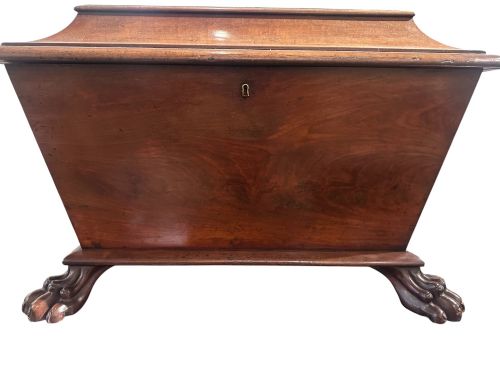


Carved Paw Feet Cellarette
These carved paw feet cellarette pieces are substantial wine coolers built to hold bottles securely in dining rooms, offering classic period proportions.
What they are
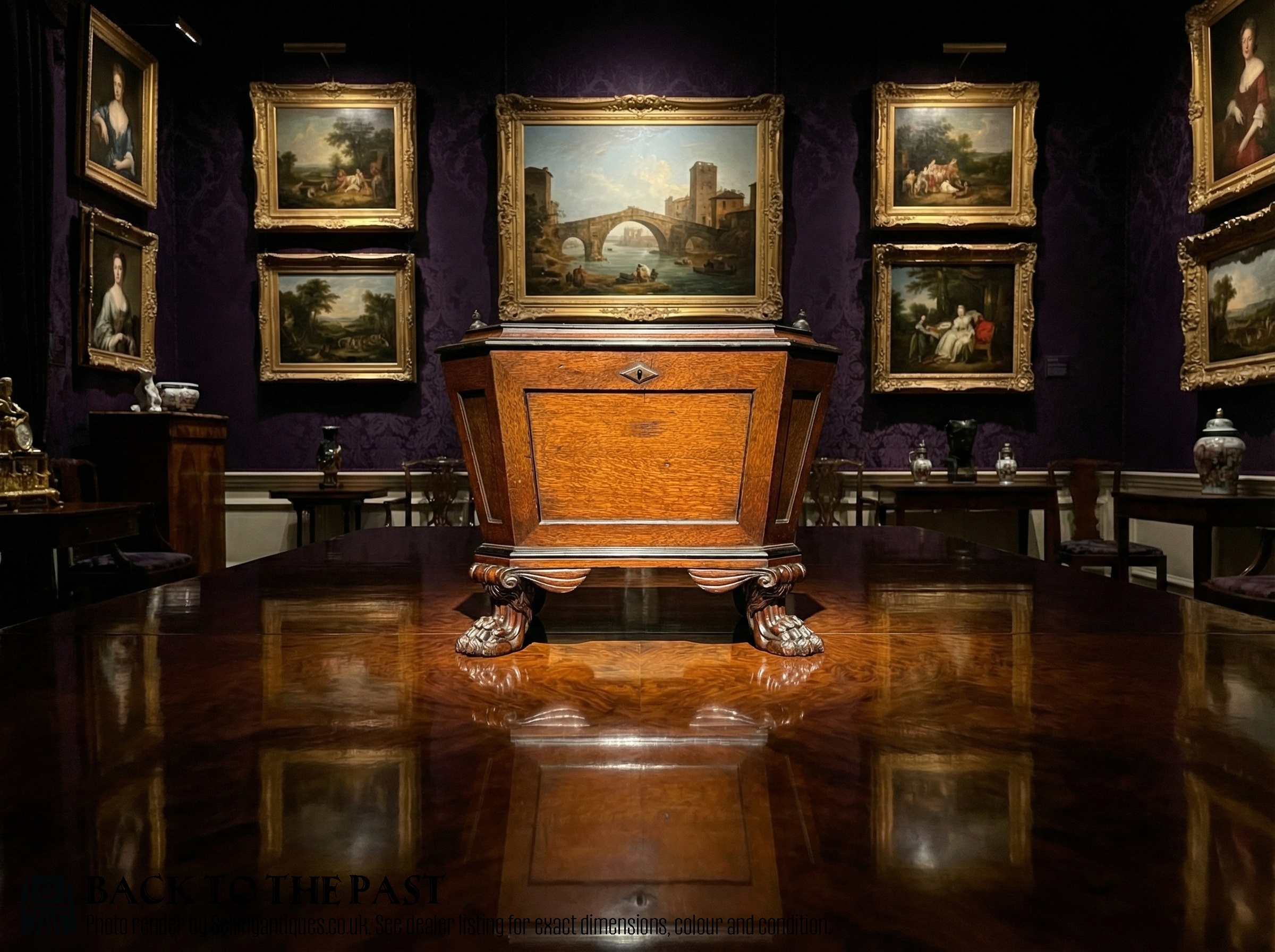
When buyers search for carved paw feet cellarette pieces, they find traditional wine coolers and cellarettes designed for storing bottles during dining. These containers appear in forms such as the sarcophagus shape.
The items span the Georgian, Regency, and nineteenth century periods. English origins dominate the selection alongside specific dates like eighteen twenty.
Examples include freestanding models and large variants intended for substantial dining spaces. The material palette ranges from mahogany and figured walnut to oak.
How they were made
Cabinet makers utilised dense hardwoods including mahogany, oak, and figured walnut to construct the bodies of these coolers. These materials provided the structural strength required for heavy containers.
Detailing includes carved paw feet placed beneath the main body of the vessel. Metal fittings such as brass appear alongside the primary timber construction.
Retail Price Guide 2026
Typical UK retail prices for carved paw feet cellarette, calculated from the Sellingantiques database of over a million retail prices indexed since 2003. This retail price guide relies exclusively on Sellingantiques data; no external sources or auction records are used, so the figures do not describe the wider market.
These stout paw feet stand ready to sprint across the dining room floor the moment the vintage port runs dry.
What varies in quality
The distinction between standard examples and superior items rests upon the choice of timber and the execution of the carving. Figured mahogany and walnut display richer grain patterns than plain timber.
Proportion and scale dictate the visual presence of the piece, with larger sarcophagus models demanding precise joinery. The refinement of the carved paw feet indicates the level of craftsmanship invested in the object.
The Carved Paw Feet Cellarette Glossary
- Cellarette
- A lockable container used for holding bottles of wine in the dining room. These vessels keep drinks cool and secure.
- Sarcophagus
- A monumental coffin-shaped design popular for large wine coolers during the Georgian and Regency periods. This form provides generous internal capacity.
- Regency
- An English design period spanning the early nineteenth century defined by classical restraint and archaeological influence. Pieces from this era often incorporate bold foot motifs.
- Figured mahogany
- Timber selected for its decorative and undulating grain patterns rather than a uniform surface. Cabinet makers reserved this material for prominent exterior panels.
Frequently Asked Questions
What is a cellarette used for?
A cellarette serves as a dedicated container for holding and chilling wine bottles within the dining room.
Historical examples kept bottles close to the dining table for convenience during long meals.
Are these wine coolers freestanding?
Many examples are designed to stand independently within a room rather than fit into fitted cabinetry.
Freestanding models allow placement against dining room walls or beneath sideboards.
What timbers were used for these coolers?
Cabinet makers built these pieces using durable hardwoods such as mahogany, oak, and figured walnut.
Brass fittings and carved wooden feet completed the construction.