

Antique Maritime Chest
An antique maritime chest is a sturdy travel container built for life at sea, prized for robust timbers and clever brass fittings.
Antique Maritime Chest
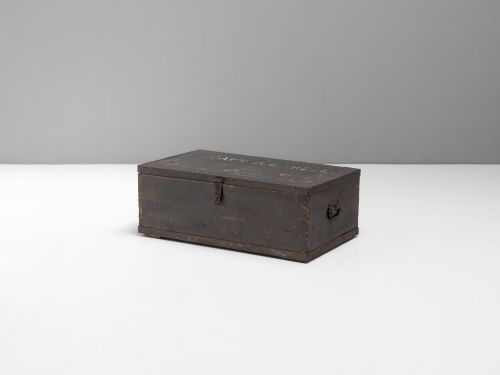
When you search for an antique maritime chest, you encounter sturdy wooden boxes designed to travel across oceans on ships or accompany officers on land. These pieces span centuries of naval travel, utilitarian storage, and military campaigns.
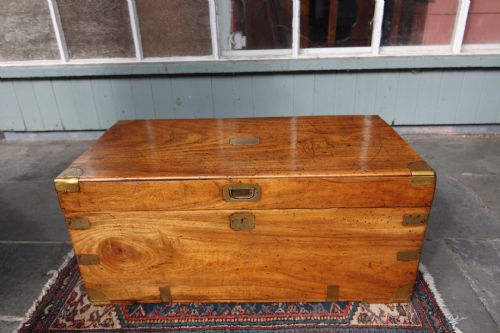
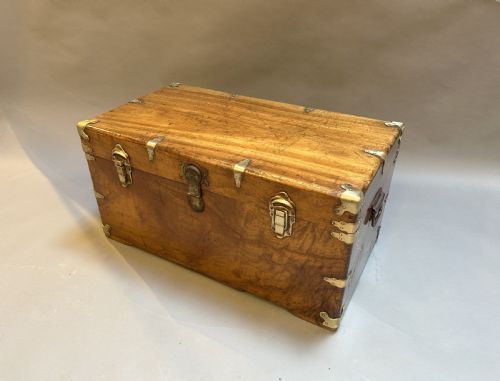
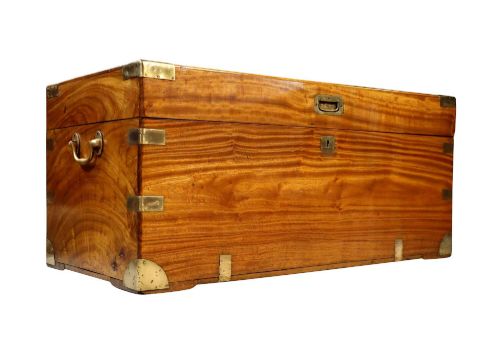
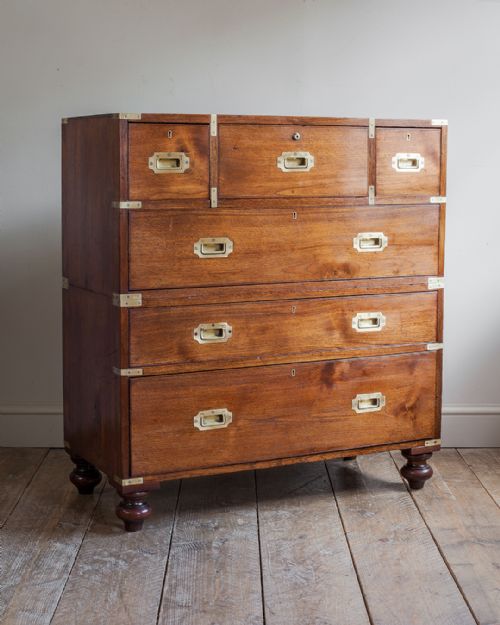
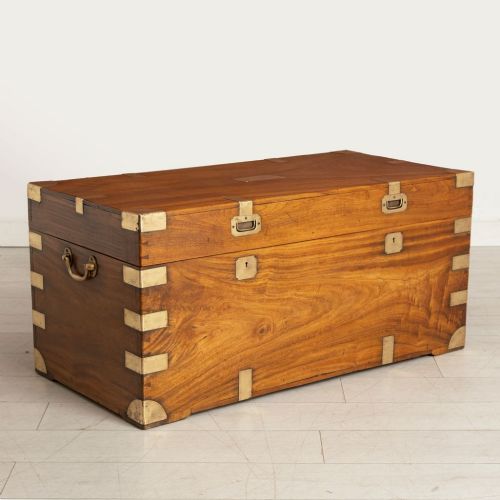
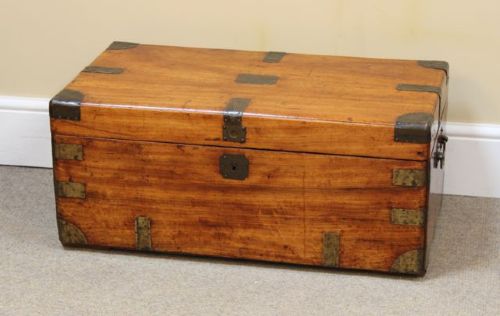
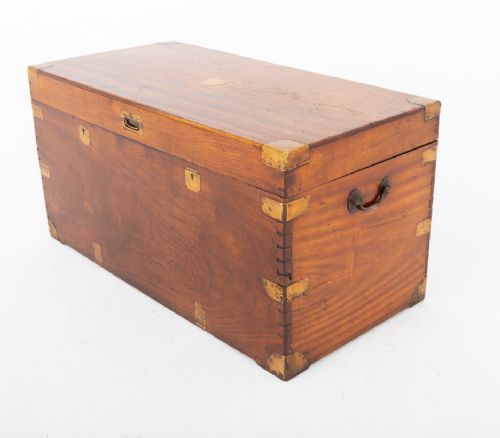
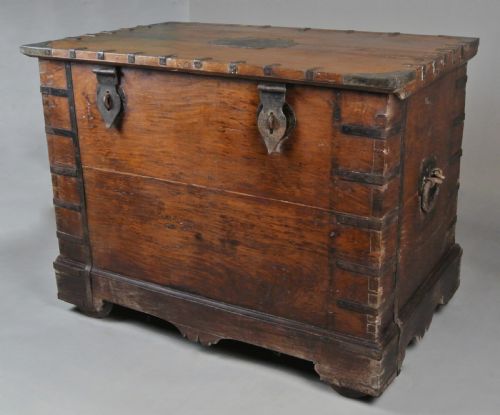
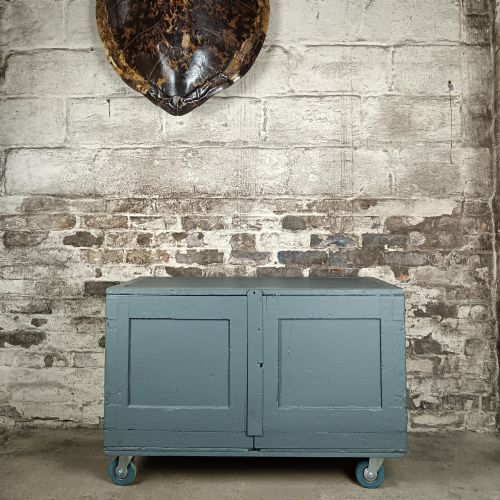
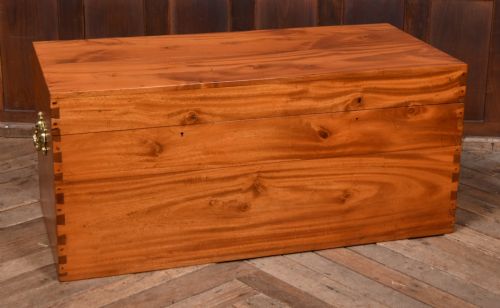
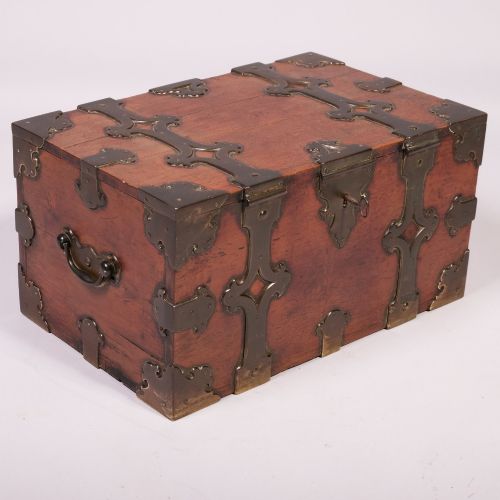
The most common examples on this page are constructed from fragrant camphor wood or dense teak, often bound in brass corners and straps for reinforcement. They appear as plain blanket boxes, fitted captain trunks, or multi-drawer campaign chests.
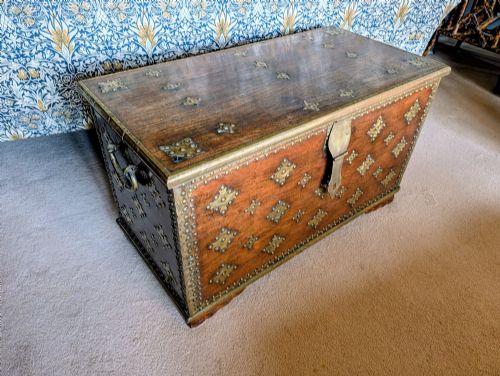
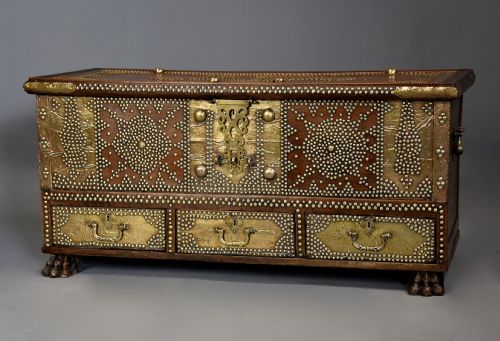
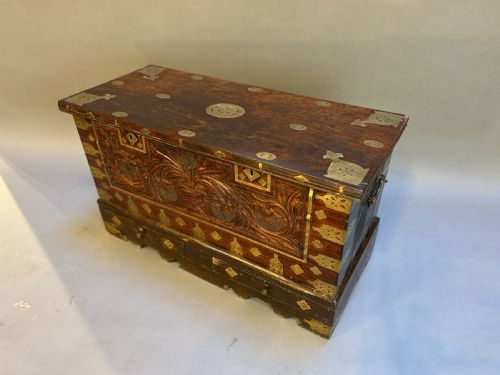
Origins vary from English workshops and shipyards to colonial outposts and distant ports, yielding styles such as Victorian campaign pieces and Anglo-Indian Zanzibar chests.
Materials and construction
Carpenters utilised durable hardwoods like teak, padouk, and camphor wood because these timbers resisted moisture, warping, and insect damage in tropical climates. Camphor wood also emitted a natural scent that kept moths away from stored uniforms and textiles.
To withstand rough handling on deck, makers reinforced corners, seams, and lids with heavy brass mounts, iron straps, and bolted plates. Rope handles and recessed drop handles were fitted tightly to the sides to save space in cramped ship cabins.
The selection includes specialised forms such as shipwright tool chests, Zanzibar blanket boxes, steamer trunks, and modular campaign chests.
Judging quality and craftsmanship
The distinction between standard storage boxes and superior campaign furniture lies in the complexity of the interior fittings and the precision of the hardware. Better examples feature flush-fitting brasses, dovetailed joints, and internal configuration such as secret compartments or smaller drawers.
The integrity of the timber and the retention of original mounting hardware dictate the standing of a piece. Original locks, keys, and untouched patination on the wood separate utilitarian transport trunks from finer officer pieces.
The Antique Maritime Chest Glossary
- Campaign chest
- A modular chest of drawers or trunk built in sections with recessed brass pulls, designed to be easily packed and transported during military expeditions.
- Camphor wood
- An aromatic hardwood native to Asia, utilised for sea chests because its natural oils repel insects and withstand damp conditions.
- Zanzibar chest
- An ornate merchant chest featuring heavy brass studding, studs, and elaborate plate work, originating from trade routes intersecting East Africa and India.
- Shipwright tool chest
- A heavy pine or hardwood box constructed by ship carpenters to hold specialised hand tools for maritime repairs.
- Dovetail joint
- A strong interlocking woodworking joint formed by wedge-shaped fingers, used at the corners of chests to resist pulling forces.
Antique Maritime Chest: Frequently Asked Questions
How were maritime chests used?
These chests served as portable wardrobes and secure storage for sailors, merchants, and military officers during long sea voyages. They held uniforms, personal belongings, charts, and instruments inside damp ship cabins.
On land, they functioned as durable packing cases that could withstand rough transport by cart or pack animal during military campaigns.
What is the difference between teak and camphor chests?
Teak chests are heavier and constructed from an oily, dense hardwood that offers exceptional strength and water resistance. They were frequently utilised for merchant trunks and large dowry containers.
Camphor wood chests are lighter, distinctively fragrant, and specifically chosen for storing woollens and uniforms because the natural scent deters moths and insects.
How do I care for an antique wooden chest?
Keep the wood away from direct heat sources and drastic humidity changes to prevent the timber from splitting or warping. Dust gently with a dry cloth and occasionally feed dry hardwoods with a traditional wax.
Avoid placing damp items directly onto antique camphor wood or teak surfaces to protect the original finish and patination.
Can I use a sea chest as a coffee table?
Many people place these sturdy chests in living spaces to serve dual purposes as coffee tables and hidden storage units. Their flat tops and robust construction make them ideal for supporting books or trays.
Ensure the height matches your seating and check that the lid remains stable when closed before placing objects on top.