


Painted Pine Sea Chest
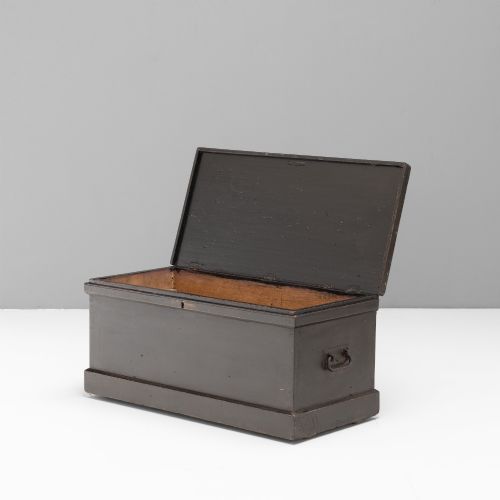
A painted pine sea chest brings the raw character of maritime history directly into a modern interior with utilitarian strength and surface charm.
Painted Pine Sea Chest
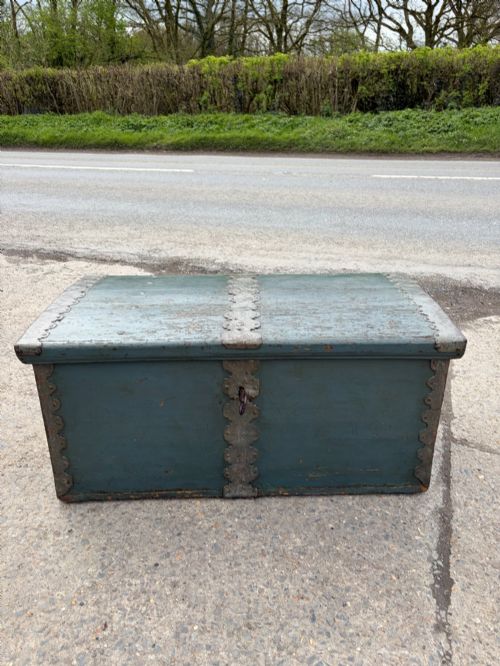
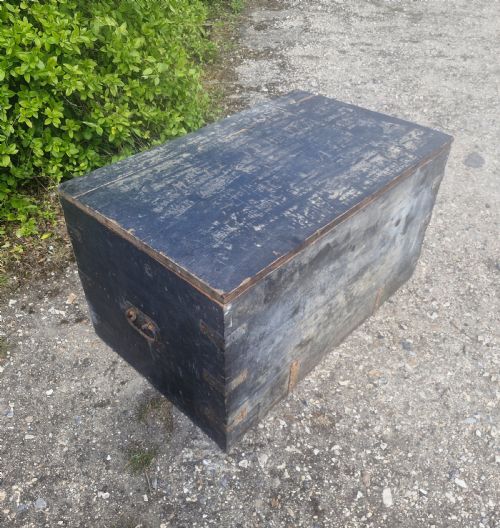
A painted pine sea chest is a robust storage trunk built for life at sea and finished with protective or decorative coatings. These pieces span the nineteenth century and the early twentieth century, showing styles from rustic country to maritime folk art.
The version most commonly met on this page is a nineteenth-century pine chest, often featuring a dome top or flat lid designed to withstand hard travel. They survive in various forms including travel trunks, campaign chests, and seaman's chests carrying original paint surfaces.
How they were made
Makers constructed these sturdy storage boxes primarily from pine, selecting softwoods that were readily available and straightforward to work. Iron hardware such as hinges, straps, and carrying handles reinforced the wooden joints for heavy maritime use.
Surfaces received protective coats of paint, occasionally utilising scumble techniques to imitate richer timbers or decorated with nautical motifs and paper linings. Heavy rope handles were fitted to the sides for practical lifting aboard ship.
Seamen occasionally pasted old paper broadsheets inside their chest lids, leaving behind forgotten nineteenth-century news to surprise future finders.
What varies in quality
Quality rests in the survival of original paint surfaces and the integrity of the timber construction rather than decorative refinement. Pieces retaining their early or original coatings display a depth of tone and honest wear that later touch-ups simply lack.
The sophistication of the hardware and the cleverness of internal compartments also separate standard utility boxes from superior seaman's chests. Strong proportions and untouched surfaces define the upper tier of these maritime survivors.
The Painted Pine Sea Chest Glossary
- Dome top
- A curved lid design that sheds water effectively and allows for greater internal storage capacity. This profile is frequently seen on nineteenth-century examples.
- Scumble pine
- Pine treated with a translucent glaze dragged or manipulated over a base colour to create simulated grain patterns. It provided an affordable decorative finish.
- Campaign trunk
- A portable chest constructed for military or naval travel, typically fitted with flush iron carrying handles and reinforced corners. These pieces prioritised rugged durability on the move.
- Maritime folk art
- Decorative painting or carving executed by self-taught makers, often incorporating nautical themes, flags, or ships. Such ornamentation turns a utilitarian box into a piece of vernacular history.
Painted Pine Sea Chest: Frequently Asked Questions
What is a painted pine sea chest?
A painted pine sea chest is a heavy wooden storage box built for sailors and travellers during the nineteenth and early twentieth centuries. These trunks were designed to hold personal belongings aboard ship and were finished with protective paint.
Today, they function as practical coffee tables or large storage containers in homes, bringing an authentic rustic or nautical aesthetic to a room.
How do I date a painted pine chest?
Dating these chests involves examining the construction methods, iron hardware, and the characteristics of the paint surface. Nineteenth-century examples often display hand-forged ironwork and timber boards joined with traditional joints.
Later Victorian and twentieth-century versions tend to show machine-cut elements and different pigment compositions. Original surface wear also helps establish the age of the piece.
Are these chests waterproof?
While originally built to protect contents from sea spray and damp conditions aboard vessels, surviving historic chests should no longer be relied upon to keep items dry in extreme environments. The wood and seals have aged over many decades.
They remain entirely suitable for indoor storage of blankets, books, and household items in stable domestic environments.
How do I clean a painted wooden chest?
Cleaning requires a gentle approach to preserve fragile historical paint finishes and natural patina. Dusting with a dry, soft cloth is usually sufficient for routine maintenance.
Harsh chemical cleaners, modern detergents, and excessive water must be avoided entirely because they can strip or damage the original nineteenth-century paintwork.