



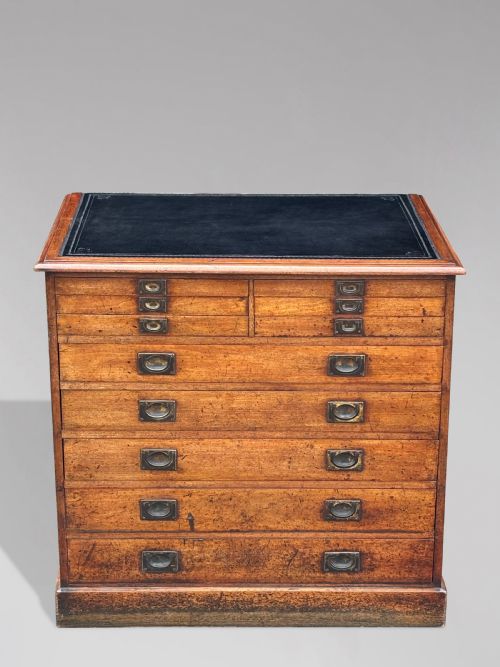
Mahogany Military Chest
When you examine a mahogany military chest, you are looking at collapsible furniture built for officers on the move during the Georgian and Victorian eras.
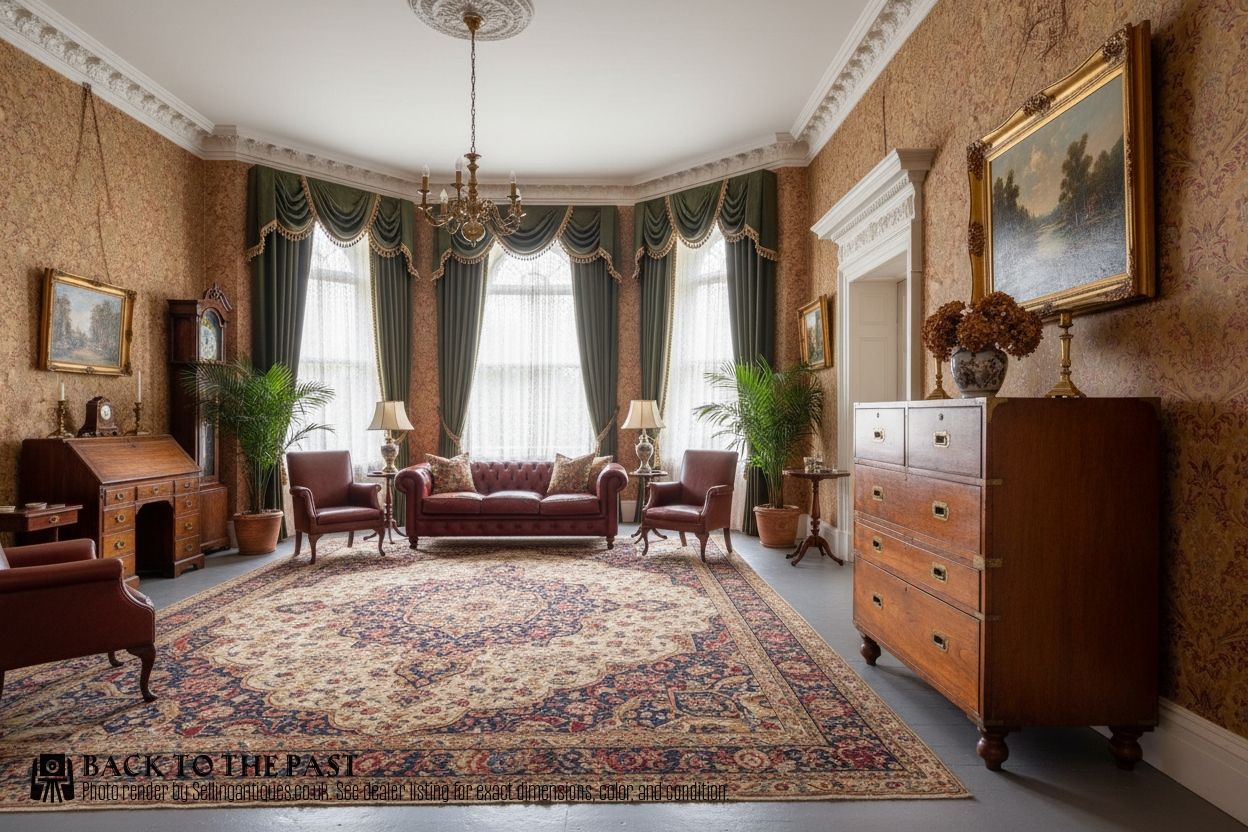
Mahogany Military Chest
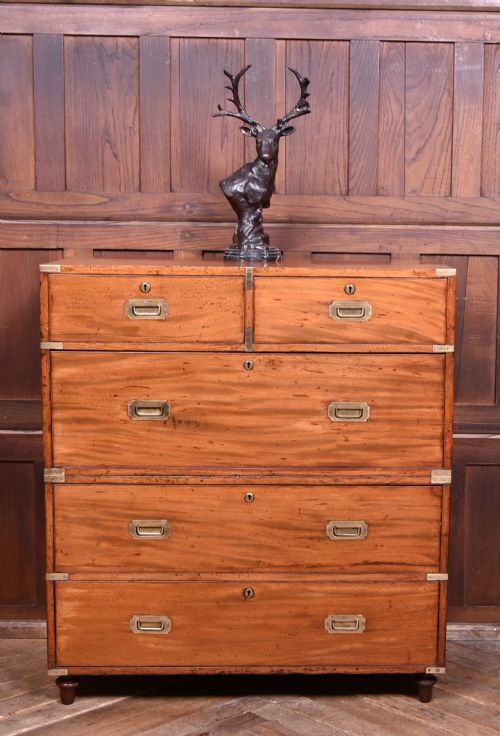
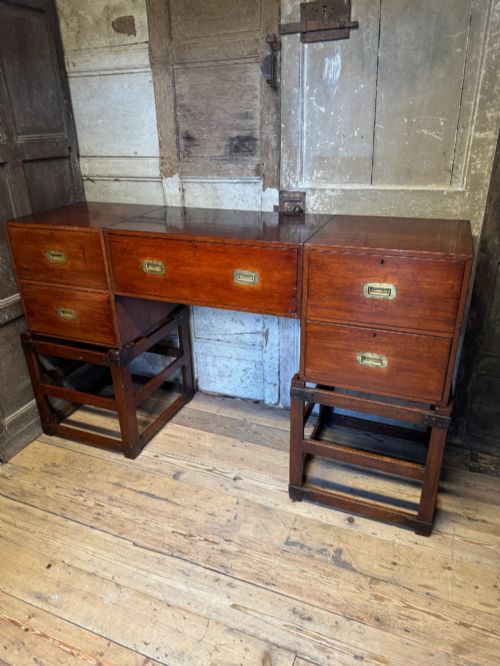
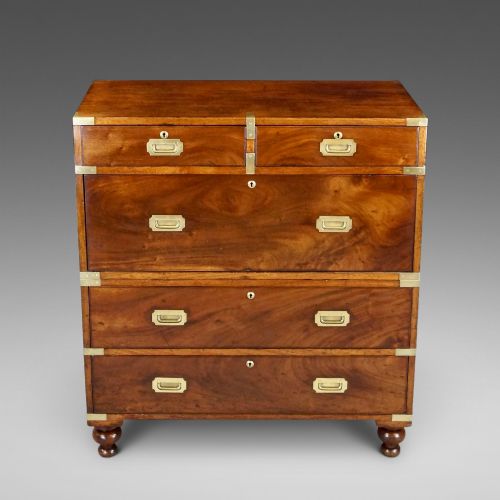
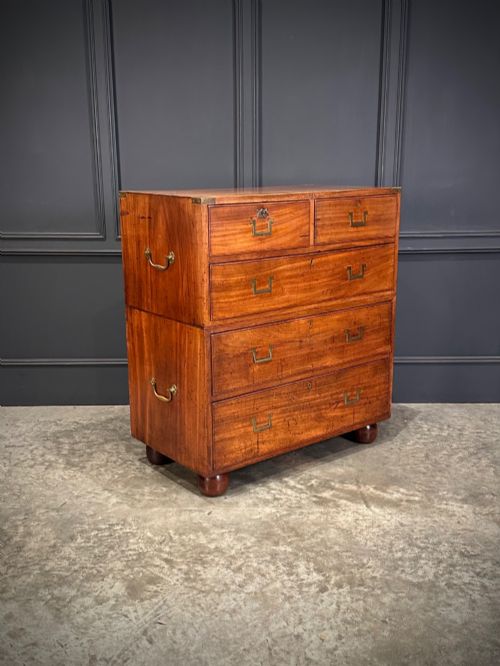
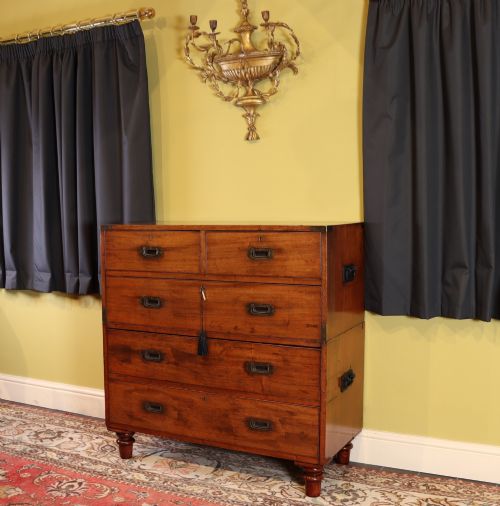
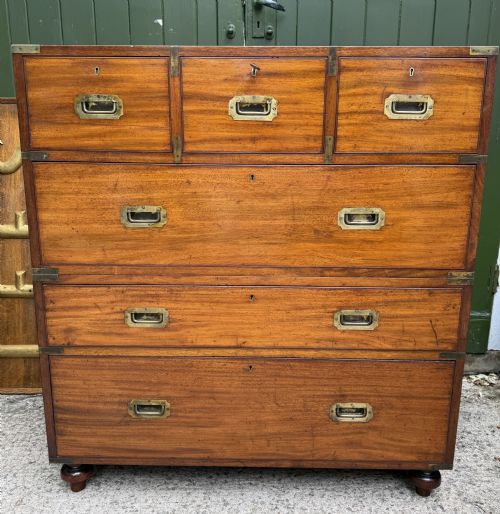
A mahogany military chest is a portable case of drawers constructed to dismantle into two separate sections for easy transport by sea or land. These items typically feature recessed brass handles and brass corner straps to protect the timber edges during travel.
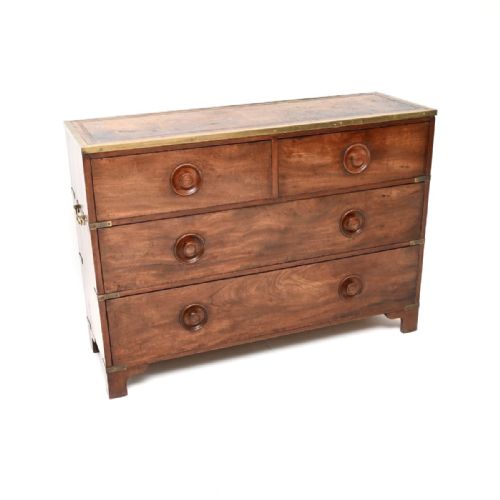
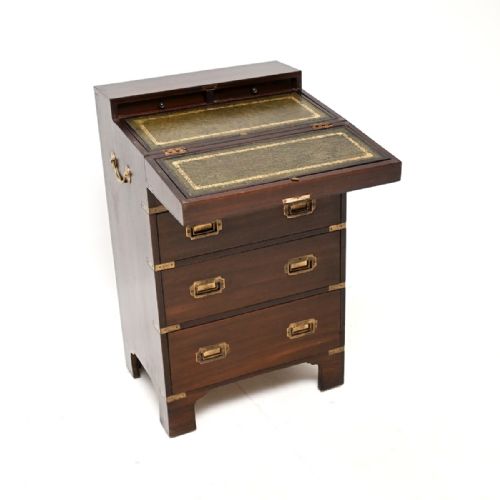
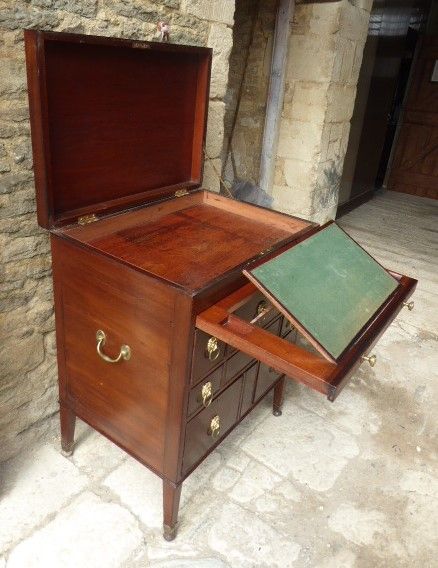
The version you are most likely to encounter on this page is the Victorian two-part chest of drawers, often arranged as two small drawers over three full-width drawers. Examples range from standard drawer units to secretaire variants with fitted writing drawers and interior compartments.
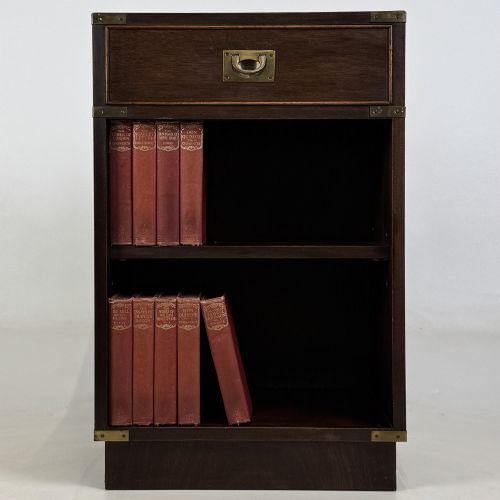
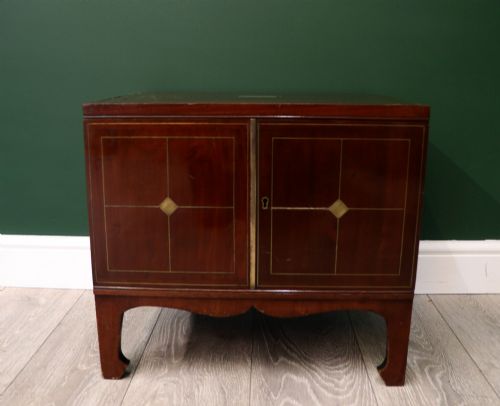
Beyond standard drawer units, the selection includes related campaign forms such as tallboys, washstands, and bedside cabinets. These pieces share the characteristic modular construction and robust hardware designed for military life.
What varies in quality
Quality in a campaign chest is determined by the precision of its hardware integration and the caliber of its secondary woods. Pieces by known makers often feature superior dovetailing, concealed locking mechanisms, and heavier brass fittings that remain firmly seated in the timber.
The degree of original compartmentalisation inside secretaire drawers separates standard utility pieces from high-grade officer commissions. Condition also rests on the retention of original brasswork and the stability of the sectional framing.
Mahogany Military Chest Retail Price Guide 2026
Typical asking prices for mahogany military chest among the pieces listed under this phrase on Sellingantiques today, from the lower quarter to the upper quarter. They describe what is for sale here now, not the wider market.
Some chests retain hidden compartments originally designed for an officer to stow secret dispatches safely out of sight.
S. W. Silver & Co.·Ross & Co.·G. Kane
The Mahogany Military Chest Glossary
- Campaign chest
- A modular chest of drawers built in two stacked sections designed to be easily separated and transported during military deployment.
- Secretaire chest
- A chest featuring a fitted pull-out writing drawer that drops down to reveal small pigeonholes and compartments.
- Flush brass
- Recessed brass hardware set level with the wood surface so that handles and corners do not snag during transit.
- Two-part chest
- A case piece divided horizontally into an upper and lower cabinet, secured by side brackets or internal pins.
- Brass bound
- Furniture edged with brass strips to absorb impact and reinforce structural joints against rough handling.
Mahogany Military Chest: Frequently Asked Questions
Why do these chests come in two parts?
Modular construction allowed officers to pack heavy belongings into manageable sections for transport on ships, wagons, or pack animals. Each half could be lifted and loaded independently.
Once safely at a new camp or garrison, the two sections stacked neatly together again to form a standard tall chest of drawers.
How do I identify a secretaire model?
Secretaire models feature a middle drawer front that pulls forward and folds down on hinges to create a writing desk surface. Inside, you will find small wooden pigeonholes and drawers for paperwork.
This clever design saved space in temporary quarters by combining a desk and a chest of drawers into a single unit.
Are all campaign chests made of mahogany?
Mahogany is the primary timber found in these listings due to its strength and rich grain, though secondary woods like oak were utilised for drawer linings. Brass hardware and leather writing surfaces also appear frequently across surviving examples.
Alternative materials such as teak and iron occasionally turn up depending on the specific military or naval commission.
How do I care for the wood and brass?
Keep the timber surfaces conditioned with traditional wax polish to prevent the mahogany from drying out in heated rooms. Avoid harsh chemical cleaners on the brass fittings to preserve their aged patina.
Check the recessed screws periodically to ensure the hardware remains tightly seated in the wood.