





British Campaign Furniture
British campaign furniture comprises rugged, knock-down pieces built for officers on the move, prized for modular utility and rich timber grains.
British Campaign Furniture
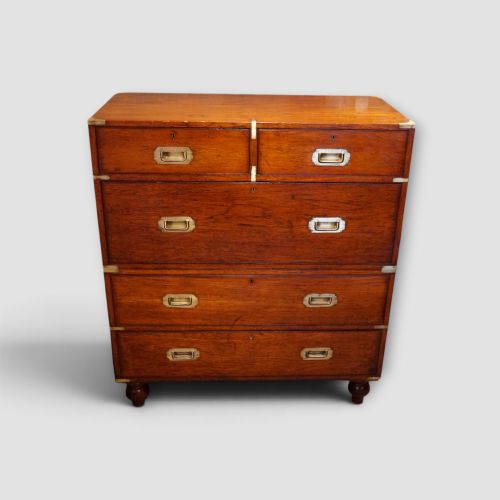
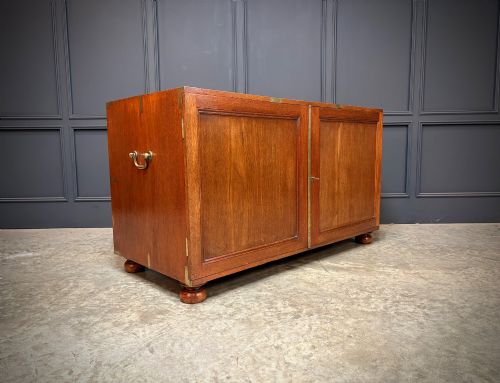
British campaign furniture encompasses practical, modular pieces designed for travel during the Victorian period, including chests of drawers, side cabinets, armchairs, and strap hooks. These items were built to pack down easily for military officers and colonial administrators on the move.
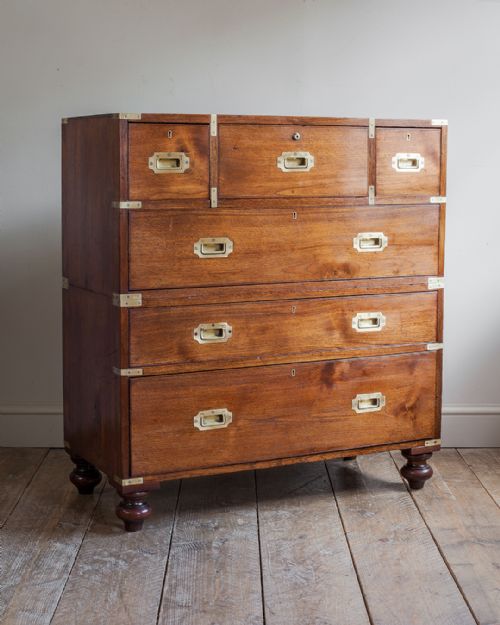
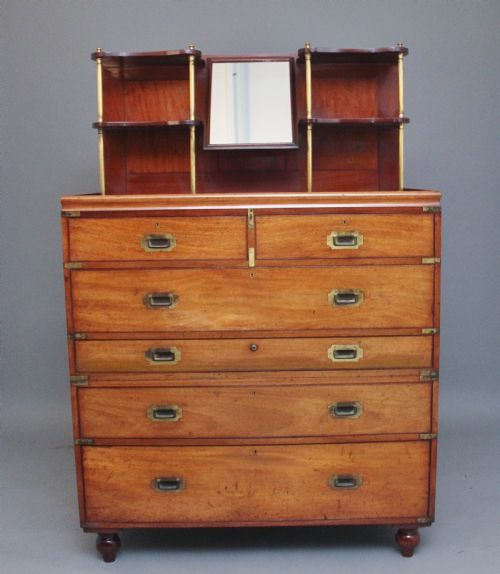
The version most commonly met on this page is the two-part campaign chest constructed from teak, mahogany, camphorwood, or padauk. Such chests feature recessed brass handles and brass corner mounts to withstand the rigours of transport.
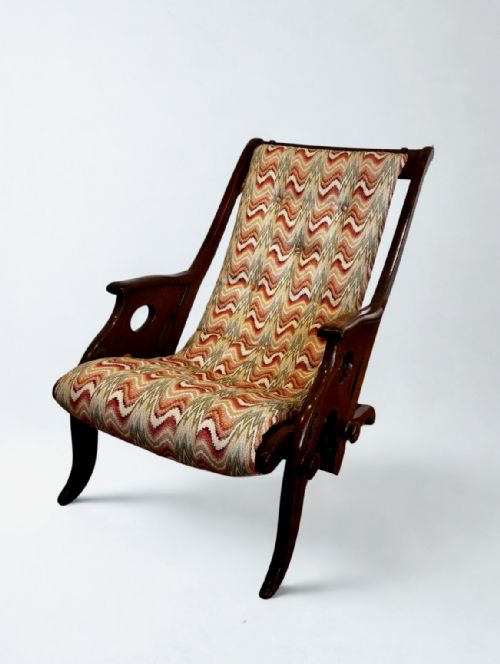
Seating also appears frequently among the offerings, spanning folding colonial campaign chairs, adjustable campaign chairs, and solid rosewood armchairs. These pieces combine folding X-frames or reclining mechanisms with durable leather and textile upholstery.
How they were made
Workshops utilised dense tropical hardwoods such as teak, mahogany, camphorwood, rosewood, padauk, and walnut to resist warping in humid climates. These timbers were selected for both structural resilience and deep grain figure.
Makers integrated heavy brass bindings, flush-fitting recessed pulls, and cast iron carrying handles to protect corners and facilitate stacking. Joints were often engineered to separate cleanly, allowing large chests of drawers to divide into two distinct transportable sections.
The furniture includes functional camp equipment like tent pole straps with hooks alongside traditional chests of drawers.
What varies in quality
The grade of timber and the precision of the joinery set the baseline for quality across these pieces. Denser secondary woods and cleanly fitted brass hardware indicate superior workshop production.
Ingenuity in folding and dismantling mechanisms also distinguishes finer examples. Smooth operation in secretaire drawers, adjustable chair ratchets, and tight-fitting two-part chest seams mark out the better pieces.
J. Herbert McNair
The British Campaign Furniture Glossary
- Campaign chest
- A modular chest of drawers built in two separate sections for easy transport on military campaigns. These pieces typically feature brass corners and inset handles.
- Secretaire chest
- A cabinet featuring a dedicated writing drawer that folds down to reveal a fitted interior of small drawers and pigeonholes. This provides a portable desk space within a standard chest format.
- Recessed handle
- A pull handle inset flush into the timber surface so it does not catch on transit covers or adjacent packing cases. It forms a standard detail on campaign boxes and drawers.
- Padauk
- A heavy, durable reddish-brown tropical timber favoured by colonial makers for its stability and resistance to insect attack. It yields a rich finish when polished.
- X-frame
- A folding cross-leg construction used on chairs and stools to allow rapid collapse and compact storage. This design dates back centuries and suits portable seating.
British Campaign Furniture: Frequently Asked Questions
What is british campaign furniture?
British campaign furniture consists of portable furnishings designed for military officers and colonial officials on active service during the nineteenth century. These pieces dismantle or fold to fit inside standard transport crates.
Items range from modular chests of drawers and secretaire cabinets to folding chairs and tent pole straps. They are characterised by robust tropical hardwoods and protective brass hardware.
Why do chests have two parts?
Chests were built in two separate stacking sections so that porters, pack animals, or wagons could manage the weight and bulk during transit. Each half fitted securely onto the other using internal alignment pins.
This modular design also allowed officers to pack their belongings efficiently when relocating between encampments. Once set down in quarters, the two sections were simply stacked and locked together.
How do you identify campaign furniture?
Key identifiers include flush brass corners, inset ring or drop handles, and split carcasses designed to separate into modular parts. Woods like teak, camphorwood, and mahogany point directly to nineteenth-century colonial production.
Many pieces also feature screw-in turned feet and internal maker stamps or brass registry plaques. Folding frames and adjustable chair mechanisms further confirm military or travel origins.
Where was this furniture used?
This furniture served British military personnel and administrators across the colonies, on campaign tents, and aboard naval vessels. It saw active deployment in India, Africa, and throughout the British Empire.
The pieces were designed to withstand extreme climates and rough handling on rough roads and sea voyages. Back in Britain, officers often kept and used them as permanent home furnishings.
How should I clean teak and mahogany?
Dust the timber regularly with a dry, soft cloth to prevent grit from accumulating in the grain. Avoid modern silicone polishes, which build up a sticky residue over time.
Feed the wood periodically with traditional beeswax to maintain a natural lustre and protect the surface. Keep pieces away from direct heat sources and strong sunlight to prevent timber splitting.