




Officer Chest of Drawers
An officer chest of drawers is a robust, modular storage piece built for travel, offering remarkable utility and classic campaign style.
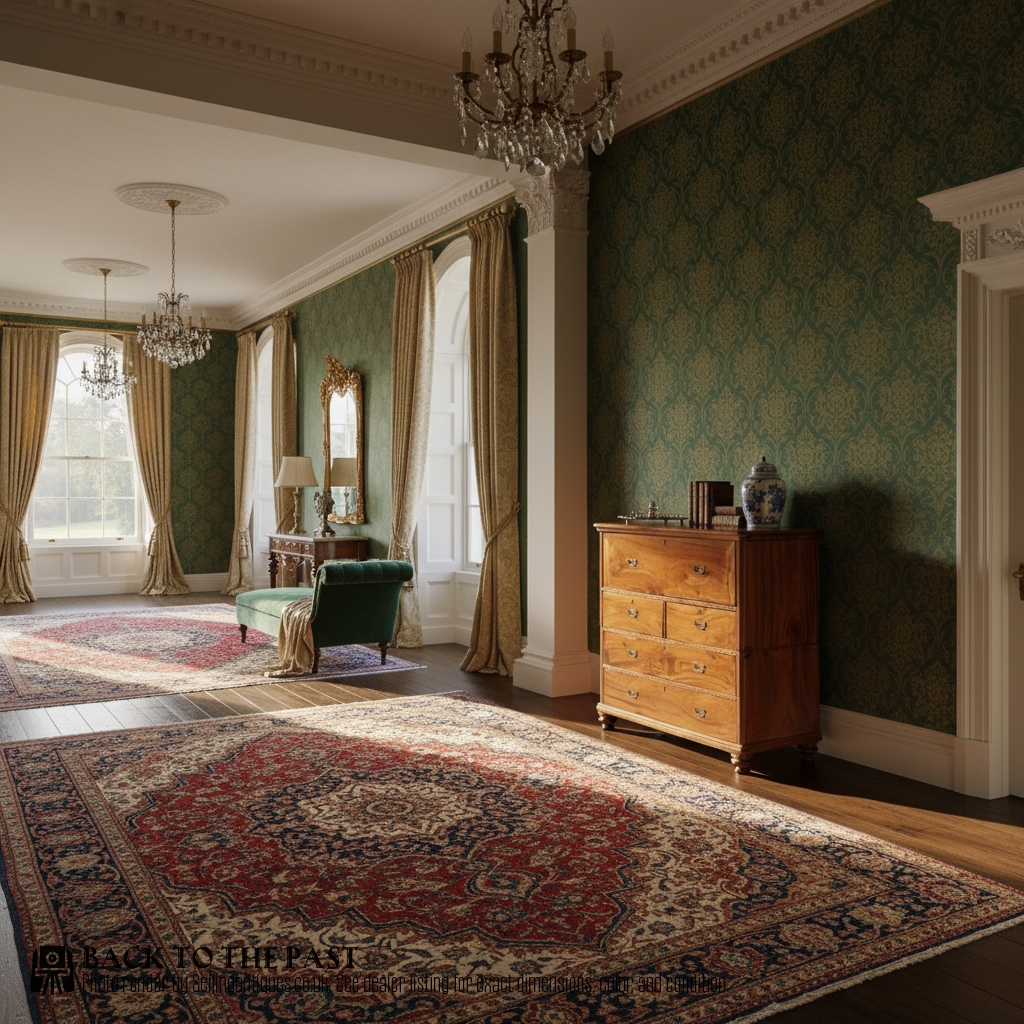
Officer Chest of Drawers
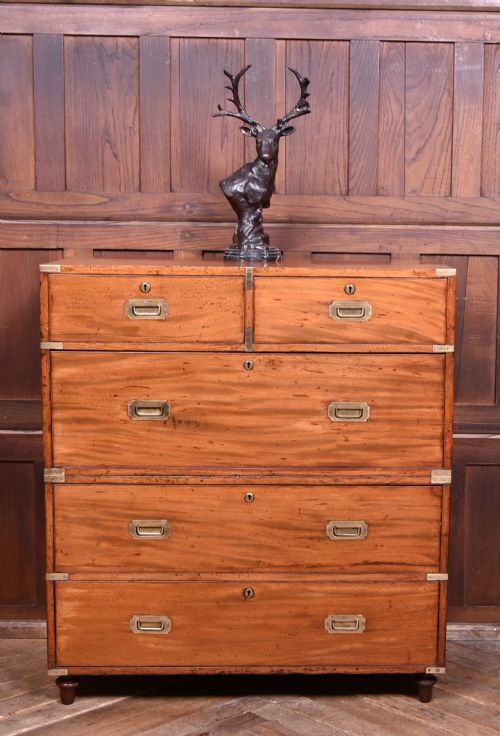
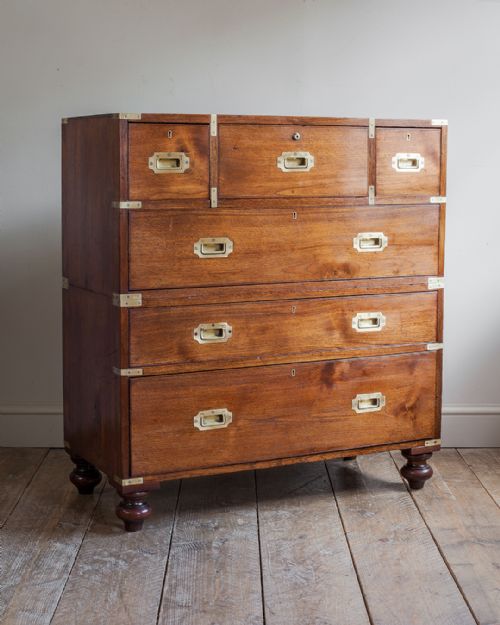
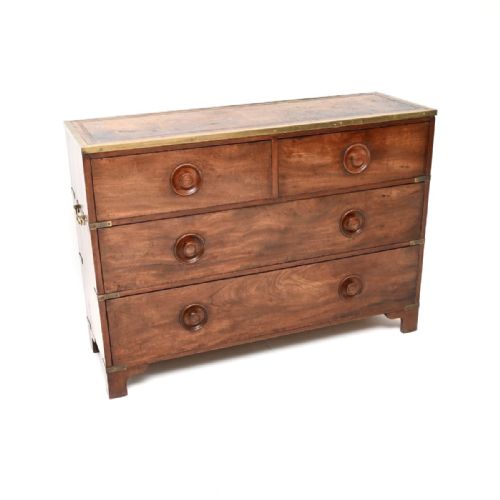
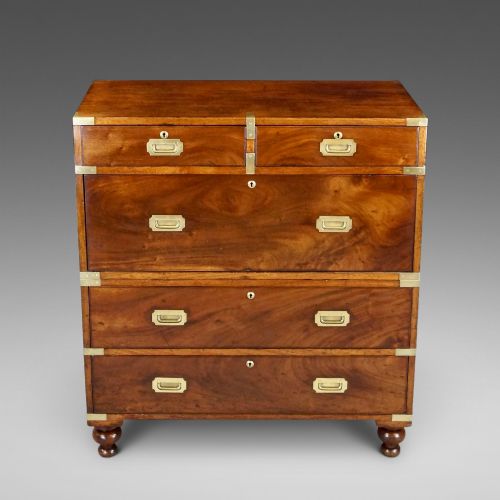
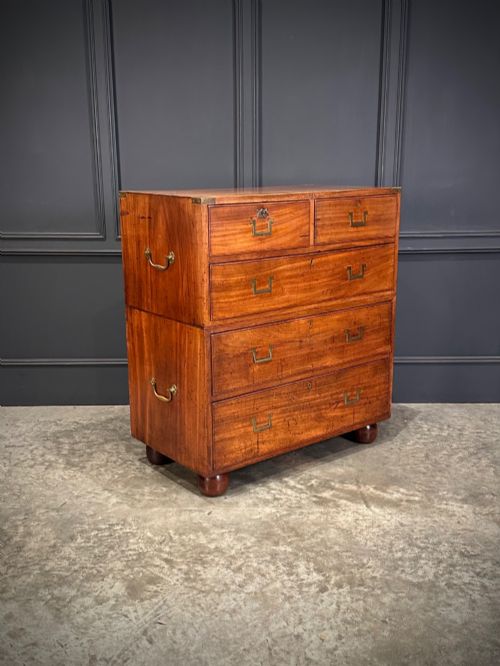
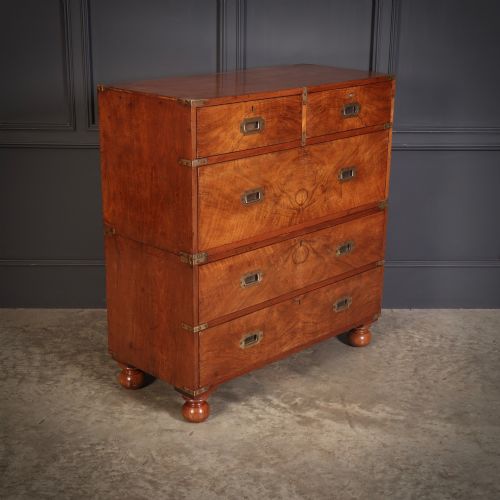
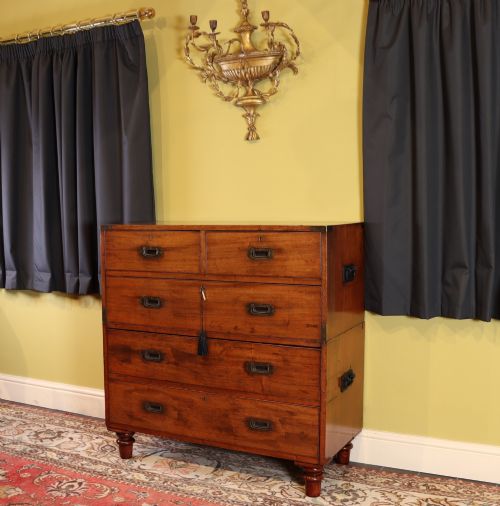
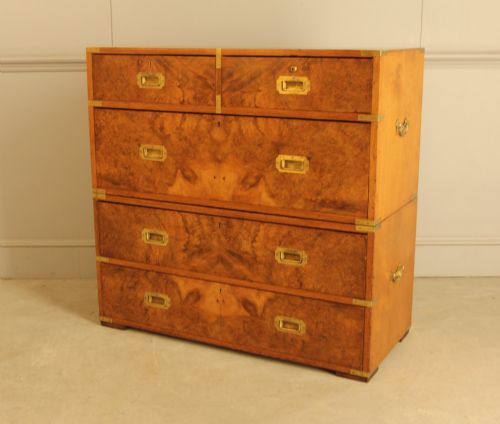
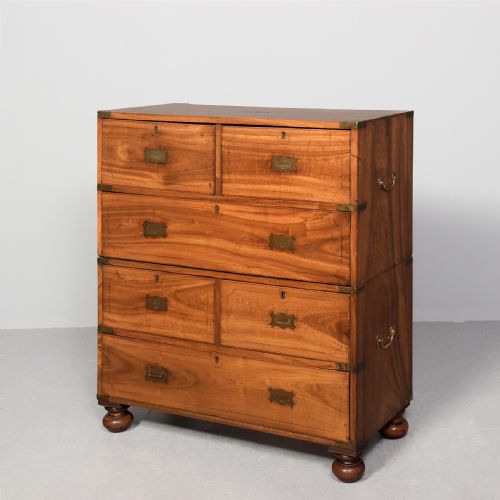
An officer chest of drawers is a utilitarian piece designed for transportation by military personnel on campaign. These chests typically divide into two separate sections to simplify packing and moving across long distances.
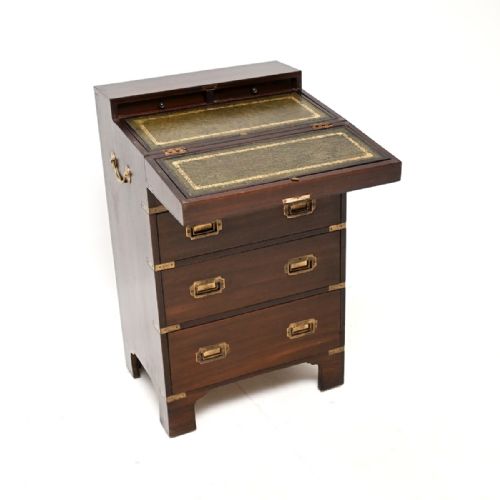
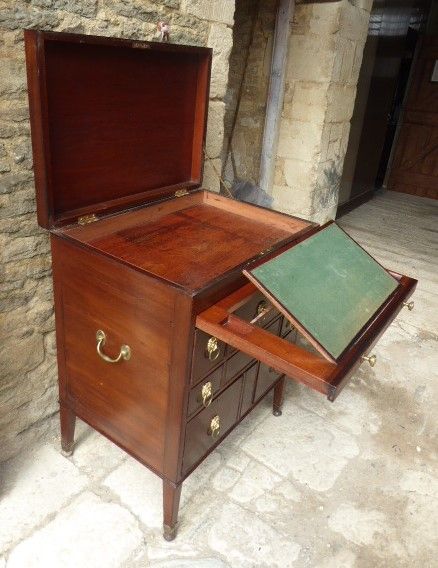
Most examples encountered on this page date from the nineteenth century, including Victorian and Regency periods, reflecting the height of British military expansion. Forms range from standard chests of drawers to secretaire chests fitted with fold-down writing desks.
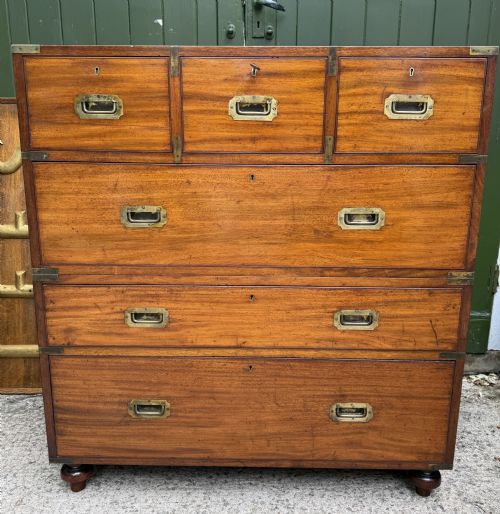
The primary styles associated with these items include Victorian campaign, British Colonial, and military campaign. Buyers encounter timber bodies fitted with recessed brass handles and corner brackets designed to withstand rough transit.
Materials and Construction
Timbers selected for these chests prioritise durability and resistance to varying climates, with mahogany and teak appearing most frequently in the evidence alongside camphor wood and burr walnut.
Brass corners, strapping, and flush-fitting inset handles protect vulnerable edges and prevent snagging during transport while defining the characteristic aesthetic of the campaign style.
Construction methods focus on modular multi-part chests that assemble securely using internal brass pins or hooks, uniting separate upper and lower carcases into a stable single unit.
Listings feature eighteenth-century through early twentieth-century pieces, spanning Regency, Victorian, and Edwardian periods.
Assessing Quality and Execution
Quality rests in the precision of the brass hardware integration and the integrity of the timber framing. Superior pieces show exact flush-fitting metalwork and clean joinery that withstands the structural stress of being split into separate sections repeatedly.
The choice of secondary woods and the grain figure of primary timbers like mahogany, teak, or burr walnut dictate the visual refinement of the piece. Integrated fitted interiors with secret drawers and well-engineered writing surfaces further distinguish finer examples.
S. W. Silver & Co. London & Liverpool·Ross & Co.·Army & Navy·Arthur Foley & Son of Salisbury
The Officer Chest of Drawers Glossary
- Two-part chest
- A cabinet constructed in separate upper and lower sections designed to be stacked and secured for travel. This division is a defining characteristic of campaign furniture.
- Campaign style
- Furniture designed for portability and rugged use by military officers on active service abroad. It typically incorporates folding elements and protective metal mounts.
- Secretaire
- A desk form featuring a pull-out or drop-front drawer containing pigeonholes and small compartments for correspondence. In military chests, this drawer often conceals a writing surface.
- Flush handle
- A metal handle recessed into the drawer face so it does not project beyond the wood. This prevents damage and entanglement during transit.
- Brass bound
- Edges and corners reinforced with brass strips and brackets screwed into the timber. This technique protects the wood from heavy knocks.
Officer Chest of Drawers: Frequently Asked Questions
Why do these chests split into two parts?
The two-part design allowed military officers to pack and transport their heavy belongings easily on campaign.
Splitting the carcase into manageable sections simplified loading onto ships, wagons, and pack animals during frequent relocations.
What is the difference between teak and mahogany chests?
Mahogany chests often display rich reddish-brown tones and fine grain patterns favoured for domestic camp settings.
Teak alternatives offered superior natural resistance to moisture and humidity, making them particularly common in British Colonial contexts.
Where should I place a campaign chest at home?
These robust chests suit bedrooms, studies, or hallways where their compact proportions and durable construction are useful.
Their modular nature also makes them practical for spaces where moving large furniture through tight doorways is challenging.