







Two Part Chest of Drawers
When you examine a two part chest of drawers, you find a clever modular piece designed for transport and built to last across the centuries.
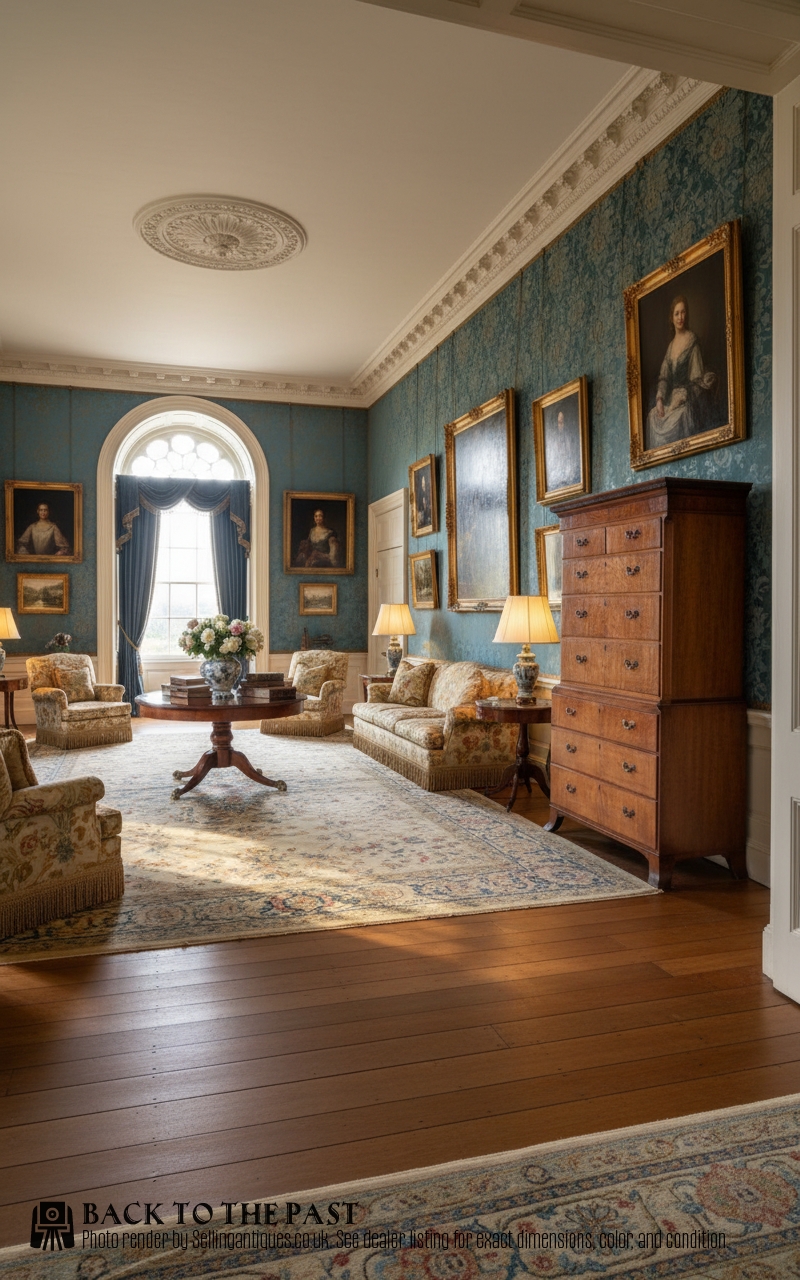
Two Part Chest of Drawers
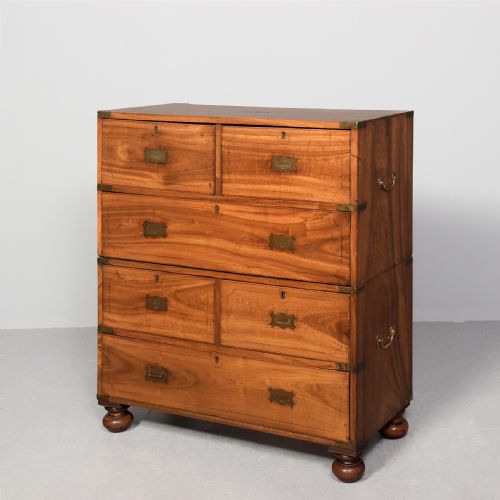
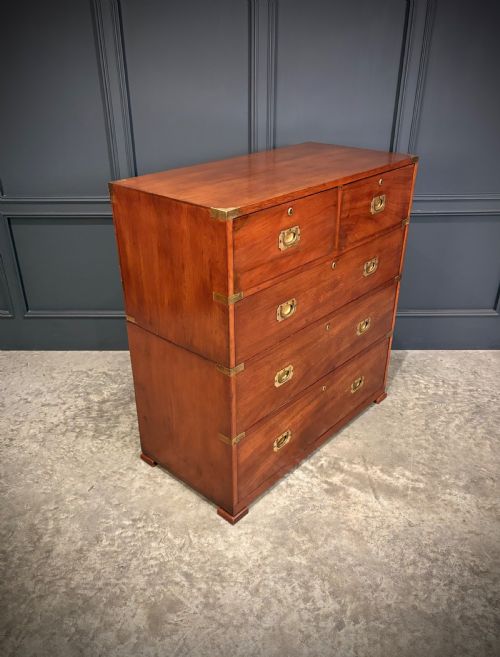
A two part chest of drawers splits horizontally into an upper and lower section to ease transit during travel or relocation.
The selections span from seventeenth-century oak examples with geometric mouldings to nineteenth-century mahogany and teak military campaign chests.
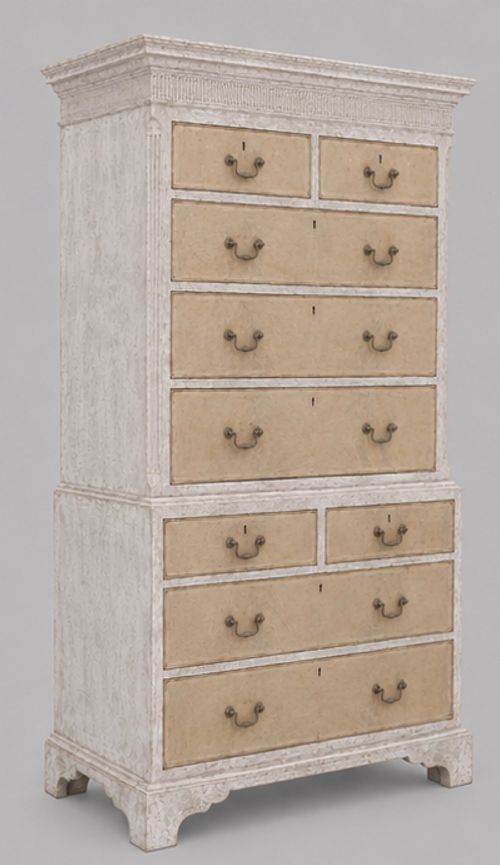
Domestic forms like walnut chest on chest designs and tallboys appear alongside brass-bound officer pieces intended for active service.
Materials and construction
Cabinetmakers utilised dense timbers including mahogany, teak, camphor wood, and oak to withstand heavy daily use and distant travel.
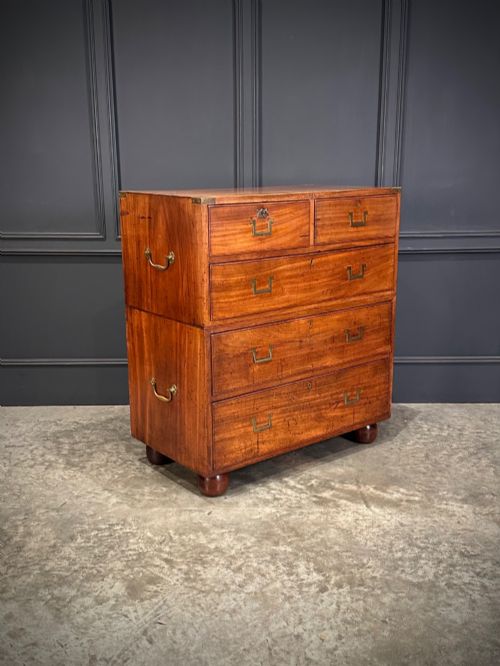
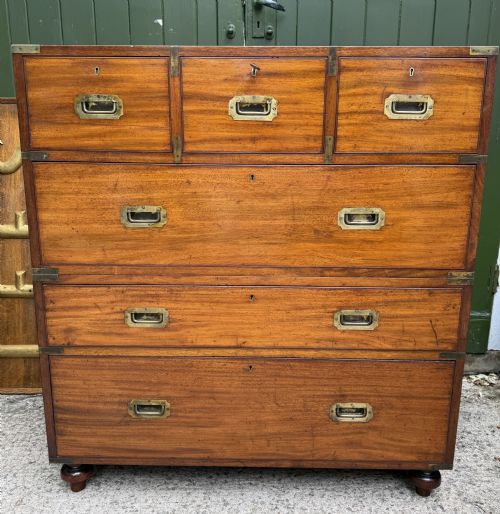
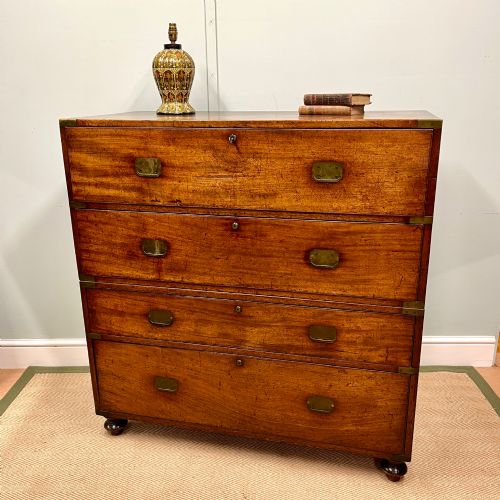
Military variants incorporate countersunk brass handles, corner brackets, and flush binding strips to protect vulnerable edges from impact.
The listings include seventeen-century oak, eighteenth-century walnut, and nineteenth-century teak examples.
What separates the grades
The integrity of original brass hardware, flush handles, and locking mechanisms dictates the historical reliability of a campaign piece.
Timber selection and surface figure, particularly in figured walnut or flame mahogany veneers, separate standard storage from finer cabinet work.
Ross & Co.·Army & Navy
The Two Part Chest of Drawers Glossary
- Campaign chest
- A modular chest of drawers built in two separate sections for ease of transport by military officers on campaign.
- Chest on chest
- A tall storage unit comprising a smaller upper chest stacked directly upon a wider lower chest.
- Secretaire chest
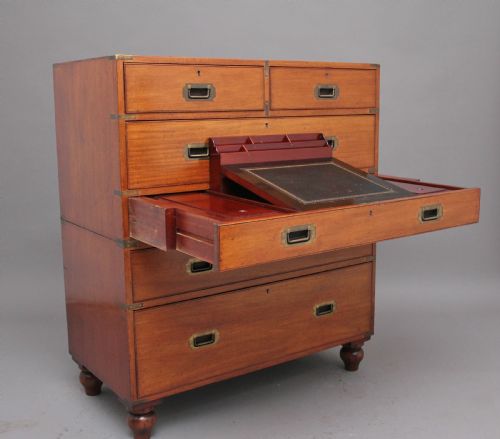
- A chest of drawers featuring a fitted pull-out writing drawer with a drop-front desk surface.
- Geometric mouldings
- Raised decorative patterns applied to drawer fronts, often found on seventeenth-century oak examples.
- Brass binding
- Protective metal strips fitted around the corners and edges of campaign furniture to prevent splitting.
Two Part Chest of Drawers: Frequently Asked Questions
Why were they built in two parts?
Dividing the cabinet into an upper and lower half made heavy storage much easier to pack, transport, and carry on long journeys.
This modular construction also allowed officers and travellers to stack and secure the units inside tight spaces during transit.
How do I distinguish campaign chests from domestic models?
Campaign versions typically feature recessed brass handles, corner brackets, and a split carcass designed for movement rather than static display.
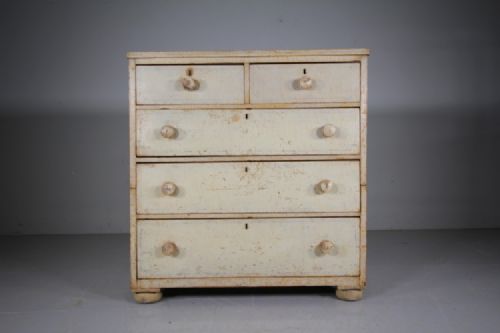
Domestic variants like tallboys or standard chests lack these protective metal mounts and focus instead on decorative veneers and mouldings.
Where were teak and camphor wood used?
Teak and camphor wood were frequently utilised for nineteenth-century campaign pieces destined for humid colonial climates where stability mattered.
Camphor wood also provided a natural insect repellent property that helped protect stored uniforms and documents during travel.
What is a secretaire drawer?
A secretaire drawer pulls out to reveal a fitted interior of small compartments and a fold-down writing surface for correspondence.
This built-in desk function saved precious space inside military tents and quarters where a separate writing table was impractical.