
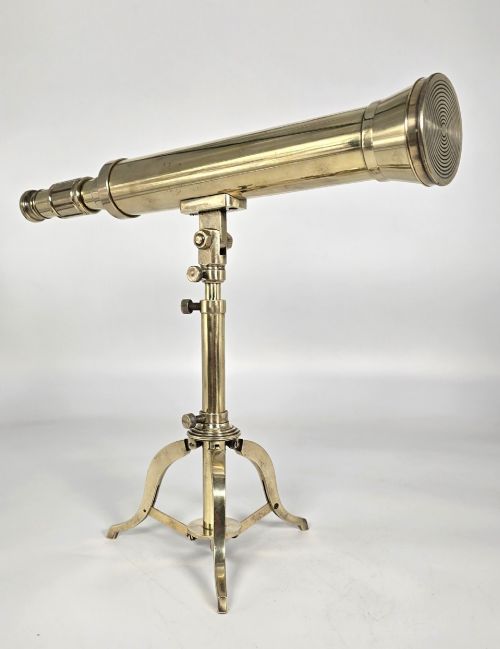


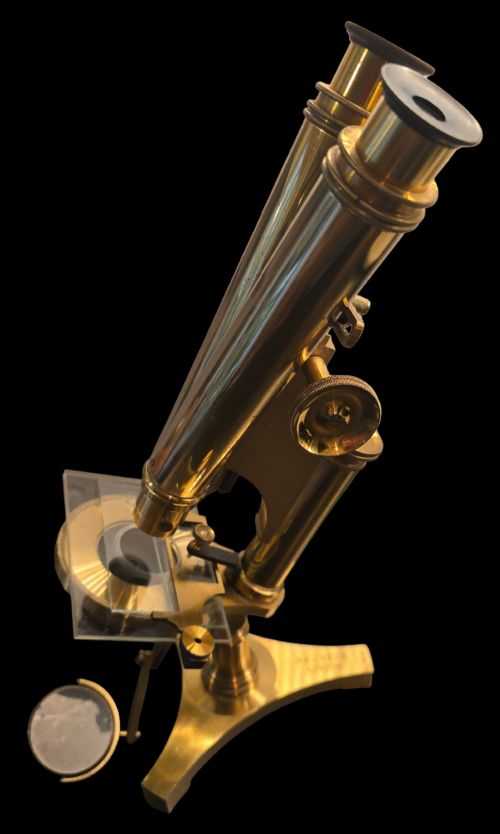


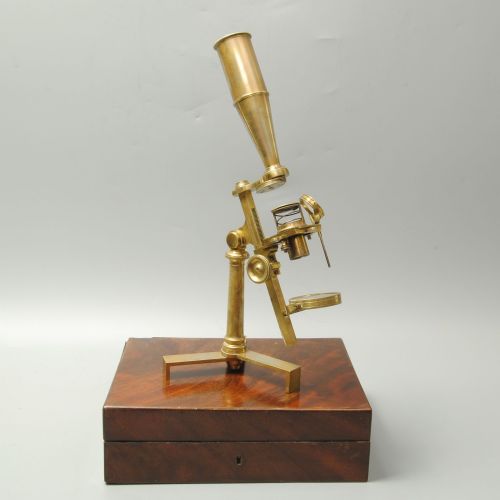

19th Century Scientific Instrument
These pieces are a 19th century scientific instrument, combining precision mechanics and functional beauty for the discerning collector.
19th Century Scientific Instrument
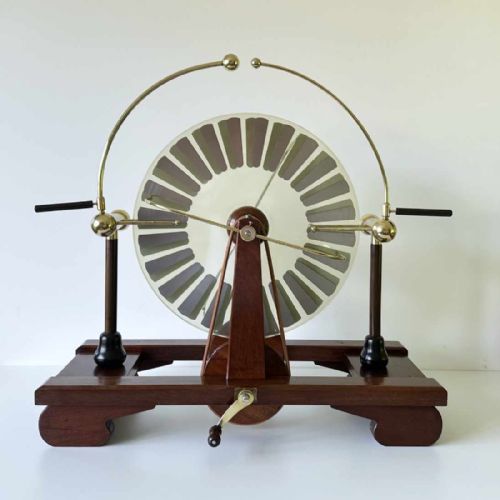
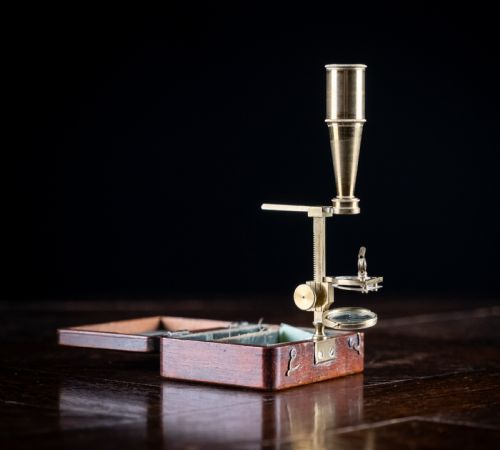
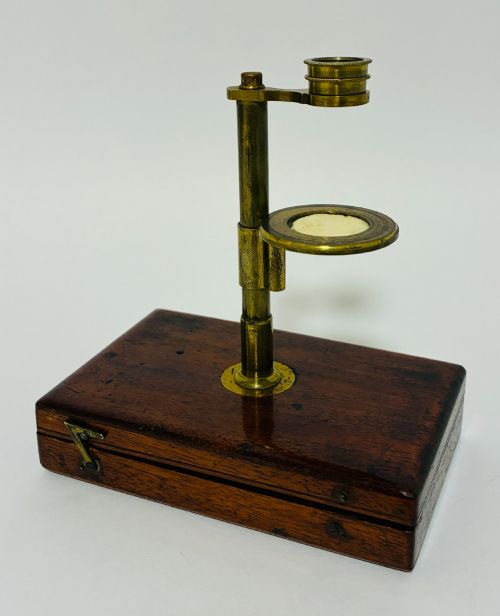
A 19th century scientific instrument encompasses a wide array of tools used for measurement, observation, and navigation during the Georgian and Victorian eras. Buyers seeking these artefacts will find items ranging from barometers and microscopes to surveyors' compasses and theodolites.
The most common survivals on this page are optical devices and meteorological instruments housed in their original fitted boxes. These domestic and field instruments reflect the era's expanding interest in science, exploration, and domestic meteorology.
Materials and Construction
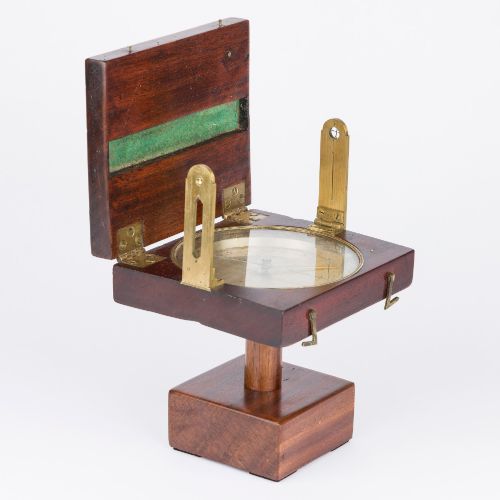
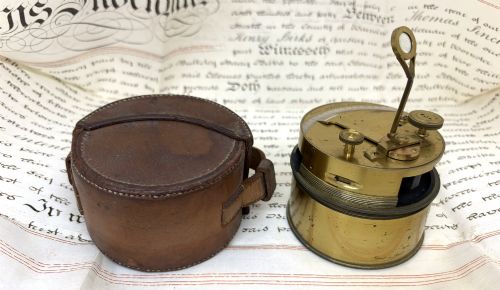
Makers relied heavily on polished brass and silvered metal for dials, lenses, and structural components, paired with hardwoods such as mahogany and rosewood for cases and mount sections. Glass and leather also appear frequently in lenses, mirrors, and protective travel sheaths.
Joinery and metal casting involved meticulous hand-finishing, engraving, and graduation of scales. Cases were often dovetailed or fitted precisely to cradle fragile apparatus during transport.
Some travel thermometers retain their original leather cases designed to survive the bumpy carriage rides of 1800s explorers.
Assessing Quality and Craftsmanship
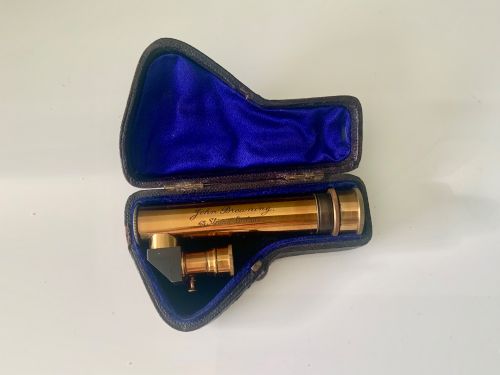
The standard of a piece depends largely on the crispness of its engraved signatures, the legibility of its silvered scales, and the smoothness of its mechanical adjustments. Finer examples retain their original optics, signed makers' plates, and matching fitted wooden cases.
Lesser items may show heavy field wear, replacement lenses, or obscured inscriptions where previous cleaning removed delicate details. The presence of specialised accessories like folding tripods or extra lens kits elevates an item considerably.
John Browning Strand London·G. Davis of Leeds·Baker London·W&S Jones·L Casella & Co·R. & J. Beck London·Robert Brettell Bate·Alfred Apps·W. & T. Gilbert London·Steward of London·Ganthony of London·Henri de Magnac·Prada of High Wycombe·Molton of Norwich·Watkins & Hill·Elliott Bros of London·Thomas Harris & Son·L Casatelli of Liverpool·S & B Solomons·Heinrich Daniel Ruhmkorff·Francis West
The 19th Century Scientific Instrument Glossary
- Theodolite
- A precision surveying instrument with a rotating telescope for measuring horizontal and vertical angles. It is typically mounted on a robust tripod.
- Barometer
- An instrument used for measuring atmospheric pressure to forecast weather changes. Examples here frequently take stick or wheel configurations.
- Spectroscope
- An optical device used to spectrum-analyse materials by observing light emission or absorption. This instrument aided greatly in chemical and astronomical research.
- Chondrometer
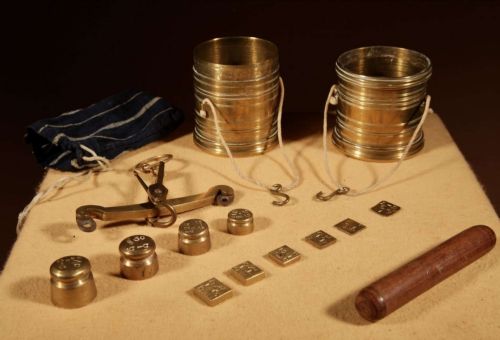
- A specialised balance scale used for determining the weight and quality of grain. Merchants utilised this device for commercial assessment before imperial standardisation.
- Galvanometer
- An electromechanical instrument used for detecting and measuring small electric currents. Victorian practitioners used portable versions for field testing.
19th Century Scientific Instrument: Frequently Asked Questions
How do I maintain my brass instrument?
Keep the brass dry and free from dust by gently wiping it with a soft, lint-free cloth. Avoid chemical polishes that can strip original patination and obliterate fine engraved markings.
Store pieces in stable humidity environments to protect both the metal surfaces and any associated wooden fitted cases from warping or tarnishing.
Were these instruments made for professionals?
Many items reflect professional deployment by surveyors, navigators, and physicians, evidenced by signed makers' plates and robust field cases. Other objects served domestic or educational purposes for affluent households interested in natural philosophy.
The complexity of the optics and the inclusion of calibration certificates often indicate whether a piece saw heavy commercial use or lighter gentlemanly study.
How do I identify the maker?
Makers typically engraved their names, firm titles, and addresses directly onto the metal dials, lens tubes, or ivory scales. Additional paper trade labels are frequently glued inside the lids of original storage boxes.
Cross-referencing these signatures with known trade directories from the Georgian and Victorian periods helps establish a reliable date of manufacture.
Can these instruments still be used today?
While many optical and meteorological devices remain functional, most buyers treat them primarily as display pieces and historical artefacts. Extreme care should be taken when adjusting delicate gears, threads, and antique glass lenses.
Calibration may have drifted over the centuries, meaning barometers and compasses should be viewed as decorative reflections of historical science rather than precise modern tools.