

Tabletop Collectors Drawers
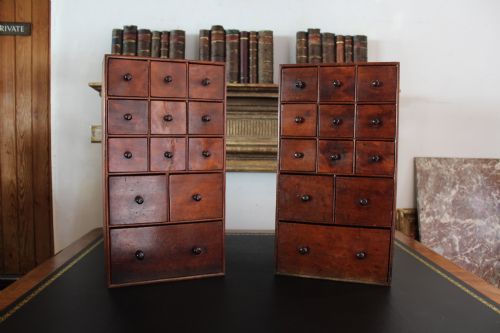
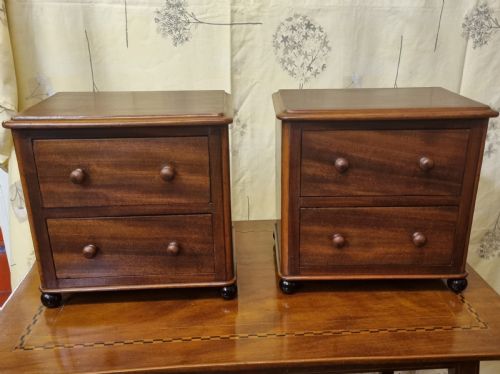
Tabletop collectors drawers are compact sets of small compartments used to organise specimens, trinkets and curiosities on a desk or surface.
Tabletop Collectors Drawers
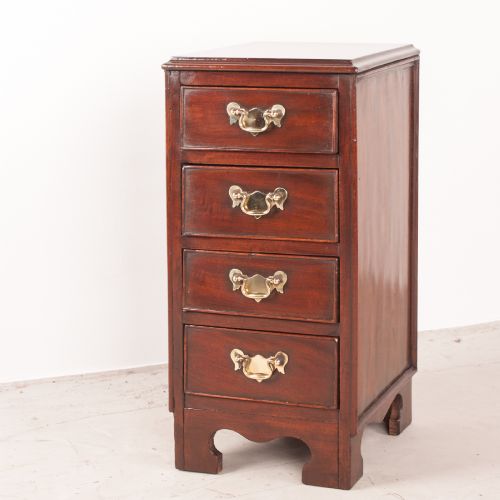
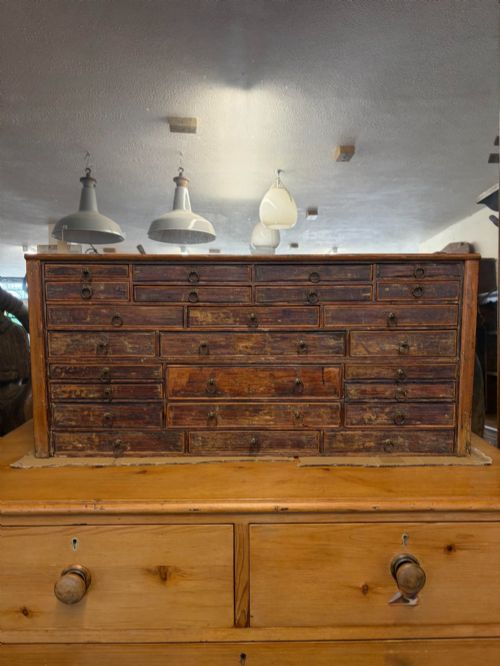
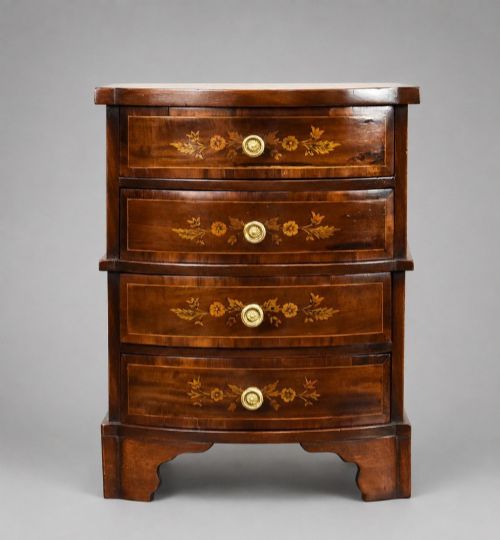
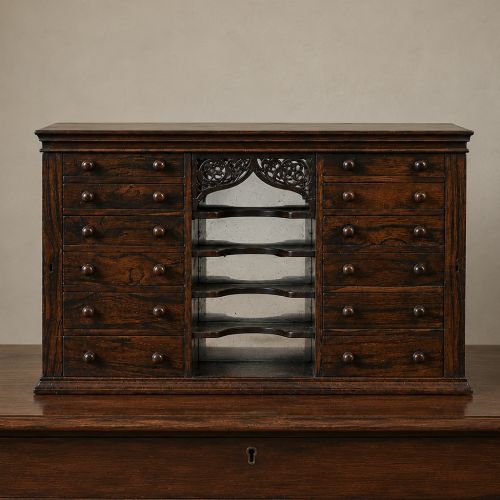
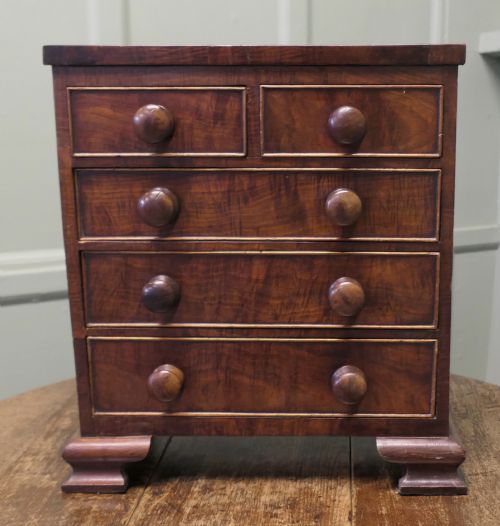
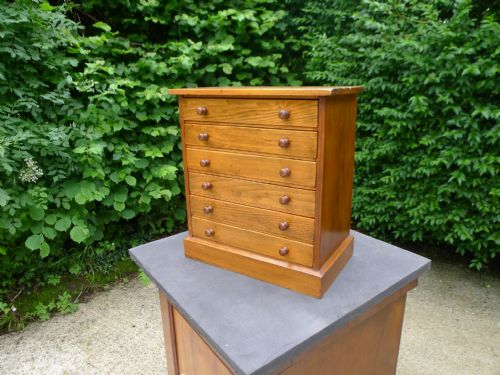
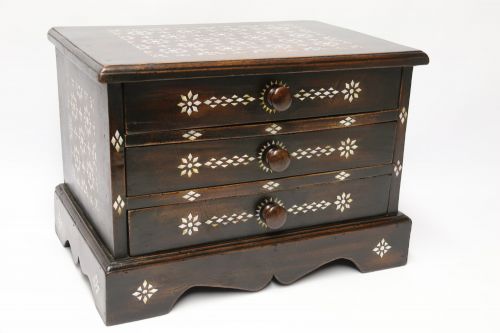
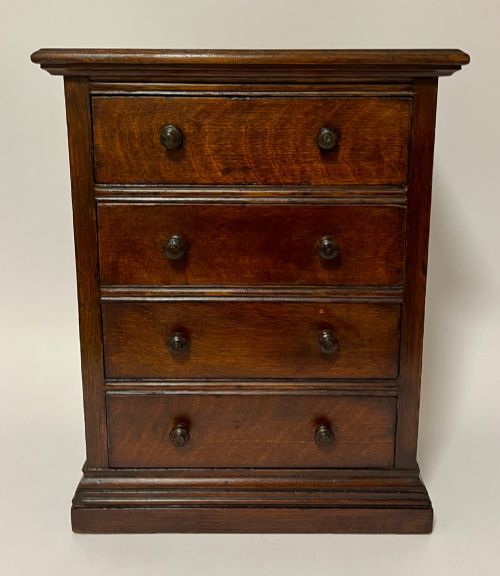
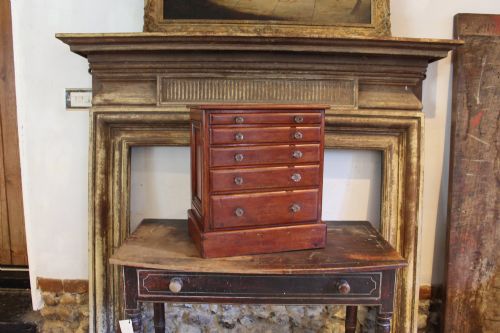
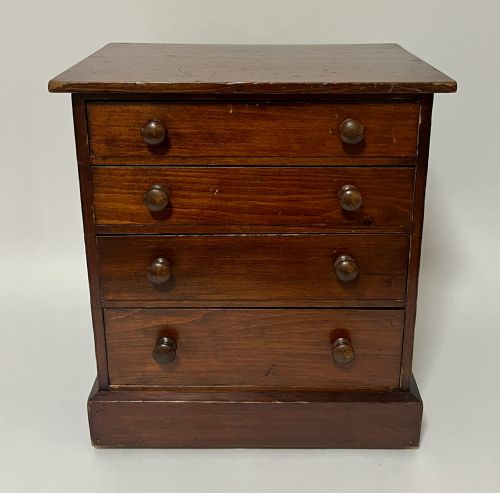
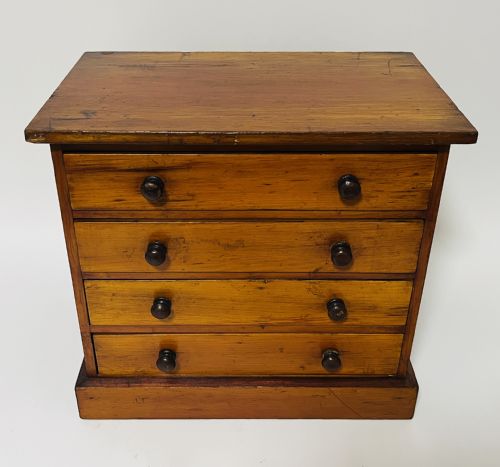
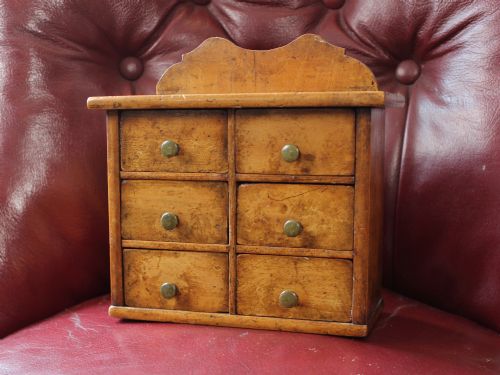
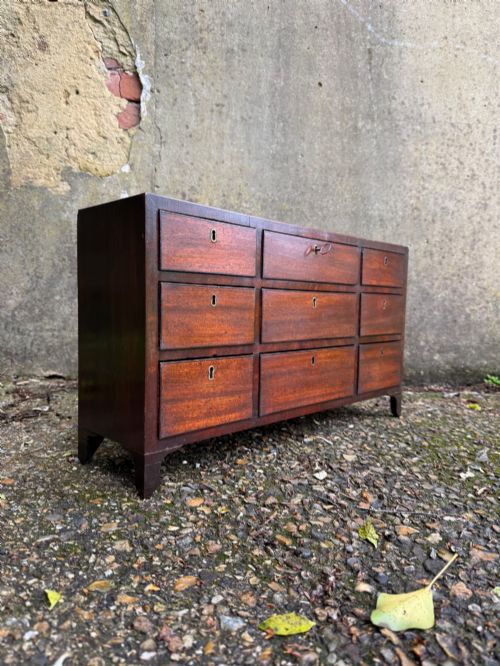
When you search for tabletop collectors drawers, you encounter miniature furniture, specimen cabinets and small banks of drawers designed for desktop use. These pieces emerge in various forms, including miniature chests of drawers, spice drawers, apothecary cabinets and microscope slide cabinets.
The selections span from the eighteenth century through the Victorian era to the early twentieth century. Common materials include mahogany, oak, pine, walnut and fruitwood, with occasional examples in exotic timbers like rosewood, burr yew and amboyna.
Victorian and nineteenth-century examples dominate the offerings, often taking the form of apprentice pieces or small storage chests. Styles range from plain country pine to formal Georgian and Regency designs, alongside occasional Anglo-Indian and Japanese black lacquered items.
How they were made
Cabinetmakers constructed these small chests using solid hardwoods like mahogany, oak and walnut, alongside softer timbers such as pine and elm. Construction often involved fine dovetail joints for the drawers and carcases, ensuring stability despite modest dimensions.
Surface treatments included clear French polish, wax, marquetry inlay and dark lacquering. Drawers frequently incorporated brass pulls, knobs or bone escutcheons, while specialist cabinets featured fitted glass doors, mirrored panels or locking mechanisms.
The site records nineteenth-century pieces alongside eighteenth-century spice cabinets and early twentieth-century Japanese lacquer work.
What varies in quality
The standard of timber selection and cabinetmaking distinguishes ordinary utility boxes from finer miniature furniture. Finer specimens display carefully matched wood grains, such as burr walnut, mahogany or yew, paired with precise joinery.
Proportion and decorative detailing define the upper tier of pieces. Authentic small-scale proportions mirror full-size furniture accurately, while added refinements like secret drawers, satinwood banding and original brass hardware elevate the piece.
Luxmore's of Ilfracombe
The Tabletop Collectors Drawers Glossary
- Apprentice piece
- A small item of furniture made by a trainee craftsman to demonstrate skill to a guild. These examples often replicate full-sized chests in miniature detail.
- Specimen cabinet
- A small chest with shallow drawers designed for storing natural history items such as fossils, shells or insects. They frequently include glass-topped covers or fitted trays.
- Bow front
- A convex curved front elevation on a chest of drawers. This decorative shape appears frequently on nineteenth-century miniature mahogany pieces.
- Escutcheon
- A small protective plate surrounding a keyhole. They are typically fashioned from brass, bone or ivory on these small cabinets.
- Wellington chest
- A tall, narrow chest of drawers secured by a hinged locking side flap. Miniature versions include mirrored backs or specialist storage compartments.
Tabletop Collectors Drawers: Frequently Asked Questions
What were tabletop collectors drawers used for?
These small chests stored botanical samples, mineral specimens, apothecary items, coins and personal trinkets. Collectors and specialists utilised them to keep delicate objects organised and protected on a desktop.
Over time, many of these cabinets transitioned from scientific utility to domestic display items, holding sewing accessories, letters or jewellery within a study or drawing room.
How do I identify an apprentice piece?
Apprentice pieces replicate standard domestic furniture in miniature scale, showcasing advanced joinery and proportions. They were created by trainees to prove their mastery before qualifying as full craftsmen.
Genuine examples often display meticulous attention to detail in the drawer construction and timber selection, though distinguishing them from decorative miniature chests made for display can require careful examination.
What woods were used for these cabinets?
Makers utilised native timbers like oak, pine, elm and fruitwood for utilitarian or regional pieces, particularly during the eighteenth and nineteenth centuries. Mahogany, walnut and rosewood appeared on more formal urban furniture.
Finer specimens incorporated decorative veneers such as burr walnut, amboyna, burr yew and satinwood banding, occasionally complemented by exotic hardwoods from international trade.
How should I care for antique wooden drawers?
Keep these wooden chests away from direct sunlight and radiators to prevent the timber from warping or splitting. Stable room humidity preserves the joints and prevents veneers from lifting.
Apply a light application of traditional beeswax occasionally to nourish the surface polish. Avoid modern chemical sprays that can damage historic finishes.