


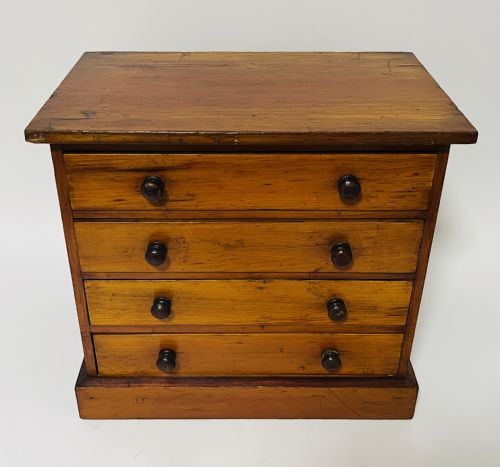
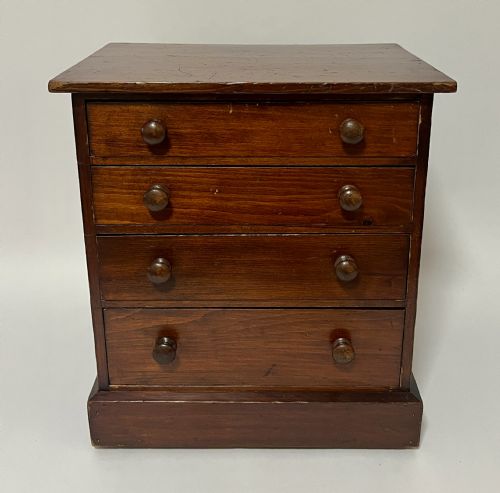
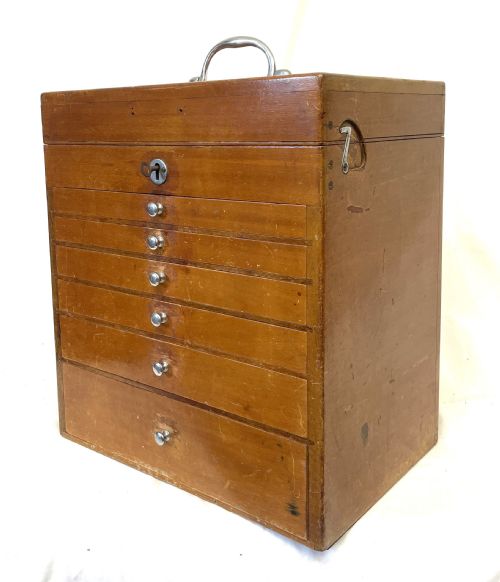


Pine Tabletop Chest Drawers
These pine tabletop chest drawers offer compact, useful storage built from sturdy timber, bringing practical organisation and charm to any desk or surface.
Pine Tabletop Chest Drawers
When you search for pine tabletop chest drawers, you encounter a specialised form of small-scale storage designed to sit neatly upon furniture rather than stand on the floor. These compact units serve varied domestic and professional functions, from miniature chests to apothecary cabinets and spice drawers.
The pieces on this page span several eras including Georgian, Victorian, and early twentieth-century decades like the 1920s and 1930s. You find items described variously as collectors chests, specimen cabinets, and banks of drawers.
Victorian and nineteenth-century examples appear frequently alongside painted pine and stained deal variations. Rustic country styles and industrial utility pieces also surface among the selection.
How they were made
Makers construct these cabinets primarily from pine, wood, and stained deal, often selecting these accessible timbers for everyday utility furniture. Some examples feature painted finishes or incorporate mahogany elements.
Metal and brass components appear in the hardware, including pulls and handles fitted to multiple small drawers. Construction techniques reflect the practical demands of storing specimens, homeopathic remedies, or dentist equipment securely.
Pine Tabletop Chest Drawers Retail Price Guide 2026
Typical asking prices for pine tabletop chest drawers among the pieces listed under this phrase on Sellingantiques today, from the lower quarter to the upper quarter. They describe what is for sale here now, not the wider market.
Object forms range from simple miniature chests of drawers to banks with twenty-five separate compartments.
What varies in quality
The sophistication of the drawer arrangement and the precision of the miniature joinery separate basic utilitarian boxes from refined collectors cabinets. Multi-drawer configurations, such as banks of twenty-five drawers or specialised apothecary compartments, demonstrate greater intricacy.
The choice of finish - whether clean stained deal, aged paint, or polished pine - alongside original brass or iron hardware dictates the visual presence of the piece.
Luxmore's of Ilfracombe
The Pine Tabletop Chest Drawers Glossary
- Pine
- A softwood commonly used for everyday and utilitarian furniture throughout the nineteenth and twentieth centuries. It accepts paint and stain readily.
- Deal
- A term traditionally applied to fir or pine timber used in cabinet making. Stained deal appears frequently on smaller storage pieces.
- Specimen Cabinet
- A small piece of furniture fitted with multiple shallow drawers designed for holding natural history samples or small collections. These often feature numerous matched drawer pulls.
- Miniature Furniture
- Scale models or small versions of larger chest forms created either as apprentice pieces or for desktop use. They duplicate full-size furniture details on a reduced footprint.
- Apothecary Chest
- A multi-drawer cabinet originally intended for storing medicines, herbs, or homeopathic remedies. They often contain many small compartments.
Pine Tabletop Chest Drawers: Frequently Asked Questions
What were pine tabletop chest drawers used for?
These small cabinets served diverse practical purposes in homes, surgeries, and shops. People used them to store homeopathic remedies, spices, dentist equipment, and natural history specimens.
Their compact tabletop design kept specialised items organised and easily accessible during daily work. Today, they continue to serve as desktop storage or decorative display pieces.
How do I date a pine tabletop chest?
Dating relies on examining the timber, construction methods, and hardware style. Pieces from the Georgian and Victorian eras often display hand-cut joints and period-specific brass or iron pulls.
Twentieth-century examples, such as those from the 1920s and 1930s, may show industrial utility influences or standardised manufacturing techniques. Comparing the finish, whether stained deal or painted pine, also helps place the piece in its era.
Where should I place a tabletop chest?
These compact cabinets sit well on sturdy desks, sideboards, or chests of drawers where their small footprint adds vertical storage. Their varied drawer counts make them ideal for organising small household items.
Keep them away from direct heat sources and strong sunlight to protect the pine timber and any original painted or stained finishes.
What is the difference between a spice cabinet and an apothecary chest?
Spice cabinets traditionally functioned in kitchens for holding culinary seasonings and often featured simpler regional or rustic country designs. Apothecary and homeopathic chests were built for medical and medicinal uses.
Medical chests frequently contain larger numbers of small, precise drawers suited for organising specific remedies and small glass vials.