
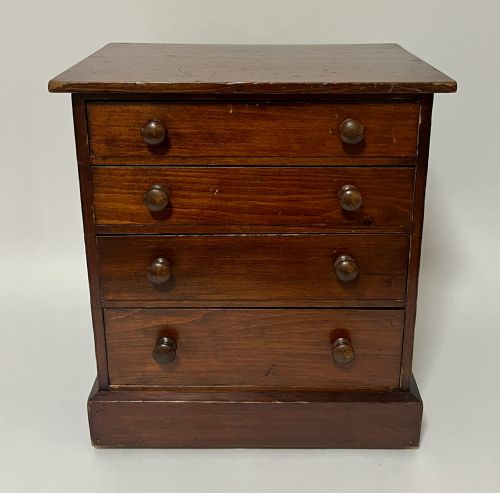
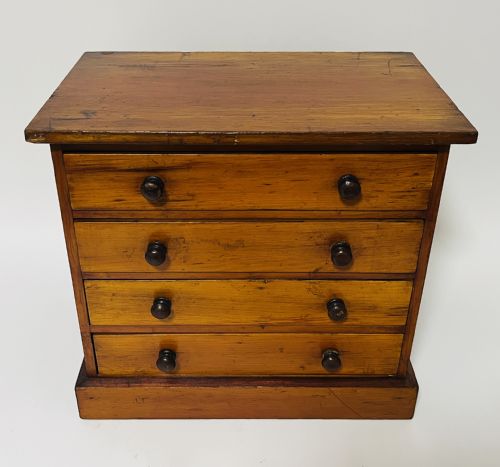
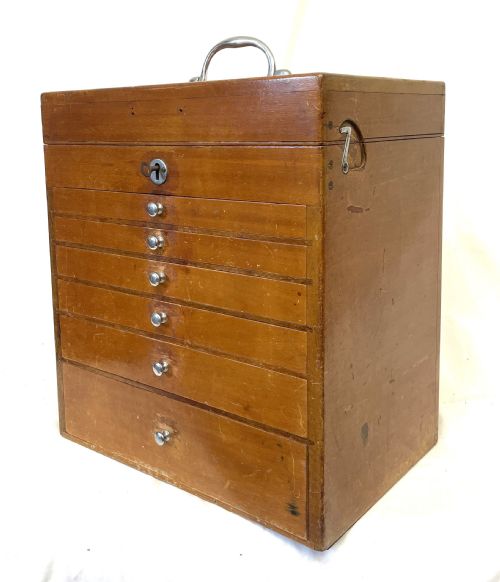


Pine Miniature Chest
A pine miniature chest offers small-scale storage crafted with surprising joinery, bringing period character to a tabletop.
Pine Miniature Chest
A pine miniature chest brings domestic scale furniture into workshops, parlours and bedrooms, functioning as a small storage unit for keepsakes, samples or spices. You meet these pieces most often in nineteenth-century and Georgian forms, ranging from plain country workshop builds to glazed specimen cabinets and apothecary chests.
The objects listed under this phrase span small chests of drawers, apprentice pieces and wall-hanging spice boxes, often constructed from local pine or pitch pine. They mirror the proportions of full-sized furniture down to the smallest turned feet and brass handles, serving practical tabletop storage roles in period homes.
How they were made
Makers built these pieces using solid pine and pitch pine, sometimes combining oak or applying ebonised wood mouldings for contrast. Surfaces were left plain, painted, or stained to mimic richer timbers, reflecting both country workshop traditions and industrial utility methods.
Hardware such as small brass pulls, metal latches and glass panes appear across specimen cabinets and apothecary units. Joinery remained straightforward yet sturdy, utilising traditional drawer construction and housing joints suited to smaller furniture.
Listings feature eighteenth-century Georgian forms alongside Victorian pitch pine cabinets and 1930s spice boxes.
What varies in quality
Quality rests in the precision of the small-scale joinery and the integrity of the timber selection, distinguishing simple utilitarian boxes from finer apprentice pieces. The proportion of the drawers, the crispness of the mouldings, and the retention of original brass hardware or painted finishes set individual examples apart.
Condition varies from honest workshop wear to carefully preserved surfaces with original glass and ebonised details. Pieces that retain their original backboards, drawer linings and feet hold a stronger material presence than those with later replacements.
The Pine Miniature Chest Glossary
- Apprentice piece
- A small item of furniture demonstrated by a craftsman to prove skill before gaining master status. These miniature chests show the same dovetailing and proportion as full-sized furniture.
- Specimen cabinet
- A small chest fitted with multiple shallow drawers designed for holding natural history samples or small collectibles. They frequently feature glass doors or closely fitted drawer banks.
- Pitch pine
- A dense, resinous softwood sourced mainly from North America and heavily utilised during the Victorian era. It provides a distinct grain pattern and harder surface than standard deal.
- Ebonised wood
- Timber treated with chemical stains or dark paint to imitate costly ebony. It appears on nineteenth-century mouldings and trim to create sharp visual contrast.
- Deal
- A traditional term for boards sawn from pine or fir timber. It forms the carcase of many country-made miniature chests and spice boxes.
Pine Miniature Chest: Frequently Asked Questions
What were miniature chests used for?
These pieces served practical storage roles on tabletops and counters, holding spices, small tools, or personal keepsakes.
Craftsmen also produced them as apprentice pieces to demonstrate competency in miniature joinery before undertaking larger commissions.
How old are most pine miniature chests?
The examples available typically date from the nineteenth century, encompassing Georgian, Victorian, and later Edwardian workshop traditions.
Earlier pieces show hand-sawn timber marks, while late nineteenth and early twentieth-century versions often utilise machine-prepared boards and simpler hardware.
Are apprentice pieces genuine?
Many small chests described as apprentice pieces genuinely reflect the scaled-down skill tests of nineteenth-century woodworkers.
Collectors look for the same drawer construction techniques found in full-scale furniture of the period to confirm their authenticity.
How do I care for antique pine furniture?
Keep these pieces away from direct heat sources and dramatic humidity shifts to prevent the pine from splitting or warping.
Gentle dusting with a dry cloth is sufficient, avoiding modern silicone polishes that can degrade older wax or painted surfaces.