
Victorian Walnut Chest
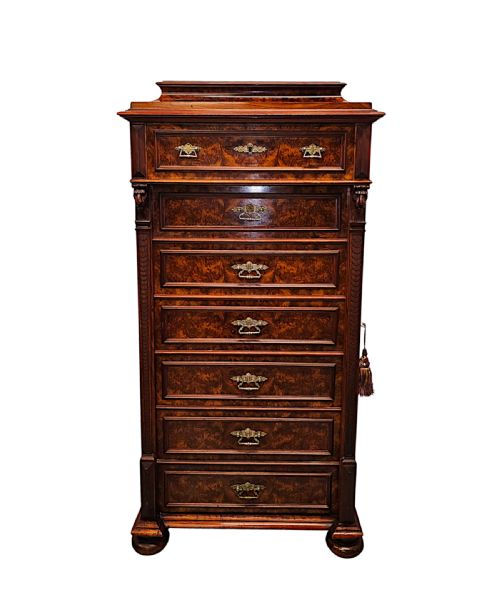
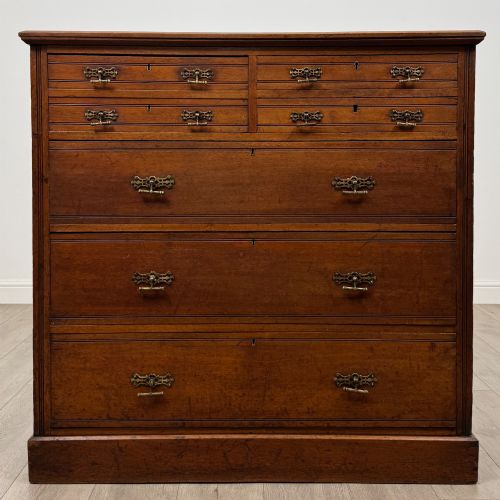
When you examine a victorian walnut chest, you are looking at substantial nineteenth-century timber storage built with distinctive figured veneers and warm brown tones.

Victorian Walnut Chest
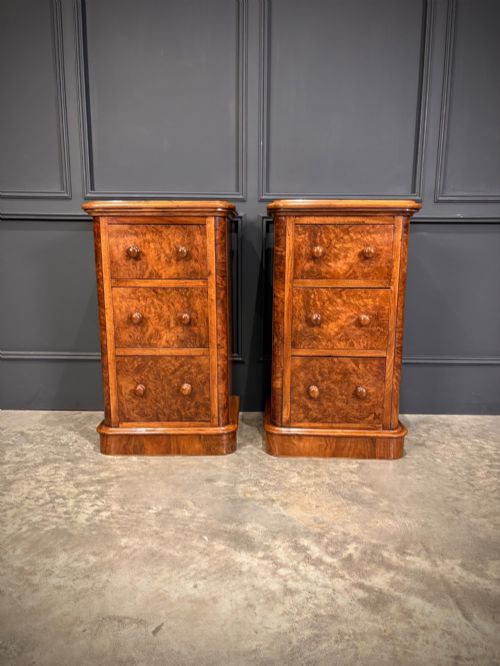
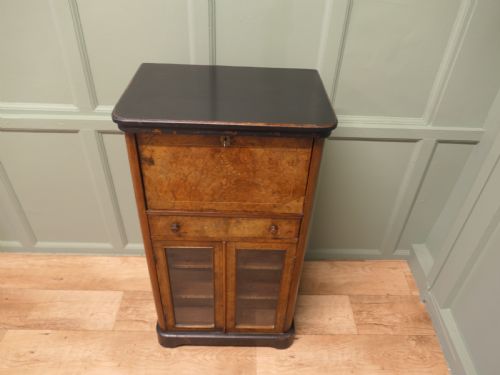
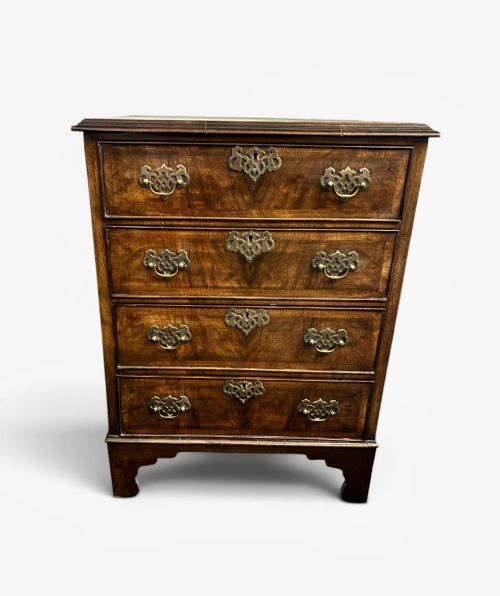
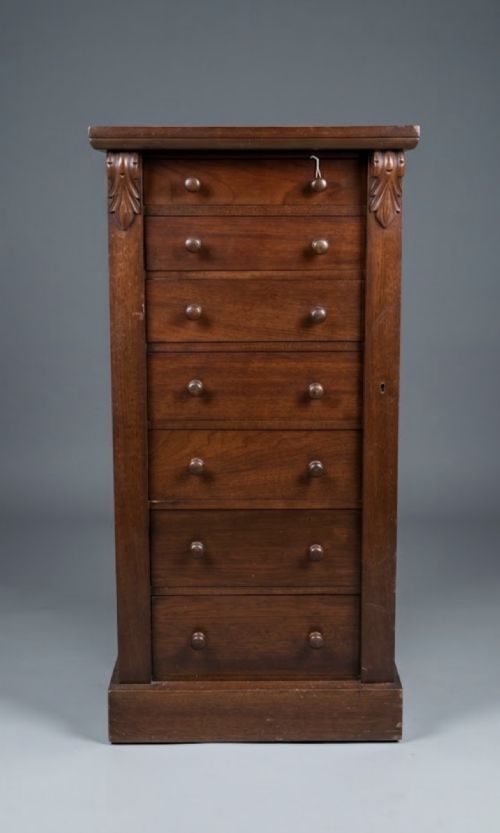
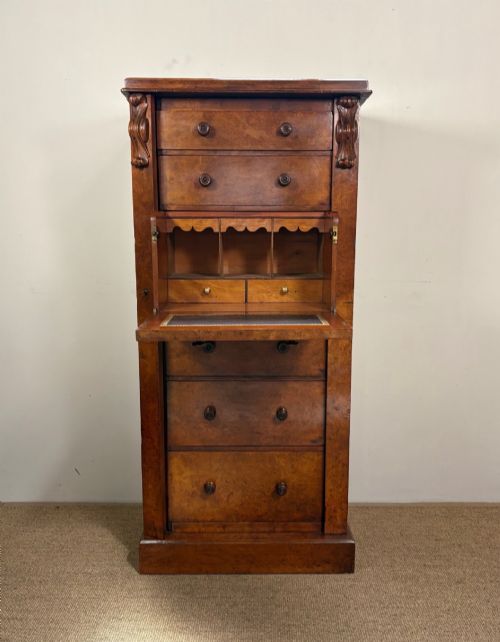
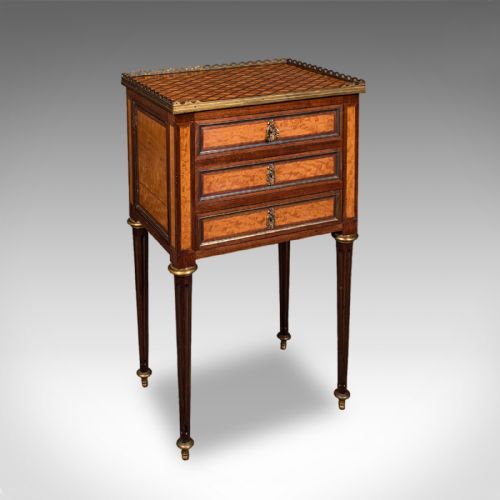
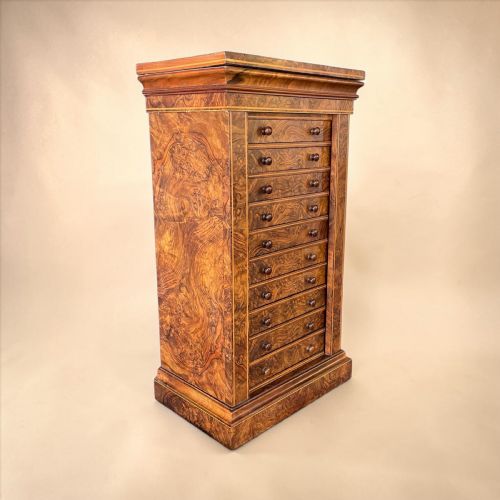
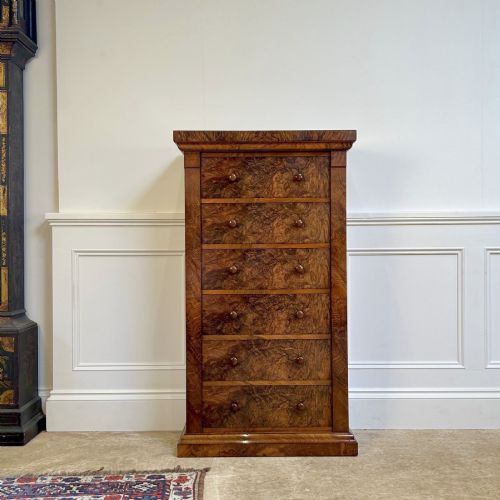
A victorian walnut chest typically takes the form of a traditional chest of drawers, a tall vertical Wellington chest, or a compact bedside cabinet.
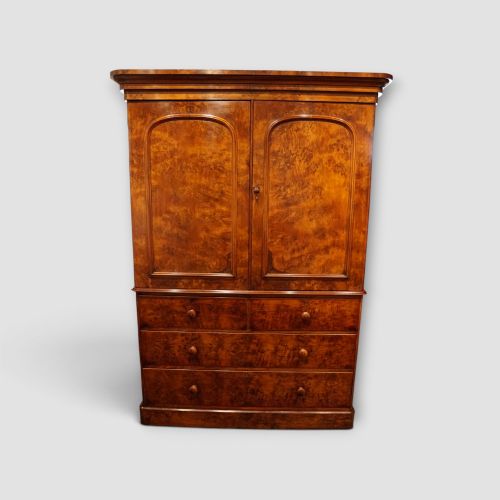
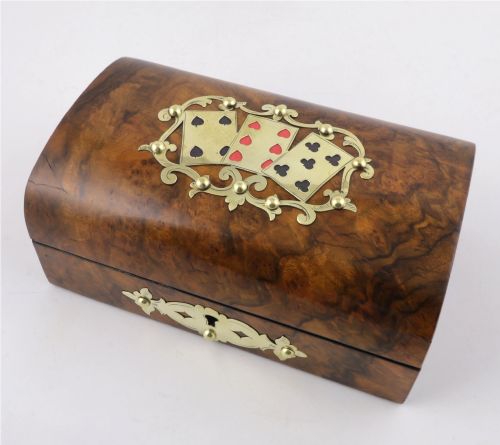
The materials span solid timber alongside elaborate veneers, frequently utilising burr walnut to create striking figured patterns across the drawer fronts and top surfaces.
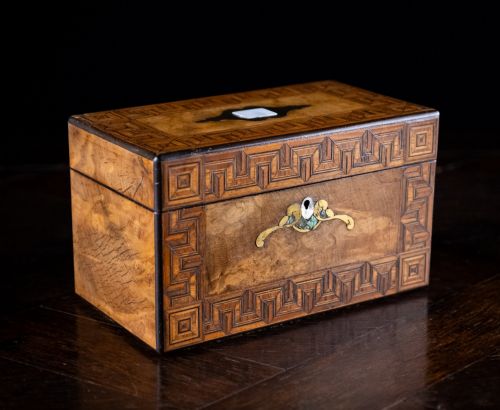
Origins stretch across the nineteenth century, encompassing standard domestic production as well as specialised campaign forms and pieces featuring marquetry or Tunbridge ware inlay.
Materials and construction
Cabinetmakers applied thin veneers of burr or figured walnut over secondary timbers like pine or mahogany, securing the grain patterns across wide drawer facades.
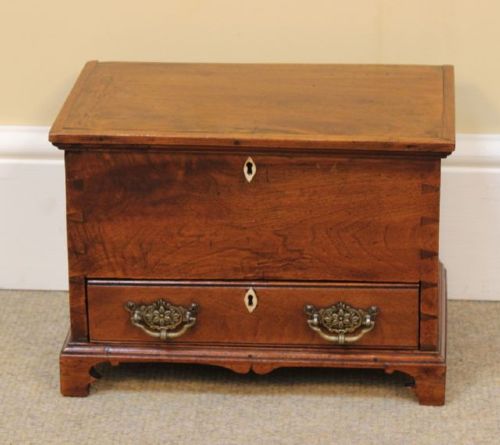
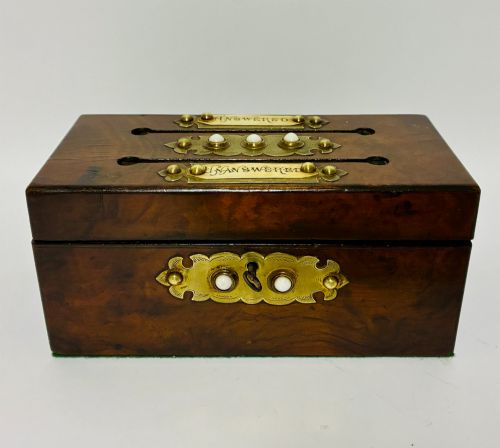
Joints relied on traditional hand-cut dovetails for the drawer construction, ensuring structural endurance while housing brass pulls, locks, and occasional mother-of-pearl details.
Victorian Walnut Chest Retail Price Guide 2026
Typical asking prices for victorian walnut chest among the pieces listed under this phrase on Sellingantiques today, from the lower quarter to the upper quarter. They describe what is for sale here now, not the wider market.
Some miniature apprentice pieces allowed young woodworkers to demonstrate their mastery of dovetails and drawer fitting before joining a guild.
Factors determining quality
Quality rests upon the selection and book-matching of the walnut veneer, where symmetrical grain and rich natural figuring elevate the visual depth of the piece.
Proportion and secondary details define the tier of the piece, distinguishing standard utility storage from refined cabinet work by notable makers equipped with superior brass hardware and secondary oak linings.
Jas Shoolbred·Gillows·Henry Hollamby·Edwards and Roberts·Druce and Co
The Victorian Walnut Chest Glossary
- Burr walnut
- A prized wood veneer sourced from tree growths, producing swirling, knotty patterns across cabinet fronts.
- Wellington chest
- A tall, narrow chest of drawers secured by a hinged locking stile on the right edge.
- Campaign chest
- Portable modular furniture built in sections with recessed brass fittings for military transport.
- Tunbridge ware
- Miniature mosaic woodwork forming geometric or pictorial panels using tiny dyed wood blocks.
- Secretaire
- A cabinet or chest incorporating a fitted pull-down writing drawer with small compartments.
Victorian Walnut Chest: Frequently Asked Questions
What is a Wellington chest?
A Wellington chest is a tall, narrow set of drawers characterised by a locking wooden bar down one side that secures all the drawers at once. This locking stile is typically held in place with a small brass key.
Cabinetmakers designed these vertical chests to maximise bedroom storage while maintaining a narrow footprint. They remain popular for storing papers, linen, and small personal items.
How do I identify burr walnut?
Burr walnut is recognisable by its swirling, highly figured grain patterns filled with small circular clusters and knot formations. It comes from the gnarled growths on walnut trees rather than straight timber.
Cabinetmakers sliced this wood into thin veneers to display the dramatic patterns across flat surfaces like drawer fronts and tabletops. This technique creates a rich visual texture quite distinct from plain linear grain.
Where were these chests used?
These pieces served primarily in domestic bedrooms, dressing rooms, and parlours as functional storage for clothing and personal belongings. Smaller variants functioned as bedside tables or tabletop cabinets.
Craftsmen also produced specialised campaign versions for travel and military use, fitted with flush handles and sturdy corner brackets. Their adaptable sizes allowed them to fit into various domestic spaces.
How do I care for antique walnut?
Antique walnut requires stable indoor humidity and protection from direct sunlight to prevent the timber and veneer from drying out or fading. Gentle dusting with a dry, soft cloth maintains the surface.
Avoid placing these chests near direct heat sources like radiators, which can cause the veneer to lift. Occasional application of appropriate wax polish helps preserve the lustre of the wood.