

Victorian Narrow Chest
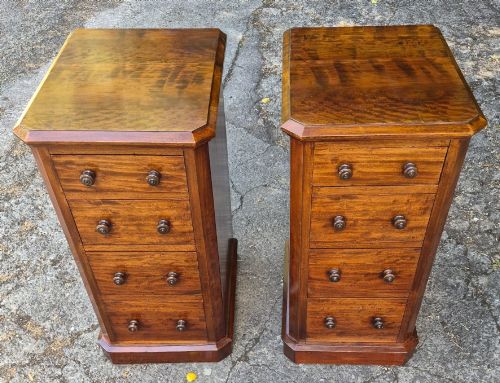
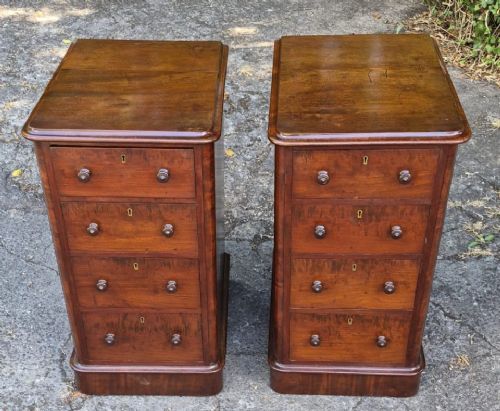
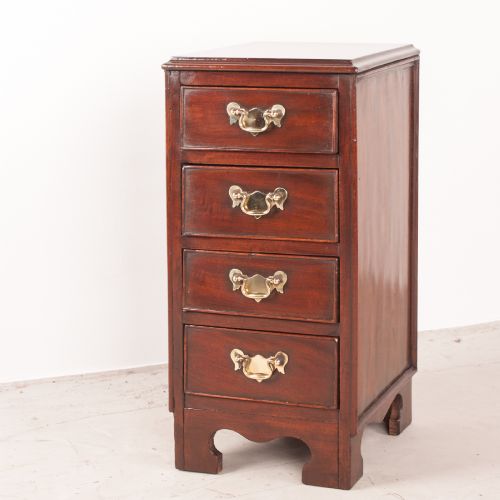
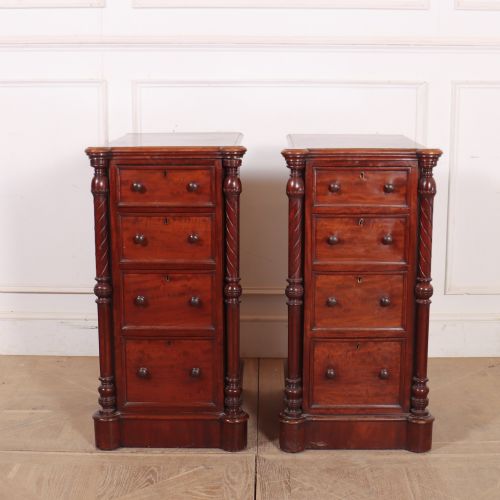
A victorian narrow chest offers compact storage with distinct vertical presence, pairing period timber with a slender footprint suited to tighter spaces.
Victorian Narrow Chest
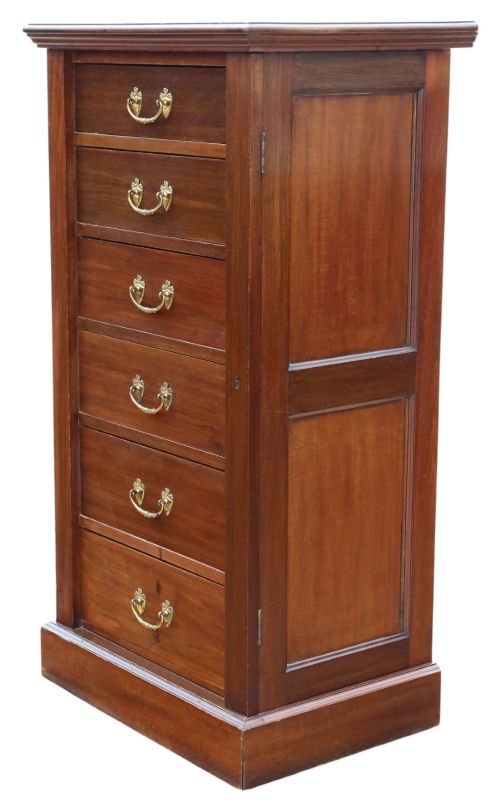
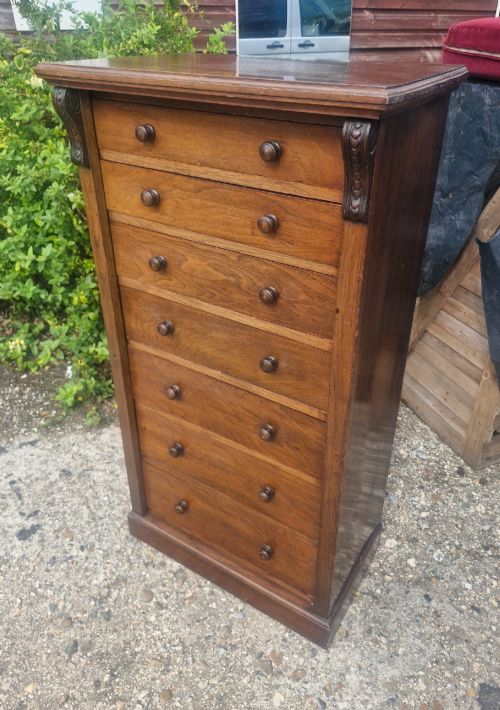
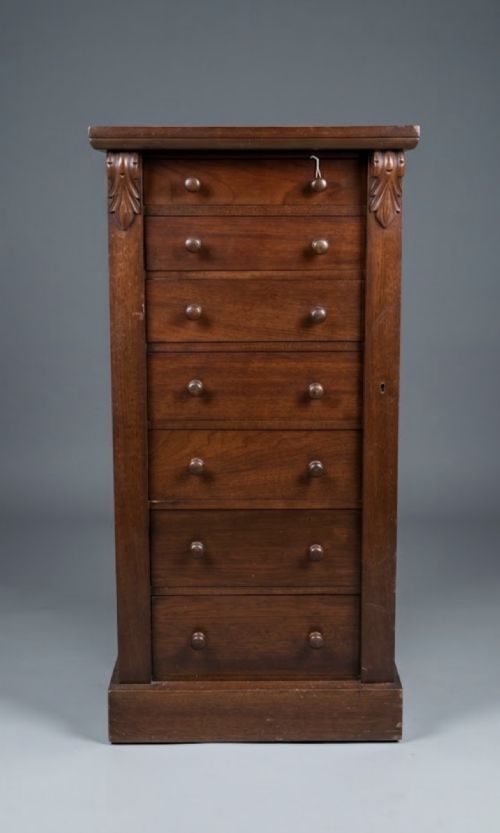
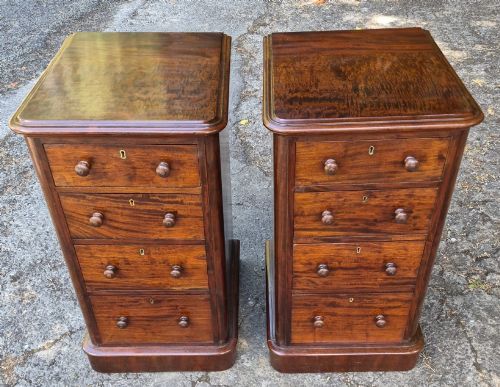
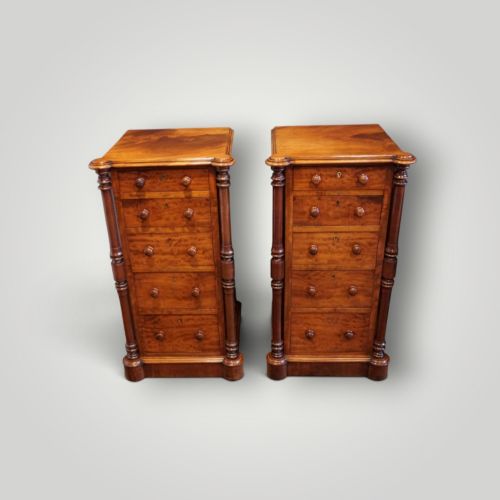
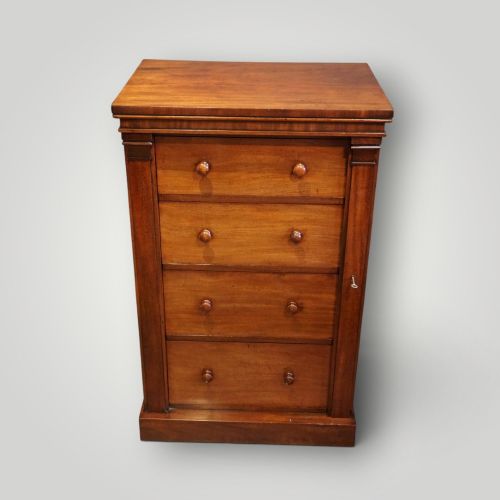
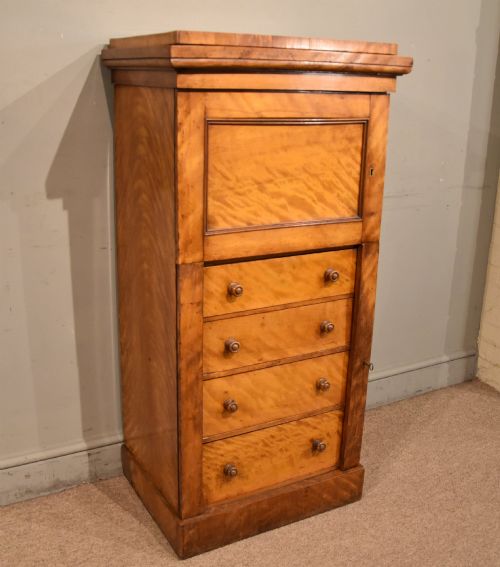
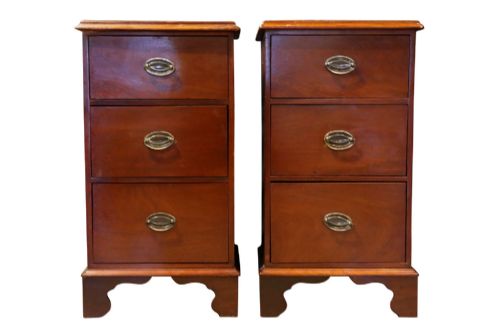
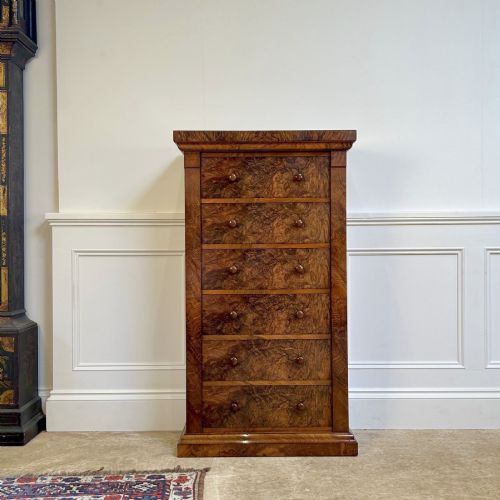
When searching for a victorian narrow chest, buyers encounter tall, space-saving storage pieces designed to maximise floor area in smaller rooms. The selection includes vertical Wellington chests, bedside chests, and slender drawer units originating primarily from the nineteenth century.
Makers utilised various formats to achieve this narrow profile, incorporating stacked drawer arrangements ranging from four to seven tiers. Pieces often appear in matched pairs or as single focal items carrying distinct period character.
Assessing Standard
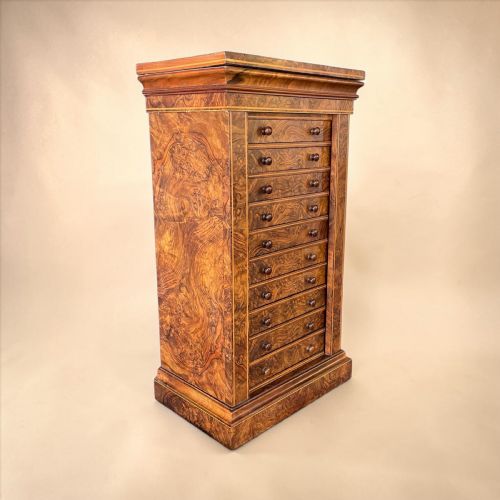
The degree of refinement lies in the selection of timber figures, such as highly figured flame mahogany or burr walnut, and the crispness of the secondary wood used inside the drawer carcasses. Original hardware, intact locking stiles, and undisturbed surface patination elevate a piece significantly.
Proportion and execution define the hierarchy among these chests, where restrained detailing and precise cabinet work distinguish workshop output from simpler country items. Altered pieces or adapted configurations sit lower in the scale than untouched examples retaining their original height and drawer counts.
Original country house scumble paint survives on selected pine examples, preserving a whimsical faux-wood finish.
Warings Liverpool·Gillows
The Victorian Narrow Chest Glossary
- Wellington chest
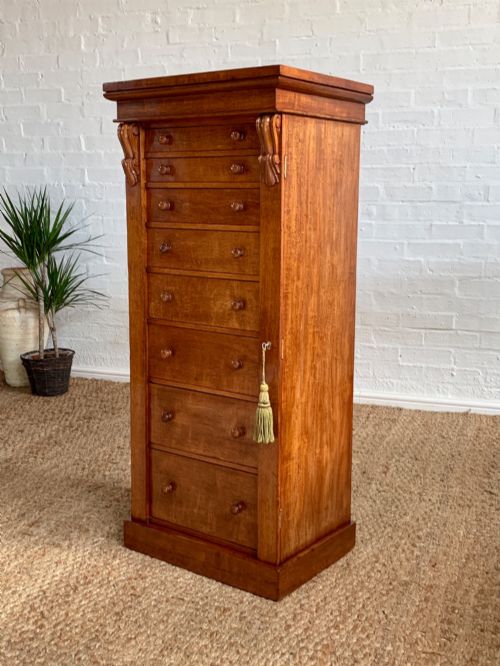
- A tall, narrow chest of drawers secured by a hinged locking side stile that fastens over the drawer edges. This specific form typically contains six or seven graduated drawers.
- Hobbs lock
- A secure brass lever lock frequently fitted to quality nineteenth century cabinet work. These mechanisms often bear stamped maker details.
- Flame mahogany
- A cut of timber displaying a characteristic flickering, flame-like grain pattern. Cabinet makers prized this veneer for principal visual surfaces.
- Scumble paint
- A decorative surface treatment applied to mimic wood grain or provide an aged finish. Country pieces occasionally retain this historic painted layer.
Victorian Narrow Chest: Frequently Asked Questions
What is a Wellington chest?
A Wellington chest is a tall, narrow set of drawers distinguished by a locking flap or stile on one side. This locking mechanism secures every drawer simultaneously when closed.
Originating in the nineteenth century, this form accommodates multiple drawers within a minimal floor space.
Where were narrow chests used?
These compact chests served primarily in bedrooms, dressing rooms, and smaller chambers where standard wide furniture would not fit. Their vertical orientation provided substantial drawer capacity without occupying significant room.
Victorian homes utilised them for linen, accessories, and personal storage.
How do I date a Victorian chest?
Dating relies on examining timber choices, construction techniques, hardware style, and secondary woods like pine or oak inside the drawers. Mid-nineteenth century examples often display solid mahogany linings and hand-cut dovetails.
Later Victorian and Edwardian pieces show subtle shifts in proportion and factory-produced components.
Are these chests suitable for modern bedrooms?
Their slender proportions make them exceptionally practical for contemporary spaces requiring vertical storage solutions. They sit comfortably beside beds or along narrow walls where depth is restricted.
Drawers offer deep capacity despite the modest exterior footprint.