
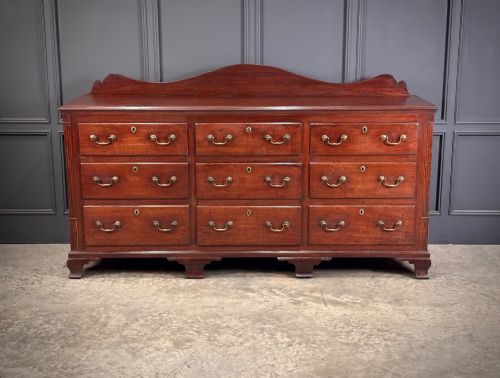
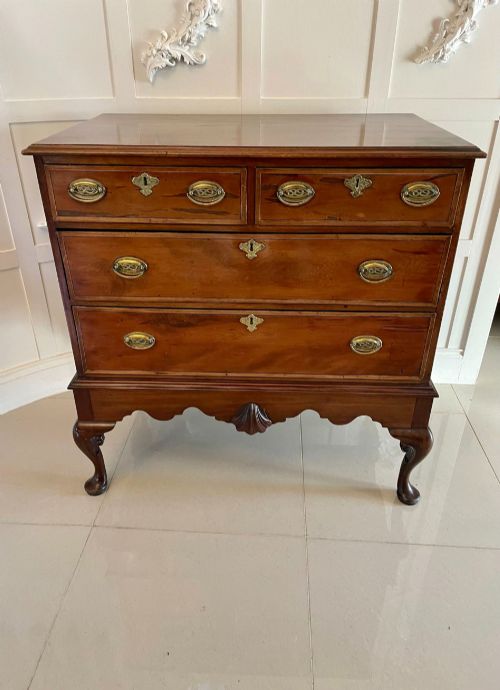
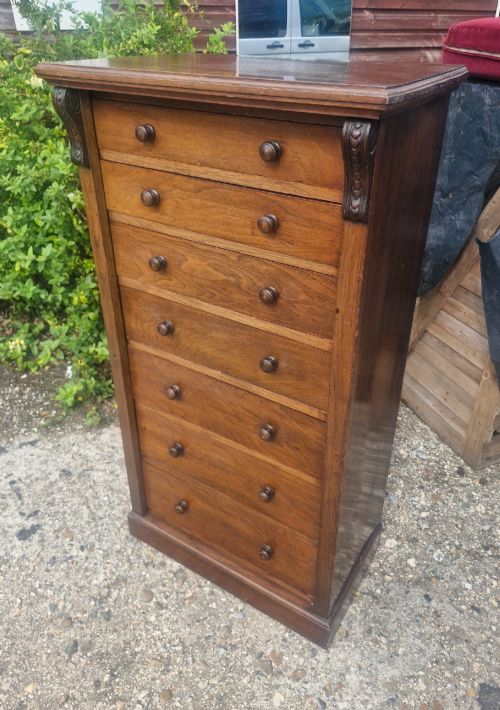

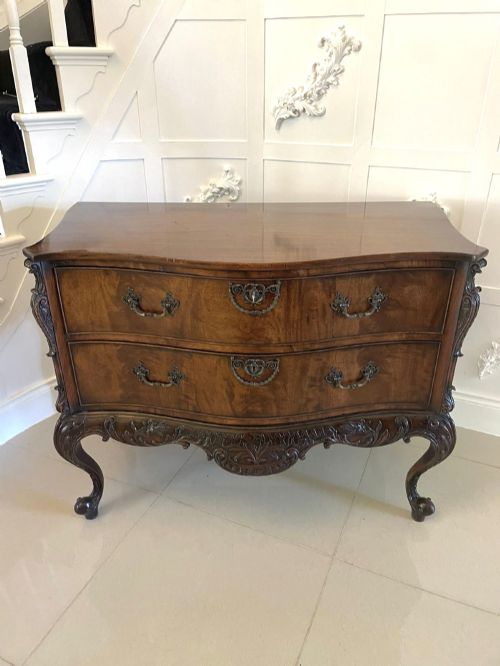
Carved Mahogany Drawers
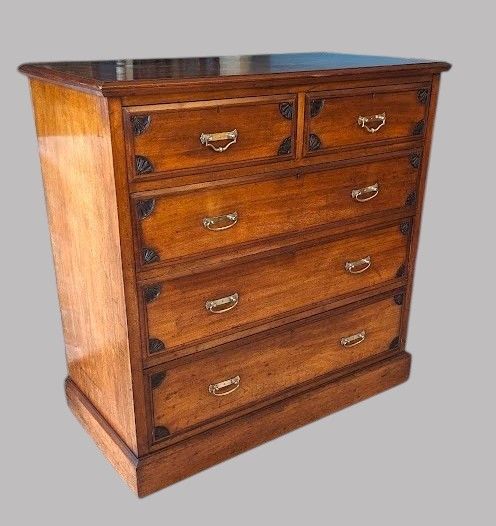
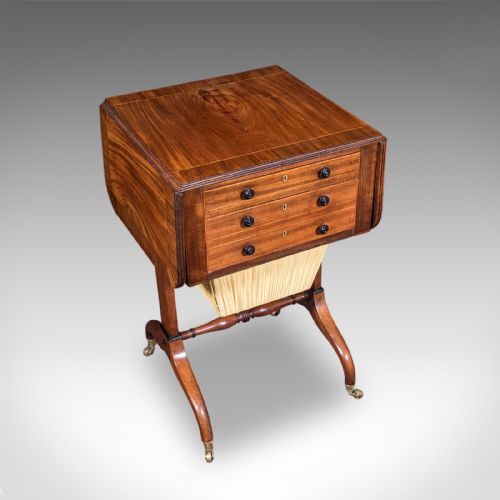
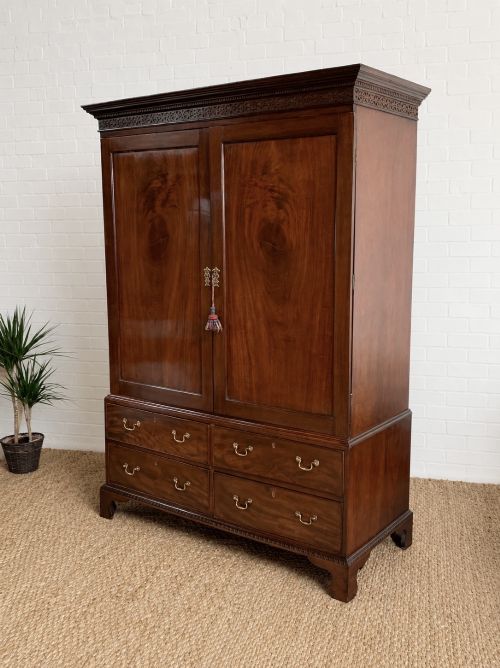
These carved mahogany drawers combine solid timber with crisp hand-chiselled detail, offering practical storage alongside rich historical character.
Carved Mahogany Drawers
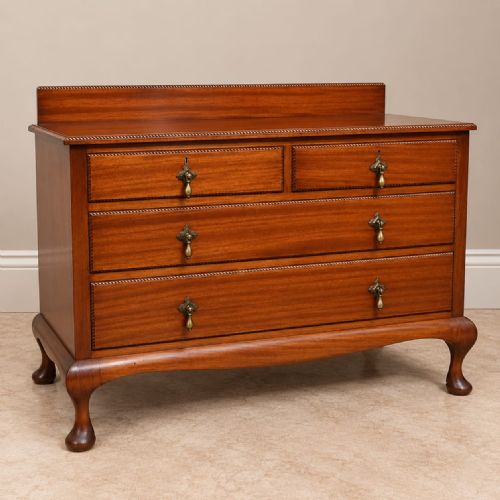
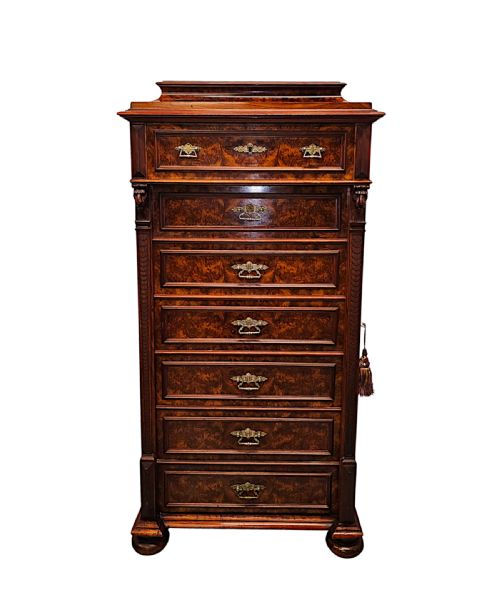
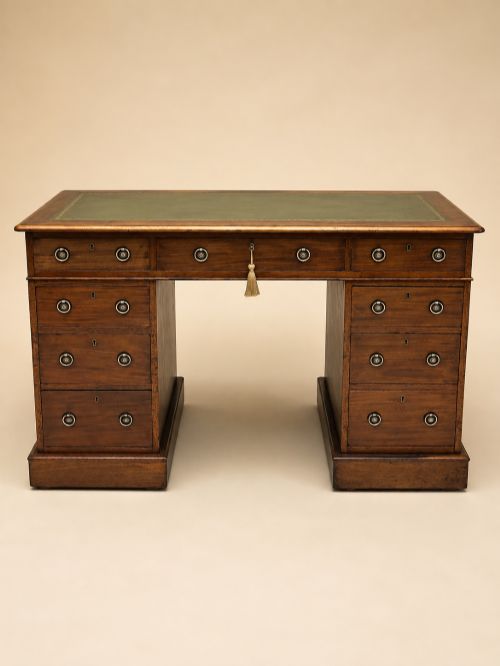
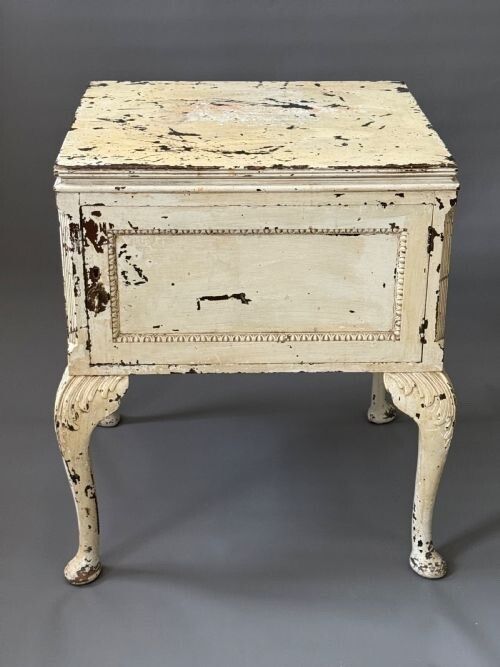
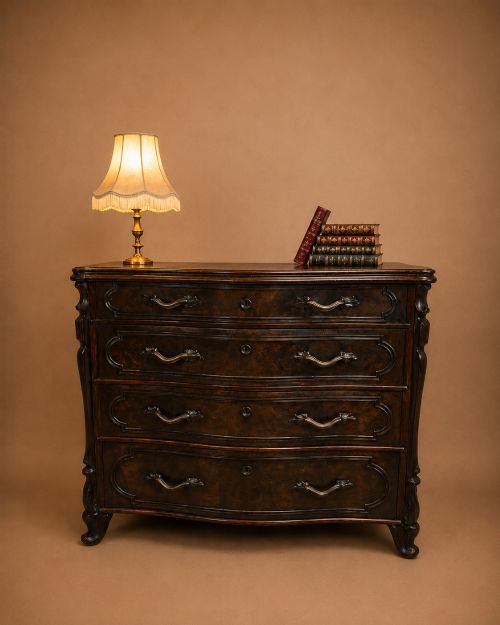
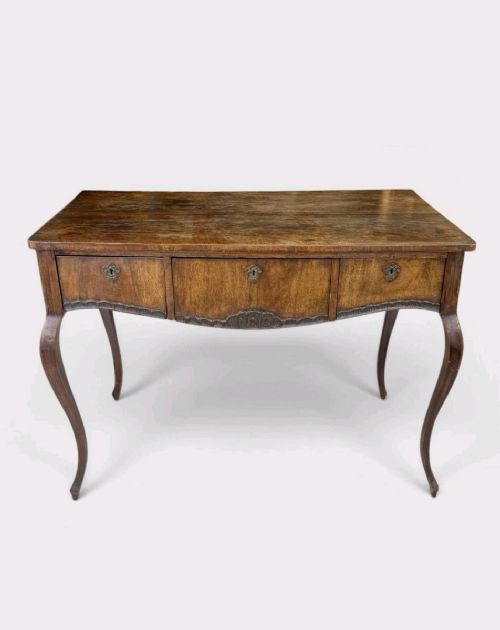
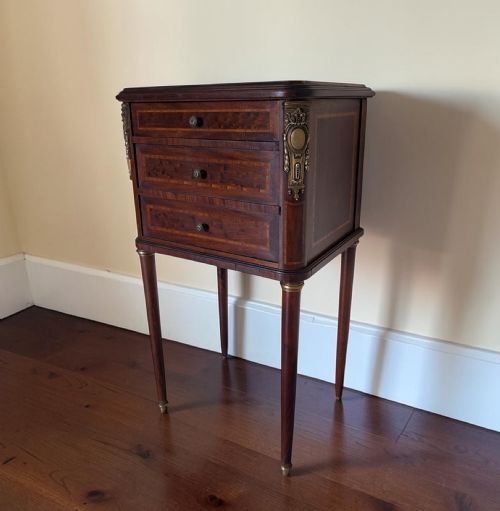
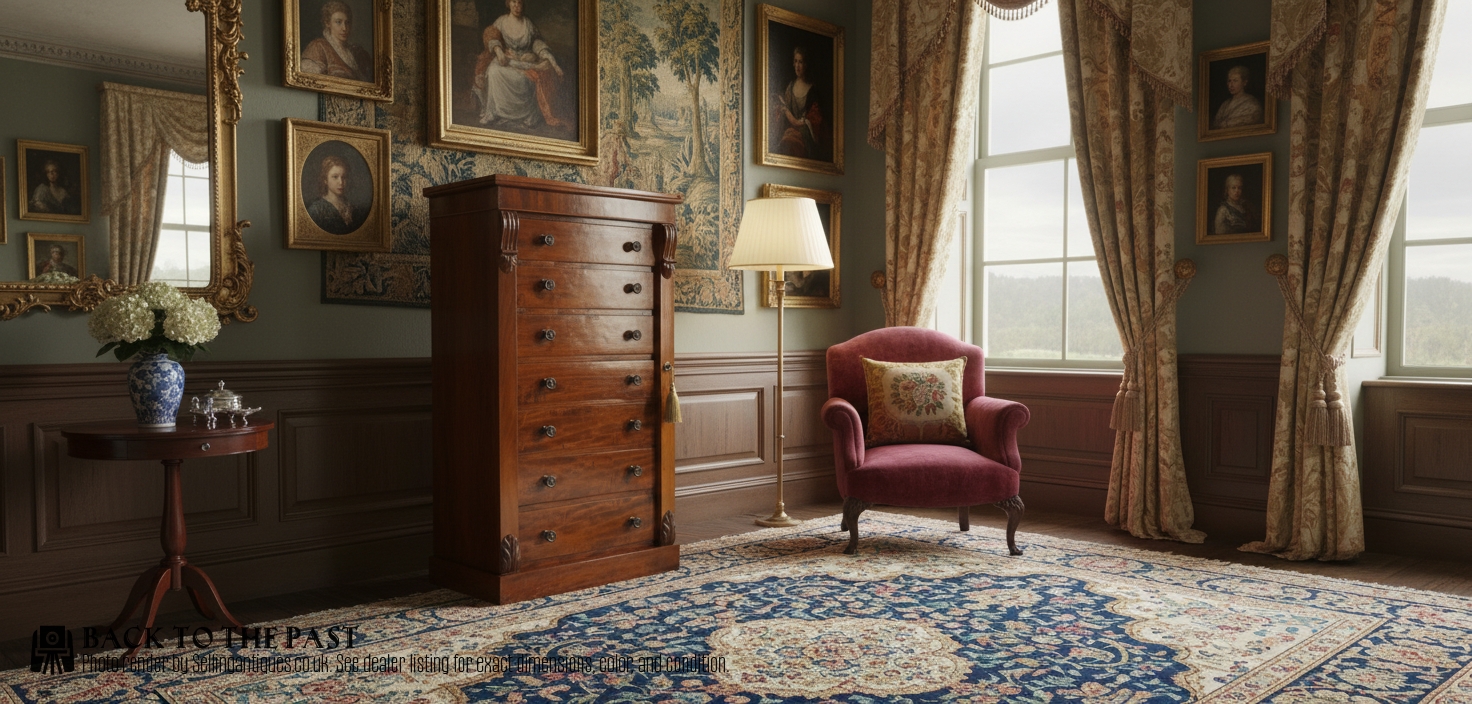
Carved mahogany drawers appear primarily as chests of drawers, desks, and bedside cabinets spanning the Georgian, Regency, and Victorian periods. The most frequent iteration on this page is the standard mahogany chest of drawers, ranging from bow-fronted designs to tall Wellington chests.
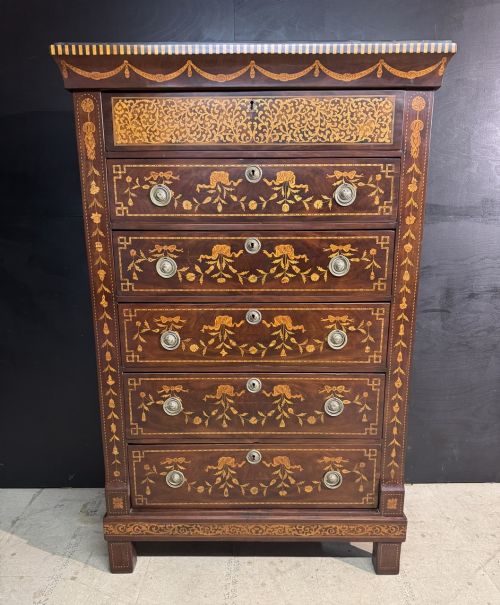
Makers and workshops across Britain and continental Europe utilised dense timbers and figured veneers to construct these storage items. Pieces often incorporate specific regional traits, such as Dutch marquetry or French serpentine curves, alongside traditional British carcass work.
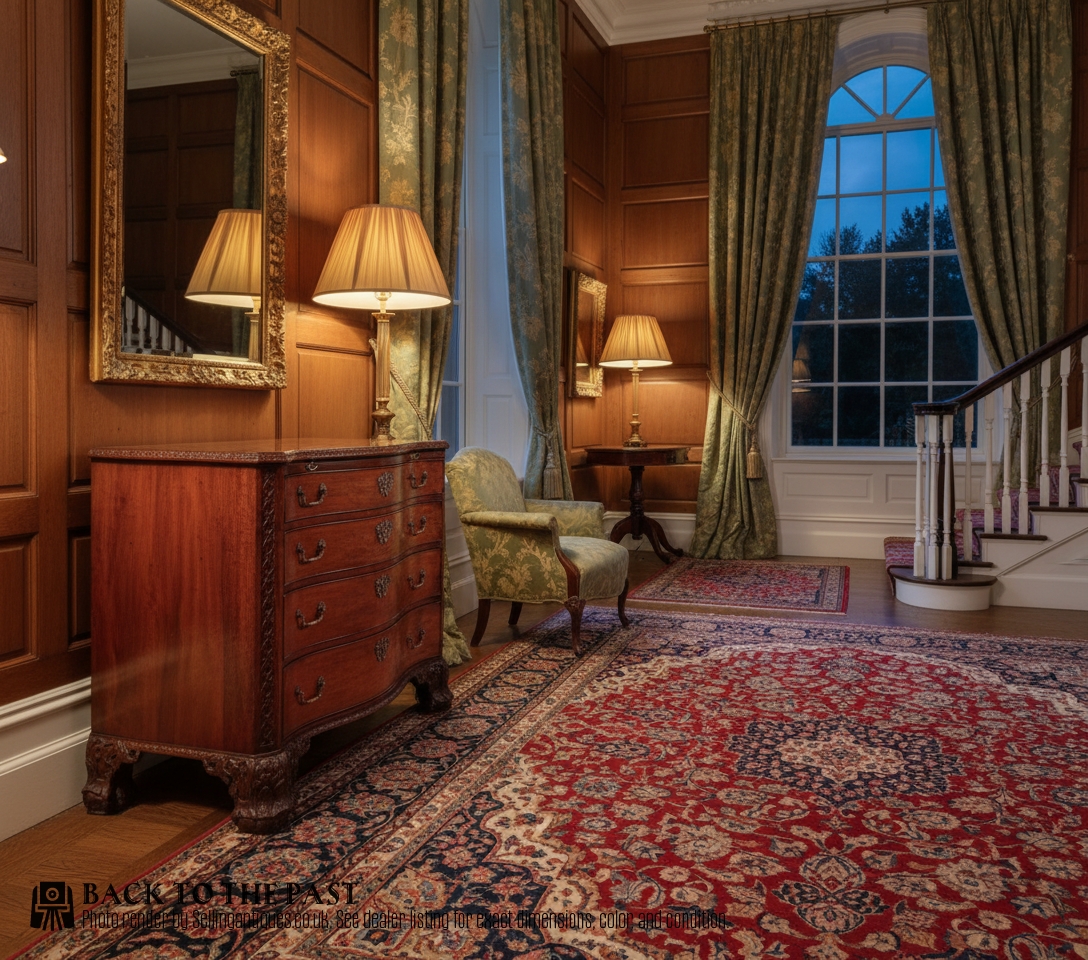
How they were made
Craftsmen built these carcases predominantly from solid mahogany and flame mahogany veneer, supplementing the primary timber with secondary woods for drawer linings and backboards. Brass handles, glass doors, and leather inserts frequently complete the construction.
Carving was executed directly into the solid mahogany framing, stiles, and drawer fronts, often complemented by intricate blind fretwork cornices and turned wooden knobs. Veneers were painstakingly laid to create mirrored grain patterns across wide drawer fascias.
Carved Mahogany Drawers Retail Price Guide 2026
Typical asking prices for carved mahogany drawers among the pieces listed under this phrase on Sellingantiques today, from the lower quarter to the upper quarter. They describe what is for sale here now, not the wider market.
Listings span multiple eras, encompassing Georgian, Regency, William IV, and Victorian periods alongside Edwardian additions.
What varies in quality
Quality rests heavily on the selection of timber and the precision of the carving, distinguishing master-carved cornices and crisp bracket feet from plain, mechanically produced mouldings. The depth and sharpness of the hand-chiselled ornamentation dictate the upper tier of these items.
Internal construction standards differentiate finer examples, observable in hand-cut dovetails on drawer boxes and the retention of original brass hardware or turned wooden knobs. The integrity of the flame mahogany veneer and the smoothness of the drawer action complete the hierarchy.
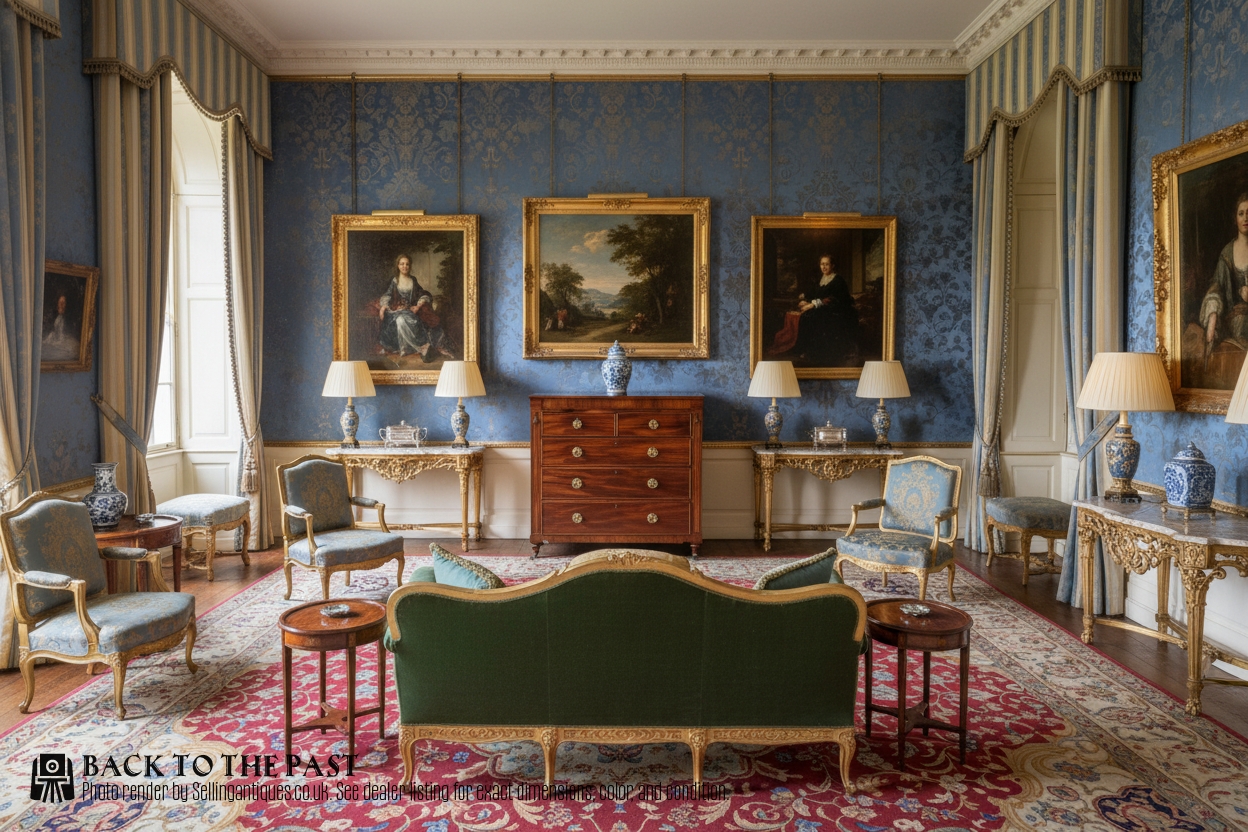
James Winter and Sons
The Carved Mahogany Drawers Glossary
- Serpentine front
- A furniture front curving outward at the centre and inward at the sides in an 'S' shape. This configuration demands high skill in both veneering and solid timber shaping.
- Blind fretwork
- Carved ornamentation applied to a flat surface in imitation of pierced lattice work. It frequently decorates the friezes and cornices of Georgian case furniture.
- Flame mahogany
- A veneer cut from the fork of a mahogany tree where the branches join the trunk. This produces a dramatic, flickering flame-like pattern across the wood.
- Bow front
- A convex, curved front typical of Regency and Georgian case pieces. The gentle outward sweep softens the rigid geometry of standard storage chests.
Carved Mahogany Drawers: Frequently Asked Questions
How do I date a mahogany chest?
Dating relies on observing construction methods, timber choice, and handle styles across the piece. Georgian items often display hand-cut dovetails and bracket feet, whereas Victorian examples favour heavier turned knobs and plinth bases.
Secondary woods inside the drawers also offer clues, as does the transition from solid mahogany panels to complex flame veneers in the nineteenth century.
What is a Wellington chest?
A Wellington chest is a tall, narrow storage unit traditionally fitted with a hinged locking stile on one side. Swinging this stile into place secures every drawer simultaneously.
Cabinetmakers designed these tall chests to maximise vertical storage space while keeping contents secure within private bedchambers or studies.
How should I clean carved mahogany?
Maintenance requires gentle dusting with a dry, soft cloth to protect the intricate carved details and the polished surface. Avoid modern silicone sprays, which build up a residue and dull the natural timber over time.
Period wax applied sparingly once or twice a year helps nourish the mahogany and preserves the deep lustre of the original polish.
Are these drawers suitable for daily use?
These pieces function reliably for storing clothing, linens, or stationery when handled with standard care. Solid mahogany construction provides robust durability despite centuries of age.
Drawers slide smoothly when kept in stable environmental conditions away from direct heat sources and excessive humidity changes.